
Embarking on a journey to work in a new country is exciting. For many professionals, securing a costa-rica-temporary-worker-permit is a crucial step. This permit allows individuals to live and work in this stunning coastal nation legally.
Our guide is designed to simplify the complex visa requirements you may encounter. Understanding the different categories of permits is essential for a smooth transition to your new life in Costa Rica. We aim to clarify the legal landscape, empowering every worker with the knowledge needed for a successful immigration journey.
Proper preparation is key. A well-organized application can prevent delays, ensuring your move to this vibrant Central American country goes as planned. For more detailed information, check out our comprehensive resource on visa options in Costa Rica.
Overview of Costa Rican Residency and Work Permits
Working in a foreign land opens doors to new experiences and growth. Understanding residency in Costa Rica is vital for anyone looking to establish a long-term presence. Legal residency provides stability and the ability to integrate into the local community and economy.
Moreover, having legal employment status is crucial. It ensures you are protected under Costa Rican labor laws, allowing you to contribute positively to the local business environment. With legal residency, you no longer need to worry about renewing short-term tourist visas.
Additionally, legal employment in this coastal nation comes with significant benefits. These include access to social security and the opportunity to build a fulfilling professional career. We offer comprehensive information to help you navigate how residency impacts your ability to work legally for a Costa Rican company.
Eligibility and Basic Requirements for Temporary Work Permits
Entering a new job market can be a thrilling adventure. However, understanding the eligibility criteria for work permits is essential for a smooth transition. To qualify for a permit, applicants must fit into a specific immigration category. The Special Category includes various roles such as temporary workers, domestic employees, and self-employed professionals.
The government strictly enforces these eligibility requirements. This ensures that local job opportunities are prioritized for citizens and permanent residents. We assist you in identifying which specific category applies to your situation, whether you are a transfer personnel or an artist.
It’s important to grasp these requirements because work permits are not automatically granted to every foreign national seeking employment. Applicants must demonstrate that their skills align with the criteria defined by the government for the Special Category of immigration permits.
Document Checklist and Preparation Tips
Preparing to work abroad involves meticulous planning and organization. A successful application for a work permit requires a complete set of essential documents. Here’s what you need to gather:
- A signed application form.
- Your birth certificate.
- Two recent passport photos.
- A police clearance certificate from your country of origin.
All foreign documents must be translated into Spanish and notarized. This step is crucial for acceptance by the immigration authorities in Costa Rica. Providing a complete set of documents is the most effective way to ensure your application moves through the review process without unnecessary delays.
We recommend verifying the expiration date on your passport. It must be valid for the duration of your stay. Proper preparation of your documents is a critical step in the application process for anyone seeking to work legally in Costa Rica.
Understanding the costa-rica-temporary-worker-permit Process
Navigating the process of obtaining a work permit can feel overwhelming, but understanding each step can simplify it. The Dirección General de Migración y Extranjería is the main authority that reviews and issues work permits in Costa Rica.
To begin, you must carefully follow each step of the process. Start with the submission of your application to the relevant government department. The Dirección General de Migración y Extranjería ensures that all applicants meet the regulations set by the Ministry of Labor.
We are here to guide you through this process, ensuring that your application for a permit is complete and adheres to current legal standards. Understanding the role of the general migración office is essential for anyone navigating the complex immigration landscape in Costa Rica.
Navigating the Application Process and Employer Responsibilities
The application process for working abroad can be complex and requires careful attention. Securing a provisional visa is often the first step for those entering the country legally. This visa allows you to start your journey while your work permit application is processed.
Your employer plays a crucial role in this process. They must prove that the job position could not be filled by a local citizen before you can apply work. This requirement ensures that local job opportunities are prioritized.
Additionally, we assist you in coordinating with your employer to ensure that all verification steps for your work permit are completed accurately. Every application requires the employer to demonstrate compliance with local labor laws to support the hiring of an international employee.
Timelines and What to Expect During Processing
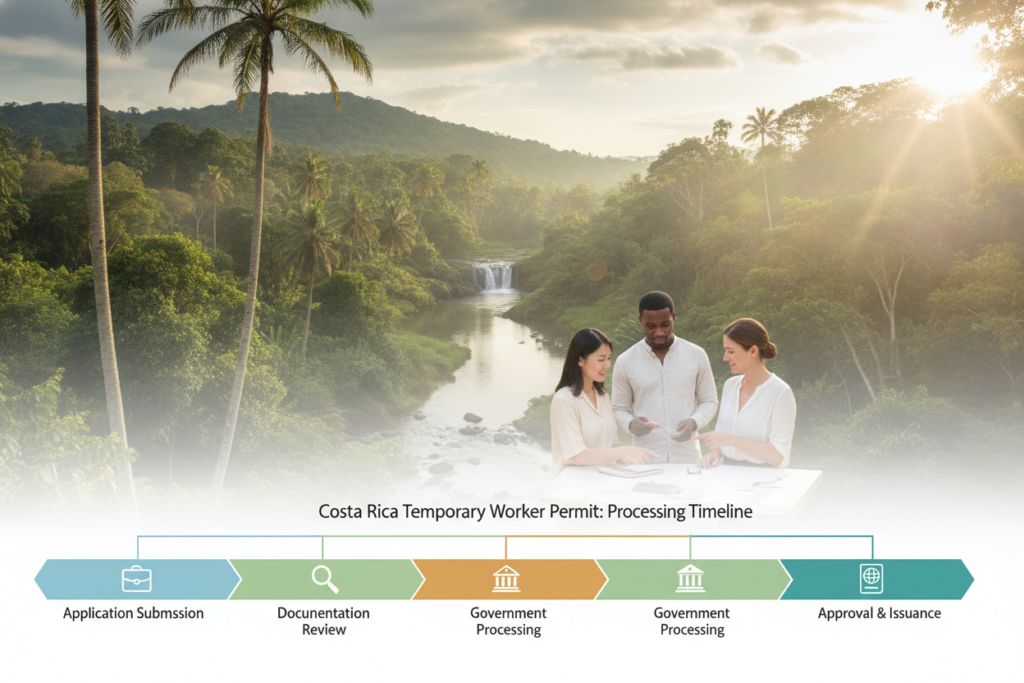
Understanding the timeline for your work permit application is crucial for a smooth transition. Under Article 27 of the Reglamento de Extranjería, DGME has up to three months to resolve an application in Costa Rica once all requirements are met. This duration can vary based on specific case details.
Planning your move well in advance is essential, as the application process can sometimes take longer than expected. We advise applicants to remain patient during the 3 to 8 months of waiting, as the government conducts a thorough review of each application.
Knowing the timeline helps you manage your expectations regarding when you can officially begin your work status in Costa Rica. Delays in the application process are possible, so we recommend starting your preparations as early as possible to avoid any scheduling conflicts.
Important Considerations for a Successful Application
Success in obtaining a work permit often hinges on avoiding typical application mistakes. Many applicants encounter issues due to incomplete applications or missing translations. These common pitfalls can lead to significant delays in the immigration process.
To help you navigate this landscape, we provide the necessary information to avoid errors that could result in rejection. Ensuring that all your information is accurate and up-to-date is essential for living and working in Costa Rica.
Many applicants face challenges because they fail to provide the correct supporting documents required for their specific work category. Our goal is to equip you with the information needed to effectively navigate the complexities of the immigration system in Costa Rica.
The Role of CRIE in Facilitating Your Residency Journey
Our journey toward residency in a new country can be both rewarding and challenging. At CRIE, we have over 20 years of experience helping individuals and families navigate the residency and immigration landscape in Costa Rica.
We focus exclusively on residency and immigration services. This specialization allows us to provide the expert information you need to secure your legal status as an employee. Our team is dedicated to offering personalized support to ensure that your residency journey is as smooth and efficient as possible.
We understand that every residency case is unique. That’s why we provide tailored guidance based on your specific immigration history. Our expertise allows us to deliver accurate information regarding the requirements for obtaining a permit to live and work in Costa Rica.
Maintaining Compliance with Costa Rican Immigration Rules
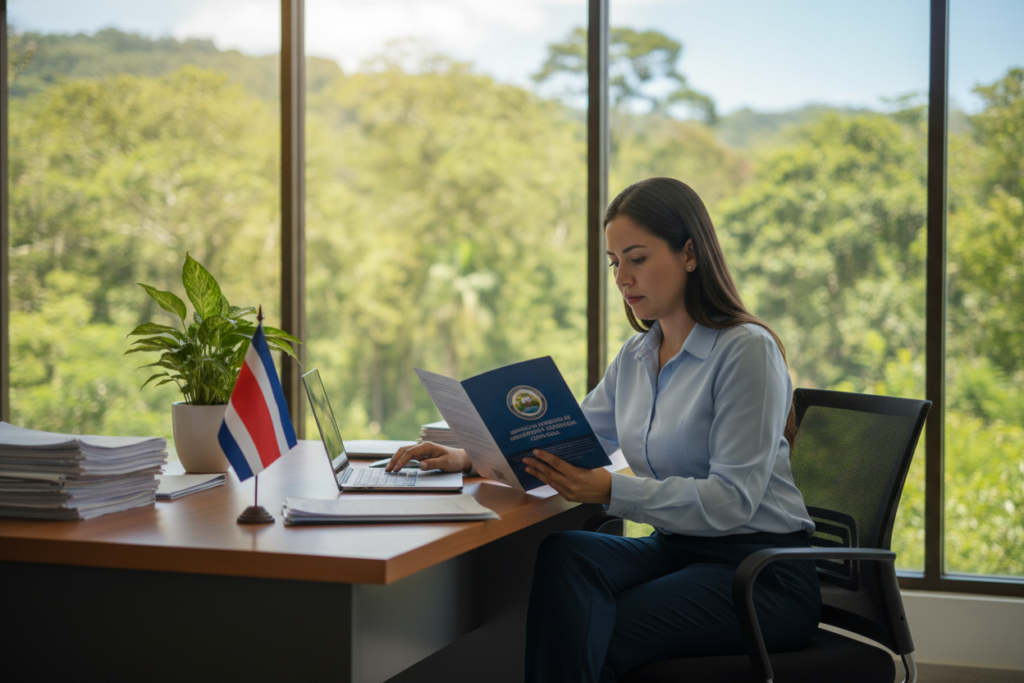
To thrive as a foreign worker in a new country, understanding immigration rules is essential. Compliance with these regulations is crucial for all foreign residents who wish to continue their employment in Costa Rica.
We help you understand the ongoing obligations that come with your residency. This ensures you remain in good standing with the authorities. Legal residents must follow all local regulations to protect their right to live and work in this beautiful country.
Staying compliant involves timely renewal of your residency. It also requires ensuring that your employment status aligns with your permit category. Our guidance helps you navigate these rules, allowing you to focus on your career and life as a resident in Costa Rica.
Additional Practical Tips for Expats and Workers
Transitioning to a new life in a different country can be both thrilling and daunting. For foreigners moving to Costa Rica for work, understanding the specific income requirements for various visa categories is crucial. For instance, the Digital Nomad Visa mandates an income of $3,000 per month for singles and $4,000 for families.
Additionally, many employees find that starting a business or investing at least $150,000 USD provides a stable path to residency. Whether you are from one of the many visa-exempt countries or require a permit, planning your job transition is vital for success.
We provide information on how to manage your income and business affairs while you live and work in this vibrant tropical environment. Our practical tips help employees and their families settle into their new life, ensuring that every work requirement is fully met.
Reach Out to CRIE for Your Next Steps
Taking the next step in your professional journey abroad can be a significant decision. Each residency case is unique, influenced by your nationality, family situation, and immigration history. Personalized guidance is essential to navigate this process effectively.
For accurate pricing and to discuss your next steps, we encourage you to connect with Johanna Alvarez, our dedicated immigration expert at CRIE. You can reach us via WhatsApp at +506 8373 2085 or email info@crie.cr for more information.
Visit our website at crie.cr to learn how we can assist you with your residency and employment goals. Contact CRIE today to receive professional guidance tailored to your unique situation as you prepare to work and live in this beautiful country.
FAQ
What is the process for applying for a work visa in Costa Rica?
To apply for a work visa, we must gather the necessary documents, complete the application form, and submit it to the Dirección General de Migración. It’s essential to ensure all information is accurate and up-to-date.
How long does it take to receive a temporary work permit?
The processing time for a temporary work permit can vary, but we typically expect it to take anywhere from a few weeks to several months, depending on the completeness of our application and the current workload of immigration authorities.
What documents do we need to provide for the application?
We need to provide our passport, proof of employment, background checks, and any relevant educational or professional qualifications. It’s crucial to ensure that all documents are properly translated and notarized if required.
Can we apply for a work permit without a job offer?
No, we must have a job offer from a Costa Rican employer to apply for a work permit. The employer must also be willing to sponsor our application.
Are there specific eligibility criteria for foreign workers?
Yes, we must meet certain eligibility criteria, including having a valid passport, a job offer from a registered company, and meeting any specific qualifications required for the job.
What should we do if our application is denied?
If our application is denied, we can review the reasons for the denial and address any issues. We may also have the option to appeal the decision or reapply with additional documentation.
Is there a limit on how long we can work in Costa Rica with a temporary permit?
Typically, a temporary work permit is valid for a limited period, often up to two years. We can apply for extensions or changes to our status as needed.
What are the tax implications for foreign workers in Costa Rica?
As foreign workers, we are subject to Costa Rican tax laws. We should be aware of our tax obligations and consult with a tax professional to ensure compliance.
Can we bring family members with us when we move to Costa Rica for work?
Yes, we can apply for family reunification permits for our immediate family members, allowing them to join us in Costa Rica while we work.