Losing a spouse is an emotionally challenging experience. When your partner was a citizen of this nation, navigating the immigration system adds a significant layer of complexity to an already difficult time.

The good news is that pathways exist for a foreign national to obtain legal status. The process requires careful planning and a thorough collection of proper documentation.

We created this guide to walk you through the available options. Our goal is to make this transition as smooth as possible by providing clear, step-by-step information.

We emphasize starting your document preparation from your home country. Having everything ready before you travel significantly reduces delays and complications once you arrive.

This nation operates under a civil law system, which is different from common law. The government applies laws fairly, but processing can be slow. We believe in setting realistic expectations about timelines.

We’ll explain the key requirements and the importance of document authentication. Our guidance is designed to give you a clear starting point for your application.

Understanding Eligibility and Key Requirements

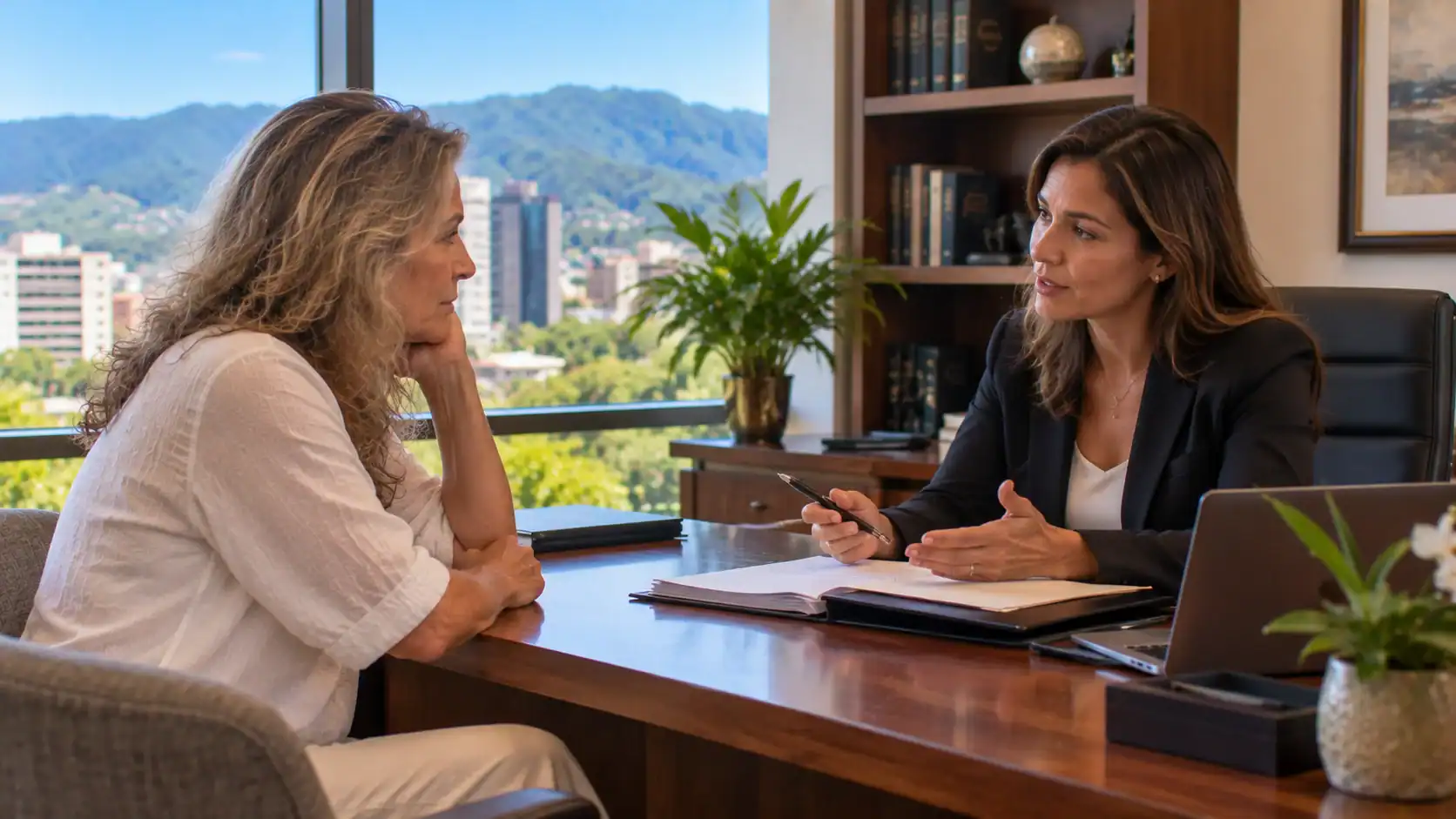
Depict a serene office setting that showcases the essence of Costa Rican residency eligibility requirements, focusing on a professional staff member. The foreground features a Caucasian individual dressed in business casual attire, such as a polo shirt, engaged in a conversation with a client. The middle ground is filled with relevant documents and visuals, displaying the title "Pura Vida Costa Rica" prominently on a brochure that highlights the benefits of residency. In the background, a lush view of Costa Rica's tropical landscapes through a large window adds natural beauty and warmth to the scene. Soft, natural lighting filters through, creating an inviting and hopeful atmosphere, reflecting the journey of securing residency after the loss of a spouse. Capture this moment from an eye-level angle to convey intimacy and professionalism.

To establish your legal status, you must first identify which of the formal residency categories you qualify for based on your income or assets.

Who Qualifies for Residency (Including Pensionado, Rentista, and Inversionista)

The three most common paths are Pensionado, Rentista, and Inversionista. Each has strict financial thresholds.

Pensionado requires proof of a lifetime pension of at least US$1,000 per month. Rentista demands verifiable income of US$2,500 monthly for two years. The Inversionista category needs a minimum investment of US$150,000 in the country.

Critical Financial and Documentation Thresholds

For the investor route, any property must be held in your personal name. It’s a common error to use a corporation.

Note that Digital Nomad status is not a formal residency type. It does not count toward permanent residency. All approved applicants must enroll in the public health care system.

Temporary residency is typically granted for one year initially. After maintaining status for about three years, you may apply for permanent residency.

Step-by-Step Guidance for the Application Process

A serene, professional office setting featuring Caucasian staff in business casual attire, including polo shirts and button-downs, diligently working on the document apostille process for Costa Rica. In the foreground, a well-organized desk displays various documents and a stamp inscribed with "Pura Vida Costa Rica." The middle ground shows two staff members collaborating over a computer, highlighting charts and flowcharts relevant to the steps of the apostille process. In the background, soft natural light enters through large windows, casting a warm, inviting glow throughout the room. This scene conveys a focused, supportive atmosphere, perfectly encapsulating the structured guidance of the document apostille process.

The foundation of a successful application is built long before you submit any paperwork to immigration authorities. We break the procedure into clear, manageable steps starting from your home country.

Preparing and Authenticating Your Documents

Your birth certificate and criminal background check are the foundational papers. If you are from the United States or another Hague Convention country, each requires an apostille stamp.

Nations outside this treaty need consular legalization. Remember, these authenticated documents are only valid for six months. All foreign-language versions must have an official Spanish translation.

Timelines and Starting the Process from Home

Begin this document collection 3 to 4 months before your planned travel. For U.S. citizens, ordering a birth certificate and an FBI background check can take several weeks.

Starting early creates a buffer against delays and prevents major setbacks. Always verify the latest list on the official migration website for absolute certainty.

Costa Rica Residency After the Death of a Costa Rican Spouse

The legal framework for foreign spouses after the passing of their Costa Rican partner is not explicitly detailed in standard guides. This situation requires careful, personalized verification with official sources.

Special Considerations for Widowed Applicants

Typically, marriage to a Costa Rican citizen (matrimonio con ciudadano costarricense) provides a pathway to temporary residency. This status is granted for one year and can be renewed annually.

After maintaining it for about three years, eligibility for permanent residency begins. Your marriage certificate (certificado de matrimonio) and its registration in the Civil Registry are foundational documents for any application.

If this family-based route is impacted, independent categories like Pensionado or Inversionista become crucial alternatives. Same-sex spouses have equal rights under Decree 41329-MGP.

Immigration authorities evaluate these sensitive circumstances individually. We strongly recommend confirming your specific case at migracion.go.cr or seeking expert guidance for clarity.

Common Pitfalls and Mistakes to Avoid

We frequently observe applicants encountering the same preventable setbacks, which cost them significant time and money. Knowing these common errors can streamline your entire process.

Document Expiry and Incomplete Preparations

Your apostilled papers are only valid for six months. If immigration doesn’t review your file before they expire, you must obtain and pay for new ones.

This happened often during COVID delays. Starting your document collection 3-4 months before travel is crucial. For example, getting an FBI background check here through a lawyer costs about $600 and takes three months. Doing it electronically from the U.S. before you leave costs $34 and takes an hour.

Error-Prone Areas During the Application Process

Avoid the “perpetual tourist” strategy of leaving every 90 days. It risks denial of entry, deportation, and a multi-year ban.

Many forget that proof of Caja enrollment is mandatory for final approval. You also need fingerprints from your home country for the criminal history check and another set taken locally.

Official Spanish translations for all foreign documents are required. Arriving first and then trying to manage international bureaucracy from afar is the most error-prone approach. Have everything ready before you travel.

When uncertain, always verify the latest requirements at the official government website. The entire residency process typically takes a year or longer, so patience and complete preparation are key.

Finalizing Your Costa Rica Residency Journey

Finalizing your legal status in this nation marks the end of a detailed administrative journey. With proper preparation and realistic timelines, you can successfully establish your life here.

The key is starting document collection from your home country. Obtaining apostilled papers and background checks beforehand prevents costly delays.

Working with a local attorney is highly recommended. The civil law system here differs from Common Law, making expert guidance essential for navigating regulations.

Once approved, you gain significant benefits. These include the right to work, own a business, and access the national healthcare system.

We provide clear, honest guidance to handle the details. For personalized help, contact us via WhatsApp at +506 8706 3888 or email info@crie.cr.

Always verify the latest official information at migracion.go.cr.

FAQ

What are the main residency categories available to a foreigner after losing their spouse?

The primary paths are Pensionado (retiree), Rentista (person with stable income), and Inversionista (investor). Your eligibility depends on meeting specific financial thresholds, like proving a guaranteed monthly income or making a qualifying investment in the country. We help you identify which category fits your situation best.

How do I start the application process from my home country?

You can begin most of the work abroad. The first step is gathering and authenticating your core documents—birth certificate, marriage certificate, and a criminal history report. These need an apostille and official Spanish translation. We guide you through this preparatory phase to ensure your file is complete before you submit anything locally.

Are there different rules for a widow or widower of a Costa Rican citizen?

Yes, there are special considerations. You may be eligible for a family ties visa, which can streamline your path to permanent residency. The key is providing the official marriage certificate and the death certificate of your spouse, both properly legalized. This process acknowledges your existing connection to the nation.

What is the most common mistake people make with their documents?

A frequent error is submitting documents that are expired or incomplete. Your background check and health documents have strict validity periods—often just six months from issuance. Missing an apostille or a certified translation will cause immediate rejection. We meticulously check these details to prevent costly delays.

How long does it typically take to get approved?

Prepare for a process that takes several months to over a year. Government processing times are variable. The timeline heavily depends on how perfectly your initial application is prepared. Submitting a flawless, complete dossier from the start is the single best way to avoid getting stuck in the immigration system’s backlog.

What happens after my application is approved?

Approval grants you temporary residency status first. You’ll receive a cédula (ID card) and must fulfill annual reporting requirements for a few years. After maintaining this status successfully, you can then apply for permanent residency. We support you through each phase to ensure a smooth finalization of your journey.


Article by Glenn Tellier (Founder of CRIE and Grupo Gap)

Don't wait, contact us right now!
Call or WhatsApp Costa Rica +506 8373 2085 or +506 8706 3888
Call USA/Canada +1 305-906-6784

See If You Qualify For Residency Today!