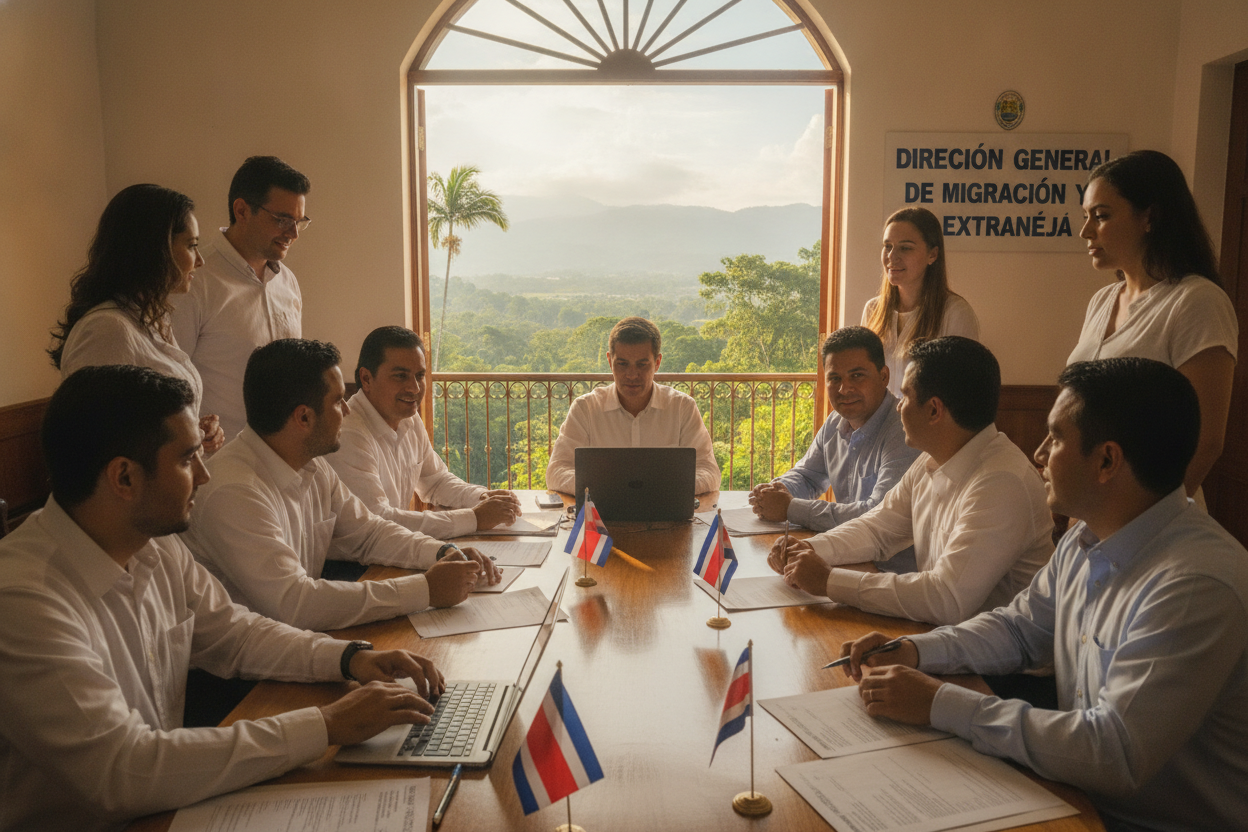
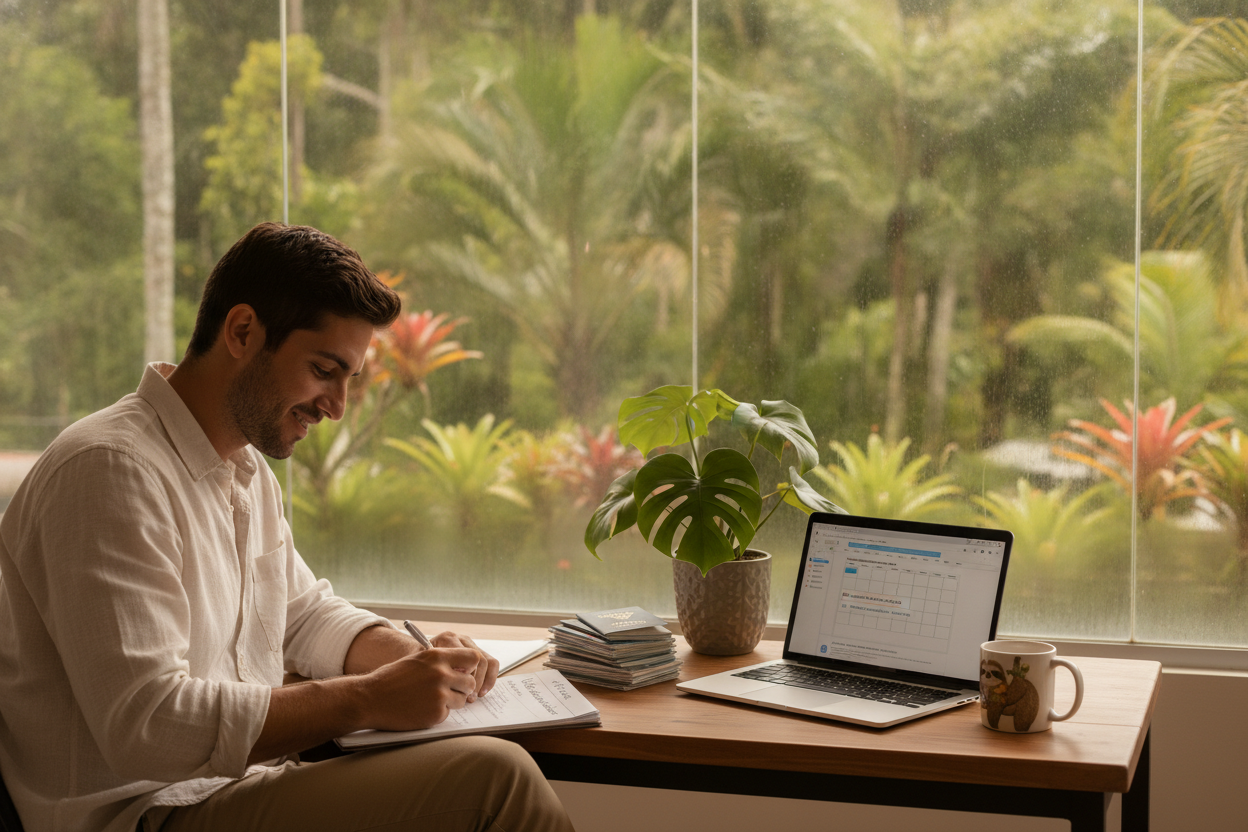
Welcome to the vibrant landscapes of Costa Rica, a country known for its commitment to education and social welfare. This nation ranks as one of the happiest and greenest in the world, making it an ideal place to call home.

Navigating the residency application process can be intricate. Prospective residents must pay close attention to the established immigration laws. Our guide offers a detailed costa rica rentista residency document checklist to simplify your journey toward securing legal status.

Whether you are looking to retire or start a new venture, understanding the specific residency requirements is crucial. We aim to provide clear, factual information that helps you prepare for a smooth transition to life in this tropical paradise.

Understanding Rentista Residency in Costa Rica

In this beautiful land, many find a welcoming community and endless possibilities. The Rentista residency program is designed for individuals who can prove a stable, unearned income. This category is defined under Article 82 of Law 8764, making it an appealing option for many.

To qualify, applicants must demonstrate a consistent income from sources such as mutual funds or bonds. This program also allows individuals to include their spouse and children under 25 in their application. This feature makes it easier for families to settle together in this vibrant country.

Many choose this path because it offers a reliable way to live in Costa Rica without being tied to a local job. Understanding your residency options is essential, as the country provides various pathways for those looking to contribute to the local economy.

Eligibility Criteria and Financial Requirements

Understanding the financial requirements is a key part of securing residency in this enchanting country. For the Rentista program, applicants must demonstrate a stable monthly income of at least $2,500 from non-work sources, such as dividends or rental income. This proof is crucial for your application to be considered.

On the other hand, the Pensionado program has a lower threshold, requiring proof of at least $1,000 per month from a government or business retirement plan. This flexibility makes it accessible for many.

To meet the income requirement, applicants can also make a certified deposit or provide evidence of a structured investment portfolio that yields consistent returns. Additionally, the Inversionista category necessitates a minimum investment of $200,000 in tangible property or projects deemed of national interest.

It is essential to provide notarized and apostilled documentation to prove that your financial resources meet the government’s strict eligibility criteria. For more detailed information on income requirements, check out our proof of income requirements.

costa-rica-rentista-residency-document-checklist

A vibrant Costa Rican workspace featuring a detailed residency document checklist spread across a wooden table. In the foreground, focus on neatly arranged documents including identification paperwork, proof of income, and health insurance forms, accented by a tropical plant and a cup of coffee. In the middle ground, there’s a laptop open to a Costa Rica map, symbolizing exploration and new beginnings. The background consists of a sunny window revealing a lush green garden, typical of Costa Rica's natural beauty. The scene is illuminated by warm, natural light, creating a welcoming and professional atmosphere. The mood is focused and motivational, encouraging viewers to embark on their residency journey.

When embarking on your journey to residency, having the right paperwork is essential. This checklist will help you gather all necessary items to support your application. Essential documents include your birth certificate and a criminal background check.

To avoid delays, start the application process early. FBI criminal background checks can take up to sixteen weeks, so it’s wise to plan ahead. Additionally, all foreign documents must be issued within the last six months to be valid.

Every document must be apostilled in your country of origin and translated into Spanish by a certified translator. We emphasize that the application process only begins once all required documents are submitted. Therefore, accuracy is critical for your success.

Proper timing is also crucial. Many documents, such as police records, are only valid for six months from their issue date. Keeping these details in mind will streamline your application process.

Key Supporting Documents and Their Importance

Gathering the right documents is crucial for a successful residency application. These papers establish your identity and family relationships, ensuring a smooth process.

Birth Certificates, Marriage Licenses, and Criminal Background Checks

You must provide an official copy of your birth certificate for yourself and any dependents. This document is essential for verifying your identity.

If your spouse is also applying, a marriage license is required. This document must be apostilled and translated for the immigration office.

Additionally, passport photos are necessary for the application and fingerprinting process. Ensure that your passport is copied in its entirety, including every blank page, and notarized.

Other Vital Financial and Identity Papers

Providing a certified letter from your embassy confirming your consular registration is another vital step. This helps prove your identity and legal standing.

These identity papers form the foundation of your application. They ensure that the government can verify your background and eligibility for residency.

Apostille, Certification, and Translation Essentials

Ensuring your documents are correctly apostilled and translated is a fundamental part of your residency application. The apostille process acts as a super notary, validating your documents for use in a foreign country. It confirms the authenticity of the signature on your documents.

If your document was issued in the United States, you must take it to the Secretary of State in the state where it was originally created. This step is crucial for the validity of your documents in the immigration system.

We advise against using non-certified translators. The immigration system strictly requires translations from a court-approved professional to ensure legal accuracy. Consular legalization may also be necessary for documents from countries not part of the Hague Convention.

Ensuring that every document is correctly apostilled and translated is essential. This fundamental step prevents your application from being rejected by the authorities.

Preparing Your Bank and Financial Documents

A neatly arranged desk scene featuring a collection of bank and financial documents crucial for a residency application in Costa Rica. In the foreground, focus on a stack of official bank statements, a detailed income report, and a certificate of financial stability, all stacked beside a pen and an open notebook. In the middle ground, a laptop displays a colorful Costa Rican flag wallpaper, hinting at the location's atmosphere, alongside a coffee cup emitting steam. The background showcases a sunny window with lush greenery visible outside, bathing the scene in natural light. The mood is calm and professional, suggesting organization and clarity, with an inviting workspace feel. No text or human subjects are included.

Preparing your financial documents is a vital step in the residency application process. It ensures that you meet the required income thresholds set by the government.

First, you must secure an official letter from your bank. This letter should confirm that you will receive a stable monthly income of at least $2,500. If you opt for the traditional method, you may need to deposit $60,000 into a local bank. This deposit will cover the required income for two years.

Additionally, we assist you in documenting your passive income, such as dividends or interest. This documentation is crucial to meet the government’s strict financial thresholds for residency.

It’s important to note that salary or employment income is not accepted. The Rentista category is strictly for unearned, permanent, and stable funds. Proper financial documentation provides the government with the assurance that you can sustain your lifestyle without needing to work in the local economy.

Coordinating with Immigration Experts and CRIE

Navigating the intricacies of residency applications can be daunting for many newcomers. This is where CRIE comes into play. For over 20 years, we have assisted individuals and families in obtaining legal residency in Costa Rica.

Our role is to act as your primary point of contact. We coordinate with notaries, translators, and government offices to ensure your residency application is handled professionally. Our experienced team understands the nuances of the immigration system.

By providing clear and practical guidance, we help you avoid common pitfalls that could delay your approval or lead to a rejection. Whether you are starting a business or planning to retire, our expertise ensures that your transition to Costa Rica is as smooth and efficient as possible.

Understanding CAJA and Social Security Contributions

Understanding the role of social security in Costa Rica is essential for all new residents. As part of the residency process, we must enroll in the Caja Costarricense de Seguro Social (CCSS). This system provides essential medical benefits and social security coverage.

All legal residents are required to participate in this national program. Your monthly contribution is based on a percentage of your declared income. During an interview, we will determine the exact amount you need to contribute.

We help you calculate these payments, which typically start at a base level for those with standard income. Enrollment in the social security plan is mandatory to maintain residency status.

By contributing to the social security system, we gain access to Costa Rica’s national healthcare network. This access is a significant benefit for anyone living in this beautiful country.

The Transition from Temporary to Permanent Residency

Transitioning from temporary to permanent residency can be a pivotal moment in your journey. After maintaining your temporary residency for at least three years, you become eligible to apply for permanent residency status in Costa Rica.

It is crucial to maintain your status by renewing your residency annually. Failing to do so can result in losing your legal standing. While waiting for your residency approval, you can generally remain in the country, provided your initial visa status is managed correctly.

We advise against relying on perpetual tourism. The government enforces strict penalties and travel bans for those who overstay their 90-day tourist visa. Upgrading to permanent residency is a significant milestone that offers more freedom and stability for those who have committed to living in the country.

Strategies for a Smooth Application Process

A well-organized approach can significantly enhance your residency application experience. The residency process can take between 6 to 12 months, depending on the volume of applications and the accuracy of your documents.

We recommend starting your document preparation at least 6 months before you plan to file your application. This ensures everything is perfectly in order. Avoiding common pitfalls, such as submitting incomplete files, is crucial. The immigration authority only processes applications once all requirements are fully met.

Planning your move carefully is essential. Requesting documents from your home country while already in Costa Rica can cause significant delays of several months. Keeping a detailed timeline of your document expiration dates will help ensure that your police records and other papers remain valid during the process.

By following these best practices, you can significantly increase the likelihood of a timely approval and enjoy a stress-free transition to your new home.

Final Thoughts and Next Steps with CRIE

As you embark on this exciting journey, understanding the next steps in your residency application is vital. We hope this guide has provided the clarity you need to begin your path toward obtaining residency in this beautiful country.

Every residency case is unique, depending on your nationality, family situation, and immigration history. This is why personalized guidance is so important. For detailed pricing and to discuss your next steps, please reach out to Johanna Alvarez, our CRIE immigration expert.

You can contact Johanna via WhatsApp at +506 8706 3888, by email at info@crie.cr, or by visiting our website at crie.cr for more information. We look forward to helping you navigate the immigration process and welcoming you to your new life in Costa Rica with confidence and peace of mind.

FAQ

What is Rentista Residency?

Rentista Residency is a type of visa in Costa Rica designed for individuals who can demonstrate a stable monthly income. This residency allows foreigners to live in the country without needing to work locally.

What are the financial requirements for Rentista Residency?

To qualify, applicants must prove a consistent income of at least ,500 per month for a minimum of two years. This income can come from various sources, such as investments or pensions.

How do we prove our income for the application?

Applicants can provide bank statements, official letters from financial institutions, or other documentation that verifies their income sources. It’s crucial to ensure that these documents are clear and properly formatted.

What essential documents do we need for the application?

Key documents include a valid passport, birth certificate, proof of income, and any marriage licenses if applicable. Each document must meet specific requirements for submission.

How do we ensure our documents are properly certified?

We need to apostille our documents in our home country and, if necessary, obtain official translations to ensure they meet Costa Rican standards.

What role does CAJA play in the residency process?

CAJA is the Costa Rican social security system. Once we obtain residency, we must enroll in CAJA to access healthcare services and fulfill our legal obligations.

How can we transition from temporary to permanent residency?

After holding temporary residency for a minimum of three years, we can apply for permanent residency. It’s important to maintain our residency status and meet all requirements during this period.

What are some common pitfalls to avoid during the application process?

Common pitfalls include incomplete documentation, missing deadlines, and failing to provide clear proof of income. We should double-check our applications and consult with experts if needed.

How can we streamline our application process?

Working with immigration experts can help us navigate the complexities of the application process. They can provide guidance on required documents and best practices for a successful application.

Article by Glenn Tellier (Founder of CRIE and Grupo Gap)

Don't wait, contact us right now!
Call or WhatsApp Costa Rica +506 8373 2085 or +506 8706 3888
Call USA/Canada +1 305-906-6784

See If You Qualify For Residency Today!