
Looking for a public swimming pool in Costa Rica? First decide whether you want a family day out, swimming lessons or lanes for exercise. A recreation centre, a sports pool and a hotel day pass can offer very different facilities.
Public access does not necessarily mean free entry or municipal ownership. Confirm the operator’s current opening arrangements before travelling. Source review: September 7, 2026.
Balnearios and recreational swimming
You will encounter the word balneario when looking for swimming and recreation venues. Check what a particular site offers rather than assuming the term guarantees hot water, a natural spring, swimming lanes or a lifeguard.
For a family visit, ask about pool depths, shaded areas, changing rooms, accessibility and food rules. Find out which pools are actually open and whether an event or maintenance work will restrict access.
Ojo de Agua in Belén
Ojo de Agua is a longstanding recreation venue in Belén. The municipality’s description identifies a water supply from the Barva aquifer and describes four pools. That background is useful, but it is not a current inspection report or confirmation that every facility is operating today.
Contact the venue before a visit to confirm admission, hours, available pools and any closures. Older descriptions of its history or management should not be treated as a current booking notice.
A natural water source does not make swimming-pool water drinking water. Do not swallow pool water, and do not assume that flowing or clear water is free of health risks.
Find a pool for lap swimming or lessons
If exercise is your priority, ask the local sports committee, swimming school or pool operator about scheduled public sessions. Confirm the lane length, booking rules, lesson times and whether recreational swimmers share the lanes.
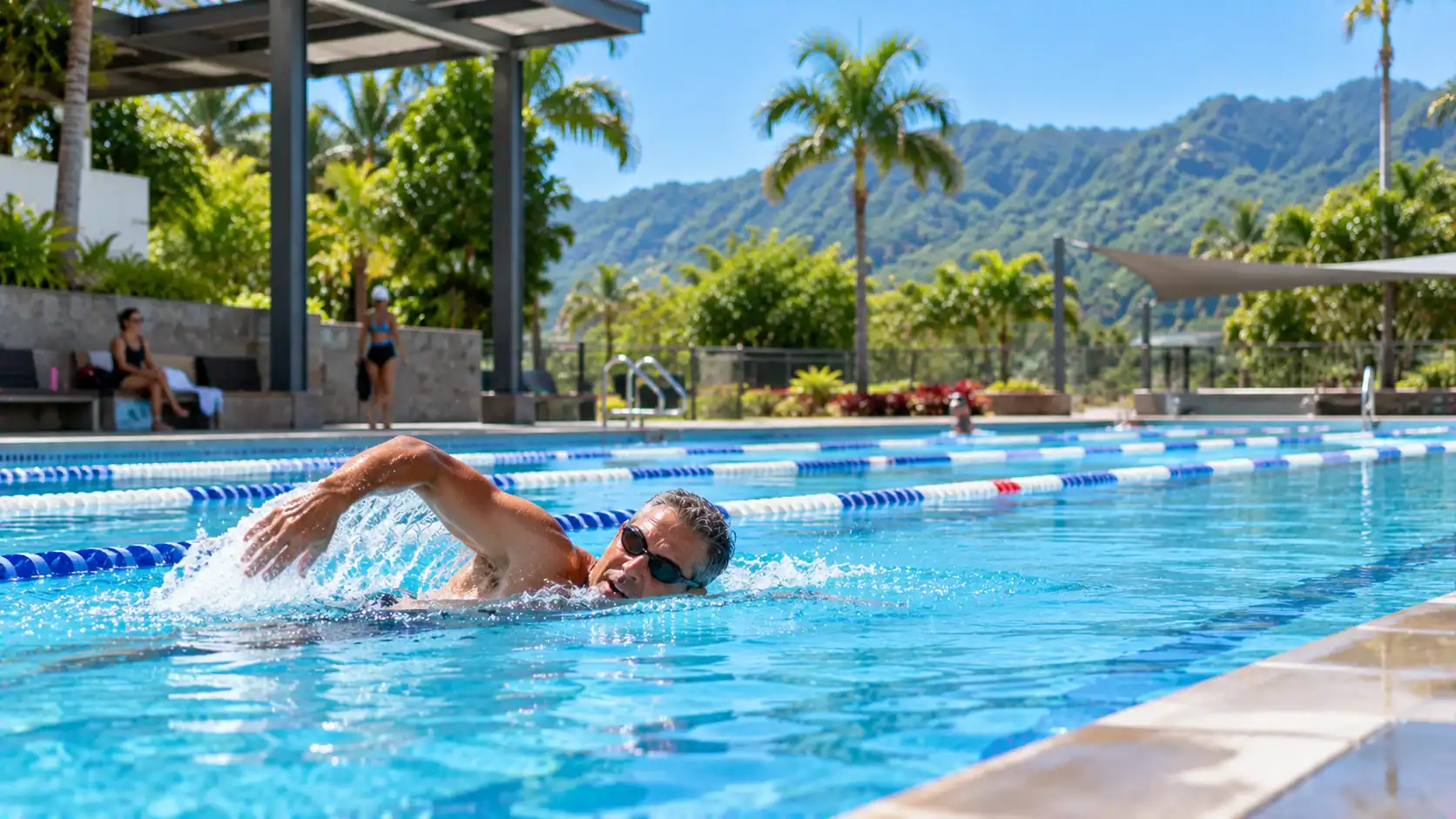
Ask whether you need to register, bring identification or buy a session pass. Check requirements for swimming caps and equipment, and find out whether coaching is included or booked separately.
A beach or river is not an equivalent substitute for a supervised pool workout. Currents, changing weather and unfamiliar depth create different risks. For coastal outings, read our rip-current safety guide.
Hotel pools and hot-spring day passes
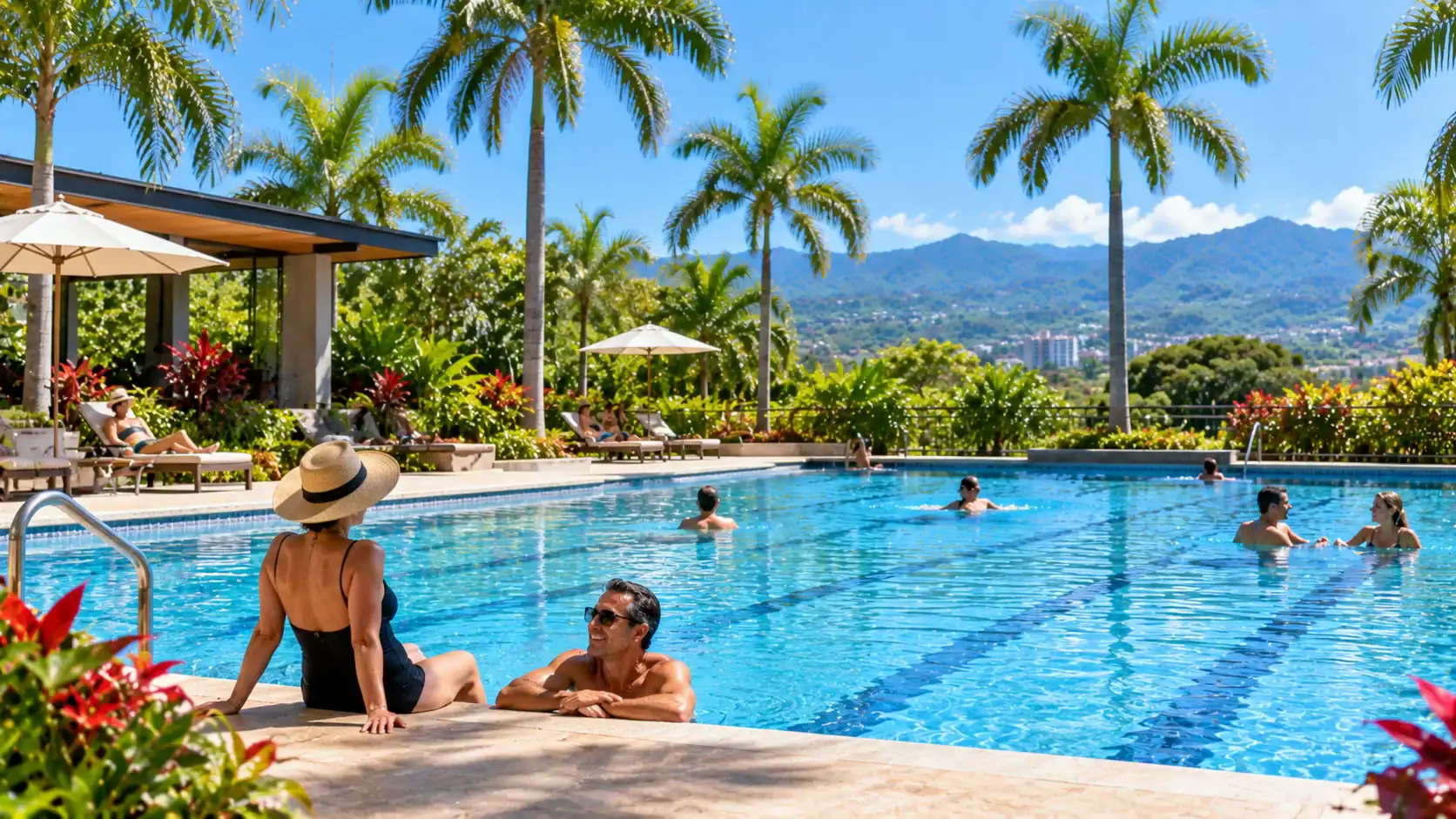
For a hotel or private recreation venue, confirm that day visitors are accepted on your chosen date. Ask which facilities the pass includes, whether meals are included, and whether advance payment is refundable.
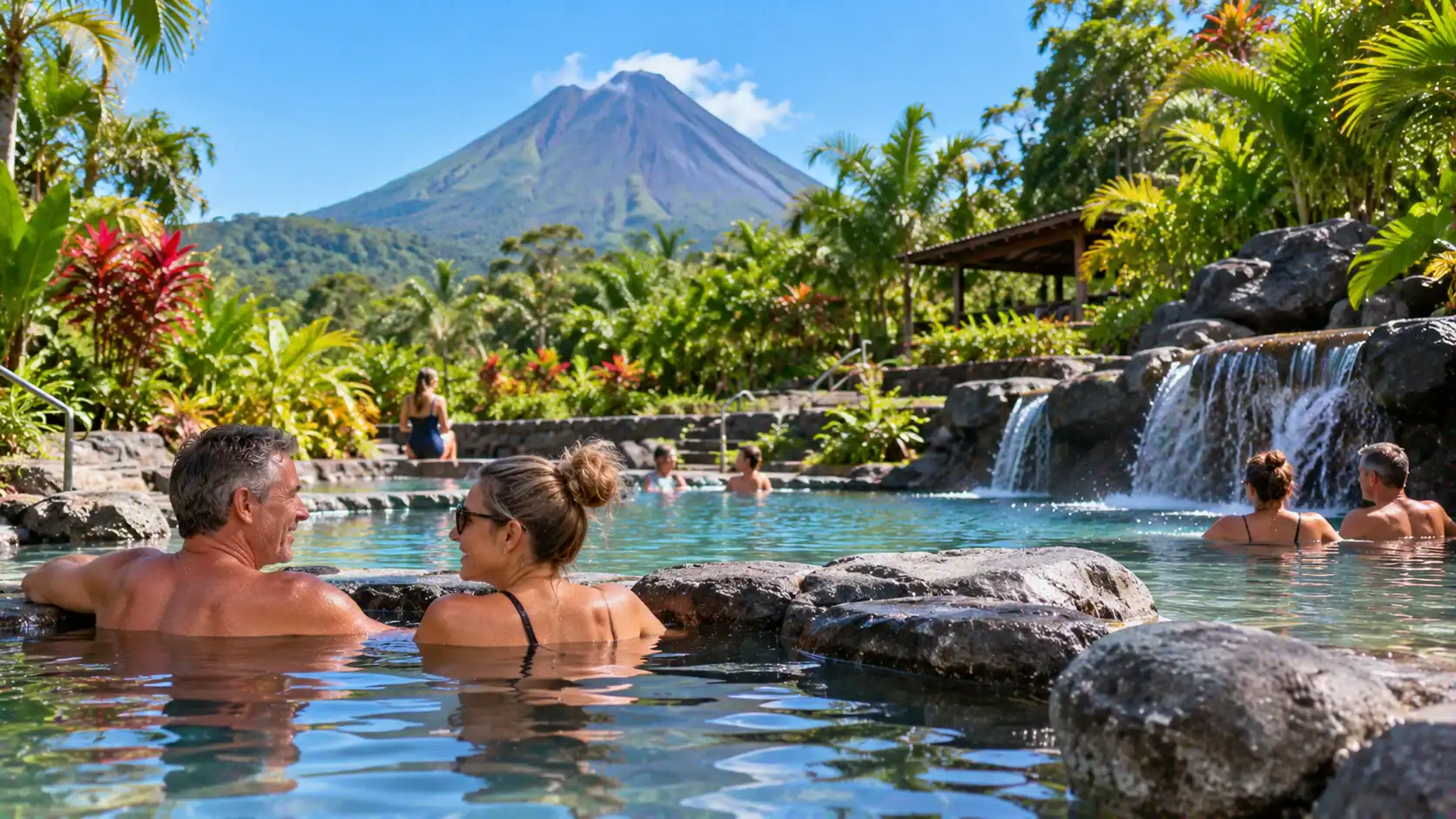
Natural thermal pools require particular care. Costa Rica’s Ministry of Health has addressed risks and precautions around natural thermal water. Follow current posted warnings and operator instructions; a scenic setting does not establish water safety.
What to bring and check on arrival
Bring swimwear, a towel, sun protection and drinking water in a container the venue permits. Check locker arrangements and avoid leaving valuables unattended. Ask about accessibility before booking if you need step-free access or assistance entering the water.
On arrival, locate depth markings, emergency equipment and staff. Follow no-diving signs and other posted restrictions. Leave the water when staff direct you to do so.
Healthy swimming and child supervision
The CDC’s pool guidance recommends showering before entering, not swallowing the water and staying out when you have diarrhoea. These are health precautions, not claims that a particular Costa Rican venue has failed an inspection.
Keep children under close, continuous adult supervision, including when a lifeguard is present. Swimming lessons do not remove that need. See the CDC’s drowning-prevention guidance for more information.
For an emergency in Costa Rica, call 9-1-1. Save the venue’s exact location and our emergency contacts guide before an outing.
The illustrations show general pool activities and equipment; they are not photographs of Ojo de Agua or another named facility.