
If you are looking for an English-speaking church in Costa Rica, start with a congregation’s own website and contact it before your first visit. Confirm the service language, location and current schedule rather than relying on an old directory.
The examples below are starting points, not an exhaustive list or an endorsement of a particular faith community. Source review: September 7, 2026.
Two English-speaking congregations to explore
English Christian Fellowship describes itself as a church for the English-speaking community in Santa Ana. Its website provides information about its beliefs and activities. Ask directly about the service you intend to attend.
International Baptist Church Costa Rica identifies itself as an English-speaking church and publishes congregation information online. Check the campus and date carefully: announcements may refer to different locations or past events.
Before travelling, confirm the address with the congregation and ask whether any special event changes the usual arrangements. A page containing a January notice may still be useful for contacts without being a reliable September schedule.
Finding a congregation in another town
Search by town and denomination, then use the congregation’s own contact details to confirm what is offered. A regional denominational office may help you locate a nearby community.
Ask whether the service is entirely in English, bilingual or in Spanish with interpretation. Those experiences can differ substantially. If looking for an English-language Catholic Mass, ask the parish or diocese about the specific date.
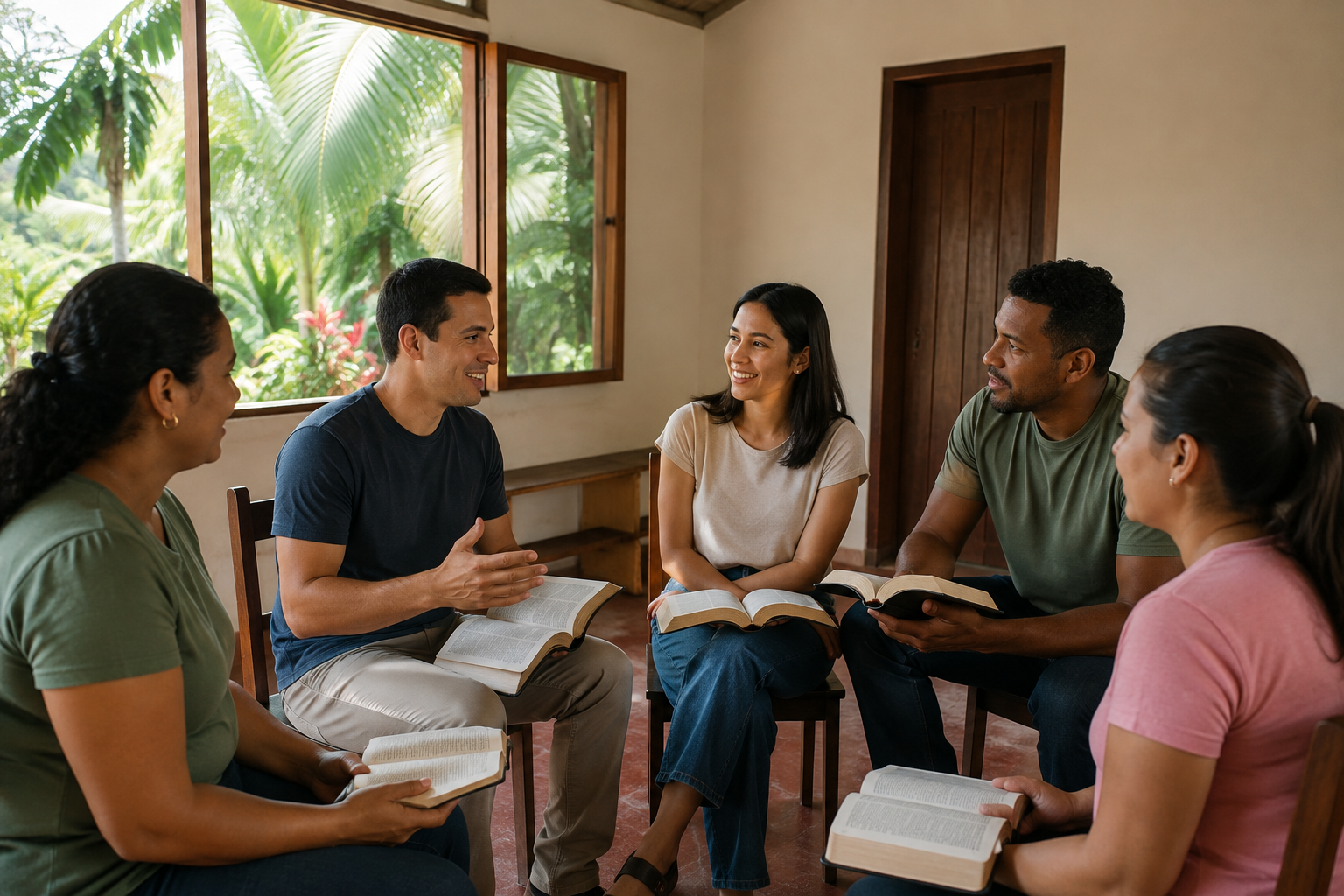
Non-denominational churches in Costa Rica
Activation Church describes itself as a non-denominational Christian church in Guanacaste. Hope Fellowship identifies itself as non-denominational and based in Playas del Coco. In Uvita, Iglesia de la Costa describes its community as evangelical, bilingual, charismatic and non-denominational.
These descriptions come from each congregation’s own site. They do not imply identical beliefs, worship styles or visitor arrangements. Read the statement of faith and ask about the current meeting location, language and children’s activities before going. Confirm schedules directly rather than assuming an old sermon or event notice is current.
Finding other religious communities
Costa Rica’s faith communities extend beyond the English-speaking churches listed here. The Ministry of Foreign Affairs and Worship maintains an official Register of Religious Entities, searchable by name. This is a registration resource, not a complete worship calendar or a recommendation of a group.
For a denominational contact, the Costa Rican Episcopal Church’s congregation directory provides its own community listings. Confirm the language and arrangements of the individual congregation; belonging to an international denomination does not establish that every service is in English.
For Jewish community enquiries, consult the Centro Israelita Sionista de Costa Rica’s visitor information. It describes membership, invitation or verified-reference conditions for attending prayers and an advance application process. Do not arrive expecting unrestricted entry. Its community museum has a separate reservation procedure.
For another tradition, use the official register and the community’s own contact channel to establish the correct organization and current arrangements. Ask about language, participation, accessibility, visitor registration and any appropriate dress or photography rules. A cultural visit, public event and worship service may have different requirements.
Additional congregation and government-directory sources checked on 8 September 2026. This is a practical starting guide, not a complete list of Costa Rica’s religions or places of worship.
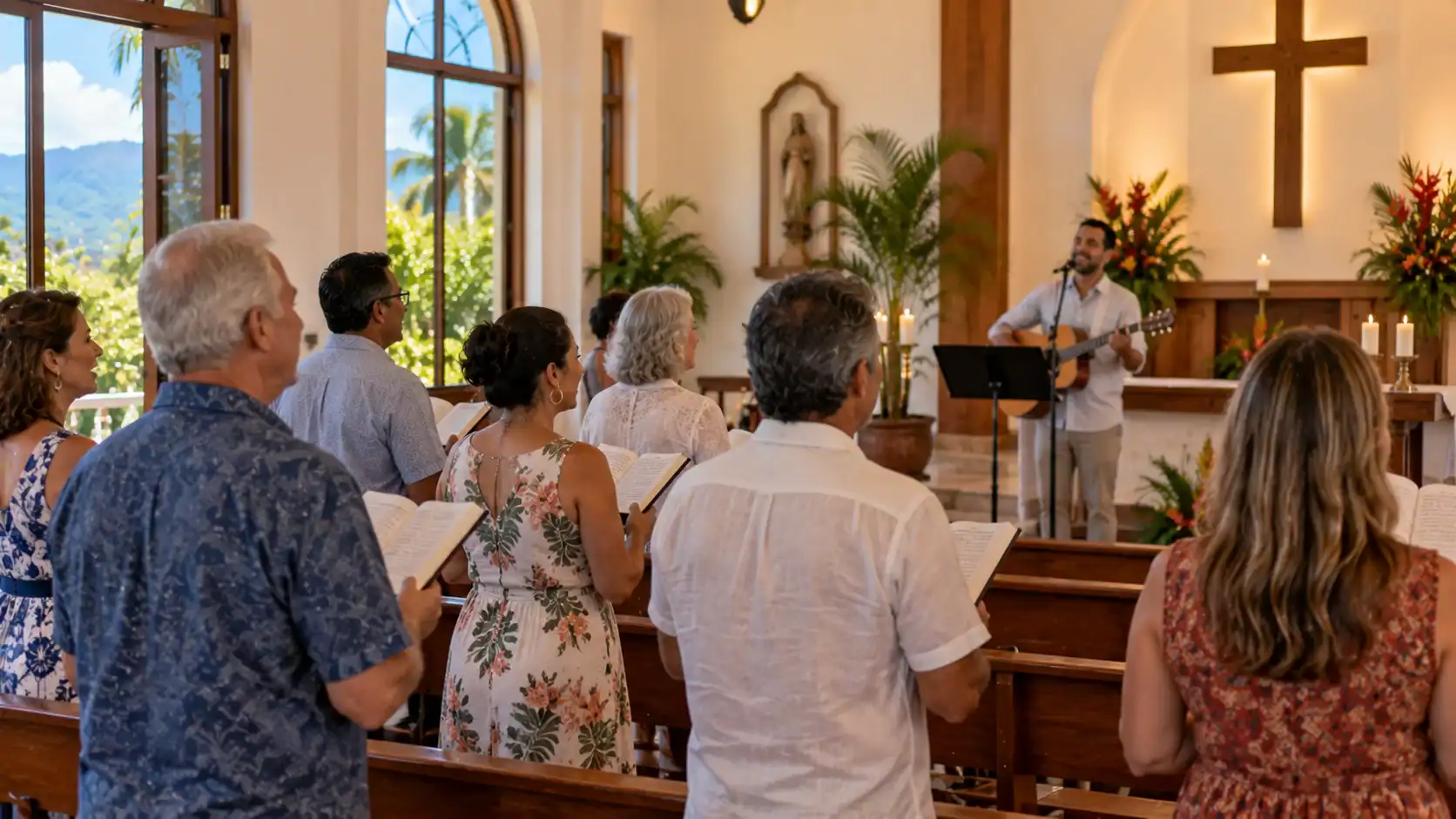
Questions for a first visit
- What is the current service time and exact location?
- Is interpretation available, and does it need arranging?
- What children’s activities are offered, and what safeguarding arrangements apply?
- Is the venue accessible for your needs?
- How long does the service usually last?
- Are there small groups or newcomer gatherings you can visit?
Check the community’s beliefs and approach as well as practical convenience. You should feel free to ask questions, visit without committing to membership and decide whether the congregation suits you.
Religion in Costa Rican public life
Article 75 of the Constitution establishes Roman Catholicism as the state religion and addresses the free exercise of other faiths. This legal framework does not mean every resident shares the same beliefs.
Religious traditions can influence public celebrations and calendars. See our guide to Virgen de los Ángeles Day for the August 2 observance.
English, Spanish or both
Choose a service language that lets you participate comfortably. Some newcomers prefer English, some want Spanish and others attend both. Neither choice determines how well someone belongs in a community.
If attending an unfamiliar service, ask about its customs and follow the community’s guidance on participation and photographs. Be considerate of worshippers who have come for prayer rather than conversation practice.
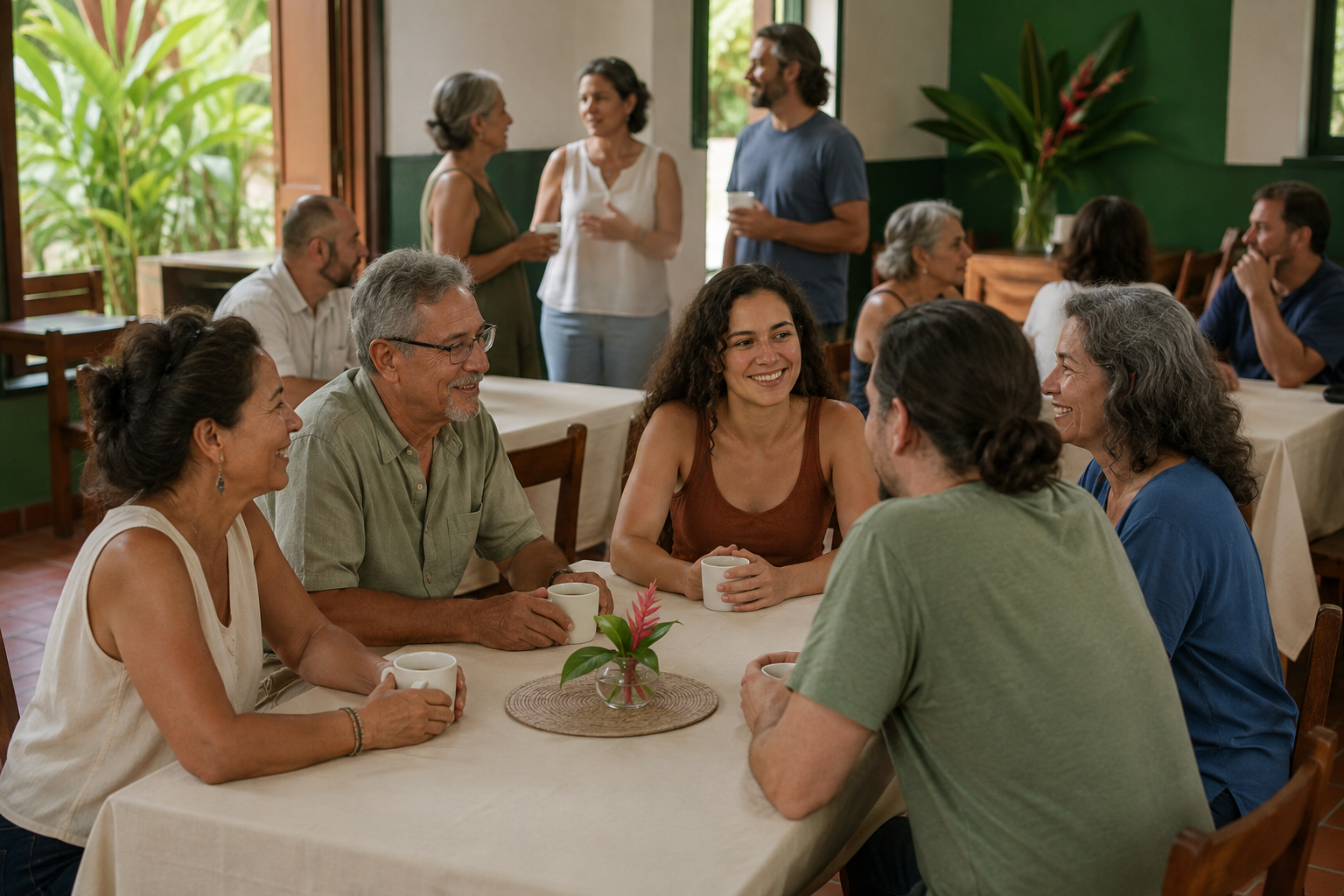
Building connections over time
Small groups, volunteering and community activities may offer opportunities to meet people, but check expectations and commitments before joining. Respect privacy when exchanging contact details or sharing photographs.
For other ways to explore local life, see our etiquette guide. For immigration planning, contact CRIE.
Illustrations depict general worship and community scenes, not the congregations named above.