
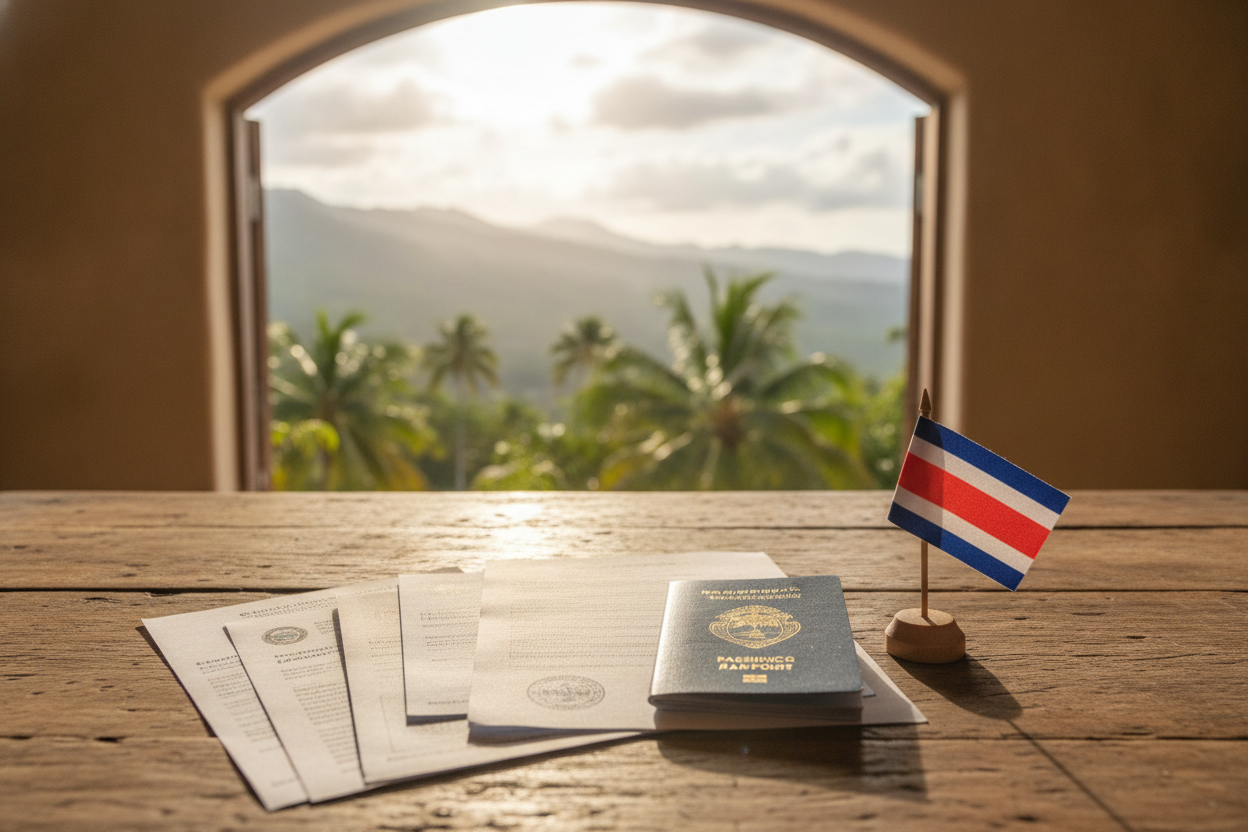
Are you considering a move to a vibrant and welcoming country? Our guide on the pensionado residency can help you navigate the essential steps. For over 20 years, we at CRIE have assisted individuals and families in successfully managing their residency applications.
The pensionado program is an attractive option for retirees, requiring proof of a guaranteed monthly income of at least $1,000. Understanding the specific requirements is crucial for a smooth transition into your new life abroad. This process can be complex, but with our guidance, you can ensure that your application remains compliant with local regulations.
We aim to provide clear and practical information, allowing you to prepare effectively for your move. By following our document checklist, you can simplify the often daunting task of gathering necessary legal documentation.
Understanding the Costa Rica Pensionado Residency Program
Are you ready to embrace a new lifestyle in a vibrant and picturesque setting? The Pensionado residency program is an excellent opportunity for retirees seeking a fresh start. This program is specifically designed for foreign nationals who receive a guaranteed lifetime pension.
Under Law 9996, which took effect in 2021, qualifying retirees can access various financial benefits and tax incentives while living here. To be eligible for this residency status, applicants must demonstrate a stable monthly income that meets the government’s established threshold.
This residency category is perfect for those who wish to settle in this beautiful country long-term and enjoy its high quality of life. After maintaining this temporary status for three years, residents may become eligible to apply for permanent residency.
Essential Income Requirements and Documentation
A successful move to a tropical haven hinges on proving your financial stability. For those seeking pensionado residency, understanding the income requirements is crucial. Applicants must demonstrate a guaranteed pension income of at least $1,000 per month.
According to Article 81 of Law 8764, this proof must come from a government agency or a recognized retirement plan. It’s essential that this income is verified as a lifetime guarantee. This ensures you can support yourself while living in this beautiful country.
To strengthen your application, regular deposits into a local bank account can show financial stability. Here are key points to remember:
- Provide official proof of guaranteed pension income of at least $1,000 per month.
- Documentation must be issued within the last 6 months to be valid.
- Ensure your pension income is well-documented, showing payment frequency and lifetime guarantee.
- Bank statements should reflect the required monthly deposits to avoid delays.
costa-rica-pensionado-residency-document-checklist

To ensure a smooth relocation, it’s vital to familiarize yourself with the required documents. The checklist for residency includes several essential items, such as your official birth certificate and marriage certificate. These documents are crucial for your application process.
Every foreign document must be authenticated with an apostille from the country of origin. This authentication is necessary for legal recognition by the immigration authorities in Costa Rica. Additionally, any document not originally written in Spanish must be translated by a court-approved translator.
It’s important to remember that failure to provide a properly apostilled document can significantly delay your residency application. We also emphasize the need to verify that every certificate is current and meets the specific formatting requirements set by the Costa Rican government.
Step-by-Step Application Process for Residency
Embarking on your residency journey in this beautiful country requires careful planning. The application process involves submitting a comprehensive package to the Dirección General de Migración y Extranjería.
First, gather all required documents, including your valid passport and official birth certificate. Your passport must have at least six months of remaining validity to meet standard requirements.
Once your documents are organized, you will submit your residency application. Additionally, fingerprinting is required at the Ministry of Public Security as part of the residency process.
Finally, remember that an application fee of $250 USD must be paid during the submission phase. Every certificate and document should be carefully reviewed to ensure consistency before you officially submit your application for residency.
CAJA Enrollment and Social Security Requirements
Navigating the requirements for residency in a new country can be a complex process. One key aspect is enrolling in the Caja Costarricense de Seguro Social (CCSS) after your residency is approved. This enrollment is essential for accessing public healthcare benefits in the country.
Your monthly contributions to the CAJA system will be based on the income you declared during your residency application. Once you become a legal resident, you will receive your DIMEX card, which serves as your primary identification in Costa Rica.
To maintain your residency status, it’s crucial to spend at least one day per year within the country’s borders. We recommend staying current with your CAJA payments to ensure you continue receiving the full benefits of being a resident.
- Enroll in the CAJA system after residency approval to access healthcare benefits.
- Monthly contributions are based on your declared income.
- The DIMEX card is your official residency identification.
- Spend at least one day per year in Costa Rica to maintain residency status.
- Keep up with CAJA payments for uninterrupted benefits.
Navigating Legal Practices and Immigration Procedures
Understanding the legal landscape of immigration in a new country can be challenging. The residency application process in Costa Rica is managed by the Dirección General de Migración y Extranjería. This agency oversees all aspects of immigration and residency, ensuring compliance with local laws.
Many applicants face delays due to common pitfalls. Submitting expired criminal background checks or using unofficial translations can hinder your progress. It’s crucial to manage your documents carefully throughout the application process.
To avoid these setbacks, we recommend working with experienced professionals. They can help ensure your documents meet all legal requirements. By doing so, you can streamline your application and focus on your upcoming move.
- Familiarize yourself with the legal requirements for your residency application.
- Check all documents for expiration dates and apostille certification.
- Understand that any errors in your application can lead to significant delays.
- Consider professional assistance to navigate the complexities of immigration.
- Stay compliant with immigration laws while your application is processed.
Supplementary Documentation for Family Members
If you plan to relocate with your family, certain documents are essential for a smooth application. When applying for residency, you must include a valid marriage certificate if your spouse is also applying. Additionally, a birth certificate is necessary for any dependents included in your application.
Each family member must provide apostilled documents to prove their relationship to the primary applicant. This ensures that the immigration authorities recognize your family ties. Remember, the residency application for a spouse or child must be submitted alongside the primary applicant’s file.
All family documents must be translated into Spanish to be accepted by the immigration authorities. Here are key points to keep in mind:
- Include a valid marriage certificate and birth certificates for each dependent.
- Ensure each document is apostilled in the country of origin.
- We assist families in organizing these supplementary documents for a seamless process.
- A clear marriage certificate is vital for proving your relationship status.
- All birth certificates must be properly translated and authenticated.
Comparing Pensionado with Other Residency Options
Exploring various residency options can lead to a more informed decision about your future. While the pensionado program is popular, other residency categories may suit different financial situations in Costa Rica.
The Rentista category requires a stable income of $2,500 per month for two years. This option may appeal to those who do not have a pension but possess sufficient savings.
On the other hand, the Inversionista category requires a minimum investment of $150,000 to $200,000 in Costa Rica. This route is ideal for individuals looking to start a business or invest in property.
Additionally, the Digital Nomad visa, approved in 2021, offers a flexible alternative for remote workers wishing to live in Costa Rica for several months or years.
Each residency status has unique requirements. You must maintain your eligibility for at least three years before applying for permanent status. We help clients compare these options to determine which residency path best aligns with their long-term goals.
Financial Planning and Annual Renewal Costs
Planning your finances is essential for a successful residency experience. Understanding the various costs involved will help you manage your budget effectively. The government application fee for residency is $250 USD. This is a one-time cost that you will need to pay when submitting your application.
Once your residency is approved, you will also need to consider the annual renewal costs for your DIMEX card. These fees range from $35 to $125, depending on your residency status. It’s important to budget for these expenses each year.
To maintain your Pensionado status, you must prove a pension income of at least $1,000 per month. This ongoing requirement ensures that you can support yourself while living in the country. Additionally, you should factor in monthly CAJA contributions and potential attorney fees for the renewal process.
We advise clients to set aside funds for these recurring expenses, which are typically paid every month or upon the annual renewal of their card. By understanding these costs, you can ensure that your residency application and subsequent renewals proceed smoothly without any financial surprises.
Life in Costa Rica with Pensionado Residency
Embracing a new chapter in life amidst stunning landscapes can greatly enhance your retirement experience. Living in this beautiful country offers numerous benefits, including access to local healthcare and the chance to enjoy a peaceful lifestyle.
As a resident, you can open bank accounts and access various local services throughout Costa Rica. Many retirees find joy in the natural beauty and welcoming culture that the country provides. You must spend at least one day per year in Costa Rica to keep your residency active.
To ease your transition, professional assistance with language and immigration requirements can be invaluable. Here are some key benefits of being a resident:
- Your residency status allows you to integrate into the local community seamlessly.
- Whether you are here for a few months or many years, the residency program provides a stable foundation for your new lifestyle.
- We recommend working with a professional translator or immigration expert to manage ongoing residency requirements.
- As a resident, you can travel freely with your passport, as long as you return to Costa Rica for at least one day each year.
Next Steps and Personalized Immigration Guidance
Starting your journey towards residency can feel overwhelming, but we are here to help. If you are ready to begin your application, ensure you meet the income requirement of at least $1,000 per month.
We recommend contacting Johanna Alvarez, our immigration expert at CRIE, to discuss your specific situation and the next steps for your application. Our team is dedicated to helping you navigate the requirements of the Dirección General de Migración y Extranjería.
For personalized guidance on your move, please reach out via WhatsApp at +506 8706 3888 or email us at info@crie.cr. You can also visit our website at crie.cr to learn more about how we assist clients with their residency and immigration needs.
FAQ
What is the minimum income requirement for Pensionado residency?
What is the minimum income requirement for Pensionado residency?
FAQ
What is the minimum income requirement for Pensionado residency?
To qualify for Pensionado residency, we must demonstrate a minimum pension income of at least
FAQ
What is the minimum income requirement for Pensionado residency?
To qualify for Pensionado residency, we must demonstrate a minimum pension income of at least $1,000 per month.
What documents do we need to submit with our application?
Our application must include a valid passport, birth certificate, proof of pension income, and any necessary translations or apostilles.
How long does the application process take?
The processing time for residency applications can vary, but it typically takes several months to receive approval from the immigration authorities.
Are there any additional requirements for family members?
Yes, family members applying with us will need to provide their own birth certificates and marriage certificates, if applicable.
Do we need to enroll in CAJA for health coverage?
Yes, once we obtain residency, we are required to enroll in CAJA, which is the Costa Rican social security system, to access healthcare services.
Can we work while holding Pensionado residency?
No, Pensionado residency does not allow us to work in Costa Rica; it is strictly for retirees with a guaranteed income.
What happens if we want to renew our residency?
We must renew our residency every three years, which involves submitting updated documentation and proof of continued pension income.
How does Pensionado residency compare to other residency options?
Pensionado residency differs from other categories like Rentista or Inversionista, primarily in the income source and work restrictions.
What are the financial implications of living in Costa Rica?
We should consider application fees, ongoing expenses, and the cost of living when planning our financial future in Costa Rica.
What lifestyle benefits can we expect with Pensionado residency?
With this residency, we can enjoy a relaxed lifestyle, beautiful scenery, and access to a vibrant expat community in Costa Rica.
,000 per month.
What documents do we need to submit with our application?
Our application must include a valid passport, birth certificate, proof of pension income, and any necessary translations or apostilles.
How long does the application process take?
The processing time for residency applications can vary, but it typically takes several months to receive approval from the immigration authorities.
Are there any additional requirements for family members?
Yes, family members applying with us will need to provide their own birth certificates and marriage certificates, if applicable.
Do we need to enroll in CAJA for health coverage?
Yes, once we obtain residency, we are required to enroll in CAJA, which is the Costa Rican social security system, to access healthcare services.
Can we work while holding Pensionado residency?
No, Pensionado residency does not allow us to work in Costa Rica; it is strictly for retirees with a guaranteed income.
What happens if we want to renew our residency?
We must renew our residency every three years, which involves submitting updated documentation and proof of continued pension income.
How does Pensionado residency compare to other residency options?
Pensionado residency differs from other categories like Rentista or Inversionista, primarily in the income source and work restrictions.
What are the financial implications of living in Costa Rica?
We should consider application fees, ongoing expenses, and the cost of living when planning our financial future in Costa Rica.
What lifestyle benefits can we expect with Pensionado residency?
With this residency, we can enjoy a relaxed lifestyle, beautiful scenery, and access to a vibrant expat community in Costa Rica.
What documents do we need to submit with our application?
How long does the application process take?
Are there any additional requirements for family members?
Do we need to enroll in CAJA for health coverage?
Can we work while holding Pensionado residency?
What happens if we want to renew our residency?
How does Pensionado residency compare to other residency options?
What are the financial implications of living in Costa Rica?
What lifestyle benefits can we expect with Pensionado residency?
What documents do we need to submit with our application?
How long does the application process take?
Are there any additional requirements for family members?
Do we need to enroll in CAJA for health coverage?
Can we work while holding Pensionado residency?
What happens if we want to renew our residency?
How does Pensionado residency compare to other residency options?
What are the financial implications of living in Costa Rica?
What lifestyle benefits can we expect with Pensionado residency?
Article by Glenn Tellier (Founder of CRIE and Grupo Gap)
Don't wait, contact us right now!
Call or WhatsApp Costa Rica +506 8373 2085 or +506 8706 3888
Call USA/Canada +1 305-906-6784