
Welcome to our comprehensive guide on securing residency in Costa Rica. This beautiful country has become a popular destination for many seeking a stable and high-quality lifestyle. Its political stability and welcoming atmosphere make it an attractive option for foreigners.
Obtaining legal residency is a significant step for anyone looking to invest, retire, or simply enjoy life in this Central American paradise. Our aim is to simplify the complex immigration process, ensuring you have the necessary information at your fingertips.
As you navigate the residency process, attention to detail is crucial. We focus on providing clear facts about residency requirements to help you make informed decisions. With our guidance, you can ensure a smooth transition to your new life in Costa Rica.
Overview of Investor Residency in Costa Rica
The journey to securing residency through investment begins with grasping the fundamental aspects of the process. Understanding the basics of the investor residency category is the first step toward achieving long-term legal status in this beautiful country.
Many foreigners start with temporary residency, which serves as a common entry point. This initial status allows for legal residence while providing the opportunity to transition to permanent residency later. Permanent residency grants indefinite stays and broader legal flexibility, making it an attractive option for those planning to settle.
The role of CRIE is pivotal in this journey. We provide practical support and guidance throughout your residency process. Our aim is to simplify the immigration experience, ensuring you are well-informed about every legal requirement. With our assistance, you can focus on your life and business goals in this vibrant nation.
Key Documentation Requirements for Investor Residency
Understanding the documentation needed for residency can simplify your investment journey. To qualify for investor residency, you must provide clear proof of your investment in a Costa Rican business or real estate property.
The required documentation includes a municipal property certification. This certification must verify that the value of your investment meets the US$150,000 threshold. This is essential for certain real estate investments.
We assist you in gathering all necessary personal identification documents. This includes your birth certificate and a valid passport for every family member. Meeting the specific requirements for your investment is crucial for the success of your residency application.
Proper documentation of your investment ensures that your application aligns with the current legal standards set by the Costa Rican authorities. For more detailed information on the residency process, visit this link.
costa-rica-investor-residency-required-proof Process

Navigating the residency application process can be straightforward with the right guidance. Our structured approach ensures that every step is clear and manageable.
First, we help you with the registration of your fingerprints, a mandatory requirement for all applicants. This step is crucial at the Ministry of Security and must be completed before your application can proceed.
Ensuring proof compliance is essential. We verify that all your documentation meets the strict standards set by the Costa Rican immigration authorities. This attention to detail helps prevent delays in your application.
Recent updates in 2026 have streamlined the process, allowing for faster issuance of DIMEX cards at designated service points. This means you can receive your residency card on the same day as your application approval.
Our team is here to assist you throughout the entire process, from preparing your initial documents to securing your residency status. With our support, you can confidently embark on your new journey.
Preparing Your Application with Clear, Authentic Documents
Preparing your residency application requires a clear understanding of the necessary documents. Authenticity is vital in this process. Each document, such as your birth certificate or marriage certificate, must be properly apostilled or legalized before filing.
We emphasize the importance of using authentic documents. Criminal background checks are only valid for six months from the date of issue. Therefore, timely submission is crucial.
Attention to detail is key when preparing your application. Every proof of income or investment should be accurately translated into Spanish. Our team ensures that your marriage certificate and other vital records are ready for submission to the Costa Rican immigration office.
By avoiding common errors in your documentation, you can prevent unnecessary delays in your residency application process. Proper preparation sets the foundation for a successful journey.
Strategies for a Smooth Investor Residency Journey
Embarking on the path to residency through investment requires strategic planning and insight. Real estate investment remains a popular vehicle for those seeking residency in this beautiful country. However, business investments in tourism and technology sectors have also seen significant growth.
To ensure a successful residency journey, we recommend developing a clear strategy that balances your real estate interests with your long-term business goals. Our expertise helps you navigate the complexities of investing, whether you focus on real estate or a new business enterprise.
By prioritizing income-producing real estate, you can strengthen your application and demonstrate your commitment to the local economy. A well-structured plan that accounts for all legal and financial aspects of your investment is essential.
Our practical approach ensures that your investment strategy aligns perfectly with the requirements for investor residency. For more detailed legal insights, visit this link.
CRIE’s Proven Experience in Residency and Immigration Services
For over two decades, we have been guiding individuals and families through the intricacies of residency in this vibrant country. Our experience in Costa Rica immigration has equipped us with the knowledge to navigate the complexities of the process.
Johanna Alvarez leads our team, providing personalized guidance tailored to your unique situation. We understand that every residency case is different, influenced by factors like nationality and family dynamics.
- With over 20 years of experience, CRIE has helped countless individuals and families navigate the complexities of Costa Rica immigration.
- Johanna Alvarez provides personalized guidance to ensure your specific situation is addressed with the care and expertise you deserve.
- Our team at CRIE is dedicated to providing clear, practical advice to help you achieve your residency goals in Costa Rica.
- You can rely on our proven experience to guide you through every stage of your residency application with confidence and clarity.
Aligning Your Investment Goals with Costa Rica Residency
Aligning your investment ambitions with the legal framework of Costa Rica is crucial for a successful residency application. Understanding the specific requirements ensures that your investment strategy meets the necessary standards.
We assist you in balancing your business interests with the strict regulations governing residency. For instance, if you plan to invest in real estate, your property must be registered in your personal name. This step is vital for qualifying for residency.
Additionally, if you’re launching a new enterprise, a well-structured business plan is essential. Our team provides the guidance needed to meet all legal requirements while pursuing your investment opportunities in this beautiful country.
By focusing on the practical aspects of your investment, we help ensure that it supports your long-term residency status in Costa Rica.
Factors Influencing Approval and Processing Timelines
The approval and processing times for residency applications can vary based on several key factors. Understanding these elements can help you manage your expectations and prepare for a smooth transition.
Nationality and family situation are significant influences on your application timeline. Different cases may experience varied processing times, often ranging from 4 to 12 months.
We work diligently to minimize potential delays by ensuring your application is complete and accurate from the very beginning. Processing times can vary, so we encourage you to plan your relocation accordingly.
Our team manages your case with the goal of achieving approval as efficiently as possible, despite the inherent complexities of the system. Recognizing these factors will aid in your journey toward residency.
Navigating Costa Rica’s Immigration Landscape in Today’s Environment
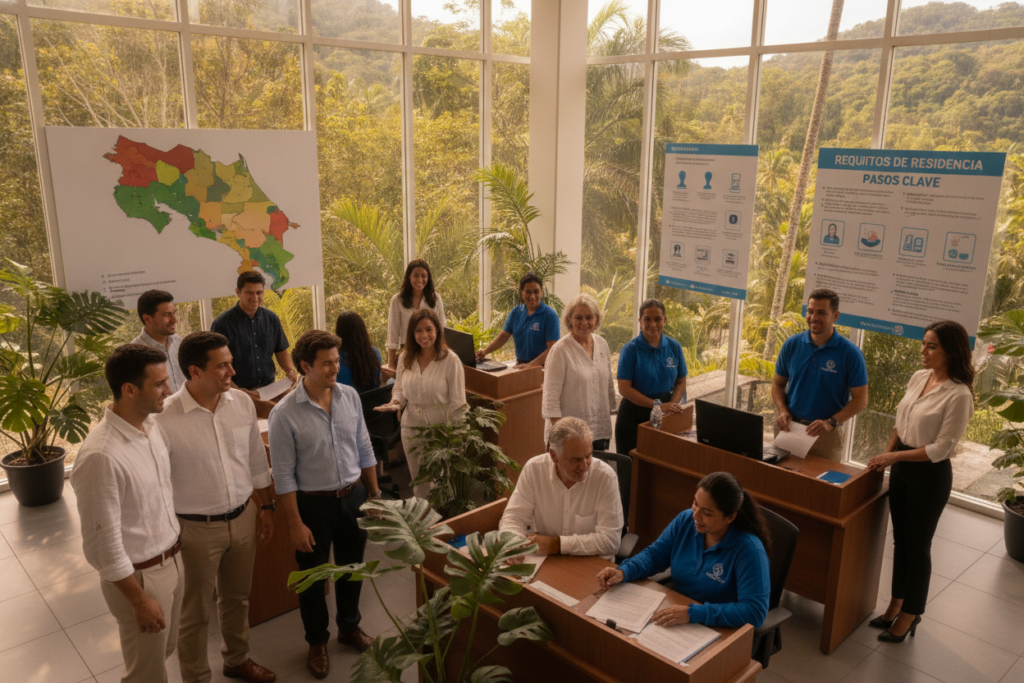
To successfully secure residency, staying informed about the latest immigration developments in Costa Rica is crucial. Regulatory changes in 2026 have reshaped how residency applications are processed. Keeping up with these changes can significantly impact your residency journey.
Managing application delays gracefully is essential. We help you maintain clear communication with the relevant authorities in Costa Rica. This proactive approach can ease any potential delays in your application process.
Our team is committed to keeping you informed about updates that might affect your residency status. By staying proactive, we can help you navigate challenges effectively. We provide the support you need to ensure your residency application remains on the right track.
Ready to Start Your Journey to Costa Rica Residency?
Are you ready to embark on your journey toward residency in this stunning country? We are here to help you start your path toward permanent residency or any other residency category that fits your needs.
Whether you qualify through investment or family ties, our team provides the expert guidance required for a successful residency application. We assist all applicants in gathering the necessary documents, such as your birth certificate, marriage certificate, and passport, to ensure a complete file.
Our expertise covers all residency options, helping you choose the right path for your future in this beautiful country. For personalized guidance and pricing on your residency application, please contact us via WhatsApp at +506 8373 2085, email info@crie.cr, or visit crie.cr.

FAQ
What are the main requirements for obtaining investor residency in Costa Rica?
To qualify for investor residency, we need to provide proof of a significant investment in real estate or a business in Costa Rica. This typically includes documentation of property ownership or business registration, along with personal identification documents.
How long does the application process for investor residency take?
The timeline for processing our residency application can vary. Generally, it may take several months, depending on the completeness of our documentation and any potential delays with the immigration authorities.
What personal documents are necessary for the residency application?
We must submit a valid passport, a birth certificate, and, if applicable, a marriage certificate. All documents should be properly legalized or apostilled to ensure they are accepted.
Is there a minimum investment amount required for investor residency?
Yes, we must meet a minimum investment threshold, which is typically set at 0,000 in real estate or a qualifying business venture in Costa Rica.
Can family members apply for residency along with the primary applicant?
Absolutely! Our immediate family members, such as spouses and children, can apply for residency alongside us. This allows our family to enjoy the benefits of living in Costa Rica.
What happens if our application is denied?
If our application is denied, we can appeal the decision or address any issues that led to the denial. It’s essential to understand the reasons for the denial to improve our chances of success in a future application.
How can we ensure our application is processed smoothly?
To facilitate a smooth process, we should prepare all required documents meticulously, ensure they are up-to-date, and follow the guidelines provided by Costa Rican immigration authorities.
What role does CRIE play in the residency application process?
CRIE offers expert guidance throughout our residency application process. Their experience can help us navigate the complexities of immigration laws and ensure our application meets all legal requirements.