
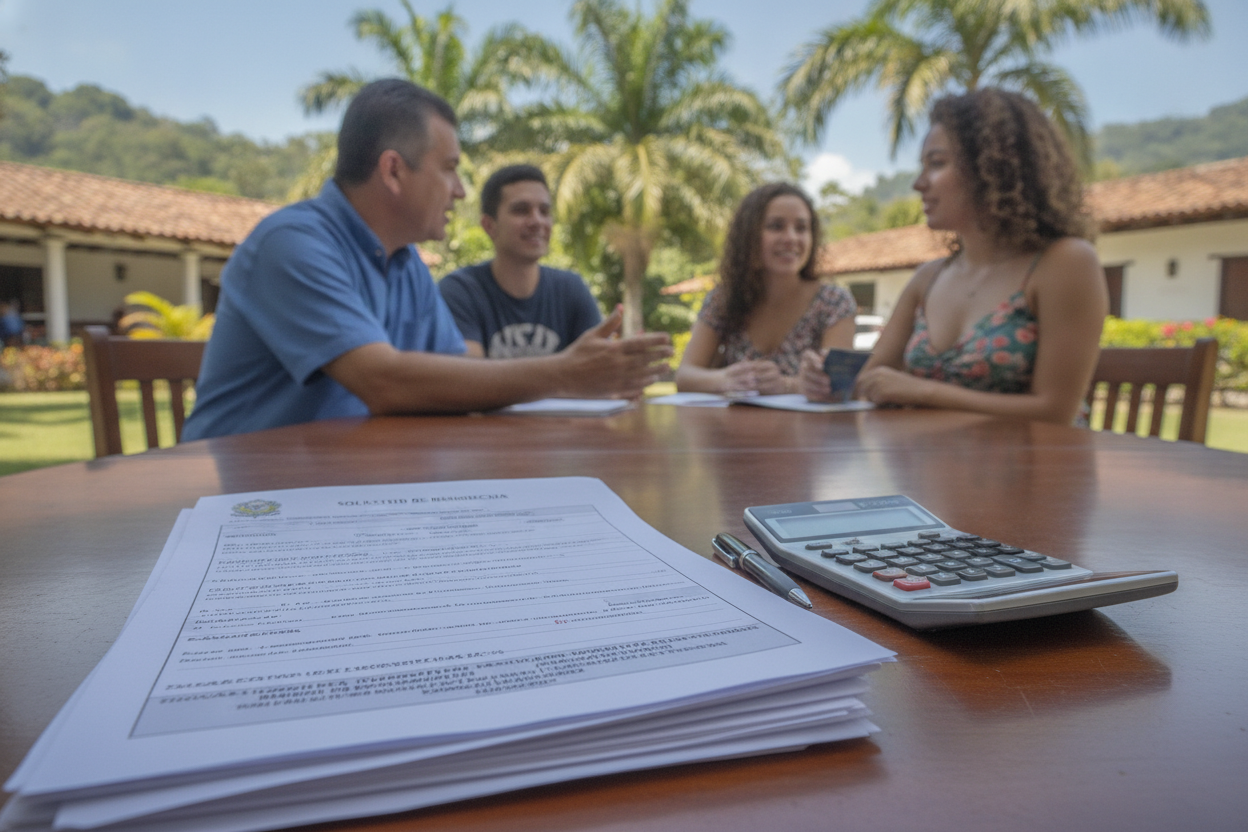
Navigating the landscape of immigration can be challenging, especially when it comes to understanding the costs involved. In our journey to help you through this process, we focus on the various government charges associated with residency applications. Each application involves specific costs that depend on your chosen category and the requirements set by the country.
Proper preparation is essential. Managing your income documentation and tax records is crucial when you prepare for your residency application. Over the years, we have seen how well-organized documents can help applicants avoid common pitfalls linked to government payments.
Understanding your category is the first step toward ensuring your application is processed smoothly. Our goal is to equip you with the information you need to manage your residency application confidently. To learn more about how we can assist you, visit our residency assessment page.
Understanding Costa Rica Residency and Immigration Services
Understanding the complexities of residency in a new country can often feel overwhelming. For over 20 years, we have guided individuals and families through the intricate process of securing residency in Costa Rica. Our team is dedicated to helping you navigate this journey smoothly.
We provide practical advice on managing your residency application. This includes ensuring your income and tax documentation meet current standards. By focusing on the specific category that fits your needs, we help you organize your documents effectively.
Our extensive experience allows us to assist you in maintaining your legal status while living in this beautiful country. We have refined our approach over the years, making the immigration process more transparent and manageable for everyone.
Exploring costa-rica-immigration-filing-fees Basics
Understanding the financial aspects of residency applications can be a daunting task. The Department of Immigration (DGME) requires all applications to include specific supporting documentation. This documentation is crucial for verifying your eligibility and financial stability.
Every residency application must meet certain government requirements. These include a comprehensive list of documents that prove your income and tax records. Properly organizing these documents is vital to ensure your application is accepted.
Additionally, all documents not in Spanish must be officially translated. This step is mandatory for the immigration process in this country. We provide guidance on the fees and documentation needed, helping you navigate the requirements for your residency application.
Navigating the Residency Application Process
Embarking on the journey to secure residency can feel like a complex puzzle, especially when it comes to gathering the necessary documentation. We understand that preparation is vital for success.
The residency application process in Costa Rica can take anywhere from 7 to 15 months. Patience and thorough preparation are essential for every family involved.
Here are some key points to consider:
- You must submit a clear photocopy of your entire passport, as this document is a fundamental requirement for your residency application filing.
- Choosing the right residency category is crucial. It impacts your work options and the overall timeline of your application process.
- We guide you through the step-by-step process, ensuring your income, tax, and family documentation are ready for the government immigration office.
- Staying informed about the status of your residency application helps you manage your time and expectations while living in this beautiful country.
For more information on residency options, visit our comprehensive guide.
Managing Government Fee Payments in Stages
Understanding the stages of government payments is crucial for a smooth residency application. This process involves various fees that must be paid at different times.
Filing-Stage Payment Details
When filing your residency application, you need to pay a $50 government fee. If you are changing your status from tourist to a residency category, an additional $200 is required.
Post-Approval Fee Considerations
Once your residency application is approved, you will face further payments. This includes a $300 guarantee bond and $128 in processing fees to the Banco de Costa Rica.
We help you manage these payments in stages, ensuring that your account deposits are made correctly to the government. Proper documentation of your income and tax payments is necessary to maintain your residency status after approval.
Additionally, we provide a clear checklist for your filing and post-approval fees. This helps you avoid mistakes that could delay your residency process.
Understanding Guarantee Deposit, DIMEX, and Caja Compliance
Familiarizing yourself with the ongoing financial responsibilities of residency is key to maintaining your status. The Guarantee Deposit, mandated by the DGME, serves as a security measure. This amount varies based on your nationality and is determined by official resolution tables.
We also guide you through the DIMEX renewal process. Keeping your DIMEX card current is essential for your residency. Be aware that late renewals incur a penalty of $3 for each month of delay.
Additionally, compliance with Caja requires monthly contributions based on the income reported in your residency application. It’s vital to prepare your bank accounts for these ongoing government obligations. We ensure you have the necessary proof of compliance to maintain your residency status for years to come.
Budgeting for Residency: Fee Planning and Avoiding Mistakes
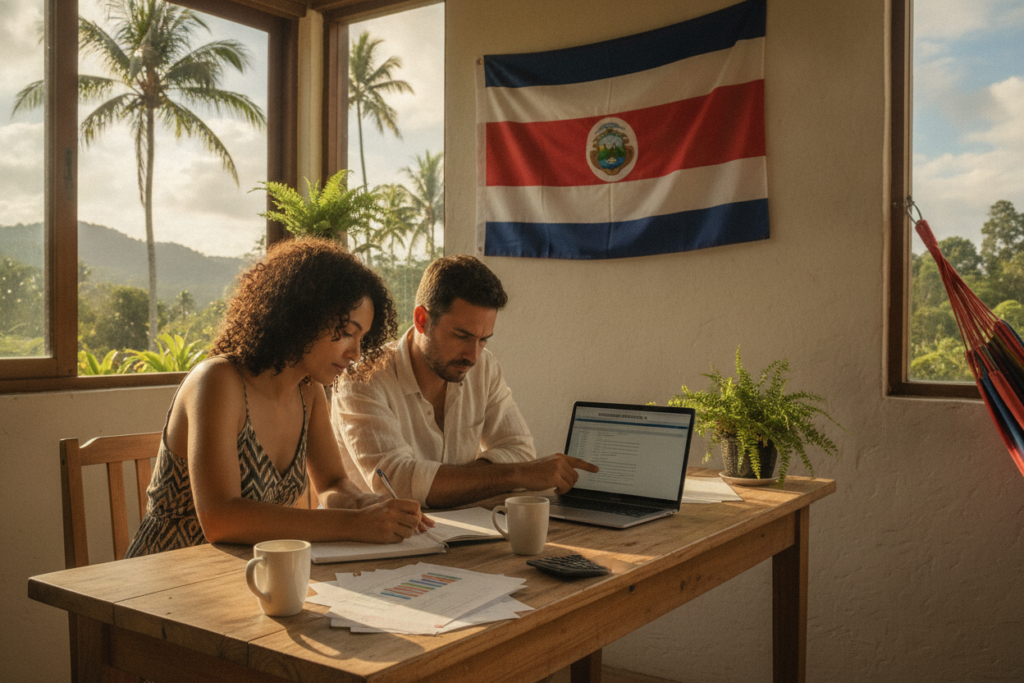
Establishing a budget for your residency journey can be complex, given the numerous fees and requirements. It’s crucial to plan for government fees, income proof, and any potential investment costs in this beautiful country.
We help you avoid common payment errors by ensuring your bank receipts for the guarantee deposit and filing fees are well documented. Whether you are applying for permanent residency or a temporary category, we provide essential information to manage your budget effectively.
Proof of income is vital. For instance, the Pensionado category requires a lifetime pension income of at least $1,000 per month. Similarly, the Rentista category necessitates proof of $2,500 per month in stable income for at least two years.
Keeping organized records of your background documents and receipts is a best practice. This helps you maintain your status in the country without unnecessary financial stress. We assist families in planning their residency budget, ensuring all members are included in the application process.
Understanding the different residency categories is crucial for accurate fee planning and long-term success. Our guidance helps you navigate the immigration system, ensuring your documents are submitted correctly to the government office the first time. For more information, visit our residency support services page.
Comparing Immigration Filing Options and Categories
Choosing the appropriate immigration pathway can shape your future in this vibrant country. We help you compare various residency categories to find the best fit for your family. Each category has specific income requirements that you must meet.
For instance, the Pensionado category requires proof of at least $1,000 per month in income. The Rentista category, on the other hand, necessitates a letter from a financial institution confirming $2,500 per month.
If you are considering the Investor category, be aware that it requires a minimum investment of $150,000. This investment must be documented with official government records and verified by a certified accountant.
Additionally, we provide insights into alternative pathways, including family ties and permanent residency options. Proper documentation of your background and financial status is essential when filing for any of these residency categories.
Our expertise helps you navigate the immigration system, ensuring that your chosen category aligns with your long-term goals for living in the country. Comparing these options allows you to plan your budget effectively and avoid common mistakes during the residency application process.
Ensuring Proper Documentation and Eligibility Confirmation
Securing residency requires careful attention to detail, especially regarding the necessary documentation. Properly authenticated and translated documents are crucial for confirming your eligibility for residency in this country.
We assist you in verifying that your background checks and other essential documents meet the requirements for your specific residency category. Your passport and personal documents must be current; expired files can lead to delays in your application process.
Moreover, we provide guidance on the authentication of documents from your home country, ensuring they are accepted by the immigration system. Confirming your eligibility for permanent residency or other categories involves a careful review of your income, pension, and investment documentation.
By organizing your information, we ensure that every document is ready for submission to the immigration authorities. Proper preparation helps you avoid common pitfalls that often slow down the residency application process for many applicants.
Our team ensures that your eligibility is confirmed before you pay any fees, saving you time and money during your immigration journey.
How CRIE Provides Clarity in the Immigration Process
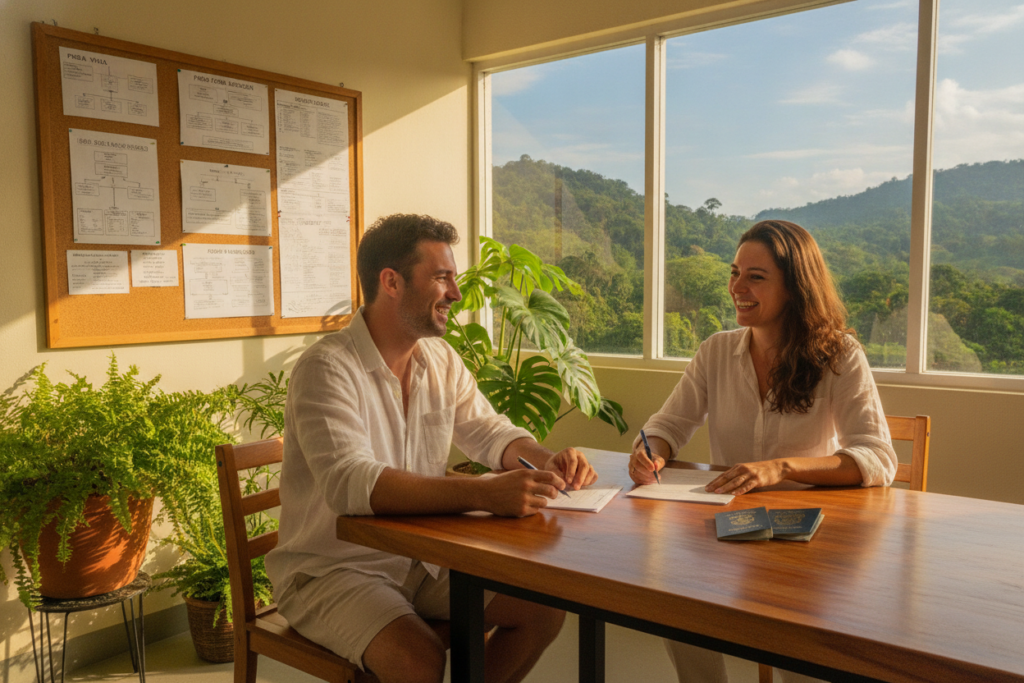
A clear approach to residency applications helps streamline your journey in a new country. At CRIE, we understand that the immigration process can be overwhelming. Our goal is to simplify it for you.
We provide a clean payment checklist that ensures your government fees, including the guarantee deposit, are paid correctly and on time. This checklist is designed to help you avoid errors during the residency filing process.
Our team also coordinates the post-approval steps, such as DIMEX issuance and Caja enrollment. This coordination is essential for securing your residency status and making your transition smoother.
By organizing your income and investment documentation, we ensure that your residency application meets all government requirements. We focus exclusively on residency and immigration services, providing the expertise needed to navigate the system effectively.
With our guidance, you can avoid common mistakes that could impact your approval and long-term residency. We strive to make the residency process as simple as possible, allowing you to focus on your new life.
Ready to Begin Your Residency Journey?
Beginning the residency application process can seem overwhelming, especially when considering the unique requirements for each category. Every residency application is tailored to your nationality, family situation, and specific immigration history.
To receive personalized guidance on your residency category and the associated costs, we invite you to speak with our expert, Johanna Alvarez. We are here to help you navigate the complex tax and documentation requirements for your upcoming residency application.
Please reach out to us via WhatsApp at +506 8706 3888 or email info@crie.cr to discuss your specific needs and next steps. You can also visit our website at crie.cr to learn more about how we can assist you with your residency journey.
FAQ
What are the main types of residency options available in Costa Rica?
How long does the residency application process typically take?
What documentation do we need to provide for the residency application?
Are there any fees associated with the residency application?
What is the guarantee deposit, and why is it necessary?
How do we manage payments during the application process?
What should we do if our application is denied?
How often do we need to renew our residency status?
Can we work in Costa Rica with a residency permit?
What resources are available to help us navigate the immigration process?
Article by Glenn Tellier (Founder of CRIE and Grupo Gap)
Don't wait, contact us right now!
Call or WhatsApp Costa Rica +506 8373 2085 or +506 8706 3888
Call USA/Canada +1 305-906-6784