
Work Permit in Costa Rica
Looking at all your options? Read our complete guide to Costa Rica residency, with every category compared.
Work Permit at a Glance
- Purpose: local work authorization for a defined activity, role, or category.
- First check: whether the proposed work fits a recognized route before preparing an application.
- Prepare: personal records plus the employer and role documentation required for the case.
- Important: temporary residency and remote-income options do not automatically provide local work authorization.
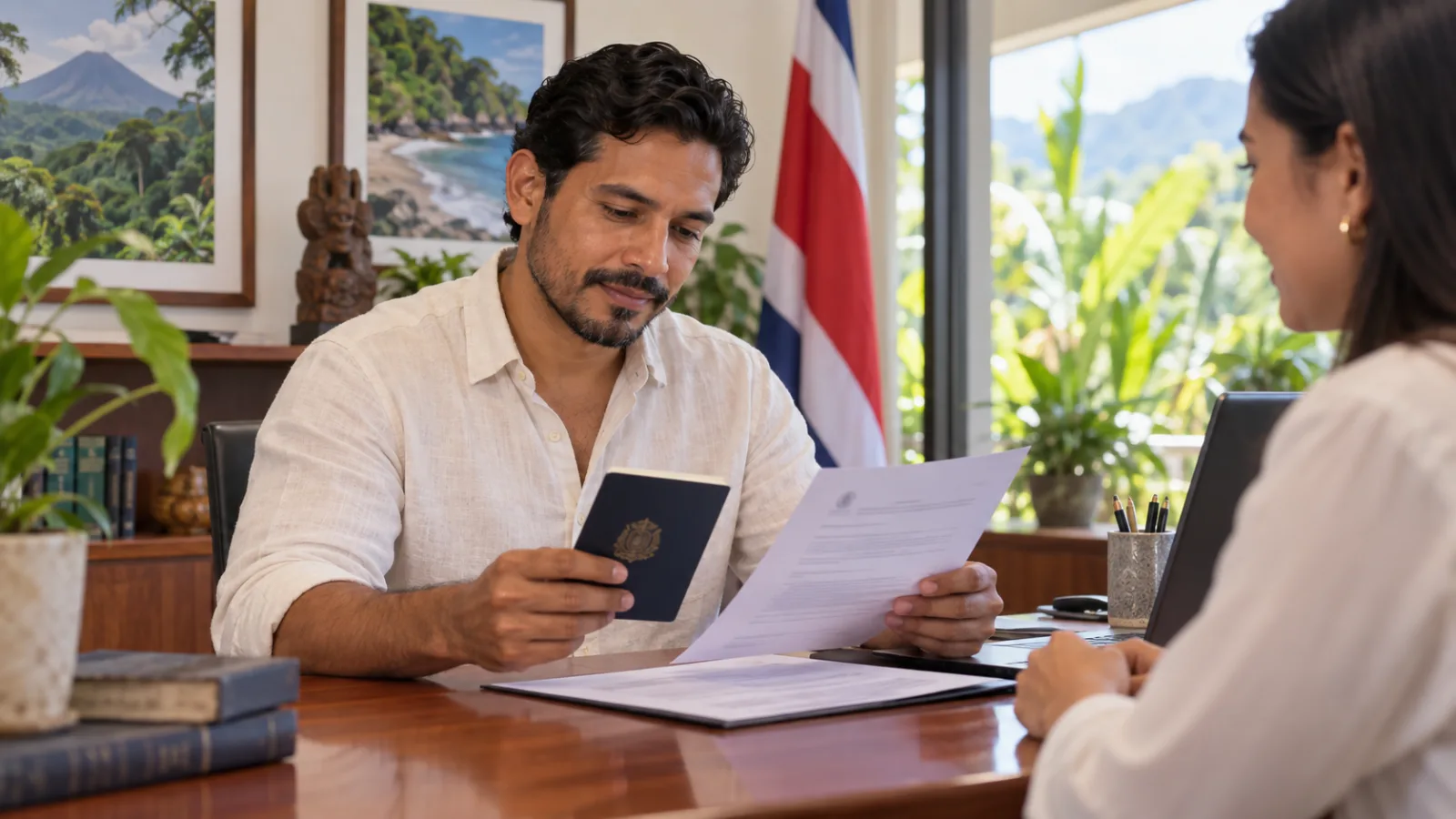
Costa Rica does not issue a general “work visa”. To work for a company in Costa Rica you need a residency or special category that Migración authorises for that specific work, unless you are a permanent resident or married to a Costa Rican, who can take any job.
If you want to work legally in Costa Rica, the rules are very different from what most people expect. In many countries, a job offer automatically leads to a work visa. In Costa Rica, the process is more restrictive and depends on specific legal categories and proper documentation.
In most cases, foreign nationals need authorization tied to a defined work category and supported by a Costa Rican employer or a specific legal structure. Understanding the correct pathway before starting is critical.
On this page, you will find a clear overview of how work permits work, the main requirements, the process, the most common mistakes, and how to determine if this is a realistic option for your situation.
What This Residency Category Is
A work permit is a form of authorization that allows a foreign national to perform specific work activities in Costa Rica under defined conditions. It is not automatically included with most residency categories.
In general:
- Costa Rican citizens and permanent residents have the broadest work rights.
- Temporary residents’ work rights depend on their specific category.
- Work permits are typically tied to a specific employer, role, or category.
If your goal is long-term residency, a category such as Pensionado, Rentista, or Investor may be a better starting point. The Digital Nomad Visa is not residency and does not provide local work authorization.
Who Can Already Work Without a Separate Permit
Under the Immigration Regulation (Reglamento de Extranjería, article 61), some people may do any paid work or professional activity once they hold their status:
- Permanent residents. Permanent residency lets you work in any paid job or intellectual activity.
- Temporary residents married to a Costa Rican.
- Refugees, political asylees, stateless people, victims of trafficking and other cases Migración decides.
Every other temporary resident, including pensionados, rentistas and investors, may only do the paid or self-employed work that Migración has authorised (Law 8764, article 80). Their dependents also need Migración’s authorisation before they start working.
The Main Ways to Get Permission to Work
Executives, managers and technical staff
Temporary residency for executives, representatives, managers and technical staff of companies established in Costa Rica, with their spouses and children. It also covers specialised employees, on a salary or self-employed, whom the company needs for that work.
Scientists, professionals and specialised technicians
A separate temporary residency route for scientists, professionals, interns and specialised technicians.
Special categories for workers
The law also has special categories for cross-border workers, temporary (seasonal) workers, workers in a specific occupation (trabajador de ocupación específica), business visitors, staff transferred within the same company, after-sales service staff, self-employed workers, and workers on specific projects or projects of public interest. Most special categories do not lead to permanent residency.
How Migración decides
Migración authorises the specific work you will do. By law it takes into account a recommendation from the Ministry of Labour and Social Security (Ministerio de Trabajo y Seguridad Social), along with other criteria. That is why the job, the company and your qualifications all have to line up in the file.
Working remotely for a company abroad
If you work online for an employer or clients outside Costa Rica, look at the Digital Nomad Visa. It does not let you take a job with a Costa Rican company.
Requirements
Work permit applications are heavily documentation-based and depend on both the applicant and the employer. Approval depends on whether the role fits within a recognized category and whether the supporting documentation is complete.
- Valid passport: copies prepared in the correct format.
- Police clearance: from the correct authority and within validity windows.
- Employer documentation: proof the company is legally registered and operating.
- Job/role documentation: contract or role description aligned with the category.
- Supporting documents: records confirming identity and background.
- Authentication and translation: foreign documents typically require apostille and official Spanish translation in Costa Rica.
For a specialised employee, the Immigration Regulation (article 86) also lists:
- An employment contract under the Labour Code.
- A sworn statement signed by the employer describing your experience, your specialised duties and your knowledge for the job.
- Your diplomas and proof of experience, apostilled or legalized if they were issued abroad.
- The company’s municipal business licence (patente), health operating permit and proof of tax payments.
- Your birth certificate and criminal record certificate, apostilled or legalized, two passport-size photos, and certified copies of your passport pages.
Start Your Residency Process From Home First
If possible, begin your preparation before you travel to Costa Rica. This gives you time to send your documents to us on WhatsApp so we can review them early and confirm they are correct.
This is especially important for work permit cases where employer documentation, timing, and document validity all need to align. Fixing issues early helps avoid delays that can affect both you and the employer.

Step-by-Step Process
The work permit process is best approached as a structured application where both the applicant and employer must be properly prepared.
- Confirm category fit: determine if your role qualifies under a recognized category.
- Review employer readiness: confirm the company can support the process.
- Plan your documents: identify all required personal and employer documents.
- Prepare documents correctly: handle authentication and legal requirements.
- Send documents to CRIE on WhatsApp: early review helps avoid delays.
- Complete translations: ensure proper format for immigration.
- Build the application: assemble a complete and consistent file.
- Submit and monitor: respond to follow-up requests.
- Finalize authorization: complete approval and documentation steps.
Common Mistakes
- Wrong category: applying under an incorrect work classification.
- Employer gaps: missing or incomplete company documentation.
- Unclear job role: vague or inconsistent job descriptions.
- Expired documents: falling outside validity windows.
- Authentication issues: missing apostille or incorrect legalization.
- Translation errors: incorrect or unofficial translations.
- Name inconsistencies: mismatches across documents.
- Working informally: starting work without authorization.
- Starting too late: not preparing documents before arrival.
Who This Is Best For
- Applicants with a Costa Rican employer willing to sponsor the process.
- Professionals with clearly defined roles that fit recognized categories.
- Companies that need a foreign employee for a specific function.
- Applicants who understand documentation requirements and timelines.
If your goal is to live in Costa Rica long-term rather than work locally, residency categories such as Pensionado, Rentista, or Investor may be better options.

After Approval: Your DIMEX and Renewals
Once Migración approves you, you book an appointment to get your residency card (DIMEX), bringing the government payment receipts listed in your approval and a one-time guarantee deposit. Temporary residency is granted for up to two years and can be renewed. To renew, you must show you are insured with the CCSS (Caja).
Changing jobs? Read changing employers on a work permit. Time to renew? See work permit renewal in Costa Rica.
What Employers Need to Know
Costa Rican law fines anyone who gives work to a foreigner who is not authorised to work, or who has them do work different from what Migración authorised (Law 8764, article 177). Migración and the Ministry of Labour check foreign hiring together, and employers must send Migración a report of their foreign staff when asked.
FAQ
Do I need a work permit if I have temporary residency?
Usually, yes. Only temporary residents married to a Costa Rican can take any job. Other temporary residents, including pensionados, rentistas and investors, can only do the paid work Migración authorises.
Can I work while my permit is being processed?
Do not start until Migración authorises the work. Employers who give work to someone who is not authorised can be fined, and working without authorisation can cause problems with your immigration status.
Is employer sponsorship required?
For the executive, technical staff and specialised employee routes, yes: the file includes your employment contract, the employer’s sworn statement and the company’s licences. Self-employed routes do not need an employer.
Can remote workers apply for a work permit?
If you work online for employers or clients abroad, look at the Digital Nomad Visa instead. It does not allow you to work for a Costa Rican company.
Do permanent residents need a work permit?
No. Permanent residency lets you work in any paid job or professional activity.
How long does the process take?
Timelines vary based on category and document readiness.
What is the first step?
Confirm whether your situation qualifies before preparing documents.
Quick Comparison
Message us on WhatsApp
If you are planning to work in Costa Rica, the smartest first step is confirming whether your situation qualifies. If you are still in your home country, even better. We can review your case early and help you avoid delays.
WhatsApp: +506 8373 2085
Email: info@crie.cr
Professional Disclaimer
This page is provided for general informational purposes only. Immigration rules, internal criteria, and required documentation can change. Information on this page is based on Costa Rica’s official immigration authority (Migración/DGME): https://migracion.go.cr/.
Work rules from the General Law of Migration and Foreigners (Law 8764, articles 79, 80, 94 and 177) and the Immigration Regulation (articles 61, 74, 86 and 178), read on SINALEVI on 15 October 2026.