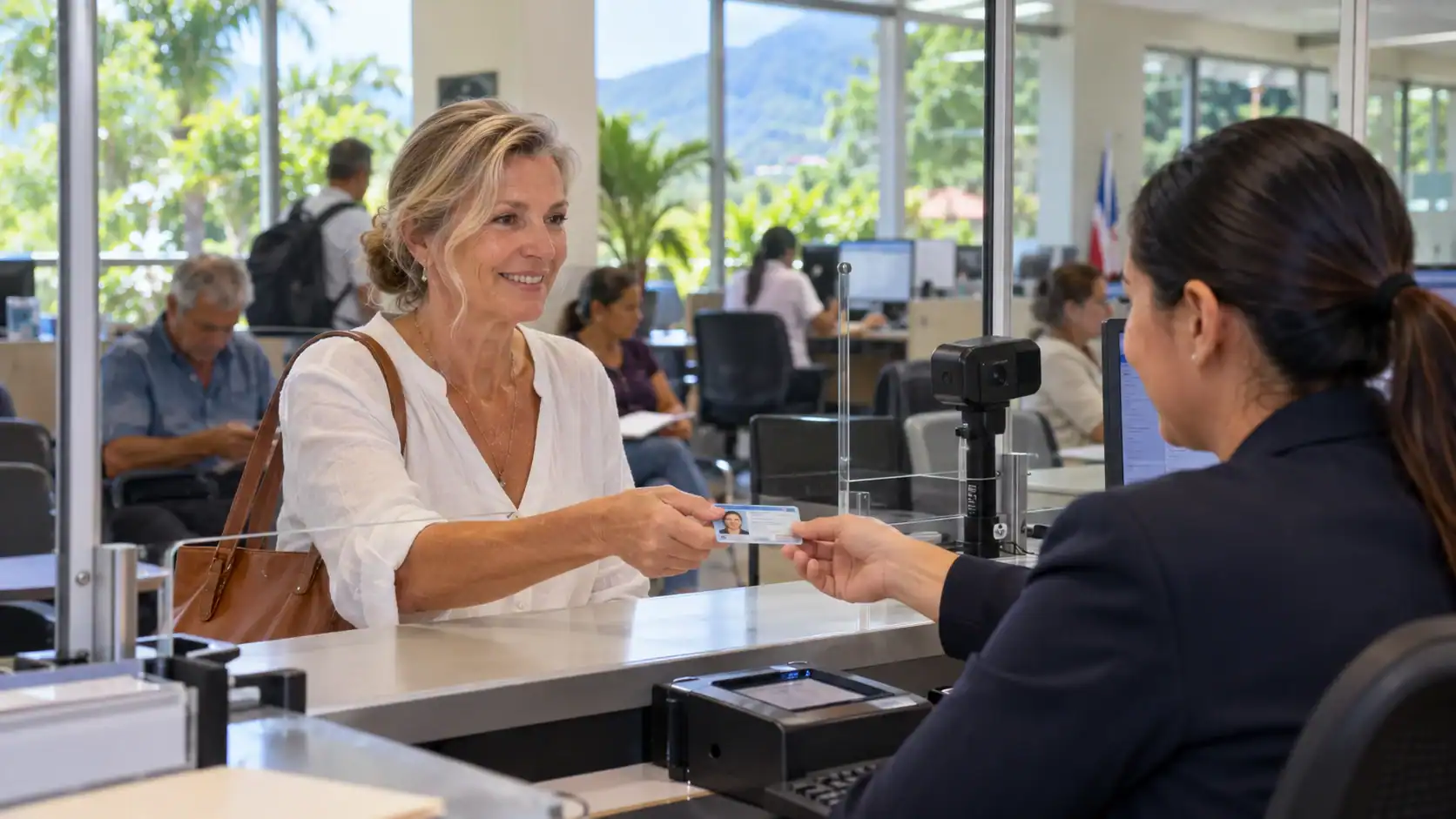
That small plastic card represents your legal right to live in this beautiful nation. It is your official residency document, granting access to healthcare, banking, and long-term peace of mind. We understand the profound relief you felt when it first arrived.
As its validity period nears its end, a pressing concern takes hold. Maintaining your compliant status is paramount to avoiding severe consequences. Over ninety percent of lapsed cases incur steep monthly fines, and most see their bank access restricted.
We have guided countless expatriates through this complex renewal maze. The difference between a smooth process and a costly ordeal hinges on early, meticulous preparation. This card is specifically for residency—it is not a tourist visa or a citizenship identification document.
This comprehensive guide details every step. We outline the specific financial and documentation requirements for common categories like Pensionado and Rentista. Our firm’s expertise is dedicated solely to this country’s immigration framework. We stress a critical principle: begin gathering apostilled and translated documents from home, well in advance.
Understanding the Costa Rica Residency Renewal Process

The path to keeping your residency valid involves several key phases, each with its own deadlines and requirements. Whether you hold a Pensionado (Pensionado), Rentista (Rentista), Inversionista (Investor), or Vínculo status, your document typically expires every two to three years. We strongly advise initiating the renewal process 90 days before that date.
The general sequence is straightforward. First, gather and prepare your necessary paperwork. Next, schedule an appointment at Banco de Costa Rica or Correos de Costa Rica. Then, submit your application with payment. Finally, you collect your new card after processing.
Processing times are a reality we must acknowledge. They can be unpredictable, stretching from nine months to two years. For example, Rentista renewals averaged 11.2 months last year, while Inversionista cases took about 8.9 months.
If your card lapses during this wait, a 30-day grace period applies with a 15% fee surcharge. After that, monthly fines begin. Notably, applicants aged 65 and older often enjoy a streamlined, same-day renewal option at immigration offices.
Costa Rica DIMEX Expired Before Appointment: Step-by-Step Guide

Discovering your residency document has lapsed before your scheduled meeting can be unsettling. Act immediately. The penalty structure escalates quickly, and your options narrow with each passing month.
Within the first 30 days, you are in a manageable grace period. You will pay a 15% surcharge on the standard government fees. You can still proceed with your renewal at Banco de Costa Rica branches, Correos de Costa Rica locations, or DGME immigration offices.
After 30 days but within three months, monthly fines begin. These can start at $100. You can still file at any of the three venue types during this time.
Once you cross the three-month threshold, the process becomes more restrictive. You must obtain a notarized justification affidavit from a local lawyer. This letter must credibly explain the delay. Renewal is only possible at DGME offices, not at bank or post office branches.
If your card has been expired for over one year, requirements are more stringent. You need a new criminal background check from your home country. It requires full apostille authentication and an official Spanish translation, plus the lawyer’s justification letter.
To schedule an appointment when already expired, call the dedicated line or visit the online portal. Be prepared to explain your status. Based on client experiences, Correos de Costa Rica locations tend to be more accommodating for borderline cases than bank branches.
You will still need to pay the standard fees. This includes a $123 deposit to a specific bank account and a separate processing fee. Every month of delay compounds your costs and complications. We can expedite the lawyer’s affidavit and documentation to minimize further penalties.
Who Qualifies for Residency (Residencia) in Costa Rica
Before beginning any application, you must determine which of the primary residency categories matches your financial profile. The nation offers three main temporary pathways. Each has specific financial thresholds you must document.
Pensionado (Pensionado) Requirements
The Pensionado category suits retirees with guaranteed lifetime income. You need a monthly pension of at least $1,000 USD. Official letters from your pension administrator, apostilled and translated into Spanish, prove this requirement.
Rentista (Rentista) and Inversionista (Investor) Criteria
Rentista residency requires demonstrating $2,500 monthly income for two years. This often involves a $60,000 deposit with regular transfers. The Inversionista category demands a one-time $150,000 USD investment.
A critical detail: this investment must be in your personal name, not a corporation. After three years in any temporary category, you can apply for permanent residency. Note that the Digital Nomad visa does not count toward this residency costa requirement.
Preparing Your Documents at Home (Apostilles and Translations)
A staggering 38% of processing delays stem from a single, preventable issue: improperly prepared documents. We cannot emphasize this enough. Start this meticulous phase in your home country, not after you arrive.
Crucial Document Checklist
Your complete packet is essential. It includes your valid passport with notarized copies of every page. You need a national criminal background check issued within six months of your submission date.
Also gather a recent birth certificate and your most recent CAJA payment receipt. Do not forget the signed informed consent form (CONSTANCIA DE CONSENTIMIENTO INFORMADO DIMEX). For married applicants, a current apostilled marriage certificate is required.
Tips for Obtaining Apostilles and Certified Translations
Every government-issued document needs an apostille stamp. This is a specific certification from your Secretary of State for international legal recognition.
After apostilling, all documents require translation into Spanish. The translator must be certified by Costa Rica’s Ministry of Foreign Affairs. Using a non-certified professional leads to rejection.
Verify the latest official requirements at migracion.go.cr. Starting this process early is your best strategy for a smooth renewal.
Timelines and Starting Early for a Smooth Renewal
The difference between a smooth renewal and a frantic scramble often boils down to one factor: how early you begin. Effective timeline management transforms this process from a source of stress into a predictable administrative task.
Recommended Start Dates
We advise starting your document collection three to six months before your card’s expiration date. This lead time is essential for obtaining apostilles and certified translations, which typically take about eight weeks.
You can submit your application up to 90 days early. Using this full window creates a critical buffer against the unpredictable processing times that follow submission.
Managing Processing Times Efficiently
After submission, the formal approval process averages nine months. Specific categories vary—Rentista renewals averaged 11.2 months last year, while Inversionista cases took about 8.9.
The official processing range is 9 to 24 months. After approval, card delivery adds roughly one month—22 business days officially, though two-month delays occur.
For complex cases, plan for a six-month minimum lead time. Complete applications have a 98% approval rate. The outcome is predictable with preparation; the timeline is not.
Appointment Scheduling at BCR or Correos de Costa Rica
Booking your slot at an authorized venue moves your renewal from planning to active processing. You have two primary options for this official submission.
How to Book Your Appointment
For Banco de Costa Rica, call 800-BCRCITA (800-227-2482) or use their online portal. Appointments typically book one to two weeks in advance across 71 participating branches.
Most phone operators speak Spanish. We recommend having your details ready. The Correos de Costa Rica system offers an alternative online booking path.
Their offices often provide a more flexible experience. Applicants aged 65 and older can visit DGME immigration offices directly on Thursdays or Fridays for same-day service, bypassing this scheduling step entirely.
What to Expect on Appointment Day
Before your meeting, deposit $123 into bank account #242480-0. The name on the receipt must match your passport exactly.
On the day, arrive ten minutes early with all documents. You will pay an additional processing fee—₡7,910 at Correos or ₡8,000 at the bank.
A critical detail: these payments are accepted only in cash or with BCR-issued cards. The representative will collect your paperwork, take a photo, and provide a proof of application.
Your new residency card will be sent to your selected post office. Plan to pick it up in person within 30 days of its arrival.
Common Pitfalls and Mistakes to Avoid During Renewal
We consistently see the same handful of errors causing the majority of processing holdups. These are entirely preventable, yet they trip up many applicants each year. Knowing what to watch for is your best defense.
Incomplete Documentation and Incorrect Submissions
The most frequent mistake is an expired criminal background check. It must be valid for six months from your submission date. Non-apostilled documents cause 38% of all processing delays.
Standard notarization is not the same as an apostille. Using a translator without official certification from the Ministry of Foreign Affairs guarantees rejection. Your social security (CAJA) enrollment must also be current and show no missed payments.
For married applicants, a current, apostilled marriage certificate is often required to verify dependent status. Provide notarized copies of every single passport page, including blank ones. Missing even one page can get your application returned.
The contrast is clear. Complete applications have a 98% approval rate. Incomplete submissions face near-certain rejection and must restart the entire process.
Ensuring Your Eligibility Post-Renewal
With a fresh card secured, your focus shifts to ensuring all details are correct and your benefits remain uninterrupted. This phase is about proactive maintenance.
Verifying Your Updated Residency Status
Inspect your new document immediately. Confirm your name spelling, the DIMEX number, expiration date, and category are accurate.
Any discrepancy must be corrected at the issuing office to prevent future issues. An email confirmation with a digital copy should arrive within 22 business days—save this electronic version securely.
Maintaining Active CAJA Enrollment
Your social security payments are an ongoing obligation. Continue making monthly CCSS payments without interruption.
We recommend checking your status quarterly at validacion.ccss.sa.cr. Verify you still appear as “CUMPLE CON LOS REQUISITOS” to avoid coverage gaps.
First-time cards are typically valid for two years. Subsequent renewals often extend to three-year periods. Mark your calendar to begin your next residency renewal process 90 days early.
After three years of temporary status, you become eligible for permanent residency. This upgrade simplifies future renewals and offers greater flexibility. For guidance on timing this transition, our team can assist.
Additional Considerations for Investors and Inversionistas
The Inversionista category offers a path to residency through investment, but it comes with distinct requirements. Holders of this status face unique rules that don’t apply to other categories.
Personal Ownership vs. Corporate Investments
Your $150,000 minimum investment must be in your personal name. Using a local corporation (sociedad anónima) is a common pitfall for real estate buyers.
If assets are held corporately, restructuring or an additional personal investment is needed. You must also keep all property taxes current for renewal.
After the initial two-year period, you have flexibility. You can proceed with standard renewals or seek permanent residency if you’ve maintained continuous presence.
Next Steps if Considering Citizenship
Three years of temporary status typically makes you eligible for permanent residency. This simplifies future renewals and expands business rights.
Citizenship through naturalization requires seven total years of legal residency. The nation permits dual nationality, so you can keep your original passport.
We stress handling each residency step methodically before pursuing citizenship. Rushing often causes delays.
Using CRIE’s Expertise for a Streamlined Process
Our firm’s sole mission is to demystify the intricate procedures for maintaining your legal status. We focus exclusively on this nation’s residency and immigration framework.
This deep specialization means we understand the unwritten preferences of different offices. We build applications for maximum approval probability from the start.
Contact via WhatsApp or Email
Reach out for an immediate consultation. Contact our bilingual team via WhatsApp at +506 8706 3888.
You can also email detailed questions to info@crie.cr. We respond quickly because we know your time matters, especially with deadlines.
Visit www.crie.cr to learn more about our dedicated services for Costa Rica.
Benefits of Expert Assistance
We resolve 85% of complex renewal issues applicants face alone. Our document review reduces rejection rates by 94%.
We catch expired checks and improper translations before they derail your application. This saves you months of reprocessing time.
As your partner, we handle all government correspondence directly. We provide honest assessments and clear explanations in plain English.
We don’t make promises about guaranteed timelines. We do guarantee a complete, properly prepared application that minimizes avoidable delays.
Securing Your Future in Costa Rica: Next Steps
The effort you invest in the renewal process today safeguards the life you are building for tomorrow. Maintaining a valid legal status is about more than just a plastic card. It protects your access to national healthcare, keeps your local bank account open, and secures your property rights.
After three years of temporary residency, you become eligible for permanent status. This upgrade offers greater stability and simplifies future renewals. The ultimate goal for many is citizenship, possible after seven total years.
Your immediate next step depends on your timeline. If your document expires soon, begin gathering papers now. If you are already late, act quickly to minimize penalties.
We can guide you through each phase. Contact our team via WhatsApp at +506 8706 3888 or email info@crie.cr. Let us help you secure your long-term future here.
FAQ
What should I do if my DIMEX card expires before my scheduled renewal appointment?
If your card expires before your appointment date, your legal status remains valid as long as you have the official appointment letter. We recommend carrying that letter with your expired card until you receive the new one. The key is to have your appointment secured—this proves you are in the renewal process.
Who is eligible to apply for permanent residency in Costa Rica?
Eligibility is typically based on specific categories. The most common are Pensionado (retiree with a lifetime pension), Rentista (guaranteed stable income), and Inversionista (investor meeting a minimum capital requirement). Each category has distinct financial proof requirements you must meet to qualify.
What documents are the most critical to prepare ahead of time?
The crucial documents are often those requiring the most lead time: your passport, birth and marriage certificates (if applicable) with apostilles and certified Spanish translations, and proof of income or investment per your residency category. Starting this document collection early is the single best way to avoid delays.
How long does the entire renewal process usually take?
From gathering documents to receiving your new physical card, you should plan for a process spanning several months. Government processing times can vary, and mailing adds more time. We advise starting the document preparation at least 4-6 months before your current card expires to build in a comfortable buffer.
How do I schedule my renewal appointment, and where is it held?
Appointments are scheduled online through the official Banco de Costa Rica (BCR) portal for immigration procedures. Your appointment will be at a designated BCR branch or a Correos (post office) location authorized to handle immigration submissions. You must bring your complete dossier of original and copied documents.
What is the most common mistake people make during renewal?
The most frequent and costly error is submitting incomplete or incorrect documentation. This includes missing apostilles, uncertified translations, or outdated financial letters. A rejected file can set you back months. A thorough pre-check of every requirement against the official list is essential to avoid this pitfall.
What do I need to do to maintain my status after renewing my card?
After renewal, you must maintain your CAJA (public health insurance) payments without lapse and continue to meet the conditions of your residency category (like maintaining the required income or investment). You can verify your active status online through the Dirección General de Migración y Extranjería portal.
Why should I consider using a professional service for my renewal?
Navigating the renewal process requires precise knowledge of current forms, fees, and procedural nuances. We manage the details—from document review to payment processing and timeline tracking—to minimize stress and the risk of errors. Our expertise turns a complex administrative task into a streamlined, predictable process.
Article by Glenn Tellier (Founder of CRIE and Grupo Gap)
Don't wait, contact us right now!
Call or WhatsApp Costa Rica +506 8373 2085 or +506 8706 3888
Call USA/Canada +1 305-906-6784