

Dreaming of calling this biodiverse and politically stable nation home? You’re not alone. Many Americans and international applicants seek to establish legal status in Costa Rica.
We’re CRIE, specialists in Costa Rican residency and immigration. This guide cuts through the confusion to give you honest, detailed information.
The journey starts with understanding your options. Key pathways include the Pensionado for retirees, Rentista for fixed-income earners, and Inversionista for investors.
Each category has specific financial requirements. Realistic processing takes 9 to 12 months.
Our approach emphasizes preparation from your home country. Getting apostilles and translations ready before you arrive streamlines your entire application.
This is your roadmap. We’ll walk you through qualifications, document checklists, timelines, and common pitfalls to avoid. Let’s build your path to residency with clarity and confidence.
Overview of Costa Rica Residency Options and CRIE (crie.cr)
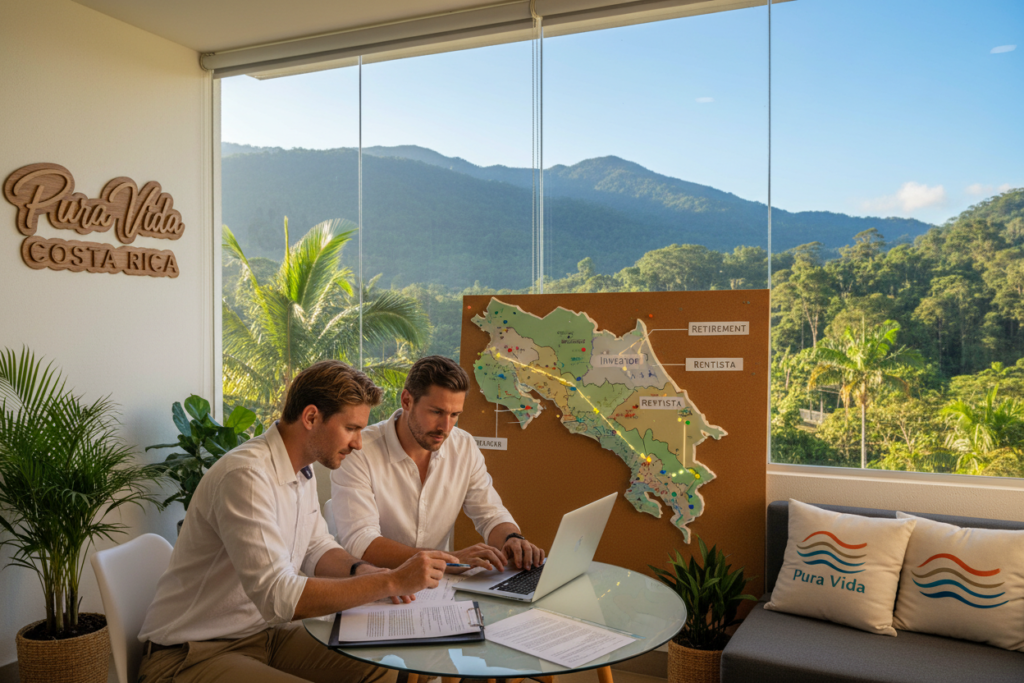
Your journey to living in Costa Rica formally hinges on choosing one of three primary residency options. These are the Pensionado (Pensionado) for retirees, the Rentista (Rentista) for those with stable income, and the Inversionista (Investor) category.
We are CRIE. Our practice focuses solely on Costa Rica residency and immigration law. We provide expert guidance through this specific system.
Each program has clear financial rules. The Pensionado requires a $1,000 monthly pension. The Rentista needs proof of $2,500 monthly income. The Investor path starts with a $150,000 commitment.
It’s vital to know the Digital Nomad visa is not a residency program. It does not count toward permanent status or future citizenship. The formal categories do provide a path to a resident ID card, local banking, and family inclusion.
These programs offer a business-friendly environment and a favorable tax regime. Our goal is to give you straightforward, realistic advice for your application.
Who Qualifies for Costa Rica Residency
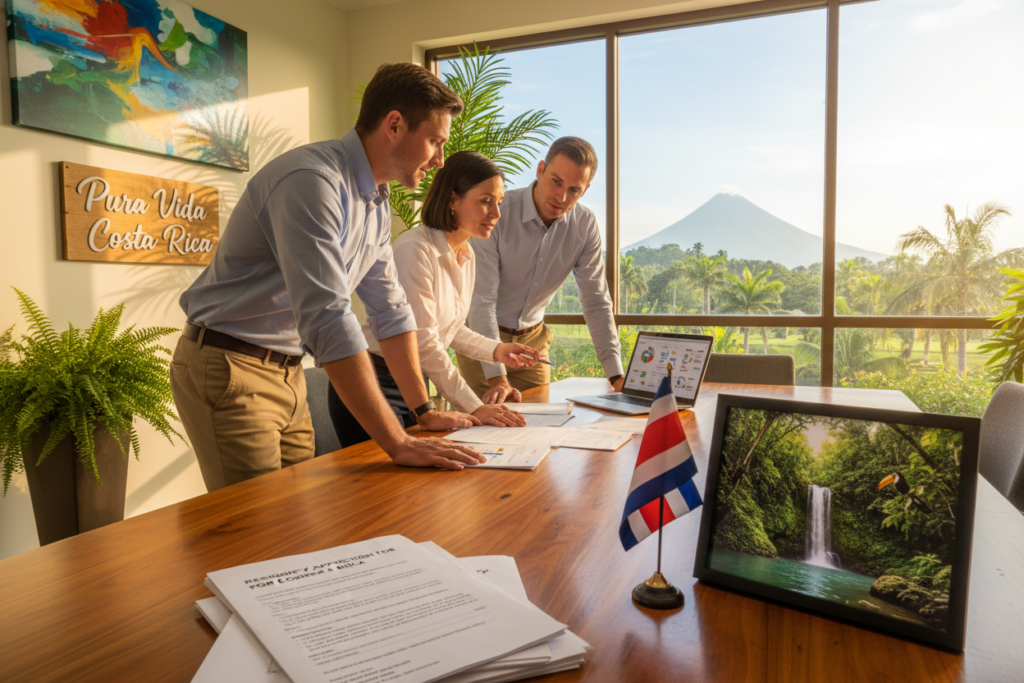
Eligibility for Costa Rica’s residency programs rests on two universal requirements plus category-specific thresholds. Every applicant must have a completely clean criminal record and a valid entry visa. Your financial profile then determines which path you pursue.
Eligibility Criteria Explained
The Pensionado category requires a guaranteed lifetime pension of at least $1,000 monthly. This can come from government or private sources.
The Rentista path needs proof of $2,500 in stable monthly income for two years. Income should come from investments or business operations.
For the Investor route, a minimum $150,000 investment is mandatory. If investing in real estate, the property must be titled in your personal name.
Personal and Financial Standards
Family inclusion is a significant advantage. The primary applicant can include a spouse, children under 18, and unmarried dependent children under 25.
Maintaining your residency status requires meeting these financial standards annually. You must also visit the country at least once per year.
Residency is the essential first step toward potential citizenship after several years.
Understanding the Required Documentation and Preparation Process
We consistently see that the most efficient path to residency begins with organizing your documents from your home country. Proper preparation is the key to avoiding months of frustrating delays.
Essential Documents: Apostilles and Translations
Every foreign document must be apostilled in its country of origin. This certifies its authenticity for international use. After apostilling, an official Spanish translation by a certified translator is mandatory.
Your valid passport is the foundational item. Provide copies of every page for immigration review. A clean criminal record from every relevant country is also required.
Proof of your financial qualification varies by residency category. This includes pension letters, bank statements, or property deeds. Birth and marriage certificates are needed for family inclusion.
Preparing Your Application from Home
Start this process 6 to 8 weeks before your planned move. Gather originals, get apostilles, and then secure translations. Creating a detailed checklist is crucial for tracking.
Always verify the latest requirements directly at the official migracion.go.cr website. This ensures your application is complete and avoids unnecessary setbacks. Careful preparation saves significant time and stress.
Navigating Different Residency Categories: Pensionado (Pensionado), Rentista (Rentista), and Investor (Inversionista)
The Pensionado, Rentista, and Inversionista programs each serve distinct financial profiles and goals. Your choice depends on your primary source of funds.
Understanding Thresholds for Each Category
Each category has a clear financial minimum. The Pensionado requires a guaranteed lifetime pension of at least US$1,000 per month.
The Rentista path demands proof of US$2,500 in monthly income for two years. The Investor program starts with a US$150,000 minimum investment.
Specific Requirements for Each Residency Type
Pensionado applicants must provide official pension letters and bank statements. The income must be permanent, not from temporary withdrawals.
Rentista status requires documenting the source and stability of your income. This often involves 12 months of bank or investment statements.
For the Investor category, qualifying assets include real estate or shares in a local corporation. A critical rule: any real estate property used for the investment must be titled in your personal name, not a corporate entity.
This program allows your capital to participate directly in the local economy. It turns your residency requirement into a potential asset.
Step-by-Step Application Process Before Arrival
Once your documents are prepared, the next step is formally presenting your case to the Dirección General de Migración y Extranjería. This filing is the official start of your processing time.
You must enter the country legally, typically on a 90-day tourist visa. This gives you a window to submit your complete package.
Filing the Application with Required Documents
Your application package includes the specific form for your category. It also needs all apostilled and translated documents.
You must provide proof of your financial qualification and a clean criminal record. Always verify the latest form requirements at the official migracion.go.cr website.
Tips for a Smooth Submission Process
Organize your paperwork in the exact order immigration expects. Attach Spanish translations directly to each apostilled original.
This organization signals professionalism and helps avoid delays. After filing, you’ll get a case number to track your status.
Realistic processing takes 9 to 12 months. After approval, you must register for social security within 90 days.
Important Timelines and Milestones in the Application Journey
A clear grasp of the timeline is your most powerful tool for managing expectations throughout the residency process. We guide our clients to plan around fixed official schedules, not hopeful estimates.
Application Processing and Renewal Periods
Official processing takes 9 to 12 months from filing to receiving your first residence permit. This isn’t a fast process, and honesty about this time frame is crucial.
Your initial permit grants temporary residency for two years. Before it expires, you must apply for a renewal, which typically takes 2-3 months. This second permit is also valid for two years.
You must visit Costa Rica at least once per year to maintain your status. Furthermore, within 90 days of approval, you must register with the national social security system, known as Caja.
After four years of temporary status, you can apply for permanent residency. The path to citizenship requires seven years of legal residence. For some nationalities, this reduces to five years.
Key Mistakes to Avoid During the Residency Application
Many applicants inadvertently add months to their processing time by repeating a handful of predictable mistakes. We see these errors often, and they are entirely preventable with proper planning.
Common Pitfalls in Document Preparation
The wrong apostille or an uncertified translation will derail your case. Documents like FBI checks need federal apostilles, not state ones. Criminal background checks also expire after six months.
For the investor category, a costly error is buying property under a corporation. The requirements state the asset must be in your personal name. Fixing this later involves extra fees and major delays.
Strategies to Prevent Delays
Start gathering your documents 3-6 months before you plan to move. Always use a translator certified by Costa Rican authorities. This upfront work is your best defense against a slow application.
Never assume a requirement is flexible. Verify everything directly at the official migracion.go.cr website. Set calendar reminders for your annual visit and social security registration deadline after approval.
Meeting the residency requirements precisely is the only strategy that works. A meticulous approach from the start ensures a smoother path to living in Costa Rica.
Transitioning from Residency to Citizenship: costa-rica-citizenship-by-investment
Citizenship in Costa Rica is not an immediate reward but the culmination of a multi-year commitment. Many inquire about a direct path, but the reality is structured differently.
Residency Steps Before Considering Citizenship
You must first establish legal residency. The clock starts ticking only after you obtain a formal category like Pensionado, Rentista, or Inversionista.
For most, the timeline to apply for citizenship is seven consecutive years of legal residence. Citizens from Central America, Ibero-America, or Spain can apply after five years.
Note that the Digital Nomad visa does not count toward this requirement. You need a formal residency status from day one.
After maintaining your status for the required years, you can apply for naturalization. This process involves additional steps, detailed in our guide to Costa Rica citizenship by naturalization for US.
Dual citizenship is permitted under Costa Rican law. Starting your residency journey now is the essential first step toward this long-term goal.
Value of Starting Your Preparation from Home
Your ability to secure residency efficiently depends largely on actions taken before you ever board a plane. Beginning your paperwork preparation from home is the most valuable step for your Costa Rica residency. It prevents months of delays and eliminates the stress of scrambling remotely.
Compiling and Verifying Your Documents
When you’re in your home country, you have direct access to government agencies and financial institutions. This allows you to work systematically through your checklist. You can obtain criminal background checks, request apostilles, and gather vital records with ease.
Your passport validity is simple to verify and renew if needed. Costa Rica requires at least six months of validity. Renewing from home is faster than from abroad.
Proof of your qualifying status is also easier to compile. Contact pension administrators or investment account managers directly. Secure official letters and statements in English before translation.
Verification ensures each paper is properly apostilled and translated. Doing this from home avoids time pressure from an expiring tourist visa. It also simplifies coordination across time zones.
We see a consistent pattern. Applicants who arrive with complete paperwork file quickly and experience standard processing. Those who don’t face prolonged delays and complications.
Meeting Additional Resident Requirements and Future Considerations
The work doesn’t end when your application is approved. Your Costa Rican residency status comes with lifelong obligations.
These are not mere formalities. The government actively monitors compliance. Failing to meet them can jeopardize your legal status.
Ensuring the Property is in Your Name
This rule is non-negotiable for the Investor category. Your qualifying real estate must be titled in your personal name.
Using a corporation, even a local sociedad anónima, invalidates the investment for residency purposes. You must choose between corporate tax benefits and using that specific property to qualify.
Maintaining Social Security Registration
Registration with the Caja Costarricense de Seguro Social is mandatory. You must complete this within 90 days of approval.
Your monthly Caja payments are a permanent requirement. They are calculated based on your declared income or a base amount.
You must also visit the country at least once per calendar year. These ongoing requirements demonstrate your genuine commitment to maintaining your residency.
Final Steps and Next Moves for a Smooth Costa Rica Residency Journey
Taking the final steps toward your Costa Rican residency requires a clear summary of what you’ve learned and a strategic plan for action. The benefits of legal status here are significant. You gain a resident ID card, access to healthcare, and a favorable tax system.
Your entire family can be included in a single application. For the investor, it opens doors to local business and projects. This is the first step toward potential permanent residency and future citizenship.
Your next move depends on your stage. If ready to apply, begin gathering your documents now. For expert guidance specific to Costa Rica residency, contact CRIE.
We provide honest, detailed guidance tailored to your situation. Verify all requirements at the official migracion.go.cr website. Reach us via WhatsApp at +506 8706 3888 or email info@crie.cr to start your journey.
FAQ
What are the main residency categories for moving to Costa Rica?
The primary pathways are Pensionado, Rentista, and Inversionista. The Pensionado visa is for retirees with a guaranteed lifetime pension. The Rentista option requires proof of stable, passive income. The Inversionista category is for those making a significant financial investment in the country, such as in real estate or business projects.
Can I apply for Costa Rican citizenship immediately through an investment?
No, you cannot apply directly. Citizenship is a separate process that comes later. First, you must obtain legal residency—like through the Inversionista program—and maintain that status for several years. After fulfilling the residency requirement, you can then apply for naturalization and a Costa Rican passport.
How long does the residency application process typically take?
A> Processing times vary by category and application volume, but you should generally expect it to take several months to over a year. The key to avoiding delays is a perfectly prepared application. We help clients compile, apostille, and translate all documents correctly from the start to streamline this timeline.
What is the most common mistake applicants make?
The biggest pitfall is submitting incomplete or incorrectly legalized documents. Every foreign-issued document, like birth certificates or bank statements, typically needs an apostille and an official Spanish translation. Missing this step is the leading cause of rejection or lengthy delays in the process.
Do I need to buy property to qualify for residency?
Not necessarily. Property ownership is a specific requirement for certain investor categories, but it’s not mandatory for Pensionado or Rentista status. For those categories, you need to prove sufficient, stable income. However, owning a home can simplify meeting the address requirement for your application.
Can my family be included in my residency application?
Yes. Spouses and dependent children under 25 can be included as dependents on a primary applicant’s file. You will need to provide the required civil documents for each family member, such as marriage and birth certificates, all properly apostilled and translated.
What happens after my temporary residency is approved?
You will receive a cédula (ID card) and must renew it before it expires, usually after one or two years. After maintaining temporary residency for three years, you can apply for permanent resident status. Maintaining your registration with the social security system (CCSS) is a key ongoing requirement.
Why is it beneficial to start the application from my home country?
A> Beginning the document preparation at home is far more efficient. You have easier access to local notaries and government offices for apostilles. This allows you to arrive in Costa Rica with a complete, submission-ready dossier, turning months of potential waiting into productive time settling into your new life.
Article by Glenn Tellier (Founder of CRIE and Grupo Gap)
Don't wait, contact us right now!
Call or WhatsApp Costa Rica +506 8373 2085 or +506 8706 3888
Call USA/Canada +1 305-906-6784