
Costa Rica has become a popular destination for many Americans seeking a new lifestyle. With around 70,000 US expatriates already living here, it’s clear that the allure of this Central American country is strong. Known for its stunning biodiversity, Costa Rica is often referred to as the “rich coast.”
Many of us wonder if we can make this beautiful country our home. The answer is yes! However, it’s essential to follow the proper legal immigration pathways. Whether you are a retiree looking for a peaceful haven or a digital nomad in search of adventure, living in Costa Rica can be a rewarding experience.
As US citizens, we belong to Visa Group 1, allowing us to stay as tourists for up to 180 days. In this article, we will explore various residency options available, helping you understand how to transition from a visitor to a legal resident.
Understanding the Costa Rican Residency Landscape
The allure of Costa Rica captivates numerous Americans seeking a fresh start. This country, home to around 5 million people, offers a variety of residency programs tailored to different financial situations. Whether you are a retiree or a remote worker, there is an option for you.
Most expats begin their journey with temporary residency. This status must be renewed every two years to maintain legal standing. After three years, you can apply for permanent residency, which provides more stability and fewer renewal requirements.
Understanding the specific requirements for each residency program is crucial. It helps ensure a smooth transition into the local community and legal system. The benefits of residency include access to Costa Rica’s national healthcare system and the opportunity to live legally in this beautiful tropical nation.
Navigating Immigration Options for US Citizens
Costa Rica stands out as a prime choice for those of us looking to embrace a new lifestyle. Understanding the various immigration options available is essential for a smooth transition. There are several pathways tailored to different financial situations.
Pensionado and Rentista Explained
The Pensionado visa is popular among retirees. It requires proof of a stable, lifetime pension income of at least US$1,000 per month. For those not yet retired, the Rentista program is a viable option. This route necessitates demonstrating a guaranteed monthly income of US$2,500 for two years.
Inversionista and Digital Nomad Insights
If you have capital to invest, the Inversionista visa may suit you. It requires a minimum investment of US$150,000 in a business or real estate. Additionally, the Digital Nomad visa caters to remote workers, requiring proof of US$3,000 per month in income or US$4,000 for families.
Exploring can-us-citizens-live-in-costa-rica Pathways
Costa Rica is increasingly attracting Americans who desire a transformative lifestyle change. With various residency options available, we can find a pathway that aligns with our goals.
Choosing the right residency pathway depends on whether we intend to retire, work remotely, or invest in local business. For many, the Pensionado visa is appealing due to its straightforward requirements. It offers tax exemptions on household goods and a personal vehicle, easing relocation costs.
Digital nomads benefit from not needing a traditional work permit, allowing us to focus on our careers while enjoying life in this beautiful country. Investors must ensure their $150,000 investment is in a government-approved project to meet legal requirements.
Regardless of the route we choose, maintaining our legal status is crucial. Falling out of compliance can jeopardize our ability to remain in this paradise.
Step-by-Step Guide to the Residency Process
For many Americans, Costa Rica represents an exciting opportunity for a new chapter in life. Navigating the residency process can seem daunting, but breaking it down into manageable steps makes it easier.
The first step involves gathering essential documents. We need our valid passport and an FBI criminal background check. Each document must be apostilled by the US Department of State. This ensures they are recognized in Costa Rica.
Next, we must have these documents translated into Spanish by an official translator in Costa Rica. This is crucial, as the immigration office has strict requirements for documentation.
Once we submit our application, we will receive proof that our file is in process. This proof is vital for maintaining our legal standing in the country. It’s also wise to build in extra time for document authentication and translation to avoid any delays.
Budgeting for Residency and Relocation
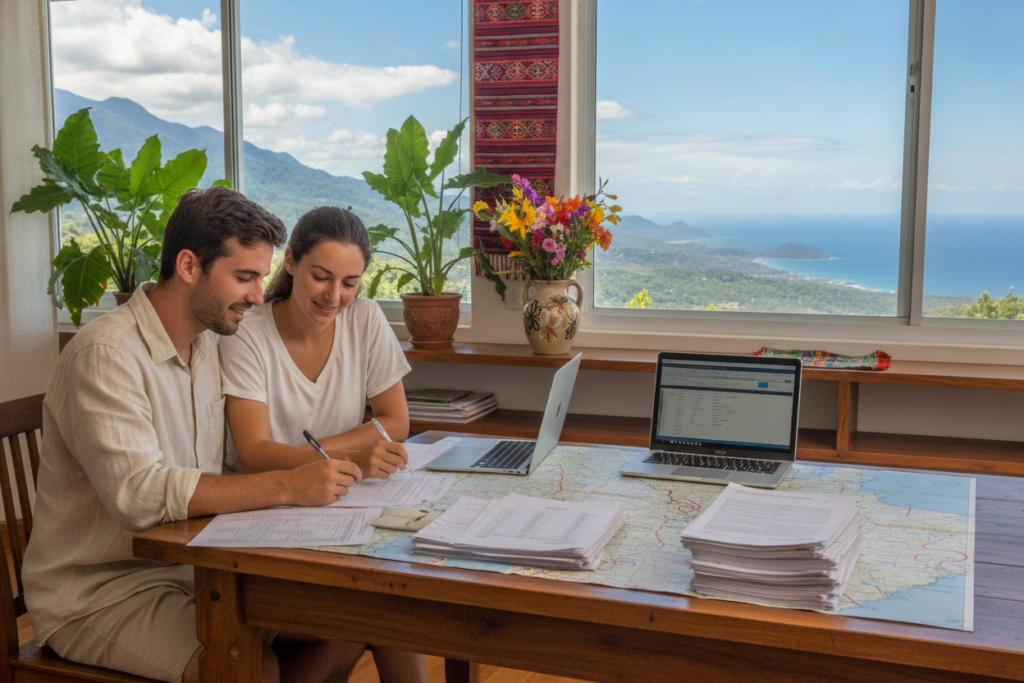
Understanding the financial aspects of relocating to Costa Rica can help us plan effectively. Budgeting for our move requires accounting for both one-time visa costs and ongoing monthly living expenses in our chosen region.
Visa Costs and Processing Fees
The total cost for the residency process typically ranges from $1,500 to $4,000. This includes application fees, DIMEX cards, and attorney services.
- Application fees can vary from $50 to $400.
- The DIMEX card costs between $98 and $123 upon approval.
- Attorney fees for assistance generally fall between $1,000 and $2,000.
Monthly Living Expenses in Costa Rica
Monthly living expenses for a couple usually range from $2,000 to $3,000. This is about 30-50% lower than in major US cities.
- A single expat can expect expenses between $1,500 and $2,000, covering rent, food, utilities, and basic healthcare contributions.
- Shopping at local ferias for fresh produce can help keep food costs low, while imported items may be significantly more expensive.
Choosing the Right Area in Costa Rica
Finding the ideal place to settle in Costa Rica can significantly enhance our experience. Each region offers unique advantages that cater to different lifestyles. From urban amenities to serene beach towns, we have plenty of options to explore.
Central Valley and San José Insights
The Central Valley is a favorite for expats seeking access to modern urban amenities and excellent healthcare. Areas like Escazú and Santa Ana provide a temperate climate while being close to the capital city of San José.
Pacific Coast and Beach Town Highlights
If we prefer the ocean, the Pacific Coast is home to vibrant towns like Tamarindo and Jacó. These areas are known for their surfing culture and lively nightlife. Additionally, Atenas is often praised for having one of the best climates in the world, making it a peaceful choice for retirees.
For a different experience, Puerto Viejo on the Caribbean Coast offers a bohemian lifestyle with Afro-Caribbean influences. When choosing an area, we should consider our priorities regarding amenities, climate, and the size of the expat community we wish to join.
Understanding Healthcare and Social Benefits
Access to quality healthcare is a vital consideration for those of us looking to settle in Costa Rica. The Caja Costarricense de Seguro Social (CCSS) provides universal healthcare. Contributions to this system range from 7% to 11% of our declared income.
As legal residents, we are required to enroll in the Caja system. This enrollment offers comprehensive coverage for surgeries, medications, and preventive care. Many expats opt for a hybrid approach, utilizing the Caja for basic needs while relying on private insurance for quicker access to English-speaking specialists.
Private medical care in Costa Rica is significantly more affordable than in the US. Doctor visits typically cost between $50 and $80, making healthcare accessible. Notable private hospitals, such as Hospital CIMA in Escazú and Clínica Bíblica in San José, offer modern facilities comparable to those in the United States.
To enroll in the Caja, we need our DIMEX card, passport, and proof of address. These documents are submitted at our local EBAIS clinic. The healthcare system is a major reason why many of us feel confident living in Costa Rica long-term, as it is both accessible and affordable.
Insights on Real Estate and Accommodation
As we consider moving to Costa Rica, understanding the real estate market is essential. This knowledge helps us make informed decisions about our living arrangements.
Americans enjoy the same property rights as Costa Ricans. However, there are specific restrictions on foreign ownership in coastal and maritime zones.
Renting a home in San José typically costs between $600 and $1,200 per month. In beach towns, rentals can range from $800 to $2,000.
Here are some key considerations:
- Renting is often the smartest choice for newcomers, allowing us to explore different areas before committing to a purchase.
- When buying property, working with a reputable real estate attorney is highly recommended to ensure a clear title and avoid disputes.
- Property taxes in Costa Rica are relatively low, around 0.25% of the registered value, making home ownership an attractive long-term goal.
- Title insurance is crucial for foreigners, as it protects against potential land disputes that may arise.
- Whether we choose to rent or buy, having a written contract is vital to protect our interests and clarify all terms of the agreement.
Managing Banking and Financial Considerations
Managing finances in a new country can be a complex yet rewarding experience. One of the first steps we should take is to set up a local bank account in Costa Rica. This is essential for paying utilities, rent, and managing our monthly expenses.
To open a bank account, we need our passport, proof of legal residency, and proof of address. Popular choices among expats include Banco de Costa Rica and Scotiabank, which cater to our day-to-day financial needs.
The banking process can be more complex than in the US. Compliance checks and in-person visits are mandatory. While most bank staff speak some English, having our documents organized and translated can facilitate the process.
Having a local account allows us to automate payments for our Caja healthcare contributions. This makes our financial life much more efficient. However, we should be prepared for a banking experience that may feel slower than what we are used to in the United States.
Adjusting to the Costa Rican Lifestyle

Adapting to life in Costa Rica can be an enriching experience for those looking to immerse themselves in a new culture. The phrase “Pura Vida” embodies the essence of the local way of life. It serves as a greeting, farewell, and acknowledgment, reflecting the laid-back attitude of the Ticos.
Costa Rica is known for its political stability and friendly population of about 5 million people. Embracing the Pura Vida lifestyle means adopting a more relaxed approach to daily interactions and life in general.
- Many expats find that learning Spanish enhances their experience, allowing for deeper connections with local Ticos.
- The country offers a high standard of living, complete with modern appliances, high-speed internet, and reliable electrical services.
- Labor costs are relatively low, making it easy to hire help for household chores, giving us more leisure time.
- Adjusting to the local culture involves being open to new experiences, such as shopping at ferias and joining community festivals.
By embracing these aspects of Costa Rican life, we can enhance our overall experience and find joy in our new surroundings. For more tips on moving to Costa Rica with family, check out this resource.
Legal Compliance and Work Permits
Understanding the legal framework for employment in Costa Rica is crucial for anyone planning to work here. Many of us might not realize that residency status significantly impacts our ability to work legally.
Pensionado and Rentista residencies generally do not allow employment as an employee. However, they do permit business ownership, which opens doors for entrepreneurship. Permanent residents can work without needing a separate work permit, making it easier to integrate into the local job market.
The Digital Nomad visa is an attractive option for remote workers. It allows us to maintain employment with foreign companies without the complexities of local work permits.
- To work legally in Costa Rica, we must ensure our residency status permits employment or obtain a specific work permit from immigration.
- Local sponsorship is often required for work permits, where an employer must prove the job could not be filled by a local citizen.
- Entrepreneurship is a viable option for those with residency, allowing us to open businesses like restaurants or tour companies.
- Always consult with an expert to ensure compliance with local employment regulations before starting any business activities.
Preparing for a Smooth Transition
As we prepare for our move to Costa Rica, careful planning is essential to ensure a smooth transition. Organizing vital documents is the first step. This includes our birth certificates, marriage certificates, and valid passport.
It’s crucial to apostille all documents through the US Department of State well in advance. This prevents delays during our residency application process. If we are moving with children, researching international schools is a good idea. These schools should offer curricula that are transferable back to the United States education system.
For those of us bringing pets, consulting a veterinarian experienced in animal relocation is necessary. They can help us obtain the required international health certificate within 14 days of travel.
Creating a checklist of tasks, from shipping household goods to closing accounts in the US, will help us stay organized during the move.
US Tax Considerations and Residency
Navigating tax obligations is a vital aspect for Americans planning to settle in Costa Rica. As US citizens, we are taxed on our worldwide income. This means we must file a tax return with the IRS, regardless of where we live.
Costa Rica operates under a territorial tax system. This means we only pay taxes on income earned within the country’s borders, such as local business profits or rental income.
Understanding our tax obligations is critical. Moving to Costa Rica does not exempt us from filing US federal income tax returns. We may be able to use the Foreign Earned Income Exclusion or Foreign Tax Credit to reduce our overall US tax liability while abroad.
It is highly recommended to consult with a US tax expert who specializes in expat issues. They can help us navigate our dual tax obligations effectively. Additionally, being proactive about our tax planning will prevent unexpected financial burdens.
Reaching Out for Expert Guidance
As we explore our options for residency in Costa Rica, expert support can be invaluable. Navigating the immigration process can be complex, which is why many expats seek professional guidance to ensure their applications are handled correctly.
CRIE has been assisting individuals and families with their Costa Rica residency and immigration needs for more than 20 years. Every residency case is unique, depending on factors such as nationality, family situation, specific documents, and personal immigration history.
Personalized Advice from CRIE’s Specialists
For personalized advice regarding your specific situation, you can speak with Johanna Alvarez, who serves as the immigration expert at CRIE. You can reach out to the team via WhatsApp at +506 8706 3888, email info@crie.cr, or visit their website at crie.cr for more information.
Contact CRIE today to speak with Johanna Alvarez for personalized guidance and current pricing for your residency application.
Final Thoughts and Next Steps
Embracing a new chapter in Costa Rica can lead to transformative experiences for those seeking change. Moving to this beautiful country offers the potential for a rewarding life filled with adventure and community.
By carefully researching your residency options and preparing your documentation, you can ensure a smooth transition into your new home. Remember, while the cost of living is lower than in the US, your personal budget will depend on your lifestyle and location choices.
Engaging with the local community and learning Spanish will greatly enhance your ability to thrive and enjoy the Pura Vida way of life. We hope this guide has provided the clarity you need to take the next steps toward your future in this tropical paradise.
For more information on residency options, visit this resource.
FAQ
Can we easily move to Costa Rica from the United States?
Yes, moving to Costa Rica is a viable option for us. The country offers various residency programs that cater to different needs, including retirees and digital nomads.
What are the key requirements for obtaining residency?
To obtain residency, we need to provide proof of income, a clean criminal record, and valid health insurance. Each residency type has specific requirements, so it’s essential to review them carefully.
What is the Pensionado program?
The Pensionado program is designed for retirees who receive a pension. It allows us to reside in Costa Rica with certain benefits, such as tax exemptions on income earned abroad.
How do we apply for a Costa Rican residency visa?
We must gather the necessary documents, fill out the application form, and submit it to the Costa Rican consulate or immigration office. It’s advisable to follow the specific guidelines for our chosen residency type.
What are the monthly living expenses in Costa Rica?
Monthly living expenses can vary, but on average, we can expect to spend between
FAQ
Can we easily move to Costa Rica from the United States?
Yes, moving to Costa Rica is a viable option for us. The country offers various residency programs that cater to different needs, including retirees and digital nomads.
What are the key requirements for obtaining residency?
To obtain residency, we need to provide proof of income, a clean criminal record, and valid health insurance. Each residency type has specific requirements, so it’s essential to review them carefully.
What is the Pensionado program?
The Pensionado program is designed for retirees who receive a pension. It allows us to reside in Costa Rica with certain benefits, such as tax exemptions on income earned abroad.
How do we apply for a Costa Rican residency visa?
We must gather the necessary documents, fill out the application form, and submit it to the Costa Rican consulate or immigration office. It’s advisable to follow the specific guidelines for our chosen residency type.
What are the monthly living expenses in Costa Rica?
Monthly living expenses can vary, but on average, we can expect to spend between $1,500 to $2,500, depending on our lifestyle and location within the country.
Which areas are best for expats in Costa Rica?
Popular areas for expats include the Central Valley, particularly San José, and various beach towns along the Pacific Coast. Each area offers unique amenities and lifestyle options.
How does the healthcare system work in Costa Rica?
Costa Rica has a robust healthcare system, primarily through the Caja Costarricense de Seguro Social (CCSS). As residents, we can access affordable healthcare services, which is a significant advantage.
Should we rent or buy property in Costa Rica?
This decision depends on our long-term plans. Renting is a great way to explore different areas before committing to a purchase. Buying property can be a good investment if we plan to stay long-term.
How do we set up a local bank account in Costa Rica?
To open a local bank account, we need to provide identification, proof of residency, and possibly a tax identification number. It’s advisable to choose a bank that caters to expats for easier services.
What is the Pura Vida lifestyle?
The Pura Vida lifestyle embodies a relaxed and positive outlook on life. Embracing this way of living can enhance our experience in Costa Rica, encouraging us to appreciate the natural beauty and community.
What are the tax implications for US citizens living in Costa Rica?
As US citizens, we must report our worldwide income to the IRS, even while living abroad. It’s essential to understand our dual tax obligations and seek advice from tax professionals familiar with international regulations.
How can we get expert advice on moving to Costa Rica?
Reaching out to specialists like those at CRIE can provide us with personalized advice and support throughout the relocation process, ensuring we make informed decisions.
,500 to ,500, depending on our lifestyle and location within the country.
Which areas are best for expats in Costa Rica?
Popular areas for expats include the Central Valley, particularly San José, and various beach towns along the Pacific Coast. Each area offers unique amenities and lifestyle options.
How does the healthcare system work in Costa Rica?
Costa Rica has a robust healthcare system, primarily through the Caja Costarricense de Seguro Social (CCSS). As residents, we can access affordable healthcare services, which is a significant advantage.
Should we rent or buy property in Costa Rica?
This decision depends on our long-term plans. Renting is a great way to explore different areas before committing to a purchase. Buying property can be a good investment if we plan to stay long-term.
How do we set up a local bank account in Costa Rica?
To open a local bank account, we need to provide identification, proof of residency, and possibly a tax identification number. It’s advisable to choose a bank that caters to expats for easier services.
What is the Pura Vida lifestyle?
The Pura Vida lifestyle embodies a relaxed and positive outlook on life. Embracing this way of living can enhance our experience in Costa Rica, encouraging us to appreciate the natural beauty and community.
What are the tax implications for US citizens living in Costa Rica?
As US citizens, we must report our worldwide income to the IRS, even while living abroad. It’s essential to understand our dual tax obligations and seek advice from tax professionals familiar with international regulations.
How can we get expert advice on moving to Costa Rica?
Reaching out to specialists like those at CRIE can provide us with personalized advice and support throughout the relocation process, ensuring we make informed decisions.