
For many people moving to Costa Rica, pets are not an afterthought. They are family.
That is why bringing a dog or cat to Costa Rica should be planned early, not handled at the last minute during the stress of an international move.
The basic idea is simple: your pet must meet Costa Rica’s animal health requirements, your home country may need to endorse the export paperwork, and the airline must accept the pet for travel.
The details matter. A missing signature, expired vaccine, wrong form, timing problem, airline restriction, or incomplete health certificate can create delays at the worst possible moment.
This guide explains what future residents and expats should know before bringing pets to Costa Rica.
Quick Answer
Dogs and cats can usually travel to Costa Rica when the correct veterinary documents, vaccinations, health certificate, and government endorsements are completed properly. Requirements depend on the animal, country of origin, airline, travel route, and whether the pet travels with you or separately. Start early, confirm the rules with your veterinarian and airline, and do not assume the process is the same for every country or every pet.
Dogs and cats are usually the most straightforward pets to bring.
Most relocation questions involve dogs and cats. These pets generally follow a veterinary document process that includes health certification, vaccine records, and official endorsement from the appropriate authority in the country of departure.
Airline rules are separate from Costa Rica entry rules.
Even if the veterinary paperwork is correct, the airline can still have its own rules for crate size, cabin travel, cargo travel, seasonal restrictions, breed restrictions, weight limits, and required reservations.
Timing is one of the biggest risks.
Pet documents are time sensitive. The health certificate, government endorsement, vaccinations, parasite treatment, and flight date all need to line up. Waiting too long can make the move more stressful than it needs to be.
In This Article
- Can you bring pets to Costa Rica?
- Documents commonly needed for dogs and cats
- Why timing matters
- Airline rules and pet travel options
- Traveling with pets versus shipping pets separately
- What to know about birds, rabbits, exotic pets, and other animals
- How pet planning connects to residency and relocation
- Common mistakes people make
Can You Bring Pets to Costa Rica?
Yes, many people bring pets to Costa Rica when they move.
Dogs and cats are the most common, and they are usually the easiest to plan for because the document process is more established.
The pet usually needs a veterinary health certificate, current vaccine information, parasite treatment information, and the required government endorsement from the country where the pet is departing.
The exact requirements depend on your country, your pet, the airline, the route, and whether the pet is traveling with you or unaccompanied.
Practical point:Do not treat pet relocation like packing a suitcase. Treat it like a document process with deadlines, signatures, official forms, airline rules, and a travel plan.
Documents Commonly Needed for Dogs and Cats
The exact paperwork depends on the country of departure, but most dog and cat travel plans involve several common items.
Your veterinarian and the official animal health authority in your country should confirm the current requirements before travel.
Common Pet Travel Documents and Records
- International health certificate completed by an approved veterinarian
- Government endorsement of the health certificate when required by the departure country
- Current rabies vaccination information
- Other vaccine records requested for dogs or cats
- Internal and external parasite treatment information when required
- Microchip information if required by the airline, country, or travel route
- Owner identification and travel details
- Flight itinerary and airline pet reservation
- Import permit if the pet is traveling unaccompanied or if the situation requires it
If you are traveling from the United States, the process normally involves a USDA accredited veterinarian and APHIS endorsement of the health certificate.
If you are traveling from Canada, most pets traveling internationally need an export certificate issued by a licensed veterinarian and endorsed by an official Canadian Food Inspection Agency veterinarian before the animal leaves Canada.
If you are traveling from another country, check the correct animal health authority in that country before booking your flight.
Why Timing Matters So Much
Pet relocation problems often happen because people wait too long.
Health certificates are time sensitive. Vaccines may need to be current within a required window. Parasite treatments may need to be done close to travel. Government endorsement can take time. Airline pet space can be limited.
If the travel date changes, the paperwork may need to be checked again.
If the certificate is incomplete, the endorsement office may reject it or ask for corrections.
If the airline does not accept the pet on that flight, the entire plan may need to change.
Important:Start with your veterinarian and airline before you buy nonrefundable tickets. The pet travel plan should match the document timeline, not the other way around.
Airline Rules Are a Separate Issue
Costa Rica’s entry rules are only one part of the process.
The airline has its own pet travel rules, and those rules can be strict.
Some pets may travel in the cabin. Others may need to travel as checked baggage or cargo. Some airlines restrict certain breeds, crate sizes, temperatures, routes, aircraft types, or travel seasons.
Airlines may also limit the number of pets allowed on a flight.
That means your pet may meet Costa Rica’s document requirements but still not be allowed on the flight you wanted.
Planning advice: Call the airline before booking. Ask about pet reservations, crate dimensions, breed rules, weight limits, seasonal restrictions, connecting flights, and where the pet will be checked in and received.
Traveling With Your Pet Versus Shipping Your Pet Separately
There is a difference between a pet traveling with the owner and a pet traveling separately.
When a pet travels with you, the process is usually more straightforward, assuming the documents, airline rules, and timing are correct.
When a pet travels unaccompanied, the process can involve additional steps and may require an import permit or cargo arrangements.
Unaccompanied pet travel is more complex because more parties may be involved, including cargo handlers, customs brokers, import officials, and sometimes a pet relocation company.
If your pet cannot travel with you, get professional help early so you do not miss a requirement.
Different Animals Can Have Different Rules
Dogs and cats are the most common pets people bring to Costa Rica, but not every animal follows the same process.
| Pet Type | Planning Notes | What to Confirm |
|---|---|---|
| Dogs | Usually the most common pet relocation request. Health certificate, vaccines, parasite treatment, airline rules, and travel crate planning matter. | Confirm current Costa Rica entry requirements, airline rules, breed restrictions, and the health certificate timeline. |
| Cats | Usually follows a similar document process, but airline cabin rules, carrier size, and stress planning are especially important. | Confirm vaccine records, health certificate rules, airline pet space, and whether your cat can travel in cabin. |
| Rabbits and guinea pigs | These may have separate health certificate requirements depending on country of departure. | Confirm the correct certificate, airline acceptance, and Costa Rica requirements before making travel plans. |
| Birds | Bird imports can be highly restricted and may not be allowed in many common pet travel situations. | Confirm directly with the official authorities before assuming any bird can be brought into Costa Rica. |
| Exotic pets | Reptiles, wildlife species, hybrid animals, and other exotic pets can involve special rules, permits, or restrictions. | Confirm with the official animal health authority and ask whether CITES or other permits apply. |
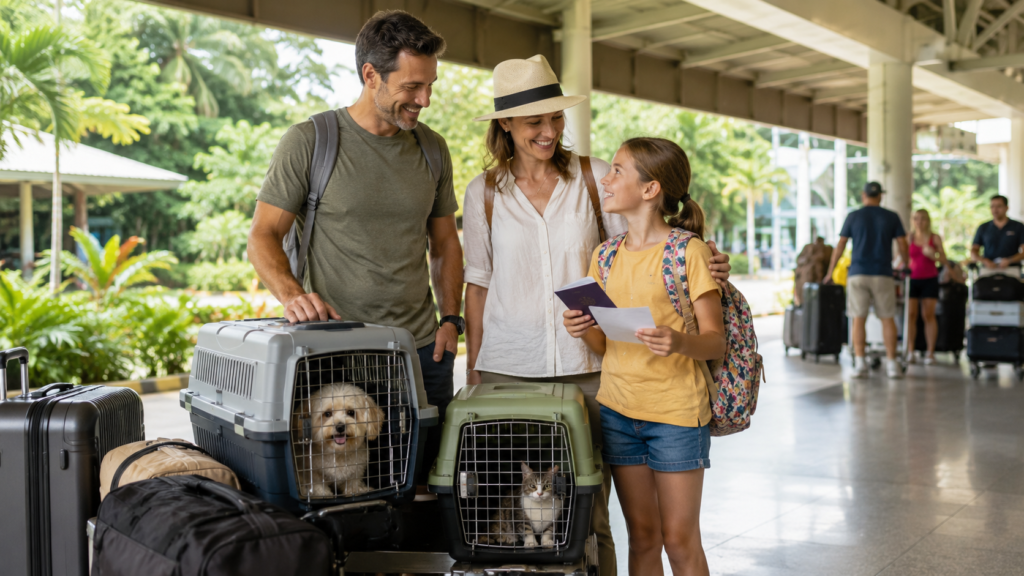
What Happens When Your Pet Arrives in Costa Rica?
When your pet arrives, the documents may be reviewed by the proper authorities.
That is why the paperwork must travel with the pet and be easy to read, complete, signed, and endorsed when required.
If the pet is traveling with you, keep copies of the health certificate, vaccine records, airline documents, and your own travel documents accessible.
If the pet is traveling as cargo or unaccompanied, confirm who is responsible for receiving the pet, presenting documents, and handling any required clearance steps.
Do not pack the only copies of pet documents deep inside checked luggage.
Choosing Where to Live With Pets in Costa Rica
Pet planning does not end at the airport.
Before choosing a rental or long-term home, ask whether pets are allowed, whether there are breed or size restrictions, and whether the property is safe for your animal.
Many condos, gated communities, apartments, and rentals have pet rules.
You should also think about heat, humidity, ticks, fleas, traffic, fencing, nearby veterinarians, emergency clinics, walking areas, noise, and how your pet handles tropical weather.
A home that looks perfect online may not be practical for your dog or cat.

Veterinary Care in Costa Rica
Costa Rica has veterinarians, pet stores, grooming services, and animal clinics in many areas.
Access is usually better in the Central Valley and larger towns than in remote beach or mountain areas.
If your pet is older, takes medication, has a chronic condition, or needs special food, research veterinary access before you choose where to live.
Bring copies of your pet’s medical records, prescriptions, vaccine history, and any special care instructions.
It is also smart to ask your home veterinarian what to bring, what to avoid, and how to transition your pet safely.
How Pet Planning Connects to Residency and Relocation
Bringing a pet to Costa Rica is not part of the immigration application itself, but it affects the move.
Your pet’s travel date can influence when you arrive, where you stay, what flights you choose, and how much stress you face during the transition.
Residency planning also involves documents, timing, appointments, travel, housing, and long-term location decisions.
That is why pet planning should sit inside the larger relocation plan, not outside it.
If your residency documents are organized but your pet documents are not, the move can still become difficult.
Common Mistakes People Make When Bringing Pets to Costa Rica
The first mistake is waiting until the last minute to call the veterinarian.
The second mistake is booking a flight before confirming airline pet rules.
The third mistake is assuming every country uses the same pet export process.
The fourth mistake is assuming a pet can travel in the cabin without checking carrier size, weight limits, and airline availability.
The fifth mistake is bringing an older or medically sensitive pet without researching veterinary care near the new home.
The sixth mistake is confusing Costa Rica entry rules with airline rules. You need to satisfy both.
The seventh mistake is not asking whether the rental, condo, or community allows pets before signing anything.
Pet Relocation Checklist
- Confirm Costa Rica’s current entry rules for your pet type.
- Contact your veterinarian early.
- Confirm whether your veterinarian can issue the correct travel documents.
- Confirm whether government endorsement is required before departure.
- Check rabies vaccination timing and other vaccine records.
- Ask about parasite treatment requirements.
- Call the airline before booking your ticket.
- Reserve pet space with the airline when required.
- Confirm crate or carrier size rules.
- Keep original documents and copies with you during travel.
- Research veterinarians near your destination in Costa Rica.
- Confirm your rental, condo, or community allows pets.
How CRIE Can Help
CRIE helps foreigners with Costa Rica residency and immigration services.
CRIE is not a veterinary office, airline, SENASA office, or pet cargo company.
But pet planning often comes up during relocation because it affects timing, housing, travel, and the overall move.
CRIE can help you think through how pet travel fits into your residency and relocation timeline, and when you should coordinate with veterinarians, airlines, and pet relocation specialists.
If you are moving with pets, the best approach is simple: organize your residency documents early and organize your pet documents early too.
Final Thoughts
Bringing pets to Costa Rica is very possible for many people, especially with dogs and cats.
But it is not something to leave until the week before you fly.
You need the right veterinary paperwork, the correct government endorsement when required, current vaccine records, airline approval, and a realistic arrival plan.
You also need to think beyond the airport. Where will you live? Is the home pet friendly? Is there a veterinarian nearby? Can your pet handle the climate? Will you have the food, medication, and routine your pet needs?
For many expats, Costa Rica becomes home because the whole family can make the move together.
The smoother you make the pet process, the easier that first chapter in Costa Rica becomes.
Planning Your Move to Costa Rica With Pets?
CRIE helps retirees, investors, spouses, parents, families, and expats prepare for the Costa Rica residency process.
If you are bringing pets, planning housing, and organizing your move, start early so your residency timeline and relocation timeline work together.