
No, you cannot buy Xanax over the counter in Costa Rica, and you cannot buy antibiotics without a prescription either. Xanax (alprazolam) is a controlled psychotropic medicine. Under Costa Rica’s digital-prescription rules, it can only be prescribed by a doctor registered in the Ministry of Health’s Receta Digital system and dispensed against that digital prescription. A U.S. or Canadian prescription is not enough on its own, so plan to see a Costa Rican doctor.
Do not assume a pharmacy product in Costa Rica is identical to one sold in the United States or Canada. Check the exact medicine with a qualified pharmacist or prescriber: active ingredient, strength, dosage form, release type and prescribed use all matter. A familiar brand name or similar package is not enough to establish an appropriate replacement.
For a move or extended stay, confirm availability before your supply runs low. This guide helps organize that conversation; it does not recommend a medicine or a treatment change.
Xanax and Other Controlled Medicines in Costa Rica
Costa Rica’s Decree 39984-S says psychotropic and narcotic medicines may only be prescribed and dispensed through digital prescriptions in the Receta Digital system. That covers alprazolam and the other benzodiazepines, as well as opioid painkillers. In practice:
- A registered Costa Rican doctor or dentist examines you and issues the digital prescription, one medicine per prescription.
- The prescription carries your ID number (a passport for foreigners who are not residents) and your address in Costa Rica.
- You receive a code and present it at any authorized pharmacy within seven calendar days.
- The pharmacist checks your ID (cédula, residence card or passport) before handing over the medicine.
If you take one of these medicines every day, arrange a Costa Rican doctor before your supply runs out, and bring your medical records so the doctor can see your current treatment.
What should you compare?
The FDA’s travel guidance recommends carrying details including brand and generic names, dosage form, strength and frequency of use. Use that information when asking a Costa Rican professional to review a product.
- Active ingredient: compare every ingredient in combination products.
- Strength and form: a tablet, liquid, cream or injection should not be treated as interchangeable without professional advice.
- Release type: identify any extended-release or other special formulation on your prescription.
- Pack quantity: check the number of doses when comparing prices.
- Storage and continuity: ask how to maintain your prescribed treatment during travel and after arrival.
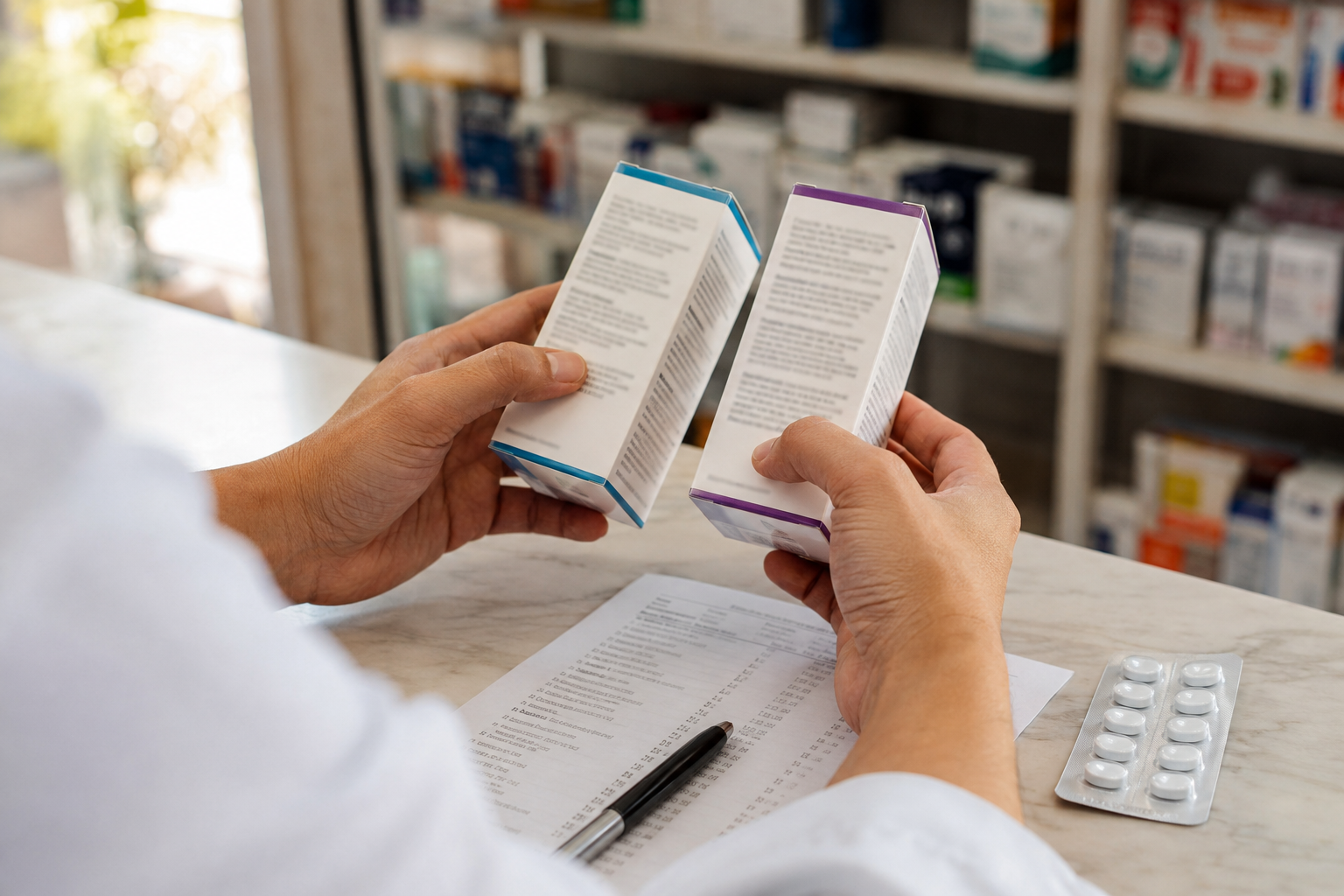
Check Costa Rican registration separately from foreign approval
The Ministry of Health provides Regístrelo for sanitary-registration procedures and registered-product verification. Its services page also points users to registered-product consultations.
Ask a pharmacist to help check the exact product. Registration, a pharmacy’s current stock and suitability for your treatment are separate questions.
A blanket statement that Costa Rica never takes foreign approvals into account is misleading. The ministry’s legislation directory includes recognition procedures involving reference regulatory authorities. For a patient, the practical question is whether the specific product meets the applicable Costa Rican requirements—not simply whether a foreign brand is familiar.
Are medicines cheaper in Costa Rica?
There is no reliable blanket answer for your prescription. Get a current quote for the exact strength, formulation and quantity from the pharmacy you plan to use. Compare your actual out-of-pocket cost, including insurance coverage where applicable, rather than comparing a foreign list price with a different local product.
Record the quote date, currency, pack size and whether the item is in stock. Ask whether a quoted alternative requires your prescriber’s review. Do not change treatment solely because another product costs less.

Can you use a prescription from the United States or Canada?
Ask the dispensing pharmacy or an appropriate Costa Rican clinician before relying on a foreign prescription. Provide the medicine’s details and your medical records. Do not assume that a product is available without a prescription simply because another traveler purchased it, or that a foreign prescription will meet every local requirement.
The Ministry of Health’s December 2025 notice on digital prescriptions states that pharmacies must require a digital prescription for antibiotics and other antimicrobials. Ask the pharmacist about the current process for your medicine; do not rely on an old account of buying it without a prescription.
Bringing your current medication with you
Carry readable labels and supporting medical records, and check Costa Rica’s entry requirements for the actual substance and quantity. Airline packing instructions do not replace government import rules.
The Ministry of Health’s 2013 traveler document addresses internationally controlled substances, including a one-month personal-treatment quantity and supporting documentation. It is an older, category-specific document; confirm the current authorization process with the ministry before travel rather than treating it as a universal medication allowance.
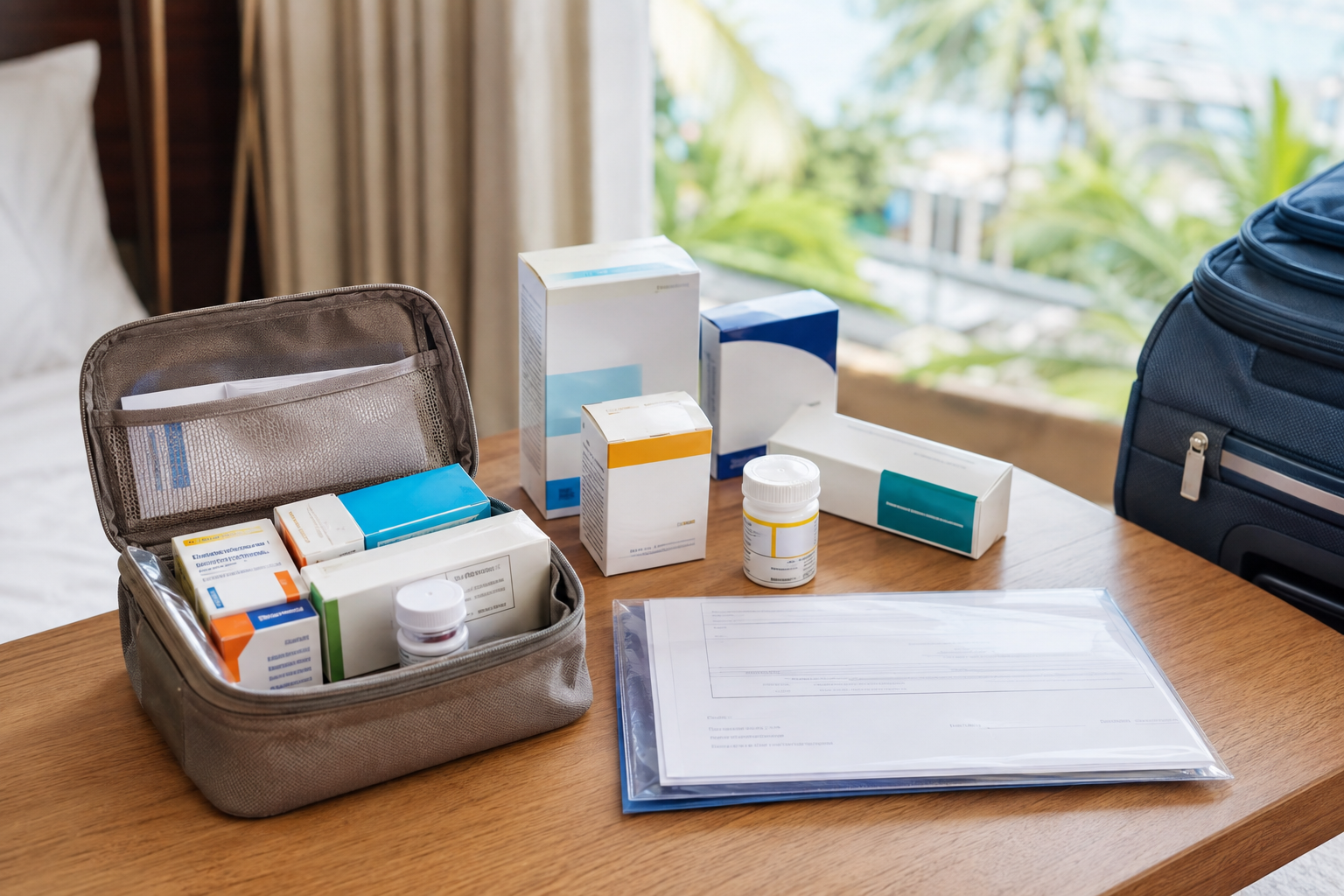
Questions for controlled medicines and travel
When contacting the Ministry, provide the active ingredient, strength, total quantity, travel dates and whether you are entering or leaving Costa Rica. Ask which supporting records and advance authorization apply. An outbound procedure or a personal-treatment allowance should not be treated as permission for a commercial shipment.
Ask your clinician or pharmacist about refrigeration, flight delays and what to do if your next refill is delayed. Keep the pharmacy contact and follow-up arrangements with your medication list. Do not change prescribed treatment to solve a paperwork problem without professional guidance.
Make a medication plan before moving
- Ask your current prescriber for a clear treatment summary and medication list.
- Contact a Costa Rican pharmacy or clinician with the exact product details.
- Confirm local availability, prescription requirements, price and any ordering delay.
- Discuss any proposed substitution with a qualified professional.
- Check travel authorization and storage needs before departure.
- Arrange follow-up before your existing supply runs out.
For wider planning, read our healthcare guide for expats and customs restrictions guide. Availability at a private pharmacy should not be treated as proof of coverage through an insurer or the public healthcare system.
Checked on 10 October 2026 against Costa Rica’s Ministry of Health rules. Requirements can change, so confirm the current process with your pharmacist.
FAQ
Can you buy Xanax over the counter in Costa Rica?
No. Alprazolam is a controlled psychotropic. A doctor registered in the Ministry of Health’s Receta Digital system must issue a digital prescription, and the pharmacy dispenses it against that code.
Will a Costa Rican pharmacy fill my U.S. or Canadian prescription?
Not for controlled medicines such as Xanax, which need a Costa Rican digital prescription. For other medicines, ask the pharmacist and bring the details of your prescription.
Can you buy antibiotics over the counter in Costa Rica?
No. Since the Ministry of Health’s December 2025 notice, pharmacies must require a digital prescription for antibiotics and other antimicrobials.
Can I bring my own medication to Costa Rica?
Carry it in labelled packaging with your prescription and medical records. For controlled medicines, confirm the current personal-use allowance and paperwork with the Ministry of Health before you travel.
Are Costa Rican medicines the same as in the U.S.?
Often the same active ingredient is sold under a different brand name. Compare the active ingredient, strength, form and release type with a pharmacist before switching.