
Costa Rica’s festivals bring together civic history, religious traditions, music, dance and community life. Independence Day and the annexation of the Partido de Nicoya are national commemorations; a parish procession, library workshop or town festival has its own local program. Use this guide to choose what interests you, then confirm the organizer’s current dates and access arrangements.
Reviewed 8 September 2026. Historical sources explain the traditions; they are not event schedules for 2026.
Where to find cultural activities happening now
The Ministry of Culture and Youth’s official cultural agenda lists activities by province and category, including music, museums, theater, dance and exhibitions. Open the individual listing to check its date, venue, admission details and registration instructions. An exhibition may run for weeks while a concert has only one performance.
For a newcomer, a daytime museum event or library workshop is an easy first outing. For an evening concert, arrange the return journey before leaving. Do not assume that an event is free, accessible without steps, suitable for every age or presented in English simply because it appears in a public calendar.
Independence Day: September 15 and the September 14 lanterns
Costa Rica commemorates independence from Spain on September 15. The regional declaration was signed in Guatemala on September 15, 1821; news reached Costa Rica later. The local act signed in Cartago on October 29 belongs to that subsequent process. These dates describe different stages, not competing dates for the annual national celebration. The Ministry’s account of the Cartago act explains the distinction.
The familiar desfile de faroles takes place on the eve of Independence Day, September 14. According to the Ministry’s history of the lantern tradition, its organized annual observance in Costa Rica began in 1953. Handmade lanterns and the independence torch connect school and community celebrations with the story of Central American independence.
Ask the school or municipality for the actual parade route and starting time. Keep crossings clear, follow stewards’ directions and ask before photographing children. Families making a lantern can choose a battery-powered light and a design that a child can carry comfortably. September celebrations extend beyond the holiday, so the cultural agenda is useful even if you cannot attend on the 14th or 15th.
July 25: annexation of the Partido de Nicoya
Often called Guanacaste Day in English, July 25 commemorates the 1824 decision associated with the incorporation of the Partido de Nicoya into Costa Rica. The historical territory and process should not be reduced to the claim that the whole modern province voted unanimously on one day. The Ministry’s historical explanation describes the open assembly in Nicoya and participation by representatives of Nicoya and Santa Cruz.
Look for local music, folkloric dance, food and historical programs. An anniversary event published for 2024 or 2025 is not confirmation that it will happen at the same time or place this year. Check the municipality and the named cultural institution before booking a trip around it.
Semana Santa: Easter traditions and practical planning
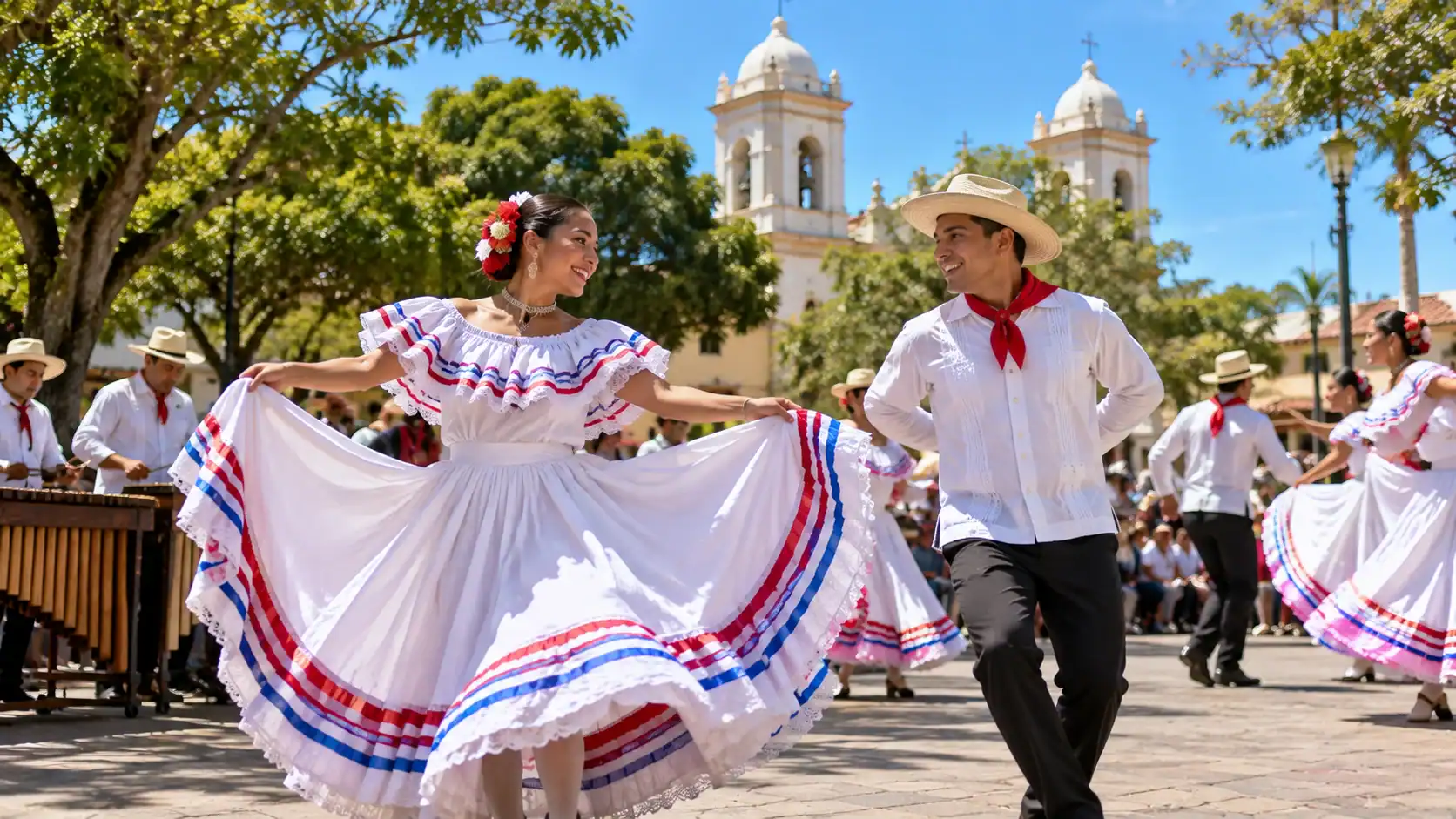
Holy Week follows the Christian Easter calendar, so its dates change each year. Religious observances can include processions, services and sacred music. The Ministry’s account of the concert bands’ Holy Week program documents the connection between music and these celebrations; that 2023 program is historical background, not a current timetable.
For a procession, contact the parish responsible for the route. For a concert, check the venue separately: religious and cultural events do not always share the same admission arrangements. Visitors who do not share the faith can observe respectfully, remain quiet during worship and follow photography restrictions.
When planning a holiday journey, confirm accommodation, transport, opening hours and cancellation terms in writing. Do not assume every business closes for the entire week or that a regular bus timetable applies on a holiday. For the distinction between commemorative dates and statutory holidays, see our public holiday guide.
Children’s Day: September 9
Costa Rica celebrates the Day of the Child on September 9. The Ministry of Education’s historical explanation traces the national observance to 1946 and emphasizes children’s rights and well-being. It is more than a shopping occasion.
Families can choose a reading activity, art workshop or shared outing suited to the child’s interests. Confirm the school’s own program and whether an activity is open to the public. Keep children’s names, school details and photographs private unless the appropriate permission has been given. A celebration date alone is not proof of a nationwide closure or an entitlement to a day off.
Other traditions to explore
- August 2: the Virgen de los Ángeles observance and pilgrimage are covered in our Cartago pilgrimage guide, including preparation and respectful participation.
- October 31: the Day of the Traditional Costa Rican Masquerade celebrates mask-making and community performance. The Ministry’s explanation describes the tradition and its recognition as a national symbol. Read our mascaradas and Halloween guide for the distinction.
- Throughout the year: follow the official agenda for concerts, exhibitions, theater, film and local festivals. An event’s recurrence, name or usual month does not establish its next edition’s dates.
Making cultural outings part of everyday life
Start with one nearby activity and return regularly. A public library, gallery or dance class offers a different experience from a large street celebration. Ask about the language used, costs, accessibility and whether advance booking is needed.
Costa Rican culture includes regional, Indigenous, Afro-Costa Rican, religious and secular traditions. Avoid treating one performance as representative of every community. Buy directly from credited artists where possible, respect ceremonial boundaries and follow our cultural etiquette guide when meeting new people.
Before attending: a short checklist
- Check the year, organizer and exact location on the current listing.
- Confirm tickets, registration, age suitability and accessibility.
- Plan transport home, weather protection and a meeting point.
- Observe local instructions for worship, performances and photography.
- Recheck for changes before setting off.
This guide keeps historical explanations separate from current event logistics. Use the linked official sources for background and the organizer’s latest notice for your visit.
Thinking of moving to Costa Rica?
Get a free residency assessment. Tell Johanna, our immigration expert, about your situation, and she will tell you which residency fits you and what you need.
WhatsApp Johanna: +506 8373 2085Free assessment
Or email info@crie.cr