
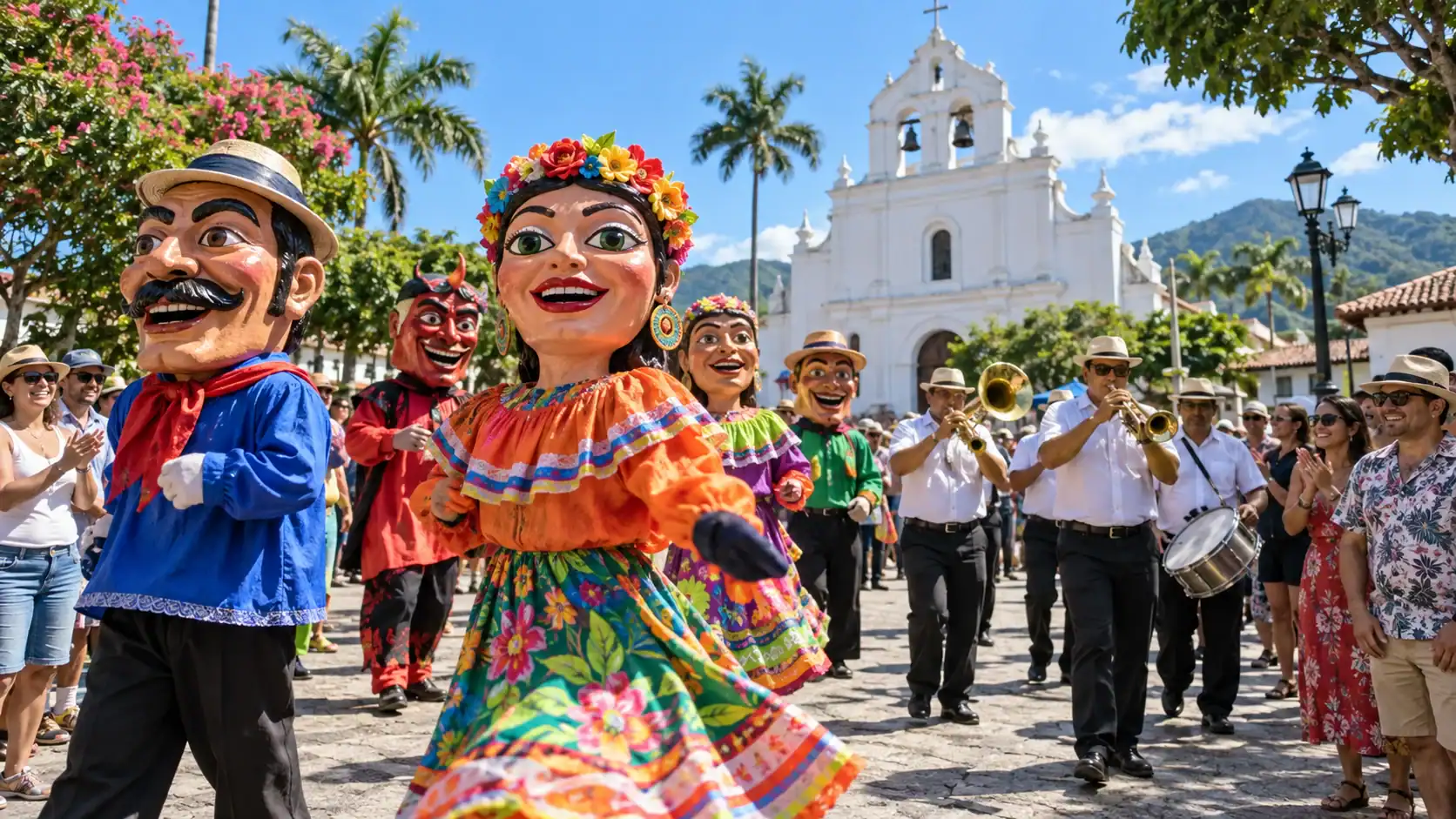
Yes, Halloween is celebrated in Costa Rica, though on a smaller scale than in the United States or Canada, and it is not a public holiday. You will find costume parties in bars and nightclubs, activities in shopping centres and schools, and trick-or-treating in some neighbourhoods. October 31 is also the National Day of the Traditional Costa Rican Mascarada, a much older local tradition of giant handmade masks, dancing and street music. This guide explains both, so you know what to expect wherever you live.
Does Costa Rica celebrate Halloween?
Halloween has grown in Costa Rica over recent decades, especially among young adults and families in the Central Valley and in beach towns with many foreign residents. In its October 31, 2025 advisory, Costa Rica’s Ministry of Public Works and Transport (MOPT) described costume activities in neighbourhoods, educational centres and businesses, including shopping centres, bars and nightclubs, as well as children going out for sweets.
It is not universal. Plenty of Costa Rican families do not take part, and door-to-door trick-or-treating happens only where neighbours have arranged it. Ask your school, building administrator, neighbours or host what is planned, and check whether an activity is public, invitation-only, meant for children or for adults only.
When is Halloween in Costa Rica?
On October 31, the same date as everywhere else. It is not one of Costa Rica’s public holidays, so when it falls on a weekday it is a normal working day, and parties tend to happen on the nearest Friday or Saturday night. In 2026, October 31 falls on a Saturday.
October 31 and Costa Rica’s mascarada tradition
The National Museum’s cultural explanation identifies October 31 as the national day of the traditional mascarada. It describes costumed characters known as mantudos and payasos appearing in community festivities and dancing to cimarrona music. The tradition also appears at celebrations outside October, including local and religious festivities.
The museum explains that the traditional mascarada became a national symbol in 2022. Calling it simply “Costa Rican Halloween” overlooks the craft, music and community history that give it meaning. You can enjoy Halloween activities and still take time to learn about the local tradition.
Look closely at the mask-making craft
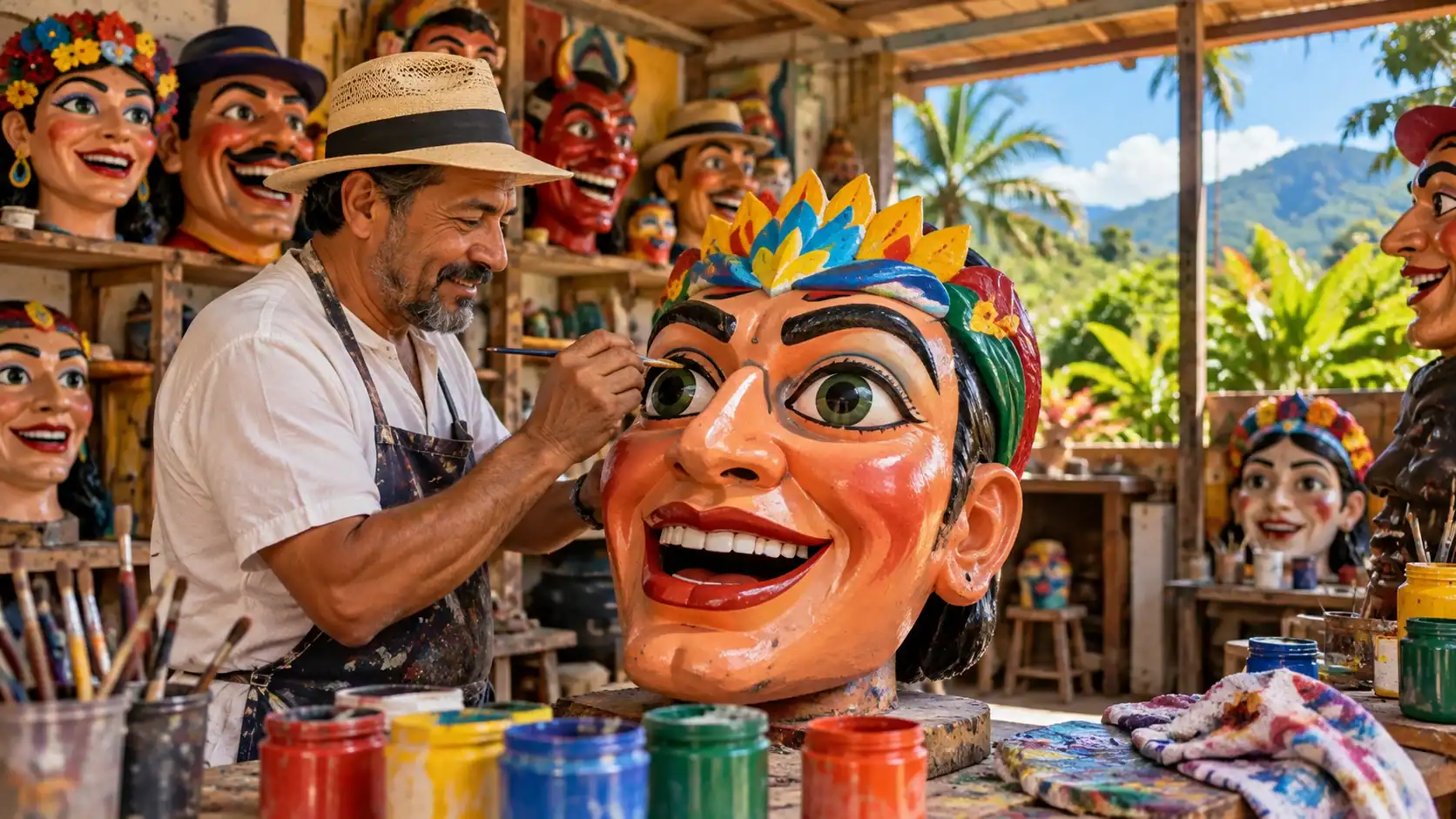
Each giant mask is made by hand, and a display is a quieter way to appreciate the individual characters and ask about the maker’s work. Masks often portray recognisable figures, such as the elderly couple below.

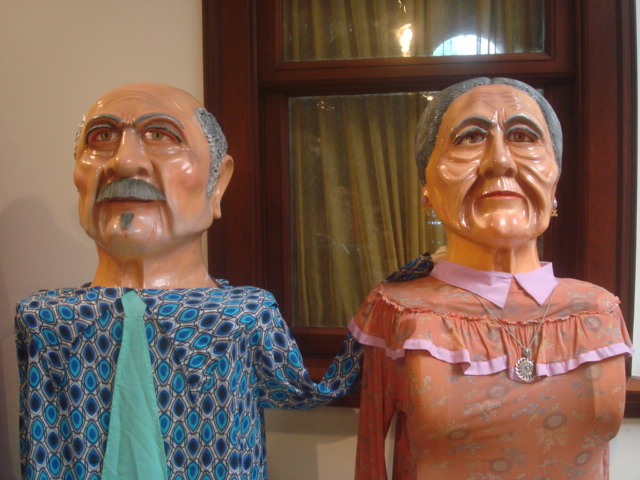
Ask permission before handling a mask or photographing a person at close range. When buying a piece, ask the seller about the maker, the materials and how to transport it. Treat each mask as a craft with an identifiable creator rather than assuming they all come from the same place.
Characters can be playful or unsettling
The witch mask below was photographed in Aserrí in 2013. A dramatic face may fascinate some children and frighten others. Before attending with younger family members, ask about costumes, crowd size and noise, and choose a spot where you can step away comfortably.

Where to find Halloween parties and events
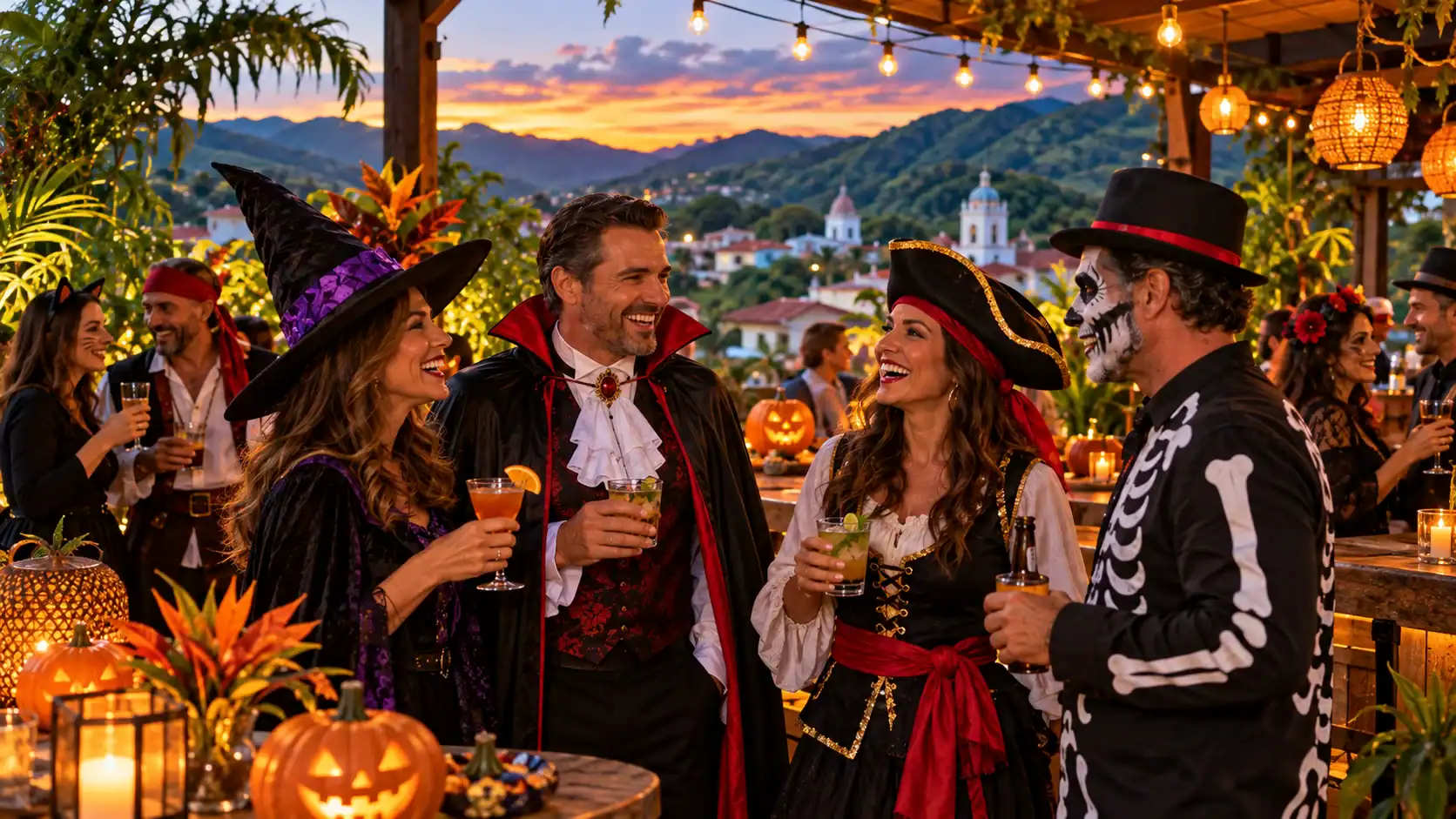
Costume parties are most common in bars and nightclubs in San José and Escazú and in the popular beach towns, and shopping centres often run daytime activities for families. If you want to see a traditional mascarada, look for municipal festivities and cultural events around October 31.
Check the Ministry of Culture’s agenda, municipal announcements and each organiser’s own page, and confirm the year as well as the date. An old listing is useful background, not a booking confirmation.
Trick-or-treating in Costa Rica
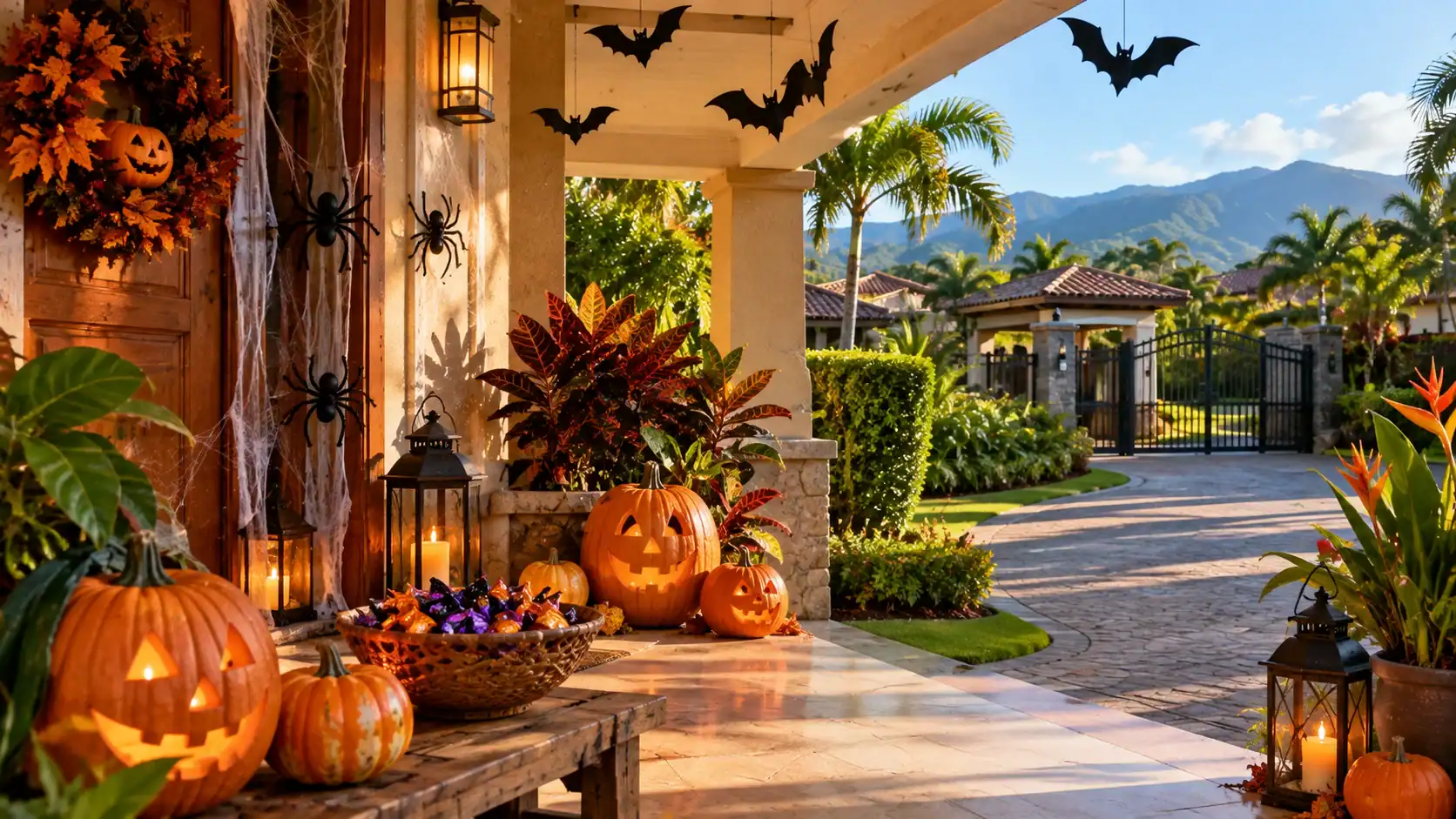
Where it happens, trick-or-treating is usually organised inside gated communities, condominiums and some residential streets, with decorated houses showing who is taking part. If you live in a condominium, the administration or the residents’ group chat is the place to ask. If you want to hand out sweets, decorate your door so children know they are welcome.
Plan a safer evening
MOPT’s 2025 advice emphasises adult supervision, attention around vehicles, and costumes that do not block vision or movement. Drivers should remove masks, slow down around pedestrians and avoid phone distractions. A street activity does not mean the road is closed to traffic.
- Agree on a meeting point and a way to contact each other.
- Arrange the journey home before going out.
- Check the event’s location, admission rules and finish time directly.
- Keep your phone away while crossing streets.
- For children, choose a manageable route and an accompanying adult.
Frequently asked questions
Is Halloween a public holiday in Costa Rica?
No. October 31 is a normal working day when it falls on a weekday. Celebrations are private, commercial or community events.
Do children go trick-or-treating in Costa Rica?
In some places. It is most common in gated communities and condominiums where residents arrange it, and much less common on open streets.
Is Halloween the same as the mascarada?
No. They share the date, but the traditional mascarada is a Costa Rican tradition of giant handmade masks, mantudos and cimarrona music, declared a national symbol in 2022.
Where are the best Halloween parties in Costa Rica?
Bars and nightclubs in San José and Escazú and the busier beach towns usually host costume parties. Programmes change every year, so check the venue’s own page for this year’s plans.
For related planning, read our cultural etiquette guide and nighttime safety guide.
Thinking of moving to Costa Rica?
Get a free residency assessment. Tell Johanna, our immigration expert, about your situation, and she will tell you which residency fits you and what you need.
WhatsApp Johanna: +506 8373 2085Free assessment
Or email info@crie.cr