
The 2005 Monteverde Bank Siege: Twenty-Eight Hours That Changed a Town
Monteverde is known for cloud forest, Quaker history and visitors who come to see birds and wildlife. In March 2005, the small community became the centre of a tragedy that Costa Ricans still remember clearly. On Tuesday, 8 March 2005, an attempted robbery at the Banco Nacional branch in Santa Elena became a hostage siege lasting about twenty-eight hours. By the time it ended the following evening, nine people had died and seventeen had been injured.The attempted robbery
Shortly after 3:00 p.m., three armed brothers approached the Banco Nacional branch. Bank security guards recognised the attempted robbery and exchanged fire with them at the entrance. Two of the men were killed outside the building. A bank guard, Álvaro Castro, was shot in the arm and abdomen but survived. The third brother, Erlyn Hurtado Martínez, managed to get inside the bank. What began as a failed robbery immediately became a hostage crisis. In the first minutes, bank employees and customers were killed or injured. Those who remained inside became hostages.Inside the bank
Accounts differ slightly on the number of people held inside, but the final figure is generally reported as around thirty-one hostages. They included bank staff and customers, among them a pregnant woman. For the people inside, the uncertainty was terrible. Some hostages were released gradually. Others escaped when opportunities appeared. Outside, police, emergency workers, families and journalists gathered as the crisis continued through the night.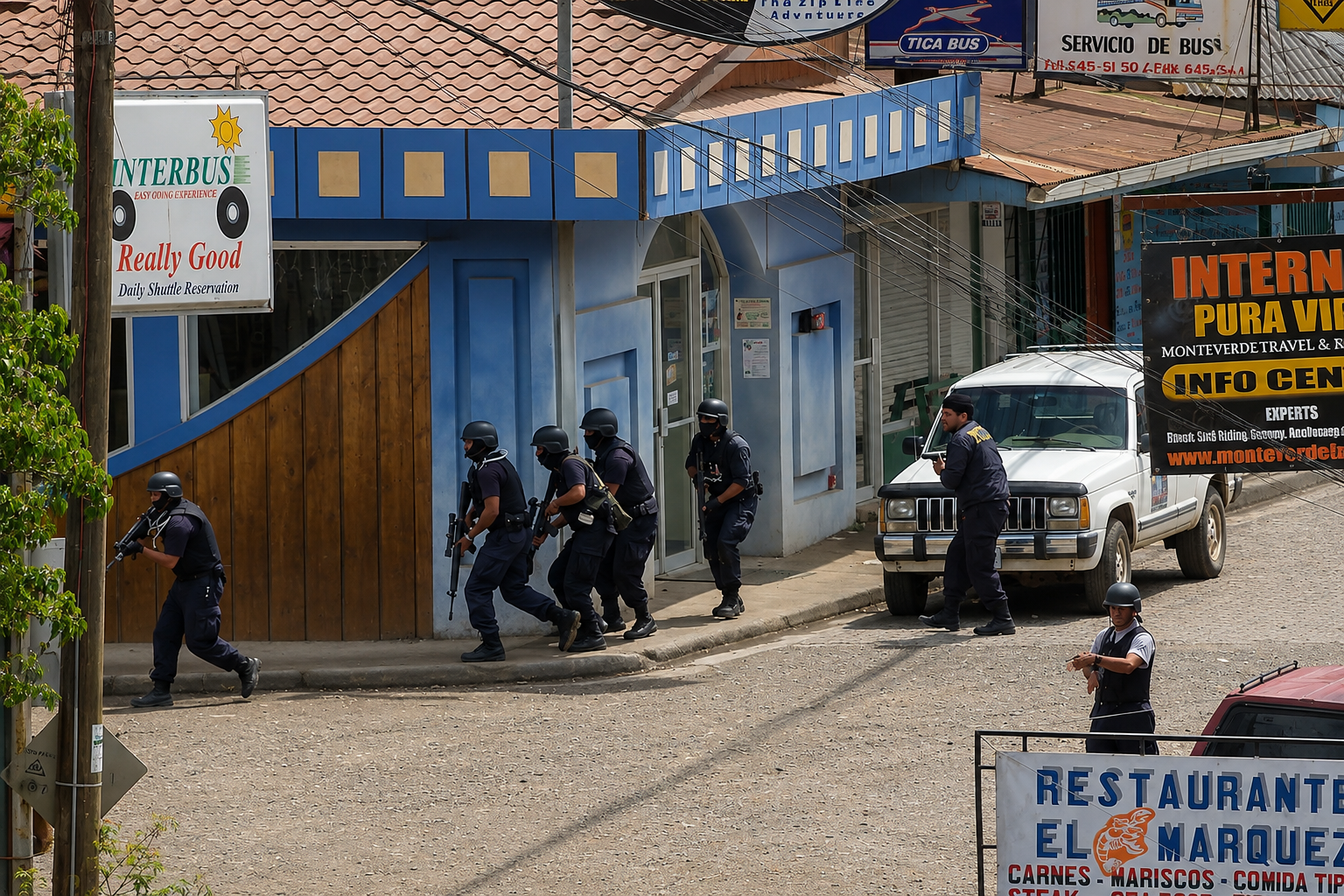
A small town under siege
Monteverde was not prepared for an event of this scale. Roads into the area filled with police, Red Cross personnel, officials and press. Many local residents stayed inside their homes and businesses while the centre of Santa Elena was secured. Police from the Fuerza Pública, the Organismo de Investigación Judicial and specialised tactical units were involved. Negotiations continued through Tuesday night and into Wednesday. Hostages came out in small groups. Some were released. Some escaped. The public watched the events unfold slowly, hour after hour, on television and radio across Costa Rica.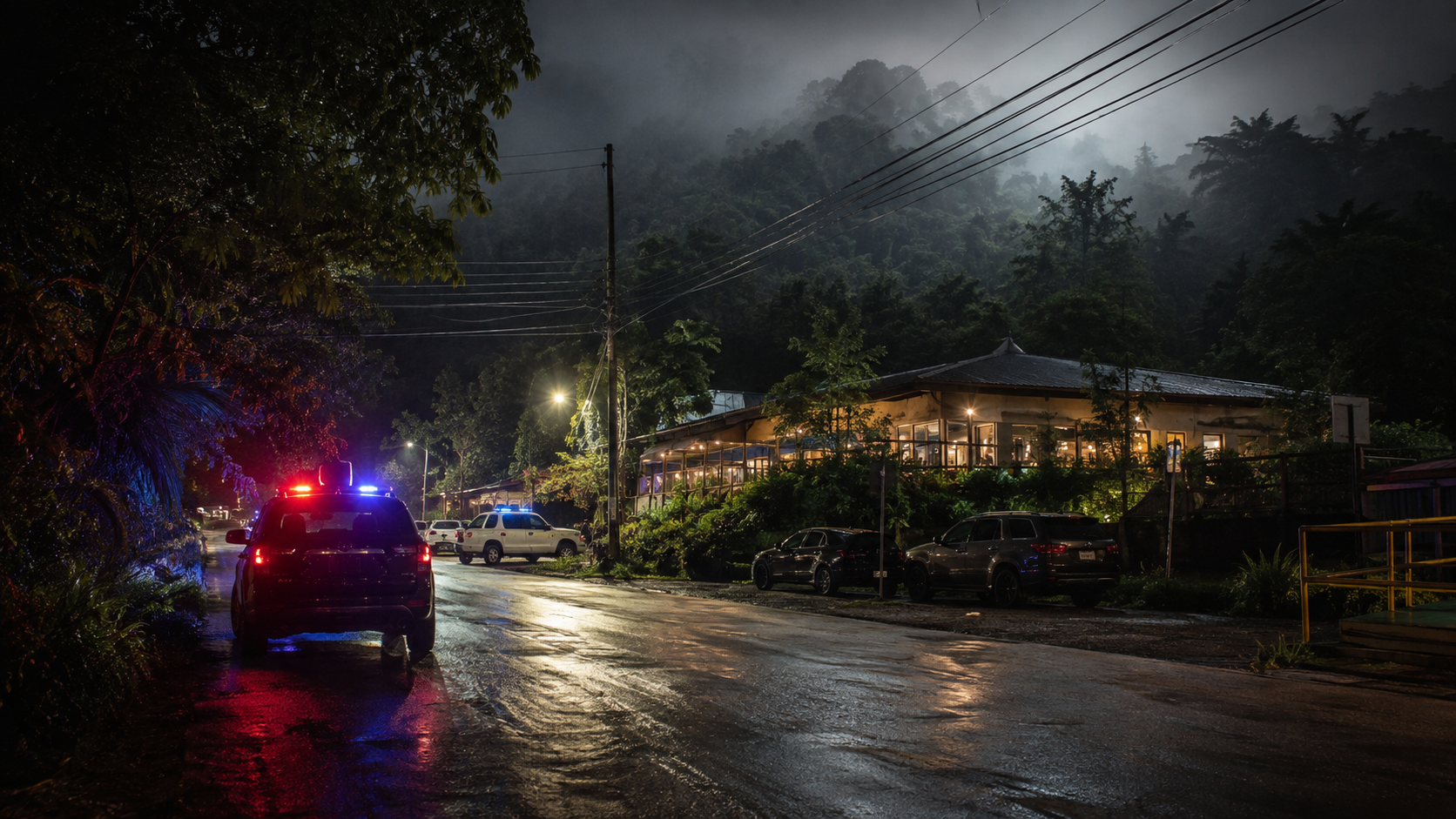
The police assault and the death of Óscar Quesada
By Wednesday afternoon, negotiations had continued for roughly twenty hours without a clear resolution. Authorities decided to attempt an entry through the bank’s south door. Contemporary reports said the operation had been authorised at the highest level of government. During the entry, Officer Óscar Gerardo Quesada Fallas, 44, was fatally shot. Known to colleagues as Máquina, Quesada was an experienced officer with the Unidad Especial de Intervención. The operation allowed more hostages to leave, but it did not end the siege. The gunman remained inside with the final hostage.The surrender
At about 7:40 p.m. on Wednesday, Erlyn Hurtado released the final hostage, bank teller Elizabeth Artavia Solís, and surrendered. The siege had lasted about twenty-eight hours. It ended without any guarantee that he would be allowed to leave. He handed over his weapons and was taken into custody.The nine people who died
The event is often remembered as a number. The people lost deserve to be named.- Juan Pablo González Ledezma, 26 — Banco Nacional employee
- Rosa Ángela Marchena Cruz, 23 — Banco Nacional employee
- María Rosa Bolaños, 54 — customer
- Mario Enrique López, 39 — customer and Red Cross volunteer
- Víctor Badilla, 39 — customer
- William Suárez, 49 — customer
- Óscar Gerardo Quesada Fallas, 44 — police officer
- Santos Agenor Hurtado Martínez and Santos Maryori Cruz Martínez — two of the men involved in the attempted robbery
What happened afterwards
Erlyn Hurtado was later convicted for the killings, injuries, kidnapping and other offences connected with the siege. He received a sentence totalling 210 years, although Costa Rican law limited the time he could serve to fifty years. In May 2011, Hurtado died during a failed escape attempt at La Reforma prison. The tragedy also had a diplomatic impact. Nicaragua’s president at the time, Enrique Bolaños, travelled to Costa Rica to offer condolences to President Abel Pacheco.Why the Monteverde siege is still remembered
The scale of the event was extraordinary for Costa Rica. Nine deaths in one incident deeply affected the country, especially because it happened in Monteverde: a peaceful mountain community better known for tourism, conservation and quiet daily life. The siege also unfolded in public over a full day and night. Families waited outside. Residents watched television coverage. Costa Ricans across the country followed every development as the situation continued. In the years that followed, the case led to public scrutiny of bank security, tactical response procedures and how the country prepares for hostage emergencies. More than two decades later, it remains one of the defining criminal events in modern Costa Rican history.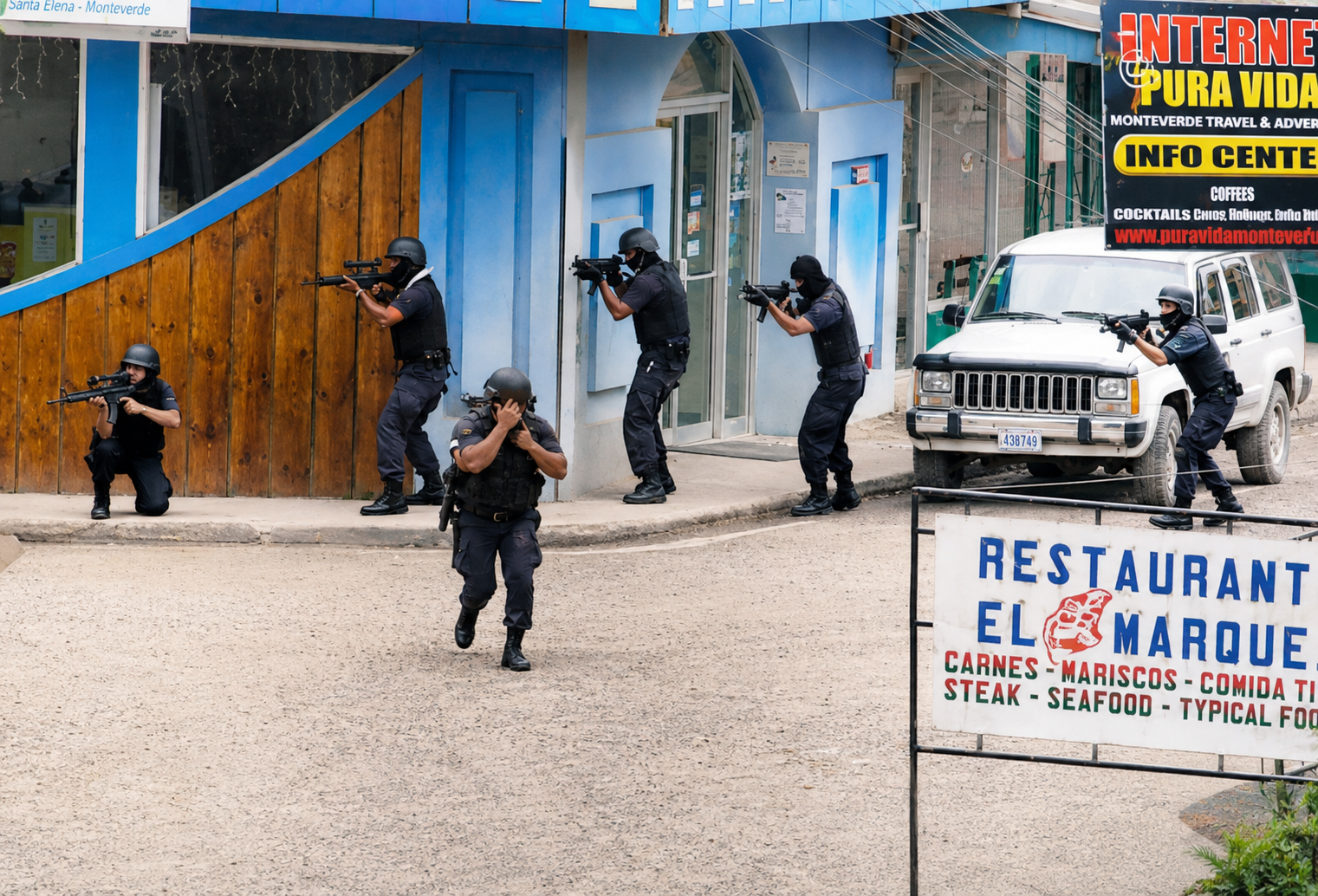
A note on the historical record
Some details of the siege differ between contemporary reporting, later court coverage and twentieth-anniversary retrospectives. Reported times vary slightly, as do early hostage counts and some details of the police operation. The central record is clear: an attempted bank robbery became a long hostage crisis; approximately thirty-one people were held inside; nine people died; seventeen were injured; and the event changed Monteverde and Costa Rica’s understanding of major hostage emergencies.About this page
We publish this article as a matter of historical record and in remembrance of the people who lost their lives. CRIE — Costa Rica Immigration Experts helps people building lives in Costa Rica. Knowing a country honestly includes understanding its difficult history as well as its natural beauty, culture and everyday life.Sources
- The Tico Times: Popular Tourist Town Under Siege
- La Nación: Twenty Years Since the Monteverde Hostage Crisis
- El Observador: Twenty Years Since the Banco Nacional Siege in Monteverde
Thinking About Making Costa Rica Home?
Thousands of expats, retirees, and investors have made Costa Rica their permanent home. If you are considering residency, CRIE’s licensed immigration attorneys can walk you through your options — Pensionado, Rentista, Investor, or family-based — and handle every step of the process.