
Yes, Costa Rica has police, even though it has no army. The Fuerza Pública is the uniformed national police, the OIJ (Organismo de Investigación Judicial) investigates crimes, the Policía de Tránsito handles traffic and the coast guard patrols the sea. In an emergency anywhere in the country, call 911. To report a crime formally, go to any OIJ office.
Knowing which police service to contact in Costa Rica can save time when you need help. The key distinction is between an urgent response, a formal criminal complaint and confidential information about a crime. They are different processes.
For an immediate emergency, call 9-1-1. Give your location, describe what is happening and follow the operator’s instructions. For other contacts, see our Costa Rica emergency numbers guide.
Official agency information checked 6 September 2026.
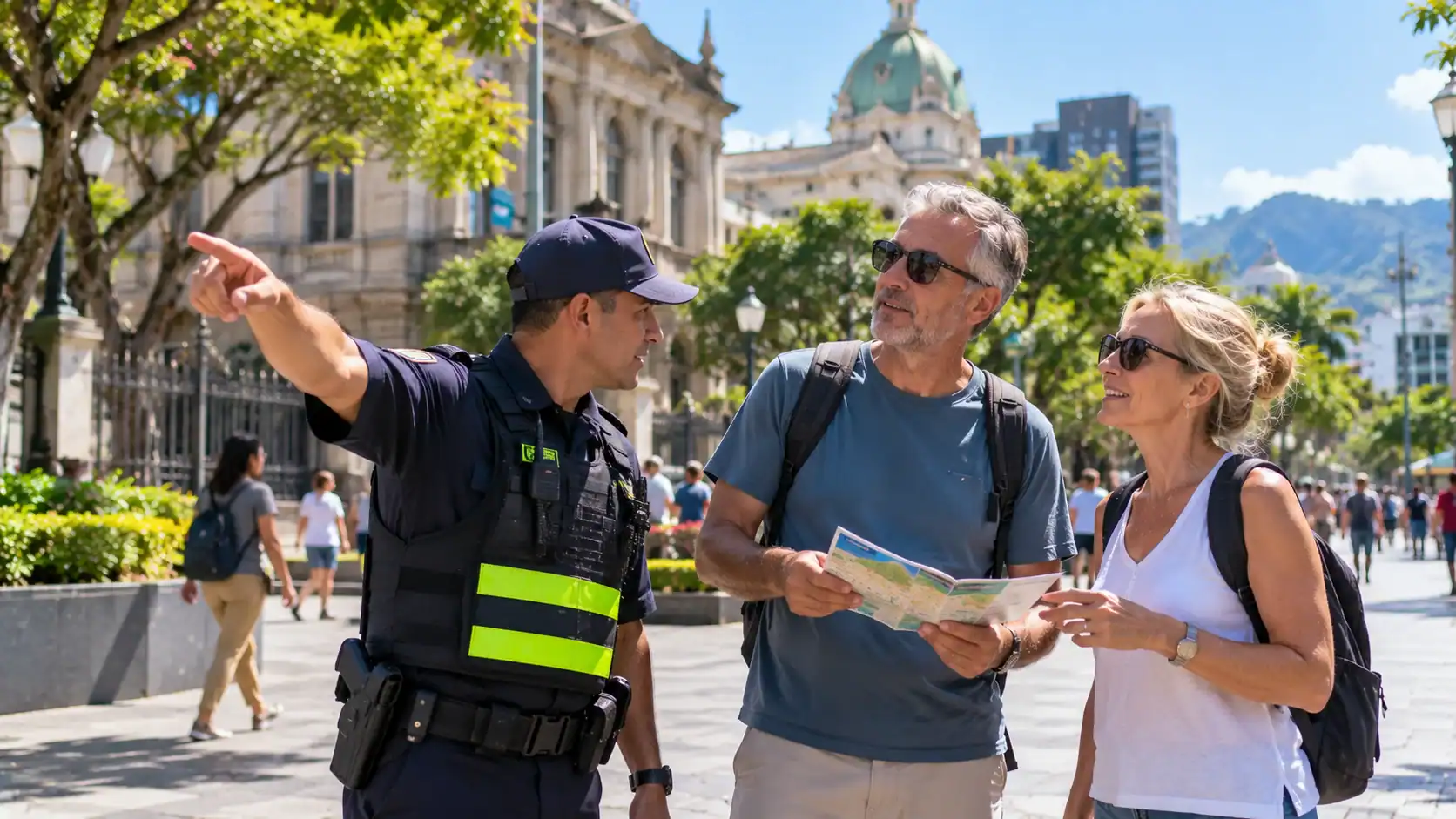
Fuerza Pública and tourist police
The Fuerza Pública is the uniformed national police within the Ministry of Public Security. Its responsibilities include public security, crime prevention and police operations. Its structure includes tourist-security services.
If you need assistance in English, ask for language support. Do not delay an emergency call while searching for a particular tourist-police office, or assume every shift has an English-speaking officer available.
OIJ: reporting and investigating a crime
The Organismo de Investigación Judicial (OIJ) belongs to the Judicial Branch. It carries out criminal investigation and associated forensic work. Telling a patrol officer about an incident is not the same as completing an OIJ complaint.
According to the OIJ’s complaint instructions, you can attend an OIJ office to report a crime. The service is free, and an identification document is not necessarily required. If your passport or ID was stolen, do not let that stop you from asking to make a report.
Prepare the details you know: time and location, what happened, descriptions, serial numbers, receipts, photographs and any relevant messages. Separate what you personally saw from what someone told you. Ask how to obtain the report reference and follow up. Contact your insurer separately about the documents needed for any claim.
The OIJ’s official FAQ says a complaint can be made at any OIJ office regardless of where the incident occurred; the institution handles the internal referral.
Confidential tips: use the correct OIJ number
The OIJ’s Centro de Información Confidencial (CICO) accepts information about suspected criminal activity:
- Free confidential telephone line: 800-8000-645.
- WhatsApp: 8800-0645.
These are different numbers. CICO operates around the clock, but it is not an emergency dispatch service. Use 9-1-1 for an immediate danger, and ask OIJ how to make a formal complaint when you are reporting a crime against you.

Policía de Tránsito and road collisions
The traffic police operate within MOPT, dealing with road enforcement and traffic incidents. After a collision, first assess whether anyone needs emergency assistance and contact the insurer or rental company as appropriate.
There is no blanket rule that vehicles can never be moved before a traffic officer arrives. The INS describes procedures for qualifying collisions, including the Declaración de Accidente Menor and Pacto Amistoso. Each has conditions concerning the accident, agreement between parties and insurance arrangements.
Do not assume that any minor-looking collision qualifies. Contact the insurer for the applicable procedure, including documenting the scene and when to move the vehicles. If someone is injured, there is immediate danger, the parties disagree or the conditions are not met, obtain the appropriate emergency or traffic-police assistance.
For the separate questions of inspection and annual circulation charges, see our vehicle costs guide.
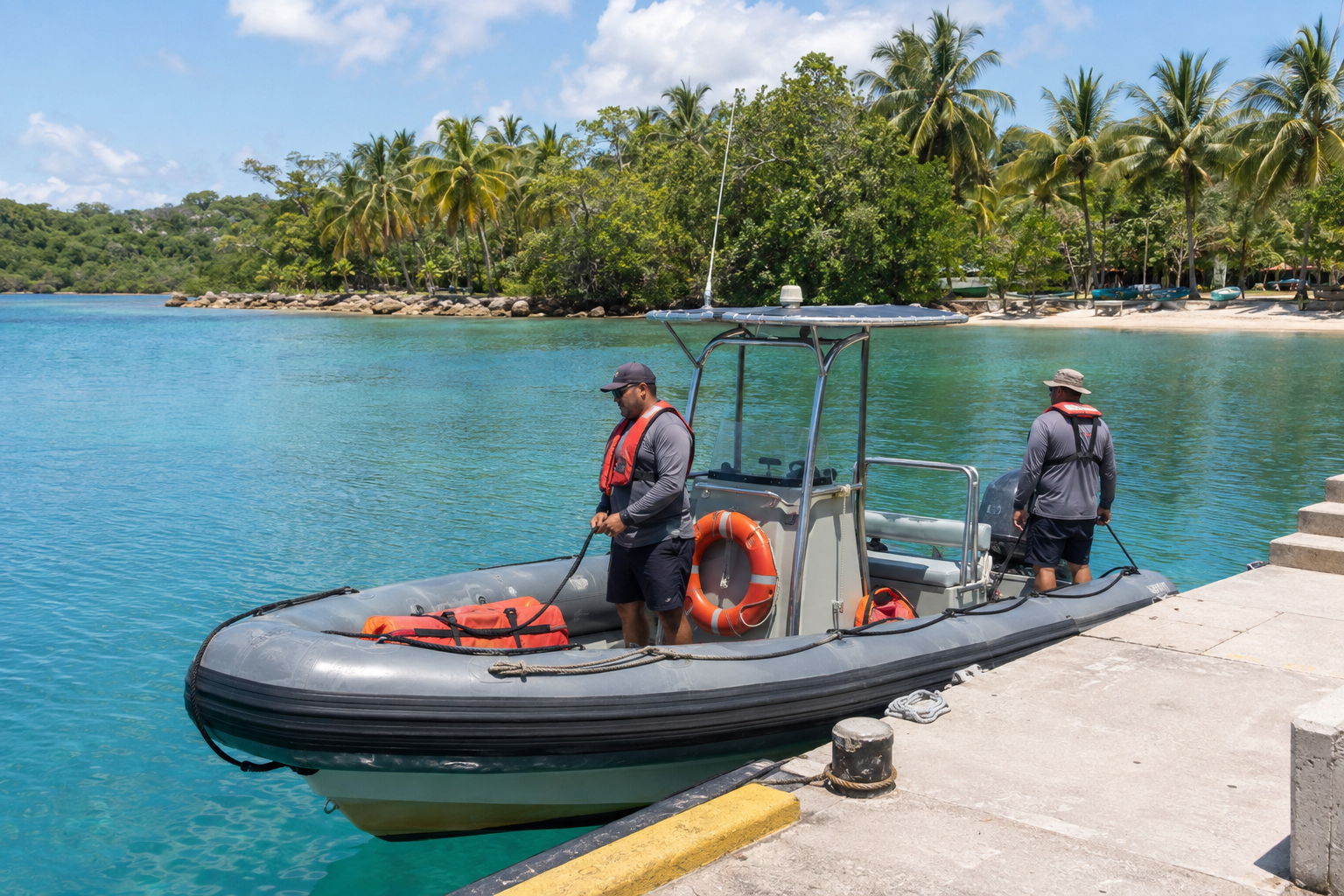
Coast guard and air surveillance
The Servicio Nacional de Guardacostas has maritime security, search-and-rescue and marine-resource protection responsibilities. The Servicio de Vigilancia Aérea provides air operations and airport-security functions. Both form part of the Ministry of Public Security.
If an emergency happens at sea or in a remote location, describe the location and situation to emergency dispatch. Give coordinates or recognisable landmarks if available, without putting yourself at further risk to obtain them.
Other specialist services
- Policía de Control de Drogas: specialist work concerning illegal drugs and related offences.
- Policía de Fronteras: border patrol and coordinated security operations.
- Policía Penitenciaria: prison security and custody, under the Ministry of Justice and Peace.
- Policía Profesional de Migración: attached to DGME, with responsibilities concerning entry, exit and foreigners’ stay under immigration law.
For a municipal matter, contact the relevant municipality to identify the responsible office. For immigration documents or your individual status, use DGME’s current guidance; this police overview is not a document checklist.
Environmental complaints and other concerns
For environmental damage, MINAE’s SITADA portal accepts complaints and provides a tracking reference. It routes assessed complaints to the responsible authority. Immediate threats to people still call for emergency assistance.
Keep copies of reports and correspondence. If you are unsure which office handles an issue, describe the facts and ask for the appropriate referral. Avoid relying on old staffing totals or informal assurances about what a particular officer can do.
FAQ
Does Costa Rica have police?
Yes. Costa Rica abolished its army, not its police. The Fuerza Pública, part of the Ministry of Public Security, is the uniformed national police, and the OIJ, part of the Judicial Branch, investigates crimes.
What number do I call for the police in Costa Rica?
Call 911 for any emergency, including crime in progress. Give your location first and follow the operator’s instructions.
How do I report a crime in Costa Rica?
Go to any OIJ office and make a complaint. It is free, you can file it at any office no matter where the crime happened, and an identification document is not always required, so a stolen passport should not stop you.
Is there a tourist police in Costa Rica?
The Fuerza Pública includes tourist-security services. Ask for English support if you need it, but do not delay an emergency call looking for a tourist-police office.
Can I report a crime anonymously?
Yes, through the OIJ’s confidential information center: free line 800-8000-645 or WhatsApp 8800-0645. It is not an emergency service, so use 911 if anyone is in danger.
Thinking of moving to Costa Rica?
Get a free residency assessment. Tell Johanna, our immigration expert, about your situation, and she will tell you which residency fits you and what you need.
WhatsApp Johanna: +506 8373 2085Free assessment
Or email [email protected]