

As the number of expatriates moving to Costa Rica continues to rise, understanding the local banking system becomes crucial. Since 2021, there has been a remarkable 35% increase in foreigners relocating to this vibrant country. With this growth, reliable access to financial services is more important than ever.
In this guide, we aim to simplify the process of establishing a local bank account. Whether you are a digital nomad or a retiree, having a local account is essential for managing your finances, paying bills, and handling daily transactions. We will walk you through the complex requirements, allowing you to focus on enjoying your new life abroad.
Our goal is to ensure that you feel confident navigating the banking landscape in Costa Rica. With the right information, you can make informed decisions that contribute to your financial stability.
Understanding the Costa Rican Banking Landscape
To navigate the financial landscape in Costa Rica, it’s essential to grasp the differences between its banking institutions. The country has a mix of state-owned banks and private banks, each offering unique services and security levels.
Since 1949, four major public banks have served as the backbone of the financial system. These state-owned banks are popular due to their 100% government guarantee on deposits, ensuring that your money is safe and secure.
On the other hand, private banks often provide more personalized services, including English-speaking staff. However, these banks are primarily located in major cities, making them less accessible in remote areas.
When visiting these institutions, understanding key terms like “cuenta corriente” (checking account) and “tipo de cambio” (exchange rate) will be vital for managing your daily financial needs. For more information on the process, check out our guide on opening a bank account in Costa.
Who Can Open a Bank Account: Tourists, Residents, and Digital Nomads
The ability to open a bank account in Costa Rica varies depending on your residency status. Foreigners and non-residents can establish accounts, but they face specific limitations compared to legal residents.
If you are a tourist, you can set up a restricted account using just your passport and a local cell phone number. However, these accounts typically have a monthly deposit limit of around $1,000. This restriction is in place to prevent potential money laundering activities.
Digital nomad visa holders may have access to specialized accounts that require proof of stable foreign income. This helps banks meet compliance standards while offering you a broader range of services. Once you achieve legal residency, you can upgrade your account to enjoy higher transaction limits and additional banking features.
Gathering Essential Documentation for Your Account Opening

Gathering the right paperwork is essential for a smooth banking experience in Costa Rica. To open an account, you’ll need to provide several important documents. This ensures that you meet the bank’s requirements and can enjoy your banking services without delays.
First, a valid passport with at least six months of remaining validity is required for identification. Additionally, you must present a utility bill or a notarized lease agreement as proof of your local address in Costa Rica.
Many banks also ask for a reference letter from your home bank. This letter helps verify your financial history and reliability as a client. It’s crucial to provide accurate information regarding your source of funds, as this is a mandatory requirement for compliance with local regulations.
Lastly, always bring original documents along with multiple copies. Bank officers will need to verify the authenticity of your paperwork during your appointment.
Scheduling and Preparing for Your Bank Appointment
Preparing for your bank appointment in Costa Rica can streamline the account opening process. It’s essential to book your appointment in advance, as this can save you time and help avoid long wait times at the branch.
Most major institutions now allow you to schedule appointments online. This is highly recommended, especially during peak hours. During your appointment, expect to spend one to two hours completing necessary forms and verifying your personal details.
Banking hours in Costa Rica typically run from 9:00 AM to 5:00 PM, Monday through Friday. Some branches may offer extended service, so check in advance. Be ready to answer questions about your expected transaction volume and the purpose of your account to satisfy the bank’s compliance team.
If your Spanish is limited, consider bringing a translator. This will help ensure you fully understand the terms and conditions of your account agreement. For more information on the process, visit our guide on opening a bank account in Costa.
Step-by-Step: opening-a-bank-account-in-costa-rica
A clear understanding of the documentation needed will help expedite your banking experience. The application process for establishing a local account requires your physical presence at the bank branch. You will need to sign all official documents in front of a banking officer.
During this process, it is crucial to carefully review the “Know Your Client” forms. Ensuring that all your personal data is correct can prevent unnecessary delays.
Typically, the bank will take a few days to review your documentation and background information. By following each step diligently, you minimize the risk of issues arising from incomplete paperwork.
Remember, opening a bank account is a formal procedure. Always ask for copies of all signed documents for your records.
Leveraging Digital and Mobile Banking in Costa Rica
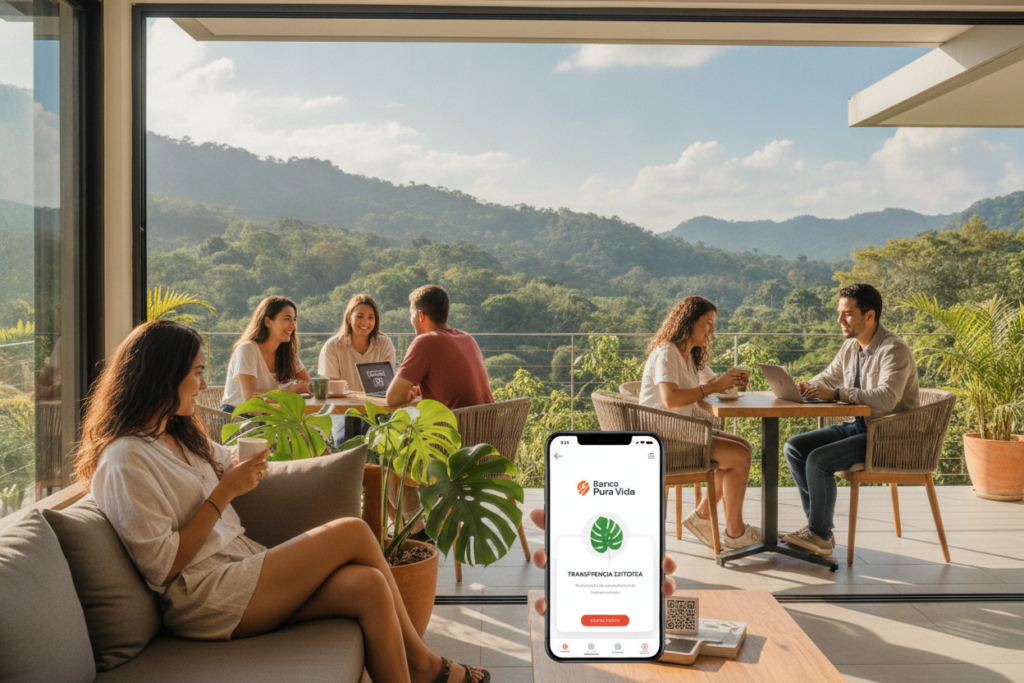
In today’s digital age, the way we manage our finances in Costa Rica has evolved significantly. Modern banking offers robust online platforms that simplify everyday transactions. You can easily pay utility bills and manage transfers from the comfort of your home.
During your initial appointment at the bank, most institutions will assist you in setting up your online banking credentials. This feature is crucial for monitoring your account balance and tracking transactions in real-time.
Digital services have improved dramatically, allowing expatriates to handle most daily financial needs without visiting a physical bank office. To ensure your security, keep your login information confidential and use two-factor authentication if available.
Understanding Bank Fees, Deposits, and Maintenance
Understanding the costs associated with banking in Costa Rica is vital for anyone looking to manage their finances effectively. Most banks require an initial deposit to activate your account, which typically ranges between 5,000 and 250,000 CRC depending on the institution.
Maintaining a minimum balance is often necessary to avoid monthly maintenance fees on your personal account. This is crucial for keeping your banking costs manageable.
If you earn income within Costa Rica, be prepared for various taxes, including the 13% VAT applied to most consumer goods. Additionally, companies generating over 119,629,000 CRC in annual revenue face a 30% corporate tax rate according to current national regulations.
Always clarify the fee structure with your bank to ensure you are not surprised by charges for international transfers or ATM withdrawals. This proactive approach can save you money and stress in the long run.
Overcoming Language Barriers and Navigating Bureaucracy
Facing the challenges of Costa Rican banking can be daunting, but it is manageable with the right approach. Many newcomers often struggle with the language and the bureaucracy involved in opening a local account.
Choosing a private bank can make a significant difference. These institutions typically have more bilingual staff compared to state-owned branches. This access can ease communication and help you understand the banking services available.
Building a relationship with a specific bank representative is also beneficial. Many expats find that having a go-to person helps streamline transactions and resolve issues more efficiently.
If you encounter language barriers, don’t hesitate to ask for written instructions or email confirmations. This ensures clarity on the next steps in your banking journey.
Lastly, remember that patience is essential. The pace of banking in Costa Rica may be slower than what you are used to, but with time, you will adapt.
Connecting Residency and Banking: How CRIE Can Guide You
Navigating the complexities of residency in Costa Rica can significantly enhance your banking experience. Establishing legal residency is a vital milestone that simplifies interactions with various financial institutions throughout the country.
For over 20 years, CRIE has provided dedicated support to individuals and families navigating the complexities of Costa Rica residency and immigration processes. While CRIE focuses exclusively on residency and immigration services, they understand how these status changes impact your ability to manage a home and bank account.
Every immigration case is unique, depending on factors like your nationality, family situation, and specific documentation history. This uniqueness requires personalized attention to ensure a smooth transition.
For guidance on your residency path and next steps, you can speak with Johanna Alvarez, a CRIE immigration expert, by contacting WhatsApp +506 8706 3888, emailing info@crie.cr, or visiting crie.cr.
Ready to Take the Next Step
Embarking on your banking journey in Costa Rica can be simplified with the right knowledge and preparation. Opening a bank account is manageable when you have the correct documentation and information at hand.
Understanding the differences between state and private banks will help you choose the institution that best fits your financial needs. Remember, your residency status plays a crucial role in the types of accounts available to you.
Stay organized with your paperwork, including your passport and proof of address, to ensure a smooth experience during your bank appointment. We hope this guide empowers you to navigate the local banking system with confidence as you settle into your new life.
For personalized guidance on your residency journey, please reach out to the team at CRIE to discuss your specific situation and requirements.
FAQ
What documents do we need to open a bank account in Costa Rica?
Can non-residents open a bank account in Costa Rica?
What are the advantages of using a private bank in Costa Rica?
How long does it take to open a bank account?
Are there any fees associated with maintaining a bank account?
How can we set up online banking services?
What should we expect during our bank appointment?
Is it necessary to speak Spanish to open a bank account?
Can we open a joint account with someone in Costa Rica?
What are the minimum deposit requirements for different types of accounts?
Article by Glenn Tellier (Founder of CRIE and Grupo Gap)
Don't wait, contact us right now!
Call or WhatsApp Costa Rica +506 8373 2085 or +506 8706 3888
Call USA/Canada +1 305-906-6784