
Many people believe the long wait for residency happens inside government offices in Costa Rica. The reality is different. Most major setbacks begin much earlier, during your paperwork preparation at home.
Seemingly small oversights can create a costly chain reaction. A missing stamp or a recently expired document often starts this process. These initial translation-errors-costa-rica can lead to months of delay and extra fees.
Success in this country depends on precision. Starting your immigration process correctly from your home country is the smartest first step. It ensures your application foundation is solid for Costa Rica.
We guide you through these complexities with transparent expertise. Please note we cannot promise approval or a specific timeline for your travel or residency application. Our role is to help you navigate the system properly.
For direct expert guidance, reach out via WhatsApp at +506 8706 3888 or email info@crie.cr. Avoid the common mistake of navigating these requirements alone. Remember, official procedures are managed through migracion.go.cr, and we help you sidestep errors that cause unnecessary holdups.
Understanding Costa Rica Residency Categories (Residencia en Costa Rica)
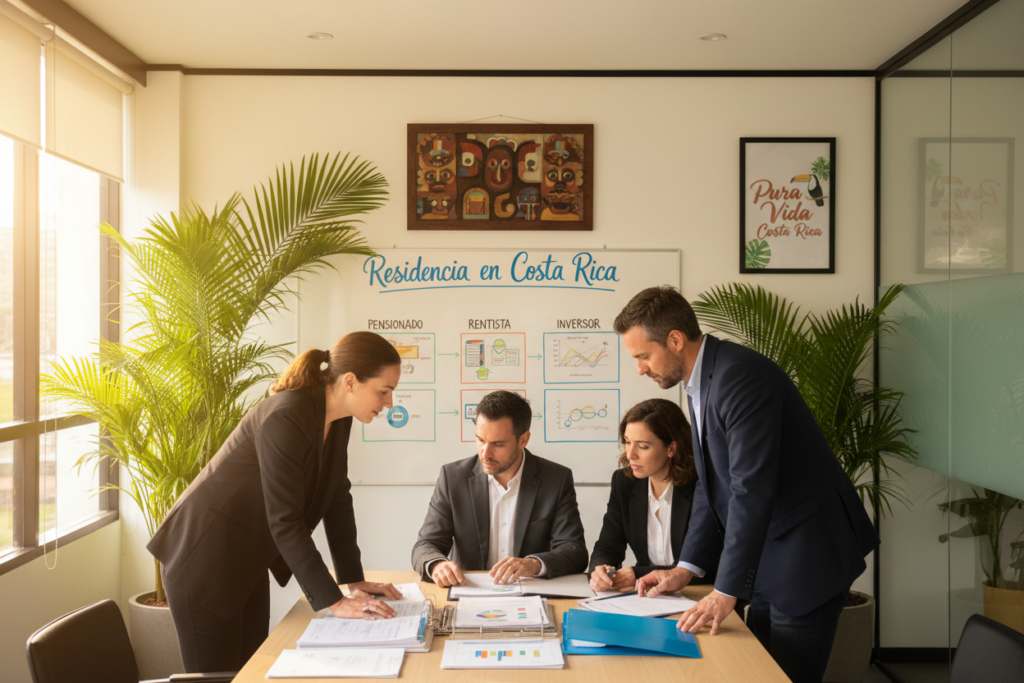
Choosing the right residency category is your first critical decision when planning your move to Costa Rica. Each pathway has specific financial thresholds you must prove. Getting this initial step wrong is a common and costly mistake.
Who Qualifies as Pensionado (Pensionado)
The Pensionado category is for retirees. You must prove a guaranteed lifetime pension of at least US$1,000 per month. Sources like Social Security or a private pension plan typically qualify.
Eligibility for Rentista & Inversionista (Rentista & Inversionista)
The Rentista path requires proof of a stable US$2,500 monthly income for two years. This is a standard route for those who travel to Costa Rica without a traditional pension.
The Inversionista category demands a minimum US$150,000 investment in approved local assets. A critical error is not holding this investment directly in your personal name.
Remember, the Digital Nomad visa is a separate temporary permit. It does not lead to permanent residency or citizenship in Costa Rica. For remote workers seeking actual residency, the Rentista requirements are often the closest fit.
The Importance of Accurate Document Translations

Accurate document translation is the non-negotiable bridge between your home country’s paperwork and Costa Rican immigration law. This foundational step happens long before you submit your file.
Common Translation Pitfalls
A major pitfall is using a translator who is not officially recognized in Costa Rica. Immigration authorities will reject documents from non-registered services.
This rule is strict. Using an uncertified service is a common and costly mistake that creates immediate errors in your application.
Why Certified Translations Matter
Only a Costa Rican official translator can convert your documents for immigration. This certified translation must be paired with documents that have been apostilled or legalized by a Costa Rica.
Starting this preparation from home is wise. It prevents weeks of delay and ensures your file is ready for your travel to Costa Rica.
Preparing Essential Documents Before Arrival
The most effective way to prevent delays is to complete your document preparation entirely in your home country. Submitting an incomplete file upon arrival creates immediate setbacks. We guide you to gather and authenticate everything correctly from the start.
Key Documents to Apostille and Translate
Core requirements include your birth certificate and federal criminal record check. Both documents must be issued within the last six months to be valid. For applicants from the United States, you must provide an FBI check—local police records are not accepted. This is a common mistake for first-time applicants.
If applying with a spouse, your marriage certificate is also mandatory. All these documents require an apostille from your home country’s authorities. This step must be finished before you travel to Costa Rica.
Failing to secure the correct apostilles at home forces you to ship documents internationally later. This results in significant extra cost and weeks of delay. Always verify the final, official checklist at migracion.go.cr to ensure your package for Costa Rica is complete.
Step-by-Step Guidance to Gather Your Paperwork at Home
Successful immigration hinges on a methodical, step-by-step approach to gathering your paperwork from home. Phase one of the entire process happens entirely in your country of origin.
You must first identify your correct residency category. Then, compile every required official record for your specific case.
Creating a Detailed Document Checklist
Creating a detailed checklist is a vital planning step. It helps you track the issue date and expiration of every paper.
This simple tool prevents the common mistake of submitting an outdated document. It turns a complex preparation phase into manageable steps.
Managing Timelines and Processing Times
You should allow 6 to 12 weeks for document gathering and apostille processing. This is one of the most important parts of your preparation before you travel.
Your most urgent deadline is the entry date stamp in your passport. Submitting your application after this date expires causes automatic rejection by Costa Rican authorities.
Remember, official processing then takes several more months. We provide guidance to improve your preparation quality, but we cannot guarantee approval or a specific timeline for your file.
Meeting Financial Thresholds for Residency
Each residency pathway in Costa Rica has strict monetary thresholds that act as the first filter for approval. This financial verification is a critical step in the entire process.
Understanding Pensionado, Rentista, and Inversionista Requirements
For the Pensionado category, you must prove a lifetime pension of at least US$1,000 per month. Official bank statements or government award letters are your primary evidence sources.
The Rentista path requires proof of a stable US$2,500 monthly income for two full years. Incomplete financial evidence here is a frequent planning mistake that leads to denial.
The Inversionista category demands a minimum US$150,000 investment in approved local assets. This property or investment must be held in your personal name, not a corporate entity.
We emphasize that meeting these minimums is necessary but not sufficient for Costa Rica. Your entire application must demonstrate long-term financial stability.
Common Pitfalls That Delay Your Residency Application
Your entry stamp is not just a souvenir. It’s the starting gun for a race with a strict and unforgiving deadline. We see many well-planned applications stall because of a few common oversights in the final process.
Overlooking Apostilles and Notarizations
Your most critical deadline is the entry stamp in your passport. Authorities in Costa Rica provide zero grace period for this date. Submitting after it expires triggers automatic rejection.
This mistake cannot be appealed. A missing apostille or notarial seal can also invalidate a perfect document. It forces a complete resubmission, wasting precious time.
Another frequent error is obtaining background checks from the wrong authority. Using a local police report instead of the required FBI check from your home country is a major planning mistake.
Proactively verify every detail before you submit to Costa Rica. This simple step prevents months of unnecessary back-and-forth with the immigration office.
Avoiding Inconsistencies in Personal Details
One of the most overlooked yet critical steps in the residency process is ensuring absolute consistency in your personal details. The immigration system in Costa Rica operates on exact matches, and even minor discrepancies can trigger significant delays.
We see this as a foundational part of your planning. A single variation, like a passport showing “José” and a birth certificate with “Jose,” is a common and costly mistake. The authorities will flag this inconsistency immediately.
Strategies for Uniform Documentation
Your entire application must tell one unified story. Omitting a middle initial or using a hyphenated surname inconsistently on different forms creates the same problem. Every document must present your name identically.
You must also report any change in your personal status during processing. This includes a change of address or marital status. Prompt notification is essential to keep your file moving.
Verify every detail before you submit to Costa Rica. This careful choice prevents the common mistake of a paused application. It saves you valuable time and stress in the long run.
Preventing translation-errors-costa-rica in Your Application
Preventing costly setbacks in your immigration journey requires strict adherence to Costa Rica’s official translation rules. The law mandates that all foreign documents be translated by a registered Traductor Oficial. Using any other source is a common and expensive planning mistake.
Best Practices for Using Certified Translation Services
A proper certified translation includes the translator’s official seal, signature, and a statement of accuracy. This is especially critical for vital records like birth and marriage certificates. These elements prove the translation meets Costa Rican legal standards.
A frequent error is arranging translations before you travel. Versions created outside the country often lack the required official seal and registration number. This invalidates your documents upon submission.
We provide guidance and can connect you with certified translators for major languages. For referrals, contact info@crie.cr. Proper timing in this step is key to a smooth process. Ensure you review the official document checklist for complete requirements.
Always verify the latest rules at migracion.go.cr. Using non-registered sources will result in the rejection of your entire application file.
Organizing Your Documentation and Planning Realistic Timelines
A realistic timeline is your best defense against the stress of last-minute scrambles and missed dates. We see many applicants make the common mistake of underestimating the time needed for each preparation step.
Treat your document gathering as a strategic project from your home country. This proactive planning turns a complex process into clear, manageable steps.
Developing a Preparation Schedule
We recommend creating a detailed tracking spreadsheet. List each required paper, its issue date, expiration, and translation status. This tool ensures realistic timing for your entire application.
Always work backwards from your planned arrival date in San José. Allow several weeks for apostille processing in your home country. Build in extra buffer days for unexpected delays.
Before your departure, verify your complete package. Check that every item is present, properly apostilled, and within its validity window. This final review prevents costly mistakes upon entry.
A short consultation can provide tailored guidance. A professional review before submission helps catch common errors. This careful choice saves you precious time and frustration.
Looking Ahead: Your Path to Smooth Costa Rica Immigration
Navigating the residency system is an ongoing commitment that extends well beyond the moment you submit your file. Your focus now shifts to monitoring your case’s progress and maintaining your legal status while in San José.
Always verify the latest rules from official sources. If your schedule changes, know how to reschedule a Costa Rica immigration properly. This planning prevents a common mistake.
Approval leads to new steps like obtaining your DIMEX card and registering with social security. View this as a continuous commitment to compliance.
For direct support tailored to your life goals, contact us. We provide honest guidance about what you will encounter. Reach out via WhatsApp at +506 8706 3888 or email info@crie.cr to start your journey with realistic timing.
FAQ
What are the most common mistakes people make with their document translations for residency?
The most frequent errors involve using non-certified services, which immigration authorities reject. Other pitfalls include incorrect translations of legal or financial terms, missing stamps or signatures from the official translator, and submitting documents that are not first apostilled in their country of origin.
How long does the entire residency application process typically take?
We advise planning for a 6 to 12-month timeline from initial document gathering to approval. This includes time for apostilles, certified translations, mailing, and the government’s processing, which can have unpredictable delays. Starting early is the single best step you can take.
Can I translate my own documents, or use a bilingual friend?
No. Costa Rican immigration law requires translations to be performed by an official translator certified by the Ministry of Foreign Affairs here. Using a friend or doing it yourself will result in your application being returned, causing significant setbacks and extra costs.
What is the difference between the Pensionado and Rentista residency categories?
A> The Pensionado category is for those with a lifetime pension of at least
FAQ
What are the most common mistakes people make with their document translations for residency?
The most frequent errors involve using non-certified services, which immigration authorities reject. Other pitfalls include incorrect translations of legal or financial terms, missing stamps or signatures from the official translator, and submitting documents that are not first apostilled in their country of origin.
How long does the entire residency application process typically take?
We advise planning for a 6 to 12-month timeline from initial document gathering to approval. This includes time for apostilles, certified translations, mailing, and the government’s processing, which can have unpredictable delays. Starting early is the single best step you can take.
Can I translate my own documents, or use a bilingual friend?
No. Costa Rican immigration law requires translations to be performed by an official translator certified by the Ministry of Foreign Affairs here. Using a friend or doing it yourself will result in your application being returned, causing significant setbacks and extra costs.
What is the difference between the Pensionado and Rentista residency categories?
A> The Pensionado category is for those with a lifetime pension of at least $1,000 USD per month. The Rentista category requires a guaranteed income of $2,500 USD per month for two years, proven by a bank deposit or letter. Each has different document requirements for proving financial stability.
Do I need to get my birth certificate and marriage license apostilled?
Yes. Any civil document (birth certificate, marriage license, divorce decree) not issued in Costa Rica must have an apostille from the issuing country’s authorities. This is a mandatory step before the document can be legally translated and submitted for your application.
What happens if my name is spelled slightly differently on different documents?
Inconsistencies, like “Jon” on a passport and “John” on a birth certificate, can cause major delays. You must correct this before applying. We help clients identify these issues early and obtain sworn statements or corrected documents to ensure uniformity across all paperwork.
When should I start gathering and preparing my documents?
Start at least 4-6 months before you intend to submit your application. Ordering official documents, securing apostilles, and obtaining certified translations is a multi-step process with variable wait times. A detailed checklist and schedule are crucial for smooth preparation.
,000 USD per month. The Rentista category requires a guaranteed income of ,500 USD per month for two years, proven by a bank deposit or letter. Each has different document requirements for proving financial stability.
Do I need to get my birth certificate and marriage license apostilled?
Yes. Any civil document (birth certificate, marriage license, divorce decree) not issued in Costa Rica must have an apostille from the issuing country’s authorities. This is a mandatory step before the document can be legally translated and submitted for your application.
What happens if my name is spelled slightly differently on different documents?
Inconsistencies, like “Jon” on a passport and “John” on a birth certificate, can cause major delays. You must correct this before applying. We help clients identify these issues early and obtain sworn statements or corrected documents to ensure uniformity across all paperwork.
When should I start gathering and preparing my documents?
Start at least 4-6 months before you intend to submit your application. Ordering official documents, securing apostilles, and obtaining certified translations is a multi-step process with variable wait times. A detailed checklist and schedule are crucial for smooth preparation.
Article by Glenn Tellier (Founder of CRIE and Grupo Gap)
Don't wait, contact us right now!
Call or WhatsApp Costa Rica +506 8373 2085 or +506 8706 3888
Call USA/Canada +1 305-906-6784