
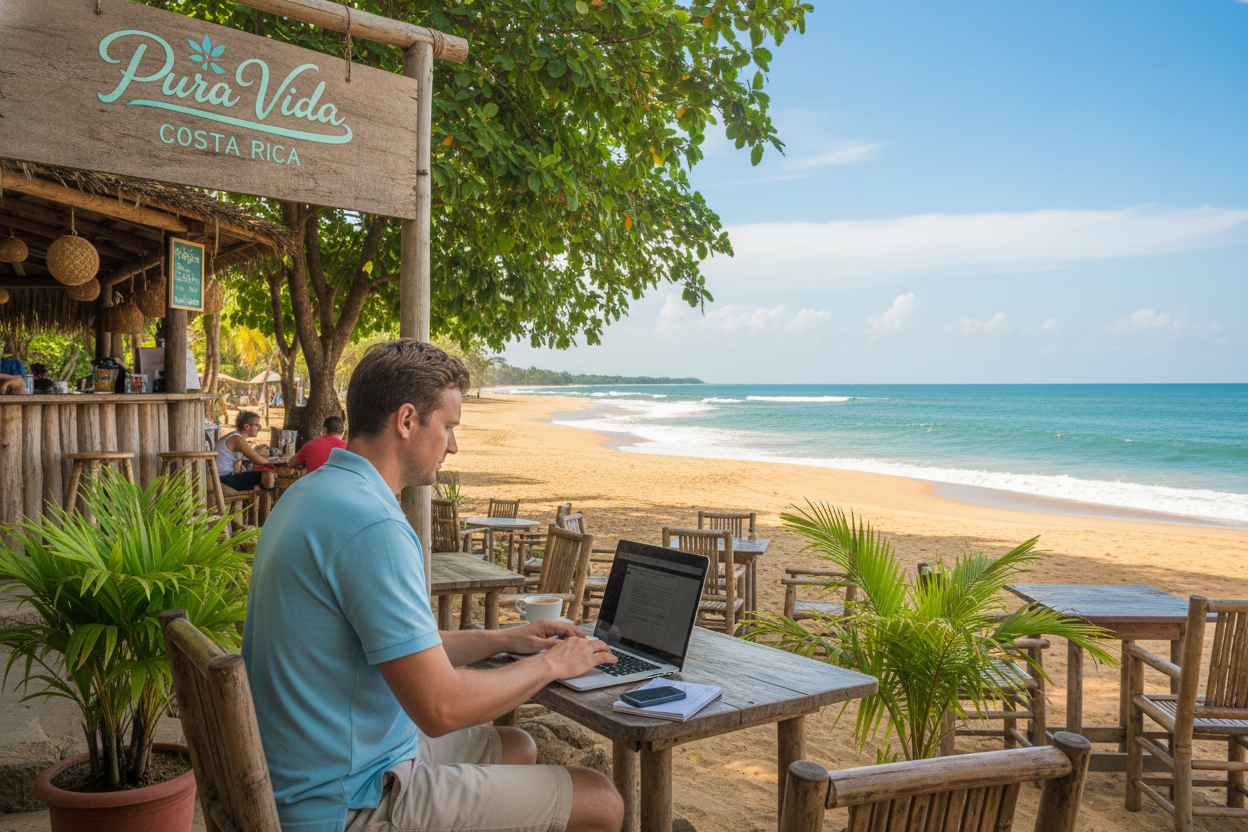
Let’s answer this directly. If you hold a Costa Rican Digital Nomad visa, you cannot legally take a job with a local firm. This visa, officially called the Estancia para Trabajadores Remotos, is designed for remote professionals earning income from abroad.
It permits a one-year stay, renewable for another. You must prove a monthly income of $3,000 or $4,000 with dependents. Critically, your employment or clients must be outside this nation’s borders.
This status is a temporary residency for remote work. It does not count toward permanent residency or citizenship. Many assume it’s a stepping stone, but that’s not how the system works here.
Our guide focuses on genuine immigration pathways. We provide clear, realistic information for those wanting to build long-term roots. If your goal involves local employment or business, you need to explore residency categories like Pensionado, Rentista, or Inversionista from the start.
Understanding the Difference Between Digital Nomad Status and Costa Rican Residency
We must clarify a common point of confusion: a visa for remote work is not a residency permit. Many remote professionals arrive believing their temporary status is a stepping stone. This misconception can derail long-term plans.
Clarifying Digital Nomad Limitations
The digital nomad visa offers a one-year stay, renewable once. It is designed for individuals earning income exclusively from foreign sources. Holders are explicitly barred from employment with local firms or serving Costa Rican clients.
This status does not count toward permanent residency or citizenship. It is a temporary permission to reside, not a path to integration. The program attracts foreign capital while protecting the local job market.
Defining Residency Requirements
True residency, or Residencia, grants indefinite permission to live in Costa Rica. It allows you to work for local employers and start a business serving the domestic market. This status is a prerequisite for eventually applying for citizenship.
Categories like Pensionado, Rentista, and Inversionista require formal applications and financial proof. They unlock the full benefits of living and operating within the country. Understanding this distinction early is crucial for proper planning.
Who Qualifies for Costa Rican Residency? (Residencia en Costa Rica)
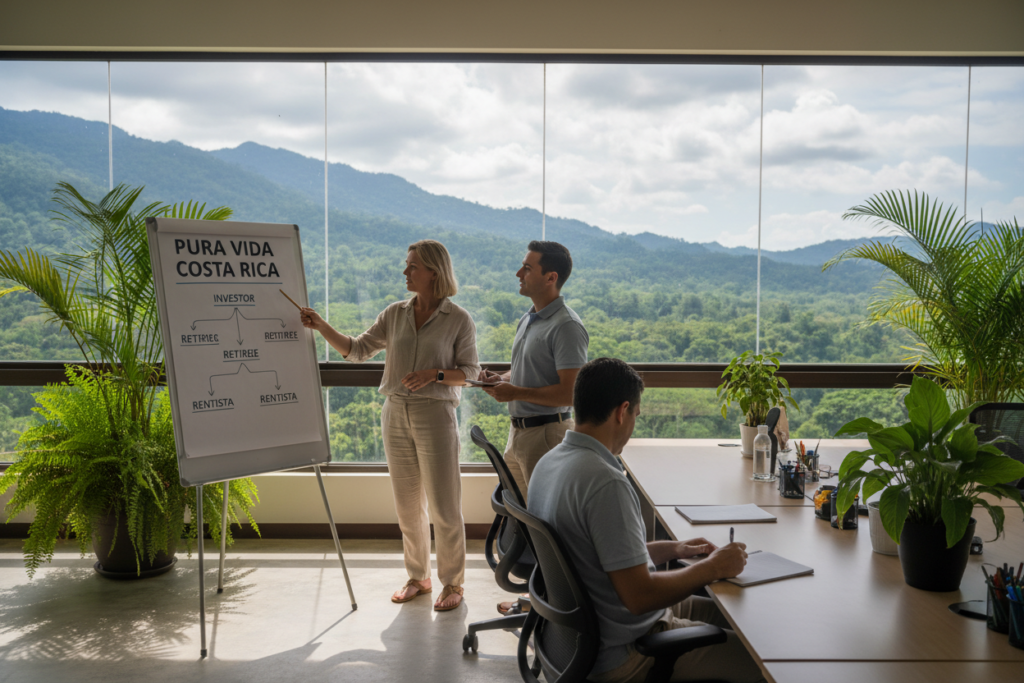
Costa Rica’s formal residency system is built on specific financial categories. Each has clear thresholds you must meet.
Eligibility for Pensionado (Pensionado) and Rentista (Rentista)
The Pensionado category is for retirees. You need proof of a guaranteed lifetime pension of at least $1,000 USD per month.
The Rentista category suits those with stable, passive income. You must show $2,500 USD per month, guaranteed for two years.
Investor (Inversionista) Thresholds and Conditions
The Inversionista path requires a minimum investment of $150,000 USD. This can be in real estate, a business, or approved projects.
A critical rule exists. The investment must be in your personal name. Using a corporation or trust will disqualify your application.
Step-by-Step Guide to Applying for Costa Rican Residency
A successful application hinges on meticulous preparation and understanding the sequence. This guide outlines the official procedure to secure your status.
Application Process Overview
First, confirm your qualifying category: Pensionado, Rentista, or Inversionista. Your financial profile determines the path.
Next, gather all required paperwork from your home country. This includes birth certificates, police records, and proof of income or investment.
Every document needs an apostille and a certified Spanish translation. Only then can you submit your file to immigration authorities.
Key Milestones and Process Timelines
Once submitted, the review typically takes 4 to 6 weeks. This assumes your file is complete and meets all authentication standards.
Key stages include initial submission, a preliminary review, fee payments, and the final approval resolution. Officials may request additional information.
We recommend verifying every requirement at migracion.go.cr. For personalized help, consult with a licensed immigration specialist to navigate this process confidently.
Preparing Your Documents Before Arrival
Properly preparing your paperwork from your home country is the single most important step in the entire residency process. Accessing official records and obtaining necessary authentications is far simpler where documents were originally issued. We strongly advise completing this phase before you travel.
Apostilles and Certified Translations
Most nations use the apostille system under the Hague Convention. This stamp authenticates public documents like birth certificates and police checks. If your country isn’t a member, you’ll need consular legalization—a more complex procedure.
Every document not in Spanish requires a certified translation. Immigration authorities will reject bank statements or pension letters without this official step. Budget time and resources for these translation requirements.
Document Checklist for a Smooth Application
Your core paperwork must be pristine. Start with a valid passport showing at least six months remaining. You need an apostilled birth certificate and a recent police background check.
Include marriage certificates if applying with a spouse. Provide clear proof of income—pension award letters or bank statements. Health insurance proof and investment documentation for Inversionista applicants are also mandatory.
Meeting these document requirements upfront prevents the most common application delays. Gather everything with meticulous care.
Timelines and Critical Milestones in the Immigration Process
The journey from initial document preparation to final authorization involves multiple distinct phases. Establishing realistic expectations is crucial for effective planning and avoiding unnecessary frustration.
Estimated Timeframes From Start to Approval
While the official processing period for a complete residency application frequently requires 4 to 6 weeks, the overall timeline from start to finish often spans 3 to 6 months. This duration incorporates the preliminary stage of collecting and authenticating your necessary paperwork.
Gathering documents, obtaining apostilles, and securing certified translations can demand 2 to 8 weeks. We strongly advise initiating this phase well in advance of your intended relocation.
Following submission, an initial review typically occurs within the first 5 to 15 days. Immigration officials may request clarifications or additional evidence. A prompt response to these inquiries is essential to prevent extended delays.
Critical milestones to monitor include your submission date, the preliminary review completion, required fee payments, and the issuance of your approval resolution. After receiving approval, you must usually complete in-person biometric registration within a 90-day window.
These are general estimates. Individual cases can vary significantly, sometimes taking several additional months or extending beyond a full year if complications arise. Engaging with experienced professionals provides valuable guidance through this detailed procedure.
Common Mistakes to Avoid in the Residency Application
Many well-prepared applications stumble on avoidable errors that immigration officials see regularly. We want to highlight these frequent pitfalls so you can steer clear of them.
Document errors are the most common. Submitting papers without proper apostilles or using uncertified translations leads to immediate rejection. Police checks and certain certificates also expire—they must be issued within six months of your submission.
Financial proof must be crystal clear. For Pensionado or Rentista status, officials need to see consistent, verifiable income from reliable sources. Sporadic bank deposits or vague descriptions will derail your case.
For Inversionista applicants, a major mistake is holding an investment property in a corporate name. The law requires the asset to be in your personal name to qualify.
Procedural missteps are costly. Failing to respond promptly to official requests for more information can close your file. Missing in-country deadlines after approval—like biometric registration—invalidates the entire effort.
The best protection is working with professionals who review your paperwork against current requirements. Always verify the latest rules at migracion.go.cr to ensure your submission is complete.
Can Digital Nomads Work for Costa Rican Companies
The core limitation of this temporary status is its fundamental separation from local economic participation. The answer remains a definitive no. Holders of the digital nomad visa are legally barred from employment or client relationships within the country.
Why Digital Nomad Visas Don’t Lead to Residency
This rule protects the domestic labor market. It ensures foreign remote professionals do not compete with citizens for local positions or business opportunities.
Consequently, time spent under this visa does not count toward permanent status or citizenship eligibility. The clock for naturalization only starts with formal residency approval.
If your long-term vision involves launching a local venture or securing employment here, you must pursue a separate residency category. The temporary visa cannot be converted or upgraded for this purpose.
We advise researching Pensionado, Rentista, or Inversionista options early. Planning this transition well before your current status expires is crucial for a smooth integration.
Recommended Residency Alternatives for Digital Nomads
The most practical route to long-term settlement often hinges on matching your income sources to specific residency options. For remote professionals, the key is identifying which formal category aligns with your financial reality.
Exploring the Closest Residency Options
The Rentista category frequently emerges as the natural fit. It requires demonstrating stable, passive income of $2,500 monthly for two years.
This suits many successful remote workers and online entrepreneurs. Consistent revenue from freelancing, business ownership, or investments can meet this threshold.
The Pensionado path is less accessible for most. It demands a guaranteed lifetime pension, which younger professionals typically lack.
The Inversionista option requires a $150,000 investment. This substantial sum may be viable for established entrepreneurs seeking to invest locally.
We advise consulting with experts to assess your specific situation. Proper planning ensures a smooth transition from temporary status to permanent roots.
Essential Immigration Requirements and Financial Considerations
Financial thresholds and verifiable proof form the bedrock of any successful residency application. Authorities won’t accept vague claims of wealth. You must provide official documentation that meets non-negotiable criteria.
The Pensionado category requires proof of a guaranteed lifetime pension of at least $1,000 USD per month. Official letters from your pension administrator are mandatory. For Rentista status, you need to show stable income of $2,500 USD monthly for two years.
Bank statements showing consistent deposits are crucial proof for this income requirement. The Inversionista path demands a minimum investment of $150,000 USD. This investment must be held in your personal name, not through a corporation.
Health insurance is a mandatory requirement for all residency categories. You must provide proof of coverage through either the public system or a private international plan.
All financial documents must be recent, properly authenticated, and translated into Spanish. We recommend having a specialist review your paperwork before submission. This ensures your proof meets the current standards.
Insights into the Costa Rican Immigration Process and Its Benefits
The true value of Costa Rican residency lies in the long-term stability and economic access it provides. This status moves you beyond temporary visitor permissions.
How to Navigate the Procedures Confidently
Success requires understanding both the bureaucratic steps and the tangible rewards. The process involves document preparation, official submission, and a review period.
Once approved, residency permits you to work locally and own businesses serving the market. You gain full access to banking services and a clear pathway to permanent status.
This stability supports a settled lifestyle where you can live and work integrated into the community. The benefits of this legal standing far outweigh any temporary arrangement.
Navigating confidently means starting early, preparing meticulously, and seeking expert guidance. We help clients transform their immigration goals into reality.
Tips for Starting the Application Process from Home
Our foremost recommendation for a smooth transition is to tackle the bulk of your application preparation before you ever board a plane. Beginning this work from your home country is a crucial step. You have direct access to government offices, notaries, and apostille services for your original records.
Start by requesting official copies of essential documents. You will need your birth certificate and a recent police background check. These requests often take several weeks to process, so plan accordingly.
Next, research the apostille process specific to your location. In the United States, for example, this is handled at the state level. Be strategic with timing, as some documents have a six-month validity for immigration purposes.
Identify a certified translator for your apostilled papers. Having translations completed early ensures quality and saves time later. Create a detailed checklist of everything you need for your chosen residency category.
We advise seeking professional guidance during this initial phase. A specialist can review your documents remotely. This ensures you gather the correct materials before investing in official authentications. Reach out from home to start confidently.
Resources and Further Guidance from crie.cr and migracion.go.cr
We believe in empowering your decisions with direct links to official sources and personalized help. Navigating residency pathways requires accurate information and experienced support.
Where to Find Official Information
Your primary resource is the Dirección General de Migración y Extranjería at migracion.go.cr. This site holds all current regulations, forms, and policy updates. It is the definitive source for official requirements.
However, the site is in Spanish and uses complex legal language. This can make independent navigation difficult. Specialized assistance helps translate these rules into actionable steps.
CRIE (crie.cr) focuses exclusively on residency and immigration services. We serve as your bridge to the system, offering guidance from consultation to approval. Our role is to interpret requirements and prepare your file correctly.
We provide expert guidance and document review. We cannot guarantee approval or promise specific timelines, as final decisions rest with authorities. Our approach is based on transparency and realistic expectations.
Always verify the latest rules at migracion.go.cr before submitting. For personalized assistance, contact us: WhatsApp +506 8706 3888 | info@crie.cr.
Final Thoughts on Achieving Costa Rican Residency
Building a lasting life in Costa Rica requires choosing the right legal pathway from the start. The digital nomad visa offers a temporary stay but does not lead to residency or local work rights.
Achieving residency means committing to a formal category like Pensionado, Rentista, or Inversionista. Each has clear financial thresholds you must meet.
Success hinges on meticulous document preparation begun from your home country. Realistic expectations and professional guidance smooth the process.
With approved residency, you establish a stable lifestyle and can enjoy long-term stays. Family members may also join under your status.
Ready to explore your options? Contact CRIE at info@crie.cr or WhatsApp +506 8706 3888 for expert assistance. Verify current requirements at migracion.go.cr.
FAQ
What’s the main difference between holding a digital nomad visa and being a legal resident in Costa Rica?
The key distinction is authorization to work. A digital nomad visa is a temporary permit for remote workers employed by companies outside Costa Rica. It does not allow you to work for a local company. Legal residency, such as the Pensionado or Rentista categories, provides a path to permanent status and, eventually, the right to seek employment locally, though separate work permits are often still required.
Who typically qualifies for the Pensionado or Rentista residency programs?
The Pensionado category is for individuals with a guaranteed lifetime pension of at least
FAQ
What’s the main difference between holding a digital nomad visa and being a legal resident in Costa Rica?
The key distinction is authorization to work. A digital nomad visa is a temporary permit for remote workers employed by companies outside Costa Rica. It does not allow you to work for a local company. Legal residency, such as the Pensionado or Rentista categories, provides a path to permanent status and, eventually, the right to seek employment locally, though separate work permits are often still required.
Who typically qualifies for the Pensionado or Rentista residency programs?
The Pensionado category is for individuals with a guaranteed lifetime pension of at least $1,000 USD per month. The Rentista category requires proof of a stable $2,500 USD monthly income for two years, guaranteed by a bank or through a deposit in a Costa Rican bank. Both require applicants to pass background checks and meet health insurance requirements.
What is the most common mistake people make during the residency application process?
The most frequent and costly error is submitting documents without proper apostilles and certified Spanish translations. Every foreign-issued document, from birth certificates to bank statements, must be apostilled in its country of origin and then translated by an official translator recognized in Costa Rica. Starting this process before you arrive is crucial.
Can the income I use for a digital nomad visa application count toward residency requirements later?
No, the requirements are separate. The digital nomad visa requires proof of remote work income, typically a minimum of $3,000 USD per month. Residency categories like Rentista require proof of passive or stable income from investments, pensions, or deposits. The income sources and documentation for each visa are evaluated under different immigration frameworks.
How long does the residency application process usually take from start to finish?
A> You should plan for a lengthy process. From the initial document preparation to final approval and receiving your DIMEX (foreigner ID card), it commonly takes between 6 to 12 months. Timelines can vary based on the volume of applications at Migración and whether your file is complete, avoiding requests for additional information.
Where can I find the most reliable and up-to-date information on requirements?
Always refer to official government sources. The Dirección General de Migración y Extranjería (migracion.go.cr) publishes all official forms, fees, and legal requirements. For comprehensive guides in English that explain the process, the Costa Rica Immigration Experts (crie.cr) website is a trusted resource used by many applicants and lawyers.
,000 USD per month. The Rentista category requires proof of a stable ,500 USD monthly income for two years, guaranteed by a bank or through a deposit in a Costa Rican bank. Both require applicants to pass background checks and meet health insurance requirements.
What is the most common mistake people make during the residency application process?
The most frequent and costly error is submitting documents without proper apostilles and certified Spanish translations. Every foreign-issued document, from birth certificates to bank statements, must be apostilled in its country of origin and then translated by an official translator recognized in Costa Rica. Starting this process before you arrive is crucial.
Can the income I use for a digital nomad visa application count toward residency requirements later?
No, the requirements are separate. The digital nomad visa requires proof of remote work income, typically a minimum of ,000 USD per month. Residency categories like Rentista require proof of passive or stable income from investments, pensions, or deposits. The income sources and documentation for each visa are evaluated under different immigration frameworks.
How long does the residency application process usually take from start to finish?
A> You should plan for a lengthy process. From the initial document preparation to final approval and receiving your DIMEX (foreigner ID card), it commonly takes between 6 to 12 months. Timelines can vary based on the volume of applications at Migración and whether your file is complete, avoiding requests for additional information.
Where can I find the most reliable and up-to-date information on requirements?
Always refer to official government sources. The Dirección General de Migración y Extranjería (migracion.go.cr) publishes all official forms, fees, and legal requirements. For comprehensive guides in English that explain the process, the Costa Rica Immigration Experts (crie.cr) website is a trusted resource used by many applicants and lawyers.
Article by Glenn Tellier (Founder of CRIE and Grupo Gap)
Don't wait, contact us right now!
Call or WhatsApp Costa Rica +506 8373 2085 or +506 8706 3888
Call USA/Canada +1 305-906-6784