
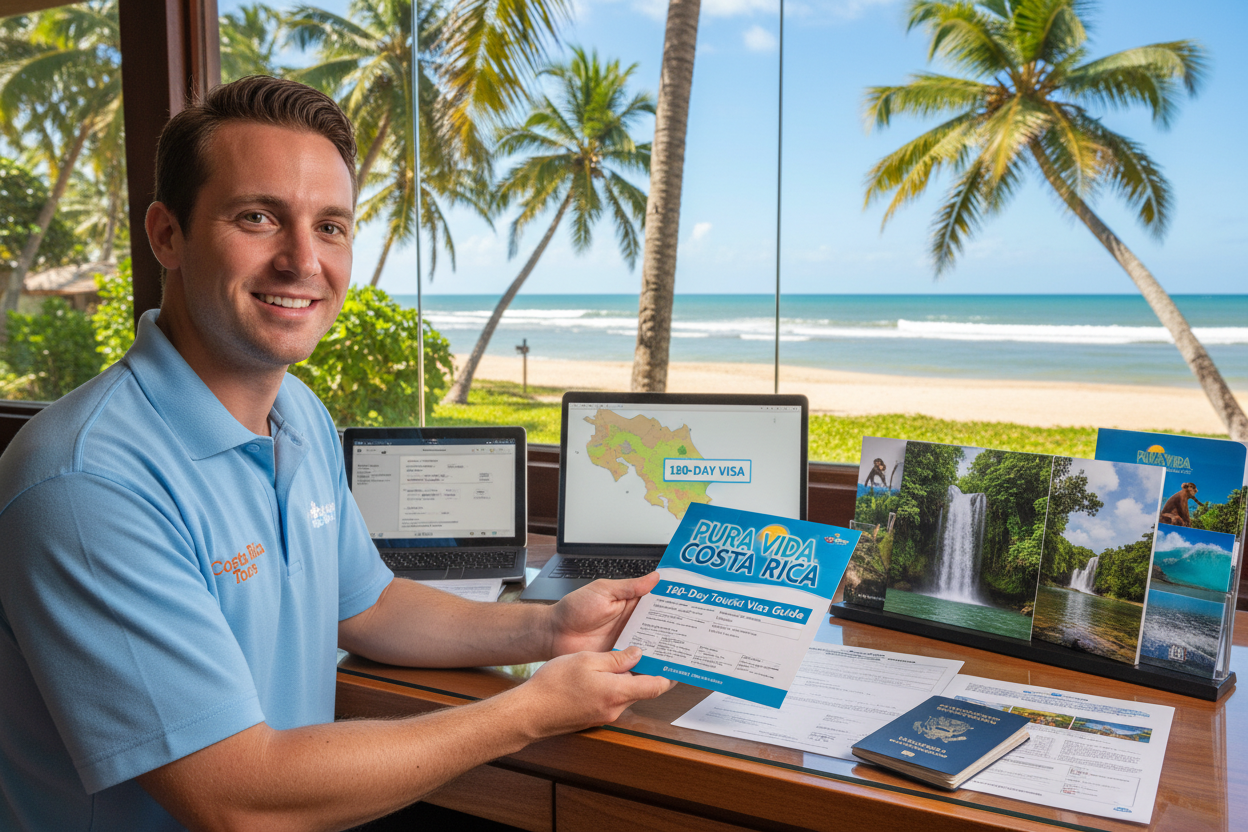
Planning a long-term visit to Costa Rica? You’re not alone. This nation’s appeal for eco-tourism and remote work is stronger than ever. Recent data shows over 2.5 million visitors arrived in just nine months last year.
The country offers one of the most generous tourist allowances in Central America. For many, including U.S. and Canadian nationals, a stay of up to 180 days is possible. This guide explains the current entry system.
We’ll walk you through the requirements, needed documents, and procedures. Our focus is on extended tourist stays. It’s crucial to understand this is different from a residency pathway.
Transparency is key. Final admission and the exact length of stay are always at the discretion of the immigration officer. Published guidelines provide a framework, not a guarantee.
This information reflects the latest updates from Costa Rica’s immigration authority. We encourage you to use official sources like migracion.go.cr for the most current details.
For those considering a move beyond tourism, specialized help exists. Firms like CRIE (crie.cr) focus exclusively on residency and immigration processes.
Let’s get you prepared. Proper documentation is your best tool for a smooth entry into this beautiful country.
Welcome to the Costa Rica Tourist Experience
Many travelers discover that a short trip to Costa Rica simply isn’t enough. The country’s political stability, stunning natural beauty, and welcoming expat communities create an ideal environment for extended visits. The famous “Pura Vida” lifestyle genuinely encourages people to slow down and stay longer.
Costa Rica enthusiastically welcomes tourists. However, immigration officials have tightened entry requirement enforcement in recent years. Preparation with complete documentation is now essential, not optional. This realistic approach balances accessibility with proper border control.
The tourist experience begins long before you arrive. You must understand the specific requirements for your nationality and gather financial proof. We see many visitors arrive hoping to explore whether the country suits them for longer-term residency.
Firms like CRIE can assist with that transition when ready. This guide focuses solely on temporary tourist stays. Those planning to work, invest, or live permanently must follow different legal pathways. Understanding these rules upfront prevents denied entry or penalties that could ban future visits.
Understanding Entry Requirements and Health Protocols
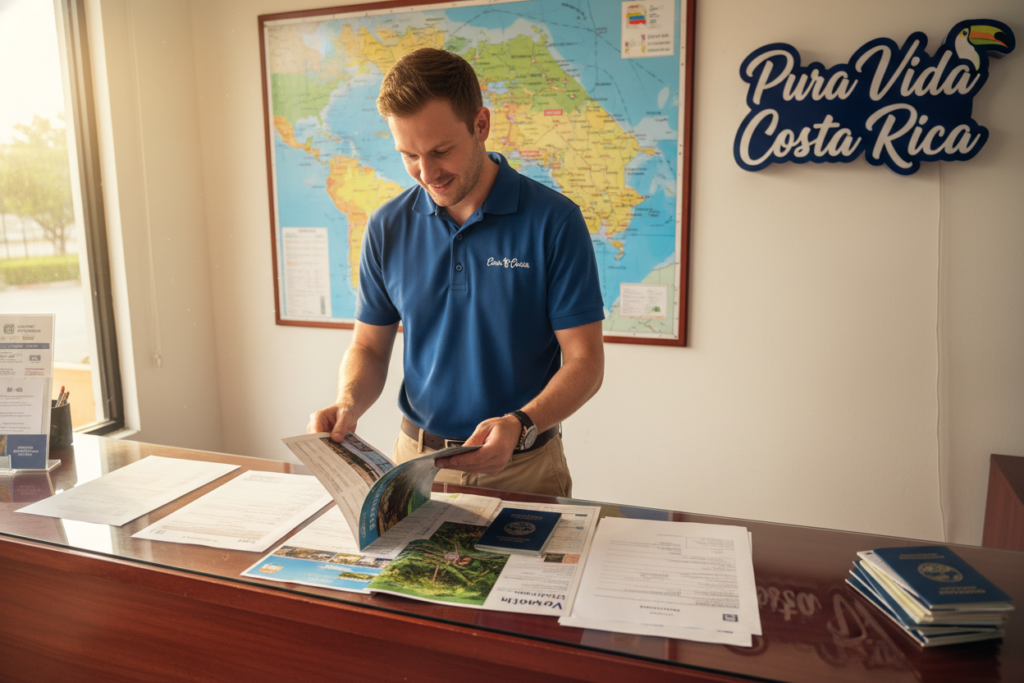
Your successful arrival in Costa Rica hinges on meeting specific, non-negotiable requirements. Immigration officers will check every document. We recommend preparing these items well before your travel date.
Passport & Travel Document Essentials
Your passport must be in perfect physical condition. Frayed edges, water damage, or a detached cover can lead to immediate deportation. All passports must also be machine-readable per ICAO standards.
Validity requirements vary by nationality group. Group 1 nations, including the United States and Canada, need only one day validity from entry. Group 2 requires three months. Groups 3 and 4 require a full six months.
Economic Means & Return Ticket Guidelines
You must show proof of economic means. The rule is a minimum of US$100 per month of your intended tourist stay. Officers may request bank statements or credit cards as proof.
A return or onward travel ticket is mandatory. One-way tickets are not accepted for tourists. Your departure date must fall within your authorized stay period.
Health protocols are strict. Travelers from countries like Brazil, Colombia, or Peru need a yellow fever vaccination certificate. Also, declare cash over US$10,000 before immigration or risk forfeiture.
Step-by-Step Guide for a Smooth Tourist Stay
Costa Rica categorizes foreign visitors into four distinct groups, each with specific visa and stay rules. Your first step is to identify your group. This classification dictates everything from required documents to your maximum permitted time in the country.
Eligibility and Qualifying Criteria
Group 1 includes travelers from the United States, Canada, and many European nations. They enjoy visa-free entry for up to 180 days. Their passport only needs one day of validity from entry.
Group 2 nationals, from countries like Russia and Turkey, get 30 days visa-free. This can be extended to 90 days. Their passport must be valid for three months.
Groups 3 and 4 require a visa obtained before travel. Nationals from China, India, and many African countries fall here. A key exemption exists. Holders of valid US or Canadian multiple-entry visas may bypass this requirement.
Timeline and Process Overview
Start preparations at least 30 days before your trip. Verify your group, check passport validity, and secure any needed visa. Also, book your return ticket and gather proof of funds.
At the border, present all documents to the immigration officer. Answer questions about your stay purpose and duration honestly. The officer stamps your passport with your authorized stay period.
Remember, the officer has final discretion. Even Group 1 travelers are not guaranteed 180 days. Your granted stay could be shorter based on their assessment.
Essential Documentation and Pre-Arrival Preparations
Unlike residency processes, tourist entry requirements focus on a few key items. Your passport, a return ticket, and proof of funds are the core documents. Preparing these correctly from home is your best strategy for a smooth arrival.
We recommend starting 30 to 60 days before your trip. Confirm your passport’s validity based on your nationality group. Also, secure your onward ticket and gather financial proof.
Apostilles, Translations, and Document Checklists
Tourists do not need apostilled or translated documents. Your checklist is simple. Have your valid passport, printed return ticket, and bank statements ready for inspection.
Proof of funds means at least $100 per month of your stay. A credit card can suffice. If you’re from a yellow fever country, bring your vaccination certificate.
However, those considering a future residency application should plan ahead. That process requires apostilled birth certificates and police records. Official Spanish translations are also mandatory.
Starting this authentication in your home country is easier and faster. Make physical and digital copies of all your key documents. Keep copies separate from your originals during your travel.
Costa Rica welcomes many travelers, but officials take documentation seriously. Incomplete preparation is a common reason for entry complications. For those exploring residency, firms like CRIE can guide the next steps once your tourist stay begins.
Avoiding Common Pitfalls and Entry Mistakes
A smooth entry into Costa Rica depends heavily on avoiding a few critical errors. We see travelers face complications from simple, preventable oversights. Proper preparation is your best defense against delays or denial at the border.
Key Mistakes to Avoid for a Smooth Entry
The most frequent error is arriving without a confirmed return or onward ticket. Airlines may deny boarding, and immigration authorities will refuse entry to tourists on one-way tickets. Always have your departure booking ready.
Another common miscalculation involves passport validity. Travelers often assume any valid passport suffices. However, Group 2 requires three months remaining, and Groups 3 and 4 require six months. Falling short by even one day can result in denied entry.
Do not assume maximum stay periods are guaranteed. Immigration officers possess broad discretion. Arriving without clear plans or adequate financial proof may result in a shorter authorized stay than your group’s maximum.
Overstaying your visa carries serious consequences. Fines start at $100 USD per month overstayed. You also risk deportation and entry bans that can extend for years. Authorities increasingly scrutinize “visa runs” to reset tourist status.
Finally, declare any cash over $10,000 upon entry. Failure to do so results in immediate forfeiture under Costa Rican law. While these rules are strict, they are consistently enforced. The vast majority of properly prepared travelers experience a smooth, welcoming entry.
Exploring Residency Options with CRIE (Residency en Costa Rica)
For those considering a permanent move to Costa Rica, understanding the formal residency pathways is essential. Tourist stays, even the full allowed period, do not establish legal residency or count toward citizenship eligibility.
Specialized firms like CRIE focus exclusively on navigating these complex immigration processes. They provide guidance distinct from simple tourist entry procedures.
Pensionado, Rentista, and Inversionista Thresholds
Costa Rica offers specific residency categories. The Pensionado (Pensionado) category requires a guaranteed income of at least US$1,000 per month.
The Rentista (Rentista) pathway demands proof of stable income of US$2,500 per month for two years. The Inversionista (Inversionista) category requires a minimum investment of US$150,000.
This investment must be in the applicant’s personal name, not through a corporation. Each category has strict documentation requirements.
Why Digital Nomad Status Doesn’t Qualify for Residency
The Digital Nomad permit allows remote work for foreign employers. However, it is explicitly not a residency category.
This status does not count toward the years required for citizenship eligibility. Those seeking permanent status typically pursue the Rentista or Inversionista pathways instead.
Residency applications involve specific timelines and mandatory document preparation. This includes apostilled certificates and official Spanish translations.
We recommend starting this required paperwork from your home country. Professional guidance helps prevent costly mistakes.
CRIE provides process management but cannot guarantee approval. Final decisions rest with Costa Rican immigration authorities.
To explore your options, contact CRIE via WhatsApp at +506 8706 3888 or email info@crie.cr.
Navigating Immigration Procedures at Costa Rican Borders
The moment you step off the plane in Costa Rica, your entry process begins at immigration control. Whether arriving by flight at Juan Santamaría International Airport or crossing a land border, you’ll join a queue to present your documents. We advise having your passport, return ticket, and proof of funds readily accessible.
Officers will ask about your visit’s purpose and duration. Common questions include where you’ll stay and your occupation. Answer clearly and honestly. The authorities assess if your plans match your documentation and financial means.
The officer stamps your passport with an entry date and may handwrite the authorized stay length. This handwritten number is what matters, not your group’s maximum. These officials have broad discretion to grant shorter periods.
For smooth processing, remain polite and patient. Dress appropriately and avoid volunteering extra information. If concerns arise, you may be directed to secondary inspection for further review. Cooperation with clear documentation is essential in these situations.
costa-rica-180-day-tourist-stay-2026: Your Comprehensive How-To Guide
Embarking on an extended visit to this Central American paradise requires meticulous planning from your home country. The famous 180-day tourist stay applies specifically to Group 1 nationals. This includes travelers from the United States, Canada, and many European countries.
Step-by-Step Guidance from Home
Start your preparations 60 days before your trip. Verify your nationality group and check your passport’s validity. Some groups need a visa issued before travel.
Gather your financial proof at the 45-day mark. You must show at least $100 per month of your intended stay. Also, schedule any required yellow fever vaccination if needed.
Book your return or onward ticket about 30 days out. The departure date must fall within your authorized period. Confirm your initial accommodation as well.
During the week before departure, organize all documents. Keep your passport, ticket, and bank statements in your carry-on. Airlines will check these before you board your flight.
Upon arrival, present your documents to the immigration officer. Answer questions about your plans honestly. Review your entry stamp to confirm your granted stay length.
Track your authorized period carefully during your visit. Avoid overstaying by even a single day. If you consider a longer-term move, contact experts like CRIE early to explore residency options.
Ready to Begin Your Costa Rican Adventure
Your journey to understanding Costa Rica’s entry rules is a significant first step toward a seamless experience. Proper preparation separates smooth arrivals from stressful complications.
Remember, this nation welcomes tourists generously with clear rules. A tourist stay, even a long one, is temporary. It does not grant work rights or establish legal residency.
If you discover you want more than a vacation, legitimate pathways exist. The Pensionado, Rentista, and Inversionista categories offer formal residency. Each has specific financial and document requirements.
Success begins with preparing apostilled certificates and official translations in your home country. We specialize in guiding this complex process. For details on extending a visit, learn about the visa extension process.
While we provide expert guidance, final approval rests with Costa Rican authorities. For a consultation, contact us via WhatsApp at +506 8706 3888 or email info@crie.cr. Always verify current rules at the official migracion.go.cr website.
FAQ
What are the basic entry requirements for tourists visiting Costa Rica?
You need a valid passport with at least one day of validity beyond your planned departure date, proof of economic means (roughly 0 USD per month of your stay), and a confirmed return or onward ticket. Immigration authorities may ask to see these documents upon your arrival.
How long can I stay in Costa Rica as a tourist?
Most travelers from countries like the United States, Canada, and across Europe receive a 90-day entry stamp. However, you can apply for an extension to stay up to a total of 180 days within a year. You must start this process before your initial 90-day period expires.
Do I need a visa before I travel?
Citizens from many countries, including the United States and most of Europe, do not need a pre-arranged visa for tourism. Your entry permission is granted by an immigration officer at the port of entry, based on your passport and supporting documents.
What is the most common mistake travelers make at immigration?
The biggest mistake is not having accessible proof of your onward travel. You must have a confirmed flight ticket exiting Costa Rica within your authorized stay period. A digital confirmation on your phone or a printed itinerary is sufficient proof for the authorities.
Can I apply for residency while on a tourist visa?
Yes, but you must start the process from outside the country. Tourist status does not allow you to apply for residency from within Costa Rica. Programs like Pensionado, Rentista, and Inversionista have specific financial thresholds and require an application filed through a Costa Rican consulate abroad.
Does the Digital Nomad Visa lead to permanent residency?
No, it does not. The Digital Nomad Visa is a specific, non-resident category that allows for a longer, legal stay with tax benefits. It is a separate status and does not count toward or convert into permanent residency in Costa Rica.
What should I do if I want to stay longer than 90 days?
You must file for a tourist visa extension (prórroga de turismo) through Costa Rica’s immigration service, Dirección General de Migración y Extranjería. We recommend starting this process several weeks before your initial 90-day stamp expires to avoid being in the country unlawfully.
Are there any health requirements for entry?
Generally, no vaccinations are required for entry. However, if you are traveling from a country with a risk of Yellow Fever, you must provide proof of vaccination. Always check the latest health protocols before your trip, as requirements can change.
Article by Glenn Tellier (Founder of CRIE and Grupo Gap)
Don't wait, contact us right now!
Call or WhatsApp Costa Rica +506 8373 2085 or +506 8706 3888
Call USA/Canada +1 305-906-6784