
We understand that navigating Costa Rica’s residency process can feel overwhelming. This guide is designed to walk you through every step, from initial document preparation to tracking your application’s progress.
Our focus is exclusively on Costa Rica residency through official channels. We cover the three primary pathways: Pensionado (Pensionado), Rentista (Rentista), and Inversionista (Investor).
Successful residency begins at home with properly prepared documents. We provide factual guidance on requirements—we do not offer pricing, quotes, or guarantees. Always verify current information at migracion.go.cr.
It’s crucial to know that a Digital Nomad visa is not residency and doesn’t count toward citizenship. For long-term goals, a formal residency category is necessary. For personalized help, contact us: WhatsApp +506 8706 3888 | info@crie.cr.
Exploring Costa Rica Residency Options and Requirements (Residencia)
Before gathering documents, you must identify which of Costa Rica’s primary residency categories you qualify for. The right choice depends on your financial situation.
Understanding the Categories: Pensionado (Pensionado), Rentista (Rentista), and Inversionista
The Pensionado (Pensionado) category is for retirees. It requires a guaranteed lifetime pension of at least US$1,000 per month.
The Rentista (Rentista) pathway suits those with stable passive income. You must prove US$2,500 per month for two years.
The Inversionista (Investor) category demands a minimum investment of US$150,000 in Costa Rican real estate. A critical piece of information: the property must be in your personal name.
Eligibility Thresholds and Qualifying Criteria
Each category has strict qualifying criteria. Your application depends on meeting these financial thresholds.
Note that a Digital Nomad visa is not a residency. It does not count toward citizenship immigration. For long-term goals, the Rentista category is often the closest fit.
We guide you through the requirements, but final approval rests with immigration authorities. Always verify the current case number and rules at migracion.go.cr.
Step-by-Step Process to Prepare and Submit Your Residency Documents
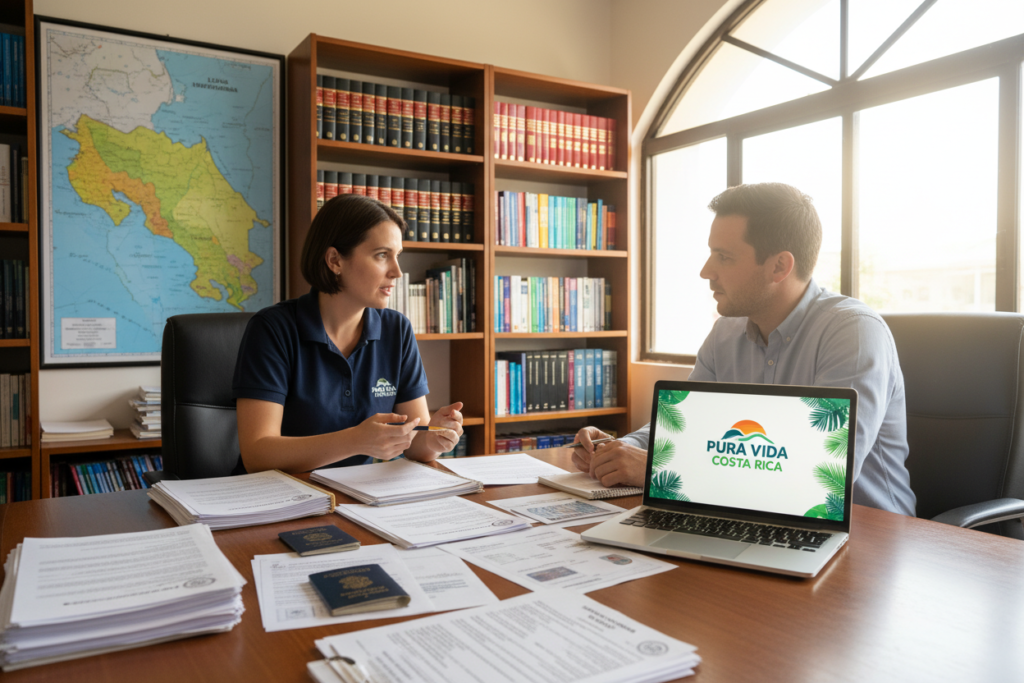
A successful residency application hinges on meticulous preparation long before you set foot in Costa Rica. We guide you through each critical phase.
Who Qualifies and What Documents to Prepare (Apostilles + Translations)
Your core documents—birth certificate, police check, proof of income—require apostilles. This is Hague Convention authentication from your home country.
Each document must then be translated by a Costa Rican Ministry-approved translator. Start this process 3-6 months before your move.
Timelines, Processing Expectations, and Starting from Home
Upon submission, you receive a receipt with a reference number. Guard this receipt number. It is essential for tracking.
Processing times vary. Straightforward cases may take 3-6 months. Complex financial verification can extend this timeline.
Common Mistakes to Avoid During Your Application
Avoid expired apostilles, non-certified translations, and incorrect property ownership for the Inversionista category. Promptly reply to any official notice.
Keep organized records of every document and receipt number. This helps when checking your case status online.
Let us know if you need clarification. Contact us via WhatsApp +506 8706 3888 or info@crie.cr. Always verify the latest information at migracion.go.cr.
check-my-immigration-status: How to Monitor Your Costa Rica Immigration Case
Once your documents are filed, Costa Rica’s immigration system offers online tools to monitor your case. Staying informed about your application’s progress is a practical part of the journey.
Online Tools and Tips for Checking Your Case Status
Visit the official migracion.go.cr website. Locate the case status tool, often called “consulta de trámites.”
You will need your unique receipt number from your application submission. Enter this number to view your current case status.
The status page may show stages like “under review” or “pending documentation.” This indicates where your application stands in the queue.
We suggest checking your case status weekly. Updates typically occur every few weeks, not daily.
Staying Updated with CRIE and migracion.go.cr
Consider creating an account on the government website if available. This can provide email alerts for status changes or official notices.
If a notice requests more information, respond promptly. Delays can extend your processing timeline.
CRIE’s immigration services help interpret these updates. If a status is confusing, let us know for clarification.
Processing times vary by case type and volume. The online tool offers transparency but does not speed up the review.
For direct assistance, contact us: WhatsApp +506 8706 3888 | info@crie.cr. Always verify information at migracion.go.cr.
Final Strategies for a Successful Costa Rica Residency Journey
The final phase of your residency journey focuses on strategic follow-through and managing expectations. Success hinges on the preparation you begin at home.
Your most powerful strategy is to complete all document apostilles and translations before arriving. A perfectly prepared application avoids major delays.
Guard your receipt number. Use it to check your case status regularly on the official portal. Understand that processing times vary and final approval rests with immigration authorities.
Residency is the mandatory first step for any long-term citizenship immigration goal. Always verify the latest information at migracion.go.cr. For a personal residency assessment, contact us: WhatsApp +506 8706 3888 | info@crie.cr.
FAQ
How can I check the status of my residency application in Costa Rica?
You can monitor your case status online through the official Dirección General de Migración y Extranjería website at migracion.go.cr. Using your unique file number, their online tool provides real-time updates on your application’s processing stage. We also recommend creating an account with the Costa Rican Immigration Experts (CRIE) platform for additional tracking and support.
What is the difference between Pensionado, Rentista, and Inversionista residency categories?
These are the three main permanent residency options. The Pensionado category is for retirees with a guaranteed lifetime pension. The Rentista category requires a stable, verifiable income from sources like investments or rentals. The Inversionista category is for those making a significant financial investment in Costa Rica, such as in real estate or a business. Each has specific financial thresholds and qualifying criteria.
What are the most common mistakes people make during the application process?
Frequent errors include submitting documents without the required apostille certification, failing to provide official Spanish translations, and incomplete paperwork. Another common issue is not starting the document preparation—like background checks—from your home country early enough. Miscalculating financial proof or missing deadlines can also cause significant delays.
How long does it typically take to process a residency application?
Processing times can vary, but you should generally expect the procedure to take several months to over a year. The timeline depends on the category, the completeness of your submitted documents, and current caseloads at immigration. Starting your document collection from your home country before moving can help streamline the later stages.
What documents do I need to prepare, and how do I get them authenticated?
You will need a set of personal documents, which typically includes birth certificates, marriage certificates (if applicable), and police clearance reports. These documents must be apostilled (or authenticated) in the country that issued them. After apostille, they require an official translation into Spanish by a certified translator in Costa Rica before submission.
What should I do if my application seems to be stalled or delayed?
First, use the official case status tool on migracion.go.cr for the most current information. If the status is unclear or has not changed for an extended period, you can contact the Dirección General de Migración y Extranjería directly for clarification. Working with a reputable legal advisor or service can also help navigate follow-ups and ensure all requirements are met.
Article by Glenn Tellier (Founder of CRIE and Grupo Gap)
Don't wait, contact us right now!
Call or WhatsApp Costa Rica +506 8373 2085 or +506 8706 3888
Call USA/Canada +1 305-906-6784