
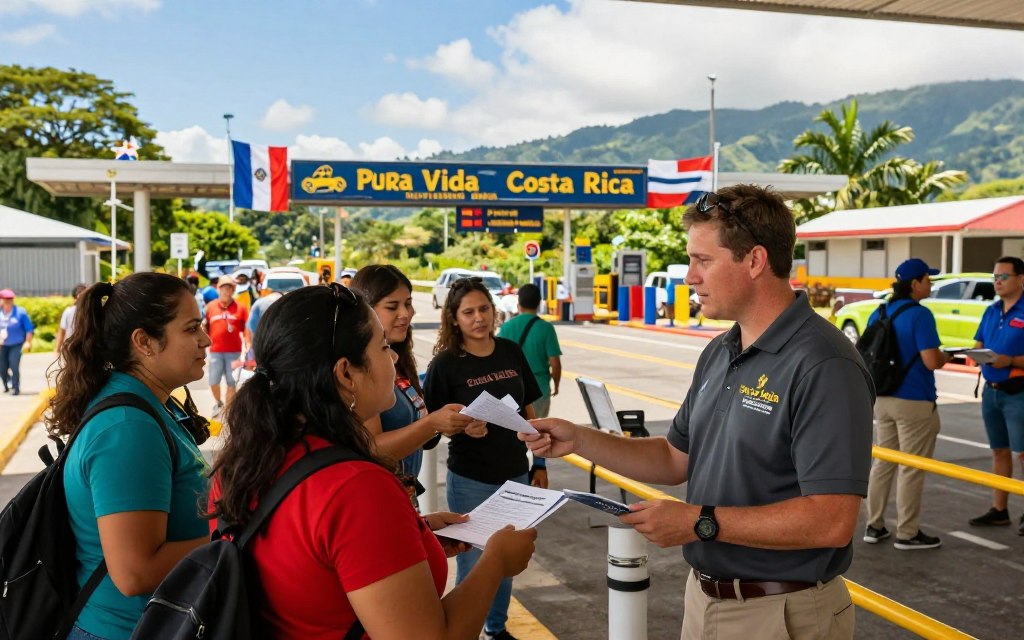
Many visitors to Costa Rica hear about “border runs” as a way to extend their stay. This practice involves leaving the country briefly—often to Nicaragua or Panama—and returning to reset your tourist visa clock.
Since September 2023, visa-exempt visitors can stay up to 180 days. This longer period reduces the immediate need for a border run, but some still consider it.
We believe in transparency. While a border run might seem like a simple fix, Costa Rican immigration authorities now scrutinize this practice heavily. Relying on it carries real legal and practical risks.
This guide explains those consequences. More importantly, we show you the better, sustainable path: obtaining proper Costa Rica residency.
At CRIE, we specialize in legitimate residency—like Pensionado, Rentista, or Inversionista categories. We help you build a stable life here, not navigate temporary loopholes that could jeopardize your future.
Our approach is honest. We provide clear information on requirements and processes, always advising you to verify details with official sources. Let’s explore why a solid residency application is the only true path to long-term stability in Costa Rica.
Overview of Costa Rica Residency and Border Run Dynamics

Navigating Costa Rica’s immigration landscape begins with a clear understanding of two distinct statuses: tourist and resident. The country offers visa-free entry for citizens of over 60 nations, allowing stays up to 180 days. This is a generous tourist policy, but it is not a path to living here long-term.
CRIE’s Role in Costa Rica Immigration
At CRIE, we focus exclusively on one thing: guiding you through Costa Rica’s official residency (residencia) process. We don’t deal in temporary fixes. Our expertise is in legitimate categories like Pensionado, Rentista, and Inversionista.
We work within the framework set by Costa Rican immigration authorities. Our goal is to ensure your application is complete and compliant from day one.
Tourist Visa vs. Long-Term Residency Basics
A tourist visa is for visiting. Residency is for building a life. The tourist status is temporary by design. It does not grant work rights or a direct path to permanent status.
True stability comes from proper residency. The most successful applications start with preparation in your home country. Key documents must be apostilled, translated, and notarized before you arrive. This upfront work prevents costly delays and rejections.
Relying solely on tourist entry can lead to complications, such as overstaying your tourist visa. We help you transition correctly from the start.
Understanding the Concept of Border Runs in Costa Rica
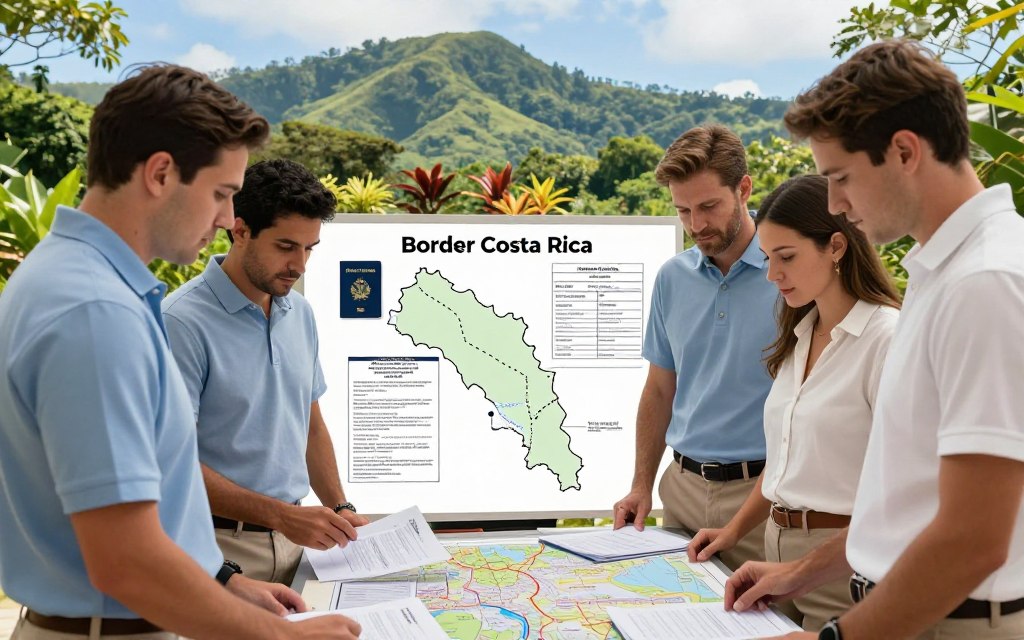
Understanding border runs requires peeling back layers of rumor to reveal legal realities. This practice is a focal point for many hoping to extend their time in the country without pursuing formal residency.
Definition and Common Misconceptions
A border run involves leaving Costa Rica, typically to Nicaragua or Panama, and returning shortly after. The goal is to reset the 180-day tourist visa period upon re-entry.
A major misconception is that this is a sanctioned, long-term strategy. People often believe repeated runs offer a permanent alternative to residency. Costa Rican immigration authorities do not share this view.
The system is designed for tourists, not long-term residents. Using it as a permanent solution is a misuse of the visa waiver program.
Legal and Ethical Considerations
The legal standing of a border run is nuanced. A single trip is not illegal, but pattern recognition is key. Officials have broad discretion to deny entry if they suspect visa abuse.
We have seen entry denied after just one or two runs. This is especially true if someone cannot prove sufficient funds or a genuine tourist purpose.
Ethically, residency exists to integrate people into society. It ensures contributions to taxes and social systems. Choosing endless runs avoids these responsibilities while using local resources.
Our advice is straightforward. For true long-term stability, legitimate residency is the only secure path. It provides legal protection and peace of mind.
Step-by-Step Process to Cross Costa Rica Borders
If you must undertake a border crossing, understanding the exact procedure can prevent unexpected delays and complications. This guide outlines the physical steps at a border like Penas Blancas with Nicaragua. We provide this information for clarity, not to encourage reliance on this temporary method.
Required Documents and Exit Procedures
Your first step is leaving Costa Rica. You must pay an exit tax before approaching the border. The fee is $8 USD if paid online via Banco de Costa Rica, or $10 USD if paid at the border office.
Ensure your passport is valid for at least six months beyond your planned stay. Both countries enforce this rule strictly. At the Costa Rican exit office, present your passport and tax receipt to the immigration officer for your exit stamp.
Entry Protocols on the Return
Walking into Nicaragua, you’ll pay entry fees: $12 USD for immigration and $1 USD as a municipality tax. Always carry small U.S. bills, as change is scarce.
When you return, the scrutiny intensifies. Re-entering Costa Rica requires a valid passport, proof of onward travel within 180 days, and accommodation details. Immigration officers will ask about your purpose and plans.
This is the critical point where officers decide to grant or deny entry. Having all your documents in order is essential for this part of the process.
Essential Documents and Pre-Arrival Preparations
The most common point of failure in residency applications isn’t the interview. It’s the document preparation stage that happens months prior. Your success in Costa Rica depends almost entirely on work you do from your home country.
Apostilles, Translations, and Notarizations
An apostille is an international certification. It authenticates official documents like birth certificates and police checks for use here. This stamp tells Costa Rican authorities your paperwork is legitimate.
Every document must be in Spanish. Official translations must meet strict local standards. Handling this in your home country—before arrival—saves significant time and cost.
Notarizations add another layer of verification. Certain financial affidavits may need to be notarized, then apostilled. This creates the chain of authenticity immigration officials require.
We cannot overstate this. Starting the process of getting foreign documents apostilled from home is the single most important step. It prevents months of bureaucratic delays. Our guidance focuses on getting this foundation right from the start.
Who Qualifies for Costa Rica Residency: An Immigration Guide (Residencia)
For those seeking long-term stability, Costa Rica’s residency system offers clear paths based on financial means. Moving beyond tourist status requires meeting specific income thresholds under official categories. We focus on the two most common: Pensionado and Rentista.
Pensionado (Pensionado): US$1,000+ Monthly Pension
The Pensionado category is for retirees with a guaranteed lifetime pension. You must prove a permanent income of at least US$1,000 per month from a government or qualifying institution. This requirement is strict—even $999 does not qualify.
Documentation must show the pension is permanent, not temporary. Alongside standard apostilled papers, this proof forms your application’s core.
Rentista (Rentista): US$2,500/Month Income Verification
Rentista residency suits those with stable passive income. You must verify US$2,500 monthly for at least two years from sources like rentals or investments.
Alternatively, a US$60,000 deposit in a local bank meets the requirement. This sum is drawn down at $2,500 per month over the two-year period.
Both categories grant temporary residency, renewable after two years. They provide a direct path to permanent status, offering true security far beyond any tourist visa.
Investor Visa Requirements (Inversionista)
Costa Rica’s investor visa, known as Inversionista, is built around a substantial financial threshold. This category is for individuals ready to make a significant capital commitment to the country.
Minimum Investment of US$150,000
The core requirement is a minimum investment of US$150,000. This capital can be placed in Costa Rican real estate, a local business, or other approved investment vehicles.
The threshold is firm. You must maintain this investment throughout your temporary residency period. Selling the asset before obtaining permanent status jeopardizes your visa.
Property Ownership in Personal Name
A critical rule often surprises applicants. If using property to qualify, the title must be in your personal name.
Ownership through a corporation or LLC does not meet the requirements. Immigration authorities need clear proof that you personally have the funds at risk.
If you already own property in a corporate structure, you must transfer the title before applying. This restructuring involves legal steps and time.
After three years of temporary Inversionista residency, you can apply for permanent status. This offers a stable, long-term future in Costa Rica.
Alternatives to Border Runs: Avoiding Common Pitfalls
The search for alternatives to border runs often leads to two main options: temporary visas or true residency. We need to clarify the stark difference between them.
Proper residency is the only path that leads somewhere meaningful in Costa Rica.
Exploring Long-Term Residency Options
For retirees, Pensionado residency offers stability and a clear legal path. Investors with qualifying assets should formalize their status through the Inversionista category.
Remote workers seeking a future here must look at Rentista. It requires proving a stable $2,500 monthly income. This temporary residency counts toward permanent status after three years.
These are the real alternatives to the uncertainty of repeated border crossings.
Understanding the Digital Nomad Visa Limitations
Many confuse the Digital Nomad Visa with residency. It is not. This visa allows remote workers to stay for up to one year, renewable once.
It requires proof of $3,000 monthly income and health insurance. However, time spent on this visa does not count toward residency or citizenship.
For remote workers wanting a real future, the Rentista category is the appropriate choice. It is a legitimate residency that builds toward permanent status.
Choosing the Digital Nomad Visa leaves you in a temporary position, just like a tourist. For long-term stability, proper residency is the only secure alternative.
Timelines, Mistakes, and Tips for a Smooth Process
Achieving legal status in Costa Rica is a marathon, not a sprint, with processing times that demand careful planning. We provide realistic expectations to guide your journey.
Planning Ahead from Home
Start the process from your home country, ideally 3-6 months before your move. Collect birth certificates and police checks. Initiate the apostille and translation steps early.
This upfront work prevents frantic scrambling against a 180-day tourist clock. Proper preparation is your greatest advantage in Costa Rica immigration.
Common Pitfalls and How to Avoid Them
Frequent mistakes include expired background checks and incorrect financial documentation. Another error is applying under the wrong residency category.
Our tips are straightforward. Over-document your income. Keep multiple copies of everything. Always verify current rules at migracion.go.cr.
Remember, processing times vary. Temporary residency can take 6-12 months, with delays possible. We guide you, but official sources have the final word.
The Impact of Frequent Border Runs on Immigration Efficiency
Beyond individual consequences, repeated border crossings create a ripple effect that impacts everyone entering the country. High volumes of these runs strain Costa Rica’s immigration infrastructure at land borders and airports.
This leads to overcrowding and longer wait times. Every crossing requires immigration officers to process documents and verify status.
Officers must spend more time screening each entry to identify patterns. This heightened scrutiny extends the processing period for all travelers, not just those doing border runs.
From a system perspective, this practice hurts overall efficiency. It makes it difficult for authorities to track who is in the country long-term.
Choosing proper residency alleviates this strain. It allows the immigration system to allocate resources appropriately, benefiting both you and Costa Rica.
Understanding Costa Rica’s Extended Tourist Visa (180-day Stay)
A significant shift in Costa Rica’s tourist policy now allows longer stays, yet it remains distinct from residency. Since September 2023, visitors from over 60 visa-exempt nations can stay for up to 180 days. This includes citizens from the United States, Canada, most EU countries, Australia, and the UK.
The 180-day extension is a generous move by international standards. It lets you experience Costa Rica’s culture and nature for a full six months on a single entry. This policy supports genuine tourism and reduces the need for quick border runs.
However, this extended tourist visa is still a tourist status. It does not grant permission to work for local employers. The time spent does not count toward requirements for permanent residency or citizenship.
You must still show proof of onward travel when you enter the country. Immigration officers can deny entry without a ticket showing departure within 180 days. This rule applies even with the longer allowed stay.
We see this policy as a great tool for exploration. It gives you time to decide if you want to live here long-term. For actual living, proper residency is the only sustainable path forward.
Integrating into Costa Rican Society Beyond Temporary Status
Building a life in Costa Rica transcends legal paperwork. It’s about weaving yourself into the fabric of local society. While tourists may enjoy the beaches, residents build lasting relationships within their communities.
Perpetual tourists remain outsiders, limited in participation. They are always aware of their temporary status. Residency changes this dynamic entirely by granting stability and opening doors to daily life.
Residency provides practical foundations like opening local bank accounts. You can apply for financing and access government services more easily. This stability encourages deeper investment in learning Spanish and engaging in local traditions.
The path to Costa Rican citizenship begins with proper residency. After maintaining it for several years, you can apply, demonstrating your integration. This process formalizes your commitment to the country.
We see residents experience greater satisfaction and connection. Choosing residency is choosing to belong. It allows you to contribute meaningfully to the economy and culture of this beautiful country.
Essential Guide to Costa Rica Border Runs: Understanding the Consequences
The true cost of relying on border runs extends far beyond the price of a bus ticket to Nicaragua. Our guide’s title focuses on the serious outcomes, not just the how-to.
What the Title Means in Practice
Understanding the consequences means seeing both immediate and long-term impacts. Immediate costs include exit taxes, travel, and lost time. Each re-entry brings stress about being allowed back in.
Long-term effects are more severe. Every crossing creates a permanent immigration record. Patterns can lead to entry denial, as detailed in this article on the limitations of border runs. You gain zero progress toward residency or citizenship.
Alignment with Immigration Regulations
Costa Rican immigration policy now actively discourages this practice. Authorities view repeated runs as a misuse of tourist privileges. For true long-term living, proper residency is the only intended path.
We at CRIE advocate for starting your residency application correctly. Always verify current rules at migracion.go.cr. Our mission is to guide you toward stable legal status and away from uncertain shortcuts.
Practical Tips for Document Management and Preparation
We often tell clients that the real work for Costa Rica residency happens long before you submit your application—it’s in the preparation. Meticulous organization is your greatest ally. This phase determines whether your process moves smoothly or gets bogged down in delays.
Organizing Apostilles and Translations
Start with a detailed checklist tailored to your specific residency category. Knowing the exact requirements prevents last-minute surprises.
Create both digital and physical filing systems. Scan every apostilled original immediately. Store digital copies in cloud storage with clear names.
Track apostille and issue dates meticulously. Police background checks, for example, often expire after six months. You must renew them if your application timeline extends beyond that.
Keep certified translations physically attached to their original documents. Immigration officers may need to see the full authentication chain.
Use a folder system that mirrors official requirements. Separate folders for personal ID, financial proof, and background checks make assembly simple.
Maintain a master spreadsheet listing each document, its status, and key dates. This single reference is invaluable for tracking progress.
Finally, build in redundancy. Obtain multiple apostilled copies of critical documents like birth certificates. It’s much easier to do this from your home country than from Costa Rica later.
Final Reflections on Navigating Costa Rica Immigration
Your path to calling Costa Rica home begins with a commitment to proper legal residency. This guide has shown why it’s the only secure route for long-term living.
Costa Rica immigration through official channels requires patience. The process is navigable with expert guidance and thorough preparation. We at CRIE provide that support.
We offer transparent guidance on residency categories like Pensionado or Rentista. We help you meet the Costa Rican government’s requirements. Always verify current rules at migracion.go.cr, as policies can change.
This is a partnership. You gather documents; we ensure they meet local standards. Together, we navigate the system for your stable future here.
Ready to start? Contact CRIE via WhatsApp at +506 8706 3888 or email info@crie.cr. Let’s build your life in Costa Rica on a solid legal foundation.
FAQ
What exactly is a "border run," and is it a legal way to stay in Costa Rica?
A border run is when a tourist exits Costa Rica—often just for a few hours—and re-enters to reset their 90-day tourist visa. While not illegal, immigration officers increasingly view frequent runs as an attempt to circumvent residency rules. We advise using this method sparingly, as it carries risk and is not a sustainable long-term strategy.
How many days can I stay in Costa Rica as a tourist?
Upon entry, immigration typically grants a stay of 90 days. However, under the extended tourist visa policy, you can request up to 180 days. You must formally ask the officer for the full period and be prepared to show proof of onward travel and sufficient funds. The final decision is always at the officer’s discretion.
What documents do I need for a smooth border crossing?
A> For both exit and re-entry, you need a valid passport with at least one blank page and six months of validity. You must also show proof of onward travel within your authorized stay period, such as a flight or bus ticket exiting Costa Rica. We recommend carrying proof of financial means and travel insurance to avoid complications.
What are the main long-term alternatives to doing repeated border runs?
The most secure paths are formal residency categories. The Pensionado visa requires a guaranteed lifetime pension of at least
FAQ
What exactly is a "border run," and is it a legal way to stay in Costa Rica?
A border run is when a tourist exits Costa Rica—often just for a few hours—and re-enters to reset their 90-day tourist visa. While not illegal, immigration officers increasingly view frequent runs as an attempt to circumvent residency rules. We advise using this method sparingly, as it carries risk and is not a sustainable long-term strategy.
How many days can I stay in Costa Rica as a tourist?
Upon entry, immigration typically grants a stay of 90 days. However, under the extended tourist visa policy, you can request up to 180 days. You must formally ask the officer for the full period and be prepared to show proof of onward travel and sufficient funds. The final decision is always at the officer’s discretion.
What documents do I need for a smooth border crossing?
A> For both exit and re-entry, you need a valid passport with at least one blank page and six months of validity. You must also show proof of onward travel within your authorized stay period, such as a flight or bus ticket exiting Costa Rica. We recommend carrying proof of financial means and travel insurance to avoid complications.
What are the main long-term alternatives to doing repeated border runs?
The most secure paths are formal residency categories. The Pensionado visa requires a guaranteed lifetime pension of at least $1,000 monthly. The Rentista visa requires proof of $2,500 monthly income for two years. The Investor visa requires a $150,000 minimum investment in Costa Rica. The Digital Nomad Visa is another option but is a temporary permit, not permanent residency.
How does CRIE assist with the immigration process?
CRIE, the Costa Rican Immigration Experts, is a licensed agency. We help clients navigate complex residency applications, ensuring documents like apostilles, translations, and financial verifications meet the government’s strict standards. We manage the entire process, from initial filing to final approval, saving you time and preventing costly errors.
Can frequent border runs eventually cause problems with immigration?
Yes. While a single run may not raise flags, a pattern of exits and re-entries can lead to increased scrutiny. An officer may grant you fewer days, request additional documentation, or even deny entry if they suspect you are effectively living in the country without proper status. It undermines trust and complicates future residency applications.
What is the single biggest mistake people make when preparing for residency?
Failing to properly authenticate documents from their home country. The Dirección General de Migración y Extranjería requires that foreign-issued documents like birth certificates and police reports have an apostille and be officially translated into Spanish. Starting this process before you arrive in Costa Rica is one of our most critical tips.
,000 monthly. The Rentista visa requires proof of ,500 monthly income for two years. The Investor visa requires a 0,000 minimum investment in Costa Rica. The Digital Nomad Visa is another option but is a temporary permit, not permanent residency.
How does CRIE assist with the immigration process?
CRIE, the Costa Rican Immigration Experts, is a licensed agency. We help clients navigate complex residency applications, ensuring documents like apostilles, translations, and financial verifications meet the government’s strict standards. We manage the entire process, from initial filing to final approval, saving you time and preventing costly errors.
Can frequent border runs eventually cause problems with immigration?
Yes. While a single run may not raise flags, a pattern of exits and re-entries can lead to increased scrutiny. An officer may grant you fewer days, request additional documentation, or even deny entry if they suspect you are effectively living in the country without proper status. It undermines trust and complicates future residency applications.
What is the single biggest mistake people make when preparing for residency?
Failing to properly authenticate documents from their home country. The Dirección General de Migración y Extranjería requires that foreign-issued documents like birth certificates and police reports have an apostille and be officially translated into Spanish. Starting this process before you arrive in Costa Rica is one of our most critical tips.
Article by Glenn Tellier (Founder of CRIE and Grupo Gap)
Don't wait, contact us right now!
Call or WhatsApp Costa Rica +506 8373 2085 or +506 8706 3888
Call USA/Canada +1 305-906-6784