
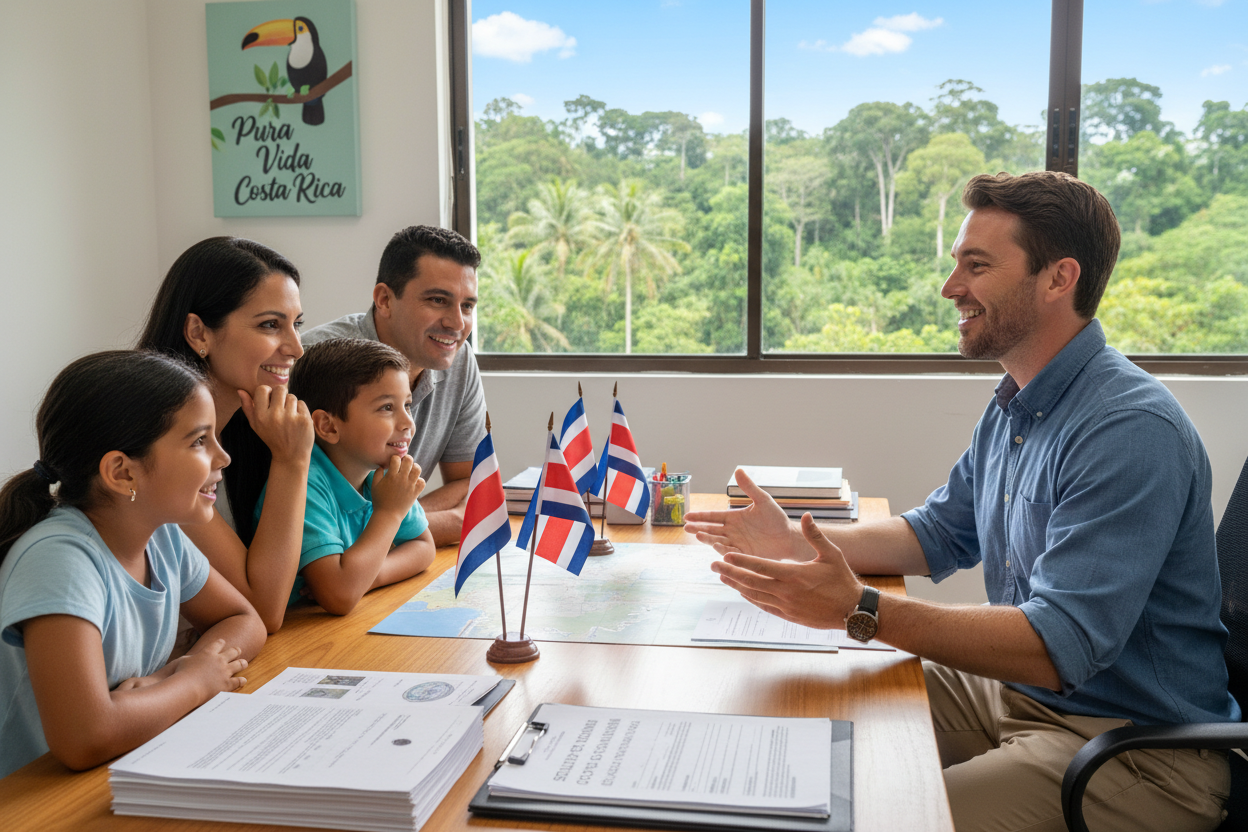
Reclaiming your heritage through Costa Rican citizenship is a powerful journey. It connects you to family roots and grants tangible rights in a stable, democratic country.
At CRIE, we focus exclusively on Costa Rica residency and immigration. Our guidance comes from daily, hands-on experience with local authorities.
The legal path via parents (jus sanguinis) is clear. Yet, the practical steps involve navigating the Civil Registry and preparing documents correctly. We set realistic expectations—outcomes depend on individual cases and agency processing.
Success starts at home. Begin gathering and authenticating your paperwork before you travel. This prevents costly delays. For many, establishing legal residency is the first step.
This process is part of a broader immigration strategy. Categories like Pensionado, Rentista, or Inversionista residency often lead to naturalization. Our comprehensive Costa Rica citizenship guide details these pathways.
Understanding the Parentage-Based Path to Costa Rican Citizenship
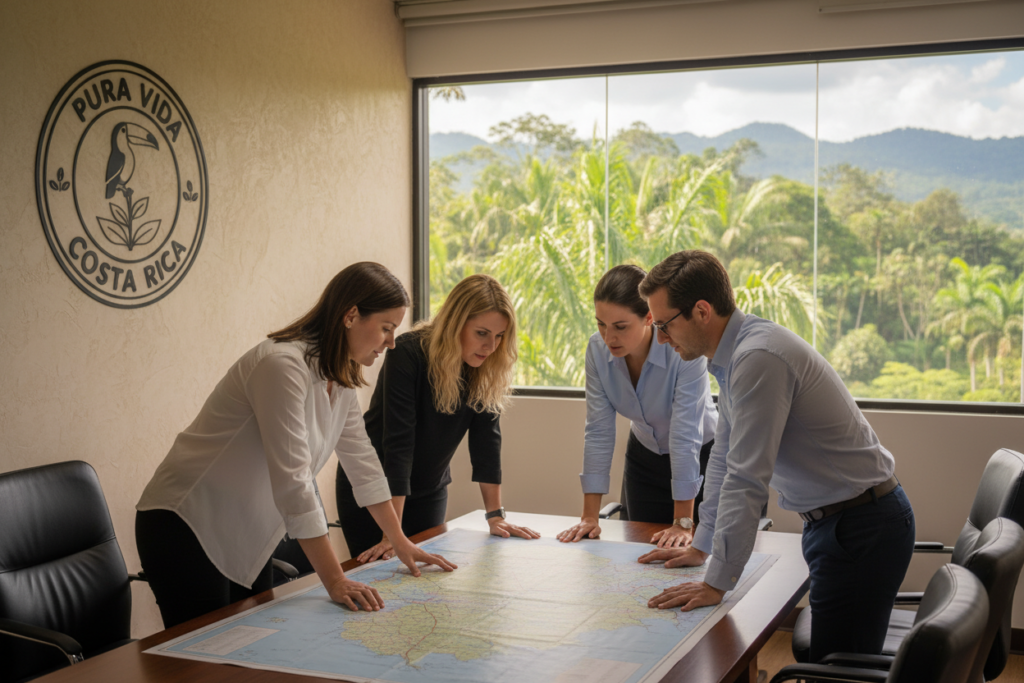
The path to Costa Rican nationality through parents is defined by the principle of jus sanguinis. This means “right of blood.” It allows you to claim citizenship based on family ties.
Overview of Citizenship by Descent
Citizenship by descent (ciudadanía por descendencia) means you can obtain Costa Rican nationality if you have at least one parent who is a Costa Rican citizen. Your place of birth does not matter. This law reflects Costa Rica’s commitment to its global diaspora.
The key is registration with the Civil Registry (Registro Civil). If born abroad, you must register before age 25. Your parents can also register you before you turn 18.
The Role of Costa Rican Ancestry and Jus Sanguinis
Law N°7514, from 1995, amended the Constitution. It set the modern rules for claiming citizenship through parentage. The Tribunal Supremo de Elecciones oversees this process.
There are two main scenarios. You are born abroad to Costa Rican parents. Or, you are born in Costa Rica to foreign parents. Both can lead to citizenship if registered correctly.
This route offers direct benefits. You gain the right to live and work in Costa Rica. You can access healthcare and vote. You can also pass nationality to your own children.
We help you understand your eligibility first. The legal right may be clear, but the application requires precise documents and steps.
Step-by-Step Immigration Guidance with CRIE (CRIE.cr)

We believe the most critical phase of your immigration journey happens long before you arrive in Costa Rica. Successful outcomes depend on precise document preparation. Our team at CRIE provides clear, step-by-step guidance tailored to your situation.
Starting from Home: Preparing Your Documents
We begin with a detailed eligibility assessment. Then, we create a custom checklist for your required documents. This includes birth certificates, marriage records, and proof of income.
All foreign documents must be authenticated. For many countries, this means obtaining an apostille. Documents not in Spanish require certified translation by approved professionals.
Completing this work upfront prevents costly delays. It ensures your application meets the strict standards of Costa Rican authorities.
Highlighting CRIE’s Residency and Immigration Expertise
CRIE focuses exclusively on Costa Rica residency and immigration. This deep specialization means we know the exact procedural requirements. We guide you through the entire process, from initial filing to final decision.
We manage realistic timelines and keep you informed. Citizenship applications through the Civil Registry often take 10 to 18 months. We help you navigate this complex system efficiently.
For personalized guidance, contact our team via WhatsApp at +506 8706 3888 or email info@crie.cr. We’ll assess your case and outline your specific path forward.
Eligibility Requirements and Necessary Documentation (Pensionado, Rentista, Inversionista)
Eligibility for Costa Rican citizenship is not one-size-fits-all; it depends on your lineage or your ability to meet one of three residency financial requirements.
Who Qualifies: Parental Citizenship and Ancestral Ties
If you were born abroad to at least one Costa Rican citizen parent, you have a legal right to citizenship. You must register with the Civil Registry before turning 25. For those with Costa Rican grandparents, the path involves more extensive historical document gathering to prove an unbroken line.
Essential Documents to Prepare Before Arrival
For most foreign nationals, the journey starts with obtaining legal residency. The three main categories are Pensionado (US$1,000+ monthly pension), Rentista (US$2,500 monthly income guaranteed for two years), and Inversionista (minimum US$150,000 investment). A critical note: for the Inversionista route, real property must be titled in your personal name, not a corporation.
Your core document checklist includes your birth certificate, marriage certificate (if applicable), valid passport, and a recent police clearance. Every foreign document requires authentication—an apostille or consular legalization—before you leave home. This is non-negotiable.
Remember, Costa Rica’s Digital Nomad visa does not count toward residency or citizenship. For a detailed comparison of Costa Rican residency options, explore our resources. Those married to a Costa Rican citizen can apply for citizenship after just two years of legal residency, while others typically need seven. Learn more about the naturalization for US residents process on our site.
Key Thresholds and Common Mistakes to Avoid in Costa Rica’s Residency Process
Many applicants face delays due to common, avoidable mistakes in the residency and citizenship process. Understanding the exact requirements from the start is your best defense.
Threshold Details: Pensionado, Rentista, and Inversionista Requirements
The Pensionado category requires proof of a guaranteed lifetime pension of at least US$1,000 per month. This amount must be consistent, not an average.
For Rentista residency, you must demonstrate a stable income of US$2,500 monthly. Crucially, you need to prove this income is guaranteed for 24 consecutive months ahead.
The Inversionista route demands a minimum investment of US$150,000. If this is in real estate, the property title must be in your personal name, not a corporate entity.
Risks of Missteps and How to Stay Compliant
Submitting an incomplete application package is the top cause for rejection. Every document needs proper apostille and translation. Police clearances must be issued within three months.
For citizenship by descent, you must register before age 25. For naturalization, continuous residency is key. Extended absences can reset your required years in the country.
Remember, the Digital Nomad visa does not count toward residency time. Always verify the latest law and process at the official migracion.go.cr website.
Document Preparation: Apostilles, Translations, and Timelines
Proper document preparation is the cornerstone of any successful Costa Rican immigration application. We stress that incomplete applications are automatically rejected. Starting this process from home prevents costly delays.
Securing Apostilles and Certified Translations
All foreign documents require authentication. For Hague Convention countries like the US, you need an apostille from your Secretary of State. Non-Hague countries require legalization through their foreign ministry and a Costa Rican consulate.
Documents not in Spanish need certified translation by an approved translator. This includes your birth certificate, marriage certificate, and police clearance. Submit both the apostilled original and the translation together.
Managing Timelines and Staying Organized
Realistic timelines are key. Gathering and authenticating documents takes 4-8 weeks. Certified translation adds 1-2 weeks. The Civil Registry process for citizenship by descent can take 6-18 months.
We help you stay organized. Your passport, birth certificate, and proof of income must be current. Police clearances are only valid for three months. Plan accordingly to avoid resubmission.
Exploring Gaining Costa Rica Citizenship Through Parents: Expert Guidance Options
Costa Rica offers a clear, multi-stage route from legal residency to full citizenship for dedicated applicants. This path is vital for those without direct parentage.
Comparing Residency Options: Why Digital Nomad Doesn’t Count
The three main temporary residency categories are Pensionado, Rentista, and Inversionista. Each has specific financial requirements you must meet.
It’s crucial to know the Digital Nomad visa does not count as residency. It offers no path to Costa Rican citizenship. For remote workers, the Rentista category is the strategic alternative.
Strategic Steps from Residency to Citizenship
The journey has three key stages. First, secure temporary residency. After three years, you can apply for permanent status.
Finally, after meeting the total residency requirement (often seven years), you can apply for naturalization. Costa Rica allows dual citizenship, so you keep your original passport.
The benefits of Costa Rican nationality are significant. They include visa-free travel to over 150 countries and full work rights.
We at CRIE can help you develop a personalized plan for this multi-year process. Contact us to map your strategic steps.
Your Roadmap to Costa Rican Citizenship and Next Steps
The roadmap to becoming a Costa Rican citizen involves clear steps, but each applicant’s path is uniquely shaped by their circumstances. You may qualify through descent by registering with the Civil Registry, or via naturalization after several years of legal residency.
Successful applications depend on meticulous document preparation. This includes authenticated birth certificates and proof of meeting financial thresholds for residency categories.
As a citizen, you gain significant benefits. These include the right to live and work freely, access to healthcare, and visa-free travel to many countries. Costa Rica also permits dual citizenship.
Your next step is to verify your eligibility and gather your documents. Always check the latest requirements at the official site, migracion.go.cr. For personalized guidance through this process, contact CRIE.
We provide the expert support needed to navigate the application process efficiently. Reach us via WhatsApp at +506 8706 3888 or email info@crie.cr to begin your journey.
Who is eligible for Costa Rican citizenship through their parents?
You are generally eligible if at least one of your parents was a Costa Rican citizen at the time of your birth, regardless of where you were born. This principle, known as *jus sanguinis* (right of blood), is the foundation of citizenship by descent. Adopted children of Costa Rican citizens also qualify under this process.
What is the first step in applying for citizenship by descent?
The first and most critical step is gathering and authenticating your core documents. This includes your original birth certificate, your parent’s Costa Rican birth certificate or proof of their citizenship, and your parents’ marriage certificate (if applicable). These documents must be apostilled and translated into Spanish by an official translator to be accepted by the Civil Registry.
How long does the citizenship application process typically take?
A> The timeline can vary significantly based on case complexity and government processing speeds. From initial document preparation to final approval, the process often takes between 12 to 24 months. Working with a qualified immigration expert like CRIE can help streamline this timeline by ensuring your application is complete and compliant from the start, avoiding costly delays.
Do I need to renounce my current nationality to become a Costa Rican citizen?
No, Costa Rica permits dual citizenship. You can become a Costa Rican citizen through your parents without giving up your original passport. This allows you to enjoy the rights and benefits of both countries, such as visa-free travel, property ownership, and access to Costa Rica’s healthcare and education systems.
What are the main benefits of obtaining Costa Rican citizenship?
Costa Rican citizenship grants you full rights as a national, including a Costa Rican passport for extensive visa-free travel, the right to vote, unrestricted work authorization, and lifetime access to the country’s renowned public healthcare (CCSS) and education systems. It also provides permanent security and the ability to live, work, and invest in Costa Rica without any immigration restrictions.
Can I apply if my Costa Rican parent is deceased?
Yes, you can still apply. The key requirement is proving your parent’s citizenship status at the time of your birth. You will need to provide their Costa Rican birth certificate or proof of nationality, along with a certified copy of their death certificate. The process focuses on establishing the legal parent-child relationship through official documentation.
What common mistakes should I avoid during the application?
The most common mistakes involve documentation errors. This includes submitting documents without the required apostille, using unofficial translations, or providing incomplete civil records. Another critical error is missing application deadlines or failing to provide sufficient proof of the parental citizenship link. Professional guidance helps avoid these pitfalls that can set your application back by months.
Article by Glenn Tellier (Founder of CRIE and Grupo Gap)
Don't wait, contact us right now!
Call or WhatsApp Costa Rica +506 8373 2085 or +506 8706 3888
Call USA/Canada +1 305-906-6784