

Relocating to a new country brings excitement and a long checklist. For many expats, moving to Costa Rica is a dream. Understanding the financial landscape, especially import taxes, is a critical first step.
Customs duties here are not a one-size-fits-all fee. They are intrinsically tied to your official immigration status. Pensioners, investors, and other residency holders often qualify for significant exemptions on household goods and vehicles.
This upfront information can save you thousands of dollars. Proper planning before you depart is essential. We emphasize gathering apostilled documents and translations in your home country.
Doing this work early makes the customs clearance process exponentially smoother. It is especially true if your residency application is already filed.
Costa Rica is an attractive destination, but its import process involves specific bureaucratic steps. This guide provides the practical, step-by-step information you require. We aim to help you navigate this complex system as you plan your move to this beautiful Central American country.
Understanding Costa Rica Customs Duties for Expats
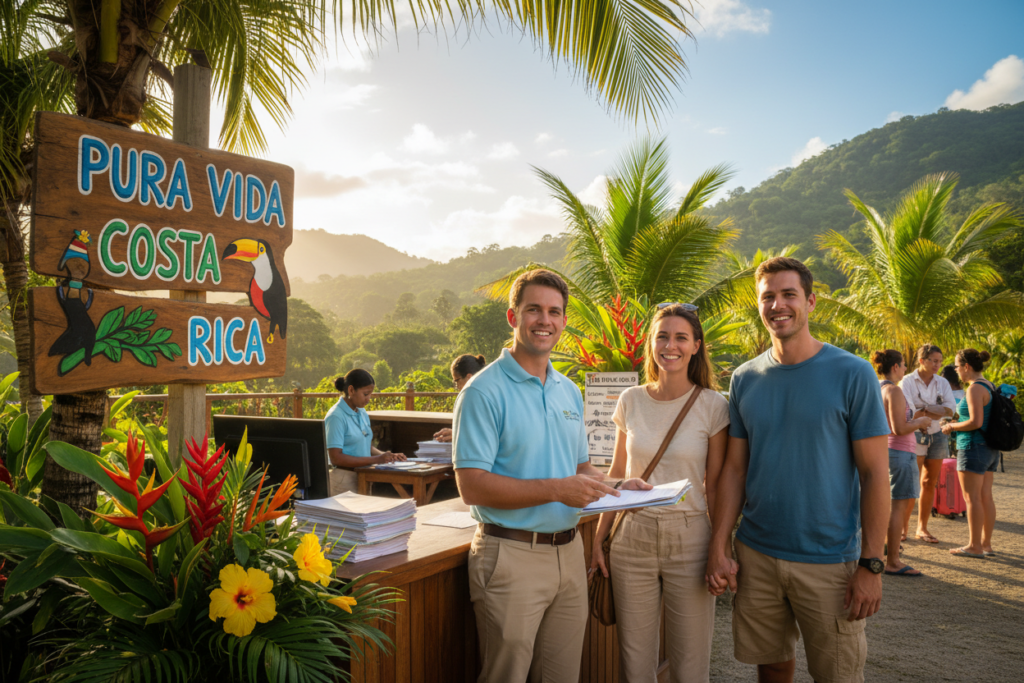
For expats, grasping the basics of customs duties (derechos de aduana) is key to managing move-related costs effectively. These are a tax levied by the government of Costa Rica on goods you bring into the country.
The amount owed is calculated based on the declared value, type, and quantity of your items. This is standard practice, but Costa Rica’s system is unique.
What Are Customs Duties and Their Basics
Customs duties are government-imposed taxes administered by the Dirección General de Aduanas. The critical insight for expats is that your official residency category determines your duty liability.
Pensionados, rentistas, and inversionistas often qualify for significant exemptions. This is why applying for the correct residency type—a process we at CRIE expertly handle—is a strategic financial decision before you ship anything.
How Duties Affect Imported Goods
Understanding this tax helps you decide what to bring. You might sell bulky furniture or older electronics before your move. It can be more budget-friendly to purchase similar items locally after you arrive.
Remember, import duties are separate from other fees. Customs processing, broker charges, and storage costs are additional line items. These can add up quickly without proper documentation and planning from the start.
How Do Custom Duties Work in Costa Rica: What Expats Need to Know

Your shipment’s tax liability in Costa Rica is determined by a combination of classification, value, and residency status. The system operates under national law and international agreements.
When goods arrive, the customs authority classifies them using international Harmonized System (HS) codes. A corresponding tax rate is applied to the declared value to calculate the duty owed. Standard import tax rates here are often substantial, ranging from 30% to over 50% for many items.
For expats with approved temporary or permanent residency, a different path exists. The law provides for duty-free import of household goods and one vehicle. This exemption is a significant financial benefit, but it is not automatic.
You must submit your official residency documents, a detailed inventory, and proof items are for personal use. Missing paperwork can lead to delays, storage fees, or a denied waiver.
We emphasize verifying your eligibility before shipping anything. For the latest regulations, check the official source at migracion.go.cr. Consulting a qualified customs broker in Costa Rica is also a prudent step.
Step-by-Step Document Preparation and Apostille Guidance
Before packing a single box, expats must tackle the crucial task of gathering and authenticating key paperwork. The requirements for a residency application in Costa Rica are specific and non-negotiable. Starting this process from your home country is the single best way to avoid costly delays.
Essential Documents to Gather
You will need originals of several core documents. These include your birth certificate, a police background check (certificado de antecedentes penales), and proof of income. A marriage certificate is required if applying with a spouse.
We recommend creating a master checklist. Having every document ready before you depart dramatically accelerates the immigration timeline.
Apostille and Translation Requirements
Nearly all documents require an apostille—an international certification of authenticity. This is obtained from the Secretary of State where the document was issued.
After apostilling, you must get official Spanish translations. A traductor oficial in Costa Rica or a certified translator abroad can handle this. Precise translations matching the originals are mandatory.
For detailed information on each residency category, consult our complete guide to obtaining residency. Begin this preparation 3 to 6 months before your move to address any issues calmly.
Residency Pathways and Immigration Requirements
Expats have three primary avenues to gain legal residency in Costa Rica, each with distinct financial thresholds. These pathways—Pensionado, Rentista, and Inversionista—lead to temporary residency, renewable every two years. Your choice directly impacts your financial planning and customs duty eligibility.
Understanding Pensionado (Pensionado) Benefits
The Pensionado category is designed for retirees. It requires proof of a lifetime pension of at least $1,000 USD per month. Qualifying sources include Social Security, military retirement, and certain private plans.
Once approved, Pensionado status offers significant benefits. You can import household goods and one vehicle duty-free. You also gain access to the Costa Rican public healthcare system and a path to permanent residency.
Requirements for Rentista (Rentista) and Inversionista (Inversionista)
The Rentista category suits expats with substantial passive income. You must prove a guaranteed income of $2,500 USD per month for two years. This can come from investments, rentals, or annuities.
The Inversionista pathway requires a minimum investment of $150,000 USD in Costa Rica. If investing in real estate, the property must be in your personal name. This is a critical legal requirement for your application.
Each category has specific documentation requirements. Meeting these financial thresholds is the first step toward securing your residency in Costa Rica.
Who Qualifies? Eligibility Criteria and Common Errors
Qualifying for residency in Costa Rica hinges on meeting strict financial benchmarks set by immigration law. The three main categories—Pensionado, Rentista, and Inversionista—have firm, non-negotiable thresholds. Your eligibility directly determines your ability to import household goods duty-free.
Income Thresholds and Financial Requirements
For Pensionado status, you must prove a guaranteed lifetime pension of at least $1,000 USD per month. Rentista applicants need to demonstrate $2,500 USD in monthly passive income. The Inversionista pathway requires a minimum investment of $150,000 USD in qualifying assets within Costa Rica.
A frequent and costly error involves the Inversionista category. Many expats purchase property through a local corporation. The law, however, requires the investment asset to be in the applicant’s personal name. Using corporate-held property will disqualify your application.
Another common mistake is insufficient proof of income. Official pension statements or consistent bank deposits are mandatory. Incomplete documentation leads to delays or denial. Expats also underestimate document validity. Background checks and apostilles expire, forcing you to restart the process.
We emphasize a realistic self-assessment of your financial situation. Addressing these issues before you apply is far more efficient than facing rejection later. Thorough preparation is your best strategy for a successful residency application in Costa Rica.
Timelines and Processing Steps for Your Residency Application
Navigating the timeline for your residency application in Costa Rica requires patience and precise planning. We provide realistic expectations to help you manage this important process.
Step-by-Step Processing Timeline
The typical processing time for a residency application is 6 to 12 months. This period starts when you submit all documents to immigration authorities.
Your journey begins with gathering and authenticating paperwork in your home country. Next, you must file the complete application in Costa Rica.
After submission, officials review your file. They may request additional information during this time.
Provisional approval leads to final steps. These include registering for healthcare and obtaining your DIMEX identification card.
Successful applicants receive temporary residency first. This status is valid for two years and must be renewed.
After maintaining temporary residency for three consecutive years, you can apply for permanent status. This offers greater stability and eliminates the renewal cycle.
We emphasize that these timelines are estimates. Individual circumstances can extend the process.
Tips for Organizing Documents at Home Before Departure
Organizing your paperwork systematically from your current home can prevent significant delays and stress during your residency application process. We share practical, field-tested tips to build your document portfolio before your move to Costa Rica.
Begin this critical task 3 to 6 months before your planned relocation. Obtaining items like apostilled birth certificates and background checks can take weeks. Early preparation provides a buffer for corrections.
Create a dedicated physical binder and a matching digital folder. Store originals, apostilles, translations, and supporting proofs like bank statements together. This centralized approach prevents last-minute searches.
Make multiple certified copies of every document. Keep one original set secure at home. Carry another when you travel. Store digital scans in a secure cloud service for global access.
Arrange documents in the logical sequence required for your application. Label everything clearly and use protective sleeves. This level of organization speeds up the immigration process and builds confidence for your new life.
Understanding Custom Duties Impact on Your Move
Bringing your personal belongings to Costa Rica involves navigating specific tax rules that can significantly affect your budget. The import tax applied to household goods is a major financial consideration for anyone moving to this country.
How Import Duties Affect Household Goods
Standard customs duty rates in Costa Rica range from 30% to 50% of an item’s declared value. Shipping a container of furniture, electronics, and personal effects could add thousands in unexpected costs. This is the baseline scenario without an exemption.
The key benefit for expats is the “menaje de casa” duty-free import. Approved temporary residents, like Pensionados or Rentistas, can bring their used household goods tax-free. This applies to items clearly for personal, non-commercial use.
To claim this import tax exemption, you need to present specific documents. Your approved residency paperwork, a detailed Spanish inventory, and proof of ownership are mandatory. Customs officials may inspect the shipment to verify compliance.
We stress that timing is critical. Your container should arrive after you have provisional residency approval. Clearing goods without this status triggers standard duties and costly storage fees. Careful planning protects your relocation budget when moving to Costa Rica.
Navigating Costa Rican Legal and Immigration Frameworks
Your journey to becoming a legal resident in Costa Rica is governed by a comprehensive immigration law known as Ley 8764. This framework establishes the rules for all foreign nationals.
The immigration system is administered by the Dirección General de Migración y Extranjería (DGME). They process applications and enforce the law.
Key Legal Considerations for Expats
Residency here is a privilege, not a right. Maintaining compliance is essential for keeping your status. You must renew your temporary residency before its two-year expiration.
You also need to continue meeting the income or investment thresholds. Extended absences from the country can be problematic. The law views this as potential abandonment of your residency.
Costa Rican law requires foreign residents to register with the national healthcare system, the CCSS. Monthly contributions based on your declared income are mandatory. Failure to maintain this registration jeopardizes your status renewal.
While the legal framework is clear, navigating it requires accurate information. We at CRIE specialize in immigration services and help expats understand and comply. For the latest regulations, always verify details at migracion.go.cr. Understanding these rules is also key if you’re exploring how to earn money legally as an expat.
Essential Guidance for US Expats in Costa Rica
A critical reality for US citizens moving abroad is that your tax filing responsibilities do not end at the border. You remain subject to US federal income tax on worldwide earnings, even while living in Costa Rica.
Mechanisms like the Foreign Earned Income Exclusion can help avoid double taxation. Proper planning with a tax professional familiar with both systems is essential.
Practical Insights from Expats and Experts
Your Social Security benefits continue seamlessly when you move. They can be deposited into a US or local bank account. Medicare, however, provides no coverage outside the United States.
This makes enrolling in Costa Rica’s public healthcare system or securing private insurance a mandatory step for residents. It’s a key cost and planning consideration.
Maintain at least one US bank account for benefits and bills. You will also need a local Costa Rican account for residency and daily life.
Use reliable international transfer services to move funds. Be aware of reporting rules for foreign accounts over $10,000.
Living in Costa Rica as a US expat means managing two legal and financial worlds. Organization and expert guidance are vital. For a broader view of financial planning, see our resource on what expats need to know.
Digital Nomad vs Traditional Residency Options
A common point of confusion among newcomers is the difference between a Digital Nomad visa and actual residency in Costa Rica. We need to clarify this crucial distinction for every expat considering their options.
Why Digital Nomad Status Does Not Count as Residency
The Digital Nomad visa is a temporary stay authorization. It allows remote workers to live here for up to 12 months, with one renewal possible.
This status does not grant official residency. It does not count toward the three years required for permanent residency or citizenship.
Comparing Visa Requirements and Benefits
Digital Nomad requirements include $3,000 monthly income and valid health insurance. It offers faster processing but is limited to 24 months total.
For true residency, the Rentista category is the closest alternative. It requires proof of $2,500 in guaranteed passive income.
Rentista grants temporary residency that renews every two years. This status qualifies for customs exemptions and starts your path to permanent residency.
For expats serious about a long-term future, we recommend pursuing a formal residency option. Understanding these differences helps you choose the right legal pathway.
Leveraging CRIE Expertise for a Successful Immigration Journey
CRIE specializes in guiding expats through every phase of the Costa Rica residency application, from initial assessment to final approval. We are your dedicated partner for navigating the country’s immigration system.
Our services focus exclusively on residency and immigration law. We help you understand requirements, prepare accurate applications, and maintain compliance throughout your journey.
How CRIE (crie.cr) Supports Your Application Process
We begin by helping you select the right residency category. This includes analyzing your eligibility for Pensionado, Rentista, or Inversionista status.
Our team provides detailed guidance on document preparation. We review your apostilles, translations, and financial proofs for completeness.
We then coordinate the entire filing process with immigration authorities. This professional representation helps avoid common mistakes that cause delays.
Our support continues after provisional approval. We assist with DIMEX card pickup, Caja registration, and the renewal process every two years.
For expats pursuing the Rentista path, understanding the passive income requirements for Costa Rica is crucial. We provide clear explanations of these financial thresholds.
Ready to start your application? Contact CRIE today via WhatsApp at +506 8706 3888, email us at info@crie.cr, or visit www.crie.cr. We’ll assess your situation and outline your next steps.
Comparing Residency Options: Benefits and Exemptions
The financial advantages of Costa Rica’s residency programs extend far beyond legal status. They offer tangible savings on import taxes, making your choice a strategic financial decision.
Exemptions on Import Duties for Certain Residency Types
Pensionado and Rentista status holders qualify for duty-free import of household goods and one vehicle. The Inversionista pathway offers the same benefit if the investment meets the $150,000 minimum.
A critical rule for real estate investors: the property must be in your personal name. Holding it through a corporation disqualifies you from these tax exemptions.
The potential savings are substantial. Without residency, a $20,000 shipment could incur $6,000 to $10,000 in import tax. A vehicle might add another $5,000 to $15,000 in taxes.
These exemptions are a major reason to pursue formal residency. The Digital Nomad visa does not provide any customs benefits, as it is not a residency category.
When evaluating your options, consider these tangible benefits alongside income thresholds. Duty-free imports, healthcare access, and legal compliance make the right residency a priority for your new life.
Marketing Your New Life in Costa Rica: Next Steps for a Smooth Transition
Your journey to a new life in Costa Rica begins with decisive action and informed planning. First, assess your eligibility for Pensionado, Rentista, or Inversionista residency. Confirm you meet the income or investment thresholds.
Start gathering required documents like birth certificates and proof of income 3-6 months before your move. Obtain apostilles and Spanish translations. This groundwork is crucial for a successful application.
Budget for application costs and monthly living expenses. Understand how your residency status unlocks duty-free import benefits for household goods and vehicles. This planning protects your finances.
Take the next step confidently by contacting CRIE. We provide expert immigration guidance to navigate this process. Reach out via WhatsApp at +506 8706 3888, email info@crie.cr, or visit www.crie.cr to begin.
FAQ
What exactly are customs duties in Costa Rica?
Customs duties, often called import taxes, are fees levied by the Costa Rican government on goods entering the country. These tariffs protect local industries and generate revenue. The amount you pay depends on the item’s category, its declared value, and its country of origin. Understanding this system is crucial for any expat planning to ship personal belongings or a vehicle.
Can I bring my household goods and car tax-free when I move?
This is a key benefit of obtaining formal residency. Once your residency application is approved, you are typically granted a one-time exemption to import your household goods and one vehicle duty-free. This is a major financial incentive, as standard import taxes on cars, for example, can exceed 52% of the vehicle’s declared value. Digital nomad status does not qualify for this exemption.
How do the Pensionado, Rentista, and Inversionista residency options differ?
These are the three primary pathways for expats. The Pensionado visa is for retirees with a guaranteed lifetime pension of at least
FAQ
What exactly are customs duties in Costa Rica?
Customs duties, often called import taxes, are fees levied by the Costa Rican government on goods entering the country. These tariffs protect local industries and generate revenue. The amount you pay depends on the item’s category, its declared value, and its country of origin. Understanding this system is crucial for any expat planning to ship personal belongings or a vehicle.
Can I bring my household goods and car tax-free when I move?
This is a key benefit of obtaining formal residency. Once your residency application is approved, you are typically granted a one-time exemption to import your household goods and one vehicle duty-free. This is a major financial incentive, as standard import taxes on cars, for example, can exceed 52% of the vehicle’s declared value. Digital nomad status does not qualify for this exemption.
How do the Pensionado, Rentista, and Inversionista residency options differ?
These are the three primary pathways for expats. The Pensionado visa is for retirees with a guaranteed lifetime pension of at least $1,000 per month. The Rentista visa requires proof of a stable $2,500 monthly income for at least two years. The Inversionista visa requires a minimum $150,000 investment in Costa Rican real estate, a business, or other approved assets. Each has specific financial requirements and leads to permanent residency.
What documents are the most critical for the residency application?
The process is document-intensive. Essential papers include a passport valid for at least two years, a birth certificate, a marriage certificate (if applicable), and a police clearance report from your home country. Crucially, most of these documents must be apostilled (or authenticated) and officially translated into Spanish by a certified translator in Costa Rica before submission to immigration.
How long does the residency application process typically take?
A> You should plan for a timeline of 6 to 12 months from initial document gathering to final approval. The process involves multiple stages: preparing and apostilling documents abroad, submitting the formal application to Costa Rican Immigration, waiting for a file number, and finally receiving your cédula de residencia (resident ID). Using a qualified legal service can help streamline this complex process and avoid costly delays.
What is the biggest mistake expats make with customs and residency?
A common and expensive error is shipping a car or large container of belongings before securing residency approval. If you do not have the official exemption in hand, you will be liable for the full, often steep, import taxes. We always advise clients to wait until their residency is granted before shipping major items. Proper planning with your legal advisor is essential to navigate this correctly.
Why should I work with a firm like CRIE for my application?
Navigating Costa Rican immigration law and customs regulations is complex, with precise requirements. A specialized firm like CRIE (crie.cr) provides expert guidance to ensure your application is complete and compliant from day one. They manage the intricate steps—from document apostille to government submissions—saving you significant time, stress, and the risk of denial due to procedural errors.
,000 per month. The Rentista visa requires proof of a stable ,500 monthly income for at least two years. The Inversionista visa requires a minimum 0,000 investment in Costa Rican real estate, a business, or other approved assets. Each has specific financial requirements and leads to permanent residency.
What documents are the most critical for the residency application?
The process is document-intensive. Essential papers include a passport valid for at least two years, a birth certificate, a marriage certificate (if applicable), and a police clearance report from your home country. Crucially, most of these documents must be apostilled (or authenticated) and officially translated into Spanish by a certified translator in Costa Rica before submission to immigration.
How long does the residency application process typically take?
A> You should plan for a timeline of 6 to 12 months from initial document gathering to final approval. The process involves multiple stages: preparing and apostilling documents abroad, submitting the formal application to Costa Rican Immigration, waiting for a file number, and finally receiving your cédula de residencia (resident ID). Using a qualified legal service can help streamline this complex process and avoid costly delays.
What is the biggest mistake expats make with customs and residency?
A common and expensive error is shipping a car or large container of belongings before securing residency approval. If you do not have the official exemption in hand, you will be liable for the full, often steep, import taxes. We always advise clients to wait until their residency is granted before shipping major items. Proper planning with your legal advisor is essential to navigate this correctly.
Why should I work with a firm like CRIE for my application?
Navigating Costa Rican immigration law and customs regulations is complex, with precise requirements. A specialized firm like CRIE (crie.cr) provides expert guidance to ensure your application is complete and compliant from day one. They manage the intricate steps—from document apostille to government submissions—saving you significant time, stress, and the risk of denial due to procedural errors.
Article by Glenn Tellier (Founder of CRIE and Grupo Gap)
Don't wait, contact us right now!
Call or WhatsApp Costa Rica +506 8373 2085 or +506 8706 3888
Call USA/Canada +1 305-906-6784