

Welcome to your most practical roadmap for moving to Costa Rica. We created this guide for Americans and international citizens considering this life change. Our goal is to provide clear, step-by-step information on residency pathways and legal requirements.
A successful move starts long before you arrive. You must prepare documents, get apostilles, and arrange translations from your home country. Understanding which residency category fits your situation is the crucial first step.
Costa Rica’s appeal goes beyond beautiful beaches. It’s about matching your finances and lifestyle goals to the right legal path. The country consistently ranks in the top five for retirement due to its stable democracy and friendly culture.
We are CRIE, your specialized partner for residency and immigration. We focus solely on getting your legal status correct. We don’t sell real estate or offer tours—just expert guidance through the official process.
This guide provides factual thresholds and realistic timelines. We’ll cover common pitfalls and actionable steps. Remember, regulations can change, so always verify the latest information with official sources.
Discovering the Costa Rican Lifestyle and Expat Living
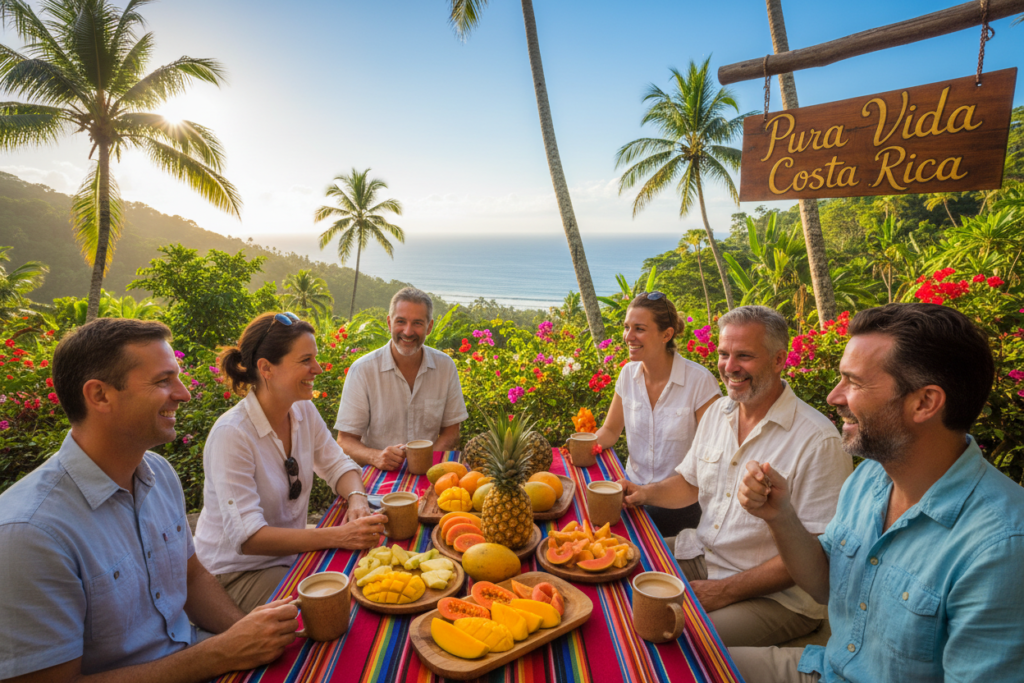
The appeal of Costa Rican living extends far beyond its postcard-perfect landscapes to a deeply rooted cultural philosophy. We ground this romantic notion in the practical steps needed for legal residency.
The Allure of Pura Vida
“Pura Vida” is more than a casual greeting. It represents a cultural commitment to quality of life. This philosophy prioritizes community connection and environmental appreciation.
It draws thousands of expats annually seeking a slower, more meaningful pace. The easygoing vibe encourages spending time outdoors and sharing in community with locals.
What Makes Costa Rica a Top Choice?
Costa Rica offers genuine lifestyle advantages for long-term living. It boasts political stability, strong environmental laws, and a universal healthcare system.
The country is welcoming and open to diverse communities. However, visiting as a tourist differs fundamentally from establishing legal residency.
Successful expat life here requires matching these benefits to proper legal status. The next sections detail the specific income and investment requirements for residency.
Starting Your Residency Journey: Documents and Preparation
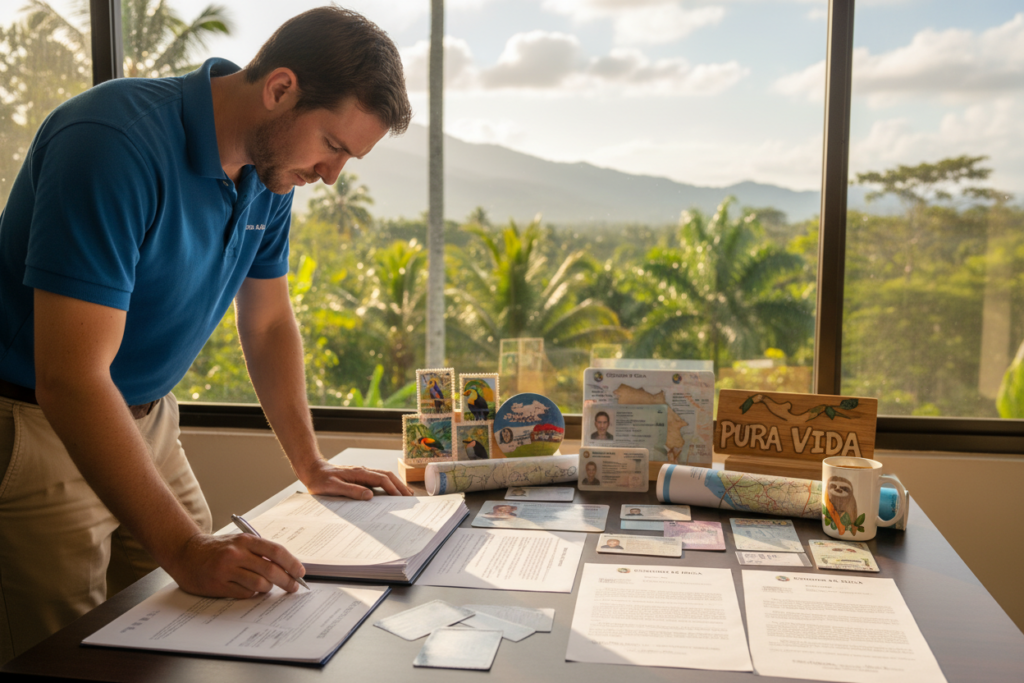
The foundation of a successful residency application is built long before you arrive on Costa Rican soil. We see many applicants falter by treating document collection as an afterthought. Starting this process from your home country is the only way to prevent costly delays.
Essential Documents to Gather
Every applicant must compile a core set of papers. This includes a valid passport, your birth certificate, and an FBI criminal background check. You will also need a marriage certificate if applicable and proof of stable income or pension.
Apostille and Translation Guidelines
Each document from the U.S. requires an apostille from the Department of State. This authentication makes them legally valid in Costa Rica under the Hague Convention.
After apostille, every paper must be translated into Spanish. This must be done by an officially authorized translator registered in the country. The entire preparation phase typically takes 2 to 4 months.
We guide you through each step to ensure your file is complete. This upfront work forms the bedrock of your entire residency process.
Understanding Costa Rica Residency Options
The legal path to living in Costa Rica hinges on a clear distinction between temporary and permanent status. We guide you through these fundamental choices to build a stable future here.
Temporary Versus Permanent Residency
Most foreign nationals begin with temporary residency (Residencia Temporal). This status requires renewal every two years and ties you to a specific category, like Pensionado or Inversionista.
After maintaining temporary status for three consecutive years, you become eligible to apply for permanent residency (Residencia Permanente). This offers indefinite status with far fewer renewal obligations.
The practical differences are significant. A temporary resident can own and operate a business but must hire Costa Rican staff for labor positions. A permanent resident gains the full right to work for any employer.
Both statuses require mandatory monthly contributions to the CAJA healthcare system. This is calculated as a percentage of your declared income.
The pathway demands commitment. You must maintain legal status, meet physical presence rules, and keep finances current for at least three years before transitioning.
Pensionado (Pensionado) Residency: Requirements and Steps
Retirees can secure residency in Costa Rica by proving a minimum pension income of $1,000 per month. The Pensionado category is the most popular option for this purpose. It is designed specifically for individuals with a permanent, verifiable retirement source.
Proof of $1,000+ Monthly Pension Income
Qualifying income includes government pensions like Social Security, military, or civil service. Private company pensions with lifetime guarantees also qualify. Importantly, investment dividends, rental income, or 401(k) withdrawals do not meet the “permanent pension” definition.
You must provide official award letters and recent payment statements. These documents need an apostille and a professional Spanish translation. The goal is to prove a stable, lifetime income stream.
Tips to Avoid Common Pitfalls
A common mistake is submitting annual statements without a clear monthly breakdown. Another error is including non-qualifying income sources. Your paperwork must explicitly show the benefit is for life.
Also, ensure your verification letters are current. Expired documents cause immediate delays. Successful applicants gain access to valuable benefits, including potential import tax exemptions. For a deeper dive into the retiree experience, explore our guide on retiring in Costa Rica.
Rentista (Rentista) Residency: A Detailed Guide
If you lack a qualifying pension but possess significant financial resources, the Rentista (Rentista) category may be your route to Costa Rican residency. This option is designed for individuals who can prove substantial, guaranteed income or have a sizable cash deposit available.
Meeting the $2,500/Month Income or $60,000 Deposit
The core requirement is demonstrating a guaranteed monthly income of $2,500 US dollars for a minimum of two years. You have two clear options to meet this. You can provide proof from sources like annuities, trust distributions, or documented rental property income.
Alternatively, you can deposit $60,000 in a qualifying bank, either in Costa Rica or abroad. This deposit must be paired with an arrangement for automatic monthly transfers of $2,500 to your local account for living expenses.
This financial setup covers your initial two-year temporary residency period. A reality that surprises many applicants is the renewal process. After those first 24 months, you must either prove continued income or make another $60,000 deposit to renew for another two years.
Proper documentation is non-negotiable for success in Costa Rica. Bank statements, trust agreements, or rental contracts must be current, apostilled, and professionally translated into Spanish at the time of your application submission.
Inversionista (Inversionista) Residency: Investment Opportunities
For those with capital to invest directly into the Costa Rican economy, the Inversionista residency category offers a distinct pathway. This option requires a one-time minimum investment of $150,000 US dollars in qualifying ventures.
Acceptable investments include real estate purchases, business capital, reforestation projects, or tourism developments. The goal is to demonstrate clear economic benefit for the country.
Understanding the $150,000 Minimum Investment
The $150,000 threshold is confirmed by law. Your capital can fund national interest projects, existing companies, or new ventures.
Some project types come with an obligation to spend at least six months per year living in Costa Rica. The investment must be professionally appraised and properly registered with local authorities.
Qualifying Property in the Applicant’s Name
A critical rule causes many applications to fail. For real estate investments, the qualifying property must be registered in your personal name.
Holding it through a corporation, LLC, or sociedad anónima does not satisfy the requirement. Immigration authorities verify this through the national property registry.
You must maintain this investment throughout your temporary residency period. Selling the asset would jeopardize your legal status. Proper documentation of continued ownership is required for all renewals.
Clarifying the Digital Nomad Situation: Not a Residency Option
A critical distinction for remote workers is understanding that Costa Rica’s Digital Nomad visa is not a legal residency pathway. We address this common misconception directly. The Visa de Nómada Digital is a temporary permit only.
Alternative Residency Pathways for Remote Workers
This digital nomad visa allows a 12-month stay in Costa Rica, renewable for a second year. You must prove a $3,000 monthly income for individuals or $4,000 for families. It offers tax and healthcare contribution exemptions.
However, time under this status does not accumulate toward permanent residency requirements. It also doesn’t count toward citizenship. It is an extended tourist visa for remote professionals, not a pathway to establishment.
For digital nomads and expats seeking true long-term status, the Rentista category is the appropriate path. It requires proving a guaranteed $2,500 monthly income for two years. This qualifies as temporary legal status and counts toward permanent goals.
Your strategic choice is clear. Use the digital nomad visa for short-term flexibility. Pursue Rentista residency if building a permanent future in Costa Rica.
Step-by-Step Application Process for Costa Rican Residency
Your journey to legal residency in Costa Rica follows a defined sequence of actions, beginning long before you board the plane. We outline this process as a practical roadmap to prevent costly errors.
Research, Document Preparation, and Submission
First, select your residency category based on financial qualifications. Next, gather and authenticate all required documents from your home country. This includes FBI checks, apostilles, and professional translations.
You then enter Costa Rica, typically as a tourist. Your authorized legal representative files the formal application with the Dirección General de Migración y Extranjería (DGME).
You will receive a resolution number confirming your application is “in process.” This grants temporary legal status to remain while awaiting a decision. Full privileges come only after final approval.
The entire timeline requires patience. Document preparation often takes 2 to 4 months. The immigration review period can range from 3 to 12 months, depending on the category and current backlog.
We guide clients through each phase to ensure completeness and compliance. This structured way is the key to a successful move.
Avoiding Common Mistakes in Your Residency Application
Many people see their Costa Rica residency dreams delayed by simple, avoidable errors in the application process. We observe the same pitfalls repeatedly. These mistakes cost applicants valuable time and money.
Understanding these common missteps is the best way to protect your investment. The most frequent issues involve document sequencing, timing, and incorrect financial proof.
Overlooked Details and Timing Issues
A critical error is getting documents translated before the apostille. The correct order is original document, then apostille, then professional translation. Using an unauthorized translator causes immediate rejection.
Timing failures are equally damaging. FBI background checks are typically valid for six months. Pension verification letters can expire during processing. Letting documents lapse creates major delays.
Income documentation must match your category exactly. Pensionado applicants sometimes submit 401(k) statements, which do not qualify. Rentista applicants may provide projected income instead of guaranteed contracts.
Inversionista applicants often hold property in a corporate name. This fails the personal ownership requirement. Submitting an incomplete application is another common error. Authorities usually reject it outright rather than request missing items.
Our team at CRIE reviews every document before submission. We verify apostilles, ensure translations meet standards, and manage timelines. This proactive guidance saves months of frustration and extra costs.
Timeline Expectations and What to Anticipate
Setting realistic expectations for the timeline is a crucial part of your residency journey in Costa Rica. The entire process unfolds in distinct phases, each with its own duration. We break it down to give you a clear picture.
Phase one involves document gathering and authentication. This typically requires 2 to 4 months while you are still in your home country. After arrival, application preparation and formal filing take another 2 to 4 weeks.
Once submitted, the immigration review phase begins. Processing times currently range from 3 to 12 months. You will receive a resolution number, granting legal status to stay. Respond quickly to any requests and avoid international travel during this time.
The final approval phase takes 2 to 4 more weeks for biometrics and card pickup. From start to finish, a realistic total timeline is 6 to 16 months. This process requires patience, as government timelines change and no one can guarantee faster results.
Maintaining Residency: Renewals and Ongoing Requirements
Securing your initial residency status in Costa Rica is an achievement, but maintaining it requires consistent attention to ongoing legal and financial obligations. Temporary residency must be renewed every two years. This process involves proving you still meet the original qualifications.
You should start the renewal process about three to four months before your current status expires. This means submitting updated financial proof, a fresh background check, and paying the required fees. We guide clients through this paperwork to ensure timely submission.
All residents have ongoing financial duties. You must make monthly payments to the CAJA healthcare system, calculated as a percentage of your declared income. You also need to maintain the income or investment level that qualified you initially.
Physical presence is another key requirement. Most temporary residents should avoid being outside Costa Rica for more than 180 days in a year. Some investment categories require you to spend at least six months in the country annually.
After three consecutive years of temporary residency, you can apply for permanent status. This eliminates the two-year renewal cycle and offers more stability. It is the long-term goal for many people building a life here.
Leveraging CRIE for Expert Guidance and Support
CRIE stands as your dedicated partner, focusing solely on Costa Rican immigration law and residency applications. We provide a specialized service for people navigating this complex process. Our goal is to offer clear information and expert support.
Why Choose CRIE?
Our team’s singular focus is your advantage. Regulations in Costa Rica change, and document standards are strict. We stay current to structure applications correctly from the start.
This expertise helps expats avoid common submission errors. We guide you through apostilles, translations, and precise financial proof. Our service aims to prevent costly delays in your residency journey.
Contact Information and Next Steps
Ready to begin your process? Contact CRIE directly for a personalized assessment. Reach us via WhatsApp at +506 8706 3888 or email info@crie.cr.
Visit www.crie.cr to learn more about our services. We will explain which residency category fits your situation. Let us provide a clear roadmap for your legal future in Costa Rica.
Locational Highlights: Best Regions in Costa Rica for Expats
Choosing where to live is a fundamental decision for any expat considering Costa Rica. Your region shapes daily life, costs, and access to services. We highlight popular areas to help you find your ideal place.
Central Valley and San José
The Central Valley offers a temperate climate year-round. It is home to the capital, San José, and surrounding expat-favorite towns.
Escazú provides upscale amenities and international schools. Santa Ana offers a family-oriented suburban feel at a lower cost. Atenas is renowned for its peaceful atmosphere and ideal climate.
Beach Towns and Coastal Areas
Pacific coastal regions draw sun-seekers and surf enthusiasts. Guanacaste province features vibrant towns like Tamarindo and Playas del Coco.
These areas offer a strong beach lifestyle with developed services. The Caribbean coast, like Puerto Viejo, provides a more relaxed, cultural vibe. Coastal living often means higher humidity and seasonal tourism fluctuations.
Your choice affects practical residency steps. Consider proximity to immigration offices in San José and overall cost of living. We recommend visiting multiple regions before making a final decision.
Insider Tips on Living, Banking, and Healthcare in Costa Rica
Daily life in Costa Rica brings its own set of practical realities, especially when managing money and health. We share key insights to help you adapt smoothly.
Local Banking and Financial Practices
Banking here operates at a different pace. Simple deposits can take an hour or two. Patience is essential.
Choose banks with expat-friendly branches like Banco Nacional or BAC San José. They often have English-speaking staff.
Opening an account is easier with legal residency. Use your DIMEX card, passport, and a utility bill. Non-residents may need a local corporation.
Navigating the Healthcare System
Costa Rica has a dual healthcare system. All legal residents must pay into the public Caja system. This provides broad coverage.
Many expats also use private care for faster service. Private doctor visits cost around $50 to $80. Specialist fees are often $100 or less.
Major procedures typically cost 40-70% less than in the U.S. The Central Valley has the best facilities and English-speaking doctors.
For daily life, shop at local ferias for fresh produce. Embrace the relaxed “Tico time” culture. This approach makes living in Costa Rica enjoyable and sustainable.
Wrapping Up Your Expat Living in Costa Rica Journey
We’ve outlined the essential steps to transform your dream of living in Costa Rica into a lawful reality. Successful expat life here starts with matching your finances to the right residency category—Pensionado, Rentista, or Inversionista. Proper document preparation before arrival is crucial for this 6-16 month process.
Costa Rica offers genuine lifestyle advantages like stable democracy and affordable healthcare. These benefits draw thousands of people annually seeking a relaxed lifestyle. Yet, realistic expectations are key—immigration processing takes patience and temporary status requires renewals.
Times are changing, and many find happiness here. Always verify current regulations at migracion.go.cr. For personalized guidance, contact CRIE via WhatsApp at +506 8706 3888 or email info@crie.cr. Begin your journey with experts focused solely on your legal status.
FAQ
What are the main residency options for expats moving to Costa Rica?
FAQ
What are the main residency options for expats moving to Costa Rica?
The primary pathways are Pensionado, Rentista, and Inversionista. The Pensionado visa requires proof of a lifetime pension of at least
FAQ
What are the main residency options for expats moving to Costa Rica?
The primary pathways are Pensionado, Rentista, and Inversionista. The Pensionado visa requires proof of a lifetime pension of at least $1,000 per month. The Rentista option needs a guaranteed income of $2,500 per month for two years or a $60,000 deposit. The Inversionista requires a minimum $150,000 investment in property or business projects.
Is the Digital Nomad Visa a path to permanent residency?
No, the Digital Nomad Visa is a separate legal status for remote workers. It allows a one-year stay, renewable for another year, but it does not count toward permanent residency. For long-term plans, expats should pursue a formal residency category like Rentista.
How long does the residency application process typically take?
You should anticipate a timeline of 6 to 12 months from submission to approval. The process involves document preparation, submission to Migración, background checks, and waiting periods. Using a specialized service can help avoid delays and streamline the procedure.
What is a common mistake people make during the application?
A frequent error is submitting documents without proper apostilles and certified translations. Every foreign-issued document, like birth certificates and police records, must be apostilled and translated by an official Costa Rican translator. Overlooking this step causes significant rejections and delays.
How is banking different for expats living in Costa Rica?
Opening a local bank account can be a detailed process. Banks require proof of residency status, a local address, and sometimes references. We recommend patience and working with banks familiar with expat clients. Many people also maintain U.S. or home-country accounts for certain transactions.
Can you explain the healthcare system for new residents?
Costa Rica has both public (Caja) and private systems. Once you are a legal resident, you can join the Caja for affordable, comprehensive care. Many expats also use private insurance for faster specialist access. The quality is generally high, and costs are lower than in North America.
Why should I use a service like CRIE for my residency process?
Navigating Costa Rican immigration law is complex. We manage the entire process—from document certification to government liaison—ensuring compliance and avoiding costly errors. Our expertise provides clarity and significantly increases your chance of a smooth, successful application.
,000 per month. The Rentista option needs a guaranteed income of ,500 per month for two years or a ,000 deposit. The Inversionista requires a minimum 0,000 investment in property or business projects.
Is the Digital Nomad Visa a path to permanent residency?
No, the Digital Nomad Visa is a separate legal status for remote workers. It allows a one-year stay, renewable for another year, but it does not count toward permanent residency. For long-term plans, expats should pursue a formal residency category like Rentista.
How long does the residency application process typically take?
You should anticipate a timeline of 6 to 12 months from submission to approval. The process involves document preparation, submission to Migración, background checks, and waiting periods. Using a specialized service can help avoid delays and streamline the procedure.
What is a common mistake people make during the application?
A frequent error is submitting documents without proper apostilles and certified translations. Every foreign-issued document, like birth certificates and police records, must be apostilled and translated by an official Costa Rican translator. Overlooking this step causes significant rejections and delays.
How is banking different for expats living in Costa Rica?
Opening a local bank account can be a detailed process. Banks require proof of residency status, a local address, and sometimes references. We recommend patience and working with banks familiar with expat clients. Many people also maintain U.S. or home-country accounts for certain transactions.
Can you explain the healthcare system for new residents?
Costa Rica has both public (Caja) and private systems. Once you are a legal resident, you can join the Caja for affordable, comprehensive care. Many expats also use private insurance for faster specialist access. The quality is generally high, and costs are lower than in North America.
Why should I use a service like CRIE for my residency process?
Navigating Costa Rican immigration law is complex. We manage the entire process—from document certification to government liaison—ensuring compliance and avoiding costly errors. Our expertise provides clarity and significantly increases your chance of a smooth, successful application.
Is the Digital Nomad Visa a path to permanent residency?
How long does the residency application process typically take?
What is a common mistake people make during the application?
How is banking different for expats living in Costa Rica?
Can you explain the healthcare system for new residents?
Why should I use a service like CRIE for my residency process?
Article by Glenn Tellier (Founder of CRIE and Grupo Gap)
Don't wait, contact us right now!
Call or WhatsApp Costa Rica +506 8373 2085 or +506 8706 3888
Call USA/Canada +1 305-906-6784