

Moving to Costa Rica is a major life decision. The Rentista visa program offers a clear path to residency for those with stable passive income.
This category is designed for individuals who can prove genuine financial sustainability. Recent immigration law changes now require documented proof of income, not just a bank deposit.
You must demonstrate at least $2,500 per month from sources like dividends or rental yields. This income must be verifiable for a minimum two-year period.
Our role is to provide clear, step-by-step guidance through this process. We focus on transparent information and professional support from start to finish.
This guide outlines the complete pathway, from eligibility to document preparation. We’ll help you understand the realistic timelines and avoid common application errors.
Overview of Rentista Residency in Costa Rica
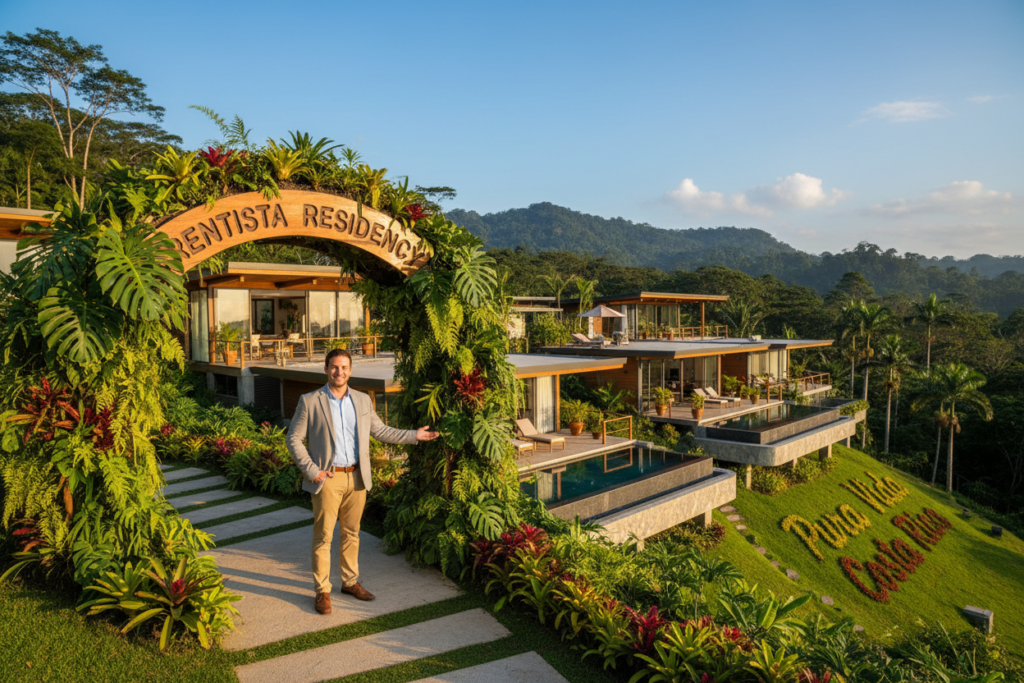
Costa Rica’s Rentista (Rentista) residency program provides a structured legal pathway for individuals with reliable passive income. It is designed for those who can prove a steady flow of funds from sources like investments, dividends, or rental properties.
Defining Rentista Residency and Its Benefits
The core requirement is demonstrating at least $2,500 USD per month for two years. This verifiable income must be permanent and stable, as defined by Costa Rican law.
Successful applicants gain legal status to live in the country. Benefits include access to the national healthcare system (CAJA) and the ability to open local bank accounts.
Comparing Rentista with Pensionado and Inversionista
The Pensionado (Pensionado) category is for retirees with a minimum $1,000 monthly pension. The Inversionista (Inversionista) route requires a $150,000 property investment in your personal name.
Rentista sits between them. It has a higher income requirement than Pensionado but avoids the large capital outlay of Inversionista. This makes it ideal for younger expats and entrepreneurs seeking the Costa Rican lifestyle.
Step-by-Step Guidance: We Help with Obtaining a Rentista Visa in Costa Rica

The path to Costa Rican residency under the Rentista category is defined by two key pillars: qualification and process. We provide clear, actionable guidance for both.
Who Qualifies for the Rentista Program?
Eligibility centers on proving reliable passive income of at least $2,500 monthly for two years. Qualifying sources include dividends, rental yields, or annuity payments.
Active employment salary does not count. The program has no age or property ownership mandates, making it accessible to a wide range of applicants.
Mapping Out the Application Process
We advise starting document preparation in your home country. Step one is gathering your passport, birth certificate, and police clearance.
Each document must be apostilled and translated by a certified Costa Rican translator. Financial proof requires notarized letters from your bank or a local CPA.
Current processing times are 18 to 24 months due to high volume. You can reside in Costa Rica legally during this period.
For the most current official requirements, always verify information at migracion.go.cr.
Understanding Eligibility Criteria and Financial Requirements
Proving your financial sustainability is the non-negotiable core of a successful Rentista application. The law requires you to demonstrate stable, passive income.
Establishing the Required Income
You must show at least $2,500 USD per month for a two-year period. This income must come from sources like dividends, rental yields, or interest.
Savings alone do not qualify. Immigration officials now scrutinize whether payments are genuine returns, not just a drawdown of your own capital.
Evaluating Different Financial Structures for Residency
You have three primary paths to meet this requirement. The best choice depends on where your assets are held.
Option one uses a Costa Rican bank letter. Some banks may require a large deposit to generate the necessary pure interest income.
Option two relies on a foreign bank. Your investment firm provides a notarized letter confirming your portfolio generates the required monthly income.
Option three involves a Costa Rican CPA. They certify your diverse passive income streams, such as global rental properties or trust distributions.
Proper documentation for any structure is critical. All foreign documents need apostilles and certified Spanish translations.
Preparing Your Documents: Apostilles, Translations, and Timelines
The foundation of a strong Rentista application lies in meticulous document preparation. We strongly advise starting this process from your home country.
Document Checklist: Passport, Birth Certificate, and More
Your core checklist includes a valid passport, original birth certificate, and a recent criminal report. For U.S. citizens, this means an FBI check; Canadians need an RCMP record.
Any record on this report can significantly impact approval odds. Every personal document requires a two-step apostille process and official Spanish translation.
Timelines to Follow and Key Milestones
Gathering and certifying your documents typically takes 4 to 8 weeks. Once submitted, current government processing takes 18 to 24 months.
You can reside in Costa Rica legally during this period. Remember, personal documents like your birth certificate are only valid for about six months for immigration purposes.
This timeline is part of the broader permanent residency journey. We manage the progress so you can focus on settling in.
Avoiding Common Mistakes and Ensuring Compliance
Many residency applications fail not due to ineligibility, but because of avoidable errors in documentation and compliance. Understanding these pitfalls from the start is crucial for a smooth process.
Critical Pitfalls in Documentation and Income Verification
A major error involves financial proof. The old strategy of a $60,000 bank deposit, divided into monthly certificates, no longer reliably satisfies requirements.
Immigration authorities now scrutinize whether income is genuine passive return, not capital depletion. Banks often require a much larger deposit to generate pure interest.
Document errors are equally costly. Using uncertified translators or incorrect apostilles will get your file rejected. Personal documents like birth certificates are only valid for about six months for this process.
Once approved, remember that Rentista residency carries the highest CAJA healthcare premiums. Your monthly cost is based on your declared $2,500 income.
To successfully apply for residency, verify all information directly with official sources. Proper preparation of your documents and financial proof is the best way to ensure compliance.
Clarifying Misconceptions: Digital Nomad vs. Rentista Residency
One of the most frequent misconceptions we clarify is that Costa Rica’s Digital Nomad program does not lead to permanent status. Many remote workers believe it’s a stepping stone to residency.
Why Digital Nomad Status Doesn’t Qualify for Residency
The Digital Nomad visa is a temporary category. It allows you to live and work remotely in the country for up to two years.
This status is not legal residency. It does not grant a pathway to permanent residency or citizenship.
Time spent under this program does not count toward the years required for permanent status. If your goal is a long-term life in Costa Rica, this is a critical distinction.
The Rentista program offers genuine residency. It requires proving passive income but builds toward permanent integration.
For remote workers seeking a real foundation, Rentista is the appropriate pathway. It provides legal status that accumulates toward your future in the country.
Final Steps to Embrace Your New Life in Costa Rica
Your approved Rentista status is the gateway to a structured, long-term journey. The first steps are enrolling in the CAJA social security system and applying for your DIMEX identification card.
Your initial residency is temporal, renewed every two years. You must show ongoing income and spend some time in the country annually.
After three years, you can apply for permanent residency. This stable status is the final step before potential citizenship.
Your included family members share this same legal pathway. It’s a multi-year process, but it establishes a genuine foundation for your Costa Rican life.
We provide clear guidance for each stage. For a complete breakdown of this pathway, see our detailed guide.
Ready to plan your next step? Contact us via WhatsApp at +506 8706 3888, email info@crie.cr, or visit www.crie.cr.
FAQ
What is Rentista residency in Costa Rica?
What are the financial requirements for the Rentista visa?
How does Rentista compare to Pensionado and Inversionista options?
What documents are required for the application?
What is the typical timeline for the Rentista process?
What common pitfalls should I avoid?
Can digital nomads qualify for Rentista residency?
Article by Glenn Tellier (Founder of CRIE and Grupo Gap)
Don't wait, contact us right now!
Call or WhatsApp Costa Rica +506 8373 2085 or +506 8706 3888
Call USA/Canada +1 305-906-6784