
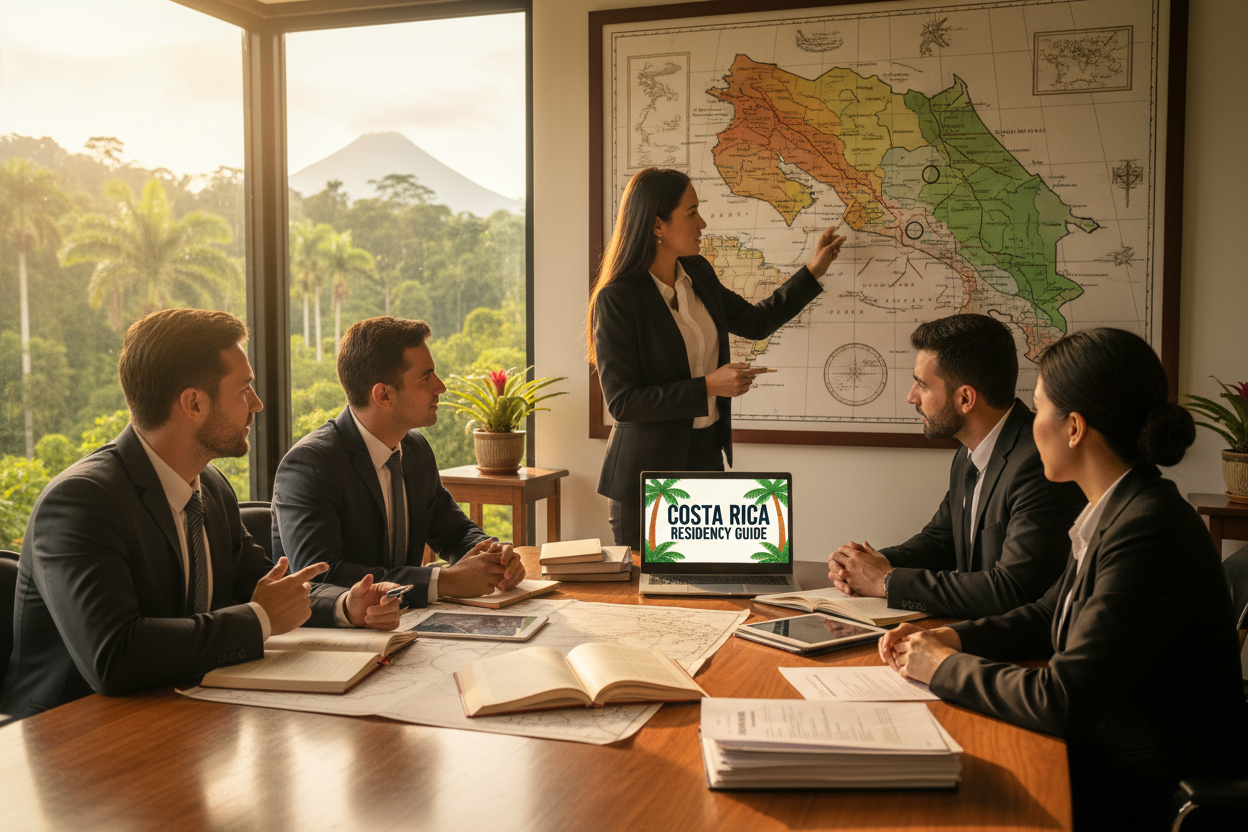
Understanding the flow of people to this Central American nation provides essential context. Costa Rica’s journey reflects broader global migration patterns. It has developed into a stable, democratic destination for retirees, professionals, and families over many years.
We at CRIE specialize exclusively in Costa Rica residency and immigration services. Our role is to guide you through the practical steps of obtaining legal status. We provide clear, realistic guidance based on current regulations.
Key pathways include Pensionado, Rentista, and Inversionista status. Each has specific financial requirements, like a $1,000+ monthly pension or a $150,000 investment. Starting your document preparation from home is a critical first step for success.
This country consistently ranks high on the Happy Planet Index, measuring long life and wellbeing. It abolished its military decades ago, redirecting funds to education and health. We offer transparent guidance—no guarantees, just a clear map of the process ahead.
Understanding Costa Rica’s Immigration Legacy
To grasp the nation’s current residency landscape, one must look at its long-standing role as a migration hub. Waves of people have arrived seeking work, safety, and opportunity for generations.
An overview of migration trends and demographic shifts
Chinese laborers came in the 1800s to build railroads. West Indian workers settled on the Caribbean coast decades later. Both groups faced discrimination but built lasting communities.
Nicaraguan migration surged after political crises, becoming the largest immigrant group today. They are vital to the economy. Now, foreigners make up about 15% of the total population.
This legacy shows Costa Rica has always been a destination. Today’s applicants join a multicultural society shaped by these arrivals. We help you navigate the formal pathways that now exist.
The Evolution of Immigration Policies in Costa Rica

From restrictive bans to humanitarian amnesties, the story of Costa Rican immigration law is one of gradual adaptation. Early government policy, like the discriminatory 1862 law, aimed to prohibit certain groups. Repeated attempts to stop Chinese migration in 1897 and 1906 also failed.
Chinese merchants petitioned the Costa Rican government in the early 1900s. Their efforts highlighted a tension between official rules and economic reality. This dynamic pushed policy toward more pragmatic solutions over the years.
A major shift came in 1999 with an amnesty for Central Americans after Hurricane Mitch. Then, in 2015, the country’s constitution formally recognized Costa Rica as “multiethnic and multicultural.” These were pivotal moments.
We see this evolution reflected in today’s residency system. Modern policies establish clear legal pathways with specific financial requirements. The focus is on orderly migration and proper records, not unenforceable bans.
Understanding this past helps applicants. It shows why the process now prioritizes documentation and self-sufficiency. You are engaging with a system designed for stability and contribution.
Historical Milestones in Costa Rica’s Journey
Key turning points over centuries have forged the peaceful and democratic nation we know today. These events directly shaped the country’s character and its modern systems.
Key events from Columbus to modern-day developments
Christopher Columbus arrived in 1502, naming the territory “Rich Coast.” This was an ironic start for a country that later thrived on agriculture, not gold.
Costa Rica gained independence from Spain in 1821. Full sovereignty came in 1838 after leaving the United Provinces of Central America.
The 1856 Filibuster War saw Costa Rican troops defeat an American filibuster. This victory cemented national unity and sovereignty for future years.
In the 1830s, coffee cultivation began transforming the economy. This agricultural work created labor patterns that lasted for generations.
A brief civil war in 1948 over an election result led to a stronger democracy. The following year, the country abolished its military.
President Tomás Guardia’s liberal reforms from 1870-1882 expanded education. These progressive steps influenced future government policy profoundly.
The impact of independence and post-colonial reforms
These milestones created a uniquely stable society in the region. Peaceful power transfers, like the 2010 election of the first woman president, demonstrate this lasting stability.
The end result is a nation that attracts foreign residents seeking security. The legal frameworks for residency are built upon this solid historical foundation. We help you navigate the system that emerged from this unique journey.
Exploring the CRIE Approach to Residency Guidance
Let’s be clear about what we do and, just as importantly, what we don’t. CRIE specializes exclusively in Costa Rica residency and immigration services. We don’t handle real estate, tourism, or general relocation advice.
Our entire focus is helping you obtain legal resident status. We provide the map and guidance for that specific journey.
Introducing CRIE and its mission
Our mission is to simplify a complex process. We combine deep knowledge of Costa Rica’s immigration system with plain-language guidance. This makes the legal requirements clear for foreign applicants.
We emphasize starting your work from home. Organizing documents like birth certificates and financial statements is the critical first step. Getting apostilles and translations done early saves significant time later.
This preparation-first method comes from our experience. Applicants with ready documents avoid costly delays after arriving in Costa Rica. We build your application on a solid foundation.
We provide transparent support but no generic price quotes or guarantees. Final decisions rest with government authorities. Our role is to be your experienced guide, ensuring your application meets all requirements for the best possible access to residency.
Step-by-Step Guide to Starting Your Residency Process
Your journey to legal residency in Costa Rica begins long before you book a flight. The most critical work happens at home. We guide you to treat the application as a documentation project from the beginning.
Organizing your documents from home
Start by gathering foundational records. You need your birth certificate, marriage certificate, and police background checks. Financial proof like pension letters or bank statements is also essential.
Each document requires an apostille from your home government. This special certification can take weeks. Documents not in Spanish need official translation for use in Costa Rica.
Planning your timeline and expectations
Realistic planning is key. The process from submission to the end often takes 6 to 12 months. Your specific category can affect this timeline.
Document prep is the part you control. A complete, error-free file provides smooth access to government processing. Arriving unprepared guarantees delays and extra stress.
This systematic approach is our philosophy. Proper preparation from home sets you up for success in Costa Rica.
Who Qualifies for Costa Rica Residency?
Not everyone who wants to live in Costa Rica qualifies for formal residency status. The system is built on specific categories—Pensionado (Pensionado), Rentista (Rentista), and Inversionista (Investor). Your first step is matching your profile to the right one.
Pensionado is for retirees with a guaranteed lifetime pension of at least $1,000 monthly. Rentista requires proof of $2,500 in stable monthly income for two years. Inversionista demands a $150,000 investment held in your personal name—a rule that catches many by surprise.
Legal residents can later petition for their spouse and dependent children. It’s a key benefit for moving a family. We must clarify a common point: Digital Nomad permits are not residency. They are temporary and do not count toward citizenship.
For digital nomads from the U.S. and other countries wanting permanent status, we often suggest evaluating Rentista. Understanding these requirements helps you decide if pursuing residency is the right part of your plan.
Key Financial Thresholds for Residency Options
Your financial profile determines which residency pathway you can access in Costa Rica. These are firm legal requirements, not flexible guidelines. Understanding them early prevents wasted effort.
Pensionado (Pensionado): $1,000+ monthly pension
This category requires a guaranteed lifetime pension of at least $1,000 per month. Sources include Social Security or government pensions. The base number covers a single applicant.
This same pension can often support a spouse and dependent children. You must provide official letters proving the permanent income. More income strengthens your application.
Rentista (Rentista) and Investor (Inversionista): Income and investment criteria
Rentista status demands proof of $2,500 in stable monthly income for two years. Bank statements must show this passive income is guaranteed. A lump sum does not qualify unless structured for monthly payouts.
The Inversionista route requires a minimum $150,000 investment. A major catch is that the asset must be held in your personal name. Many property purchases through corporations do not qualify, causing common misunderstandings.
We help you verify your eligibility against these thresholds before you start the work. This clarity is essential for a smooth process in Costa Rica.
Preparing Your Critical Documents Before Arrival
Proper document preparation is the single most important factor you control in the residency process. Attempting this work after you move creates costly delays and complications.
Apostilles and necessary translations
An apostille is a special certification from your home government. It validates your records for international use in Costa Rica. You’ll need this for birth certificates, marriage documents, and police checks.
The specific number of documents varies per person. You must obtain apostilles from every country where you’ve lived as an adult. Doing this from home is crucial for smooth access later.
After apostilling, any document not in Spanish requires a certified translation. This must be done by a translator officially registered in Costa Rica. General translation services will not be accepted by authorities.
We recommend completing both steps before you arrive. This foundational work ensures your application is ready for submission without unnecessary delays in Costa Rica.
Understanding Residency Timelines and Milestones
Establishing a realistic timeline is crucial for anyone navigating Costa Rica’s residency system. The process from beginning to end typically takes a minimum of six to twelve months. Individual circumstances and government workload can extend this period.
Your journey starts with document preparation. Gathering records, obtaining apostilles, and arranging translations can take two to four months. This foundational work happens before you even submit your application.
After submission, your file enters the government processing phase. This is where immigration authorities conduct their review. You have the least control during this part of the system.
Authorities may request additional information, which can cause delays. A final administrative phase for card production usually takes four to eight weeks. This marks the official end of the process.
These timelines are based on our experience. They are estimates, not guarantees. We always recommend verifying current processing times at the official migracion.go.cr website.
For solid planning, assume a full twelve-month timeline from start to finish. This conservative approach helps you make realistic life decisions.
Common Pitfalls in the Application Process
Based on our experience, most application setbacks stem from a handful of common errors. These mistakes can add months to your timeline and increase costs significantly.
Document errors and mistakes to avoid
Incomplete apostille coverage is a frequent issue. Applicants often miss key records or use uncertified copies. This causes government delays when you submit your file.
Translation errors are another pitfall. Using non-certified translators invalidates your work. All documents must be translated by a professional registered in Costa Rica.
For Pensionado status, you need proof your pension is permanent. Bank statements alone are insufficient. Official letters stating lifetime payments are required.
Rentista applicants must show guaranteed income for two years. Current deposits aren’t enough. You need documentation from financial institutions confirming the future flow.
The Inversionista route has a specific trap. Property must be held in your personal name, not a corporation. Many investors discover this too late, resulting in costly fixes.
Police background checks have strict timing. Obtain them too early and they expire. Get them too late and you delay the entire process.
The cumulative result of these errors is frustration and extra expense. Investing in proper preparation from the start saves time and money in the end.
Digital Nomads Versus Traditional Residency Options
The distinction between temporary authorization and actual residency is crucial for planning. Costa Rica’s Digital Nomad permit attracts remote workers with its $3,000 monthly income requirement. This is a temporary work permit, not a pathway to resident status.
Years spent under this permit do not count toward citizenship requirements. Digital Nomads also lack access to certain benefits available to legal residents. Their authorization is designed for temporary remote work, not permanent establishment.
For those seeking genuine integration, we typically recommend the Rentista residency. This requires proof of $2,500 in stable monthly income. It provides true resident status that counts toward eventual permanent residency.
If you already qualify for the Digital Nomad permit, you likely meet the Rentista threshold. Choosing the right status early ensures you’re working toward your long-term goals in Costa Rica.
history-of-immigration-in-costa-rica: A Comprehensive Review
Each major chapter in the country’s development involved significant contributions from immigrant groups. This pattern spans nearly two centuries. The nation’s current multicultural identity is a direct result.
Early Chinese workers arrived in the 1800s for railroad construction. They faced discrimination but built lasting businesses. West Indian migrants came between 1870 and 1930, with thousands settling in Limón province.
This Afro-Caribbean community enriched local culture deeply. The expansion of coffee cultivation in the 1830s created a constant demand for labor. This need established patterns of agricultural migration that continue today.
Modern Nicaraguan immigrants are vital to the economy. They constitute over 60% of the seasonal coffee workforce. Studies show their labor adds more than 12% to the national GDP.
This history informs current residency policies. Today’s system balances economic contribution with social integration. Applicants join a long tradition of foreign residents becoming part of Costa Rican society.
The Impact of U.S. Migration Policy on Costa Rica’s Immigration Landscape
Beyond being a top source of tourists and retirees, the United States is a key partner in Costa Rica’s immigration management framework. This long-standing relationship, formalized in 1851, deeply influences how the Costa Rican government approaches immigration.
U.S.-Costa Rica diplomatic ties and migration strategies
Approximately 120,000 U.S. citizens now reside in Costa Rica, many as retirees. This community represents the largest group of American expatriates in Central America. In 2022, nearly 1.3 million U.S. visitors arrived, fostering familiarity that often leads to residency applications.
Costa Rica was the first Latin American country to sign a regional migration arrangement with the United States. It also endorsed the Los Angeles Declaration on Migration and Protection. These commitments shape Costa Rican policy toward asylum seekers and refugees.
Since 2018, U.S. humanitarian aid exceeding $57 million has bolstered the country’s capacity. This support helps host vulnerable migrants from regional crises. The Protection Transfer Arrangement has resettled about 500 refugees from Costa Rica to the United States since 2016.
We see this cooperation creating a more stable immigration system. For residency applicants, it translates to more efficient government processing and predictable procedures.
Comparing Costa Rica’s Immigration Journey with Global Trends
Comparing migration patterns across Latin America reveals Costa Rica’s distinctive role as both a destination and a policy leader. We observe its journey stands out among Central American countries.
Political stability and democratic governance transformed it into a net migration destination. Other nations in the region experienced prolonged conflicts and violence in parts of their territories.
The economic divergence is stark. By 1998, Costa Rica’s GNP per capita was $2,770 compared to Nicaragua’s $370.
This nearly 8-to-1 difference explains why hundreds of thousands of Nicaraguans migrated south. They sought economic opportunity unavailable at home.
Costa Rica consistently ranks at the top of the Happy Planet Index. This global reputation attracts quality-of-life migrants from developed countries.
It also draws economic immigrants from less prosperous parts of Central America. The country is a strong voice on human rights in Latin America.
Its immigration policies evolved toward inclusive frameworks. The 2015 constitutional recognition as “multiethnic and multicultural” represents this progression.
Costa Rica is a member of the Regional Conference on Migration. It has held a leadership role, shaping how nations address migration challenges collectively.
An attractive trade and investment climate creates opportunities. This attracts foreign investors and generates employment for regional labor migrants.
This analysis shows Costa Rica’s exceptionalism is measurable. It is a key destination for both affluent foreigners and regional immigrants seeking better lives.
How CRIE Supports Your Move: Start from Home with Your Documents Ready
Your access to a streamlined process begins with our front-loaded support, turning complex paperwork into a clear checklist. We provide the expert guidance that demystifies each step for your Costa Rica residency journey.
Personalized Pathways and Proactive Planning
Our work focuses on your specific situation. We help individuals, couples, and families understand the exact documents needed for Pensionado, Rentista, or Inversionista status.
This personalized approach prevents costly mistakes. We guide you through obtaining apostilles and certified translations before you arrive in Costa Rica.
Our experience comes from years of navigating the system. We know the practical realities of working with government offices and managing timelines.
We offer transparent communication about what we control. We facilitate proper applications but make no guarantees about approval or processing times.
Those final decisions rest with immigration authorities at migracion.go.cr.
For families, we ensure all documentation is coordinated. This prevents situations where one member faces delays while others proceed.
We encourage you to reach out with questions early. Understanding if residency makes sense for your family is a crucial first step.
Contact us via WhatsApp at +506 8706 3888, email info@crie.cr, or visit www.crie.cr. Let our support transform this complex process into a manageable journey for your entire community.
Final Reflections on Embracing Costa Rica’s New Chapter
Embracing life in Costa Rica as a resident means stepping into a society where the national motto, “pura vida,” is a genuine cultural philosophy. This focus on quality of life and community wellbeing is what draws so many people here.
Becoming part of this community requires acknowledging its full story. While past struggles with discrimination exist, many Costa Ricans actively champion inclusion, as seen in the 2018 marches of solidarity.
The nation’s progress on women’s rights and its formal recognition as multiethnic and multicultural show a society evolving toward greater inclusion. Your successful integration hinges on more than legal status.
Learning Spanish and respecting local customs transforms your experience from visitor to community member. For those looking ahead, this residency can be a step toward a deeper guide to citizenship by naturalization.
You join the ongoing story of a country built by newcomers. Your respect and willingness to contribute will shape your own rich chapter in Costa Rica.
FAQ
How has Costa Rica’s history shaped its modern immigration system?
What are the main residency categories for retirees and investors?
FAQ
How has Costa Rica’s history shaped its modern immigration system?
Costa Rica’s modern system is built on a legacy of welcoming migrants for labor and community growth. From coffee cultivation to recent regional stability efforts, this history created a framework focused on orderly processes. Today, we help navigate this established system, ensuring applications meet current legal standards rooted in this long-term approach.
What are the main residency categories for retirees and investors?
The primary options are the Pensionado, Rentista, and Inversionista programs. The Pensionado category requires a guaranteed lifetime pension of at least
FAQ
How has Costa Rica’s history shaped its modern immigration system?
Costa Rica’s modern system is built on a legacy of welcoming migrants for labor and community growth. From coffee cultivation to recent regional stability efforts, this history created a framework focused on orderly processes. Today, we help navigate this established system, ensuring applications meet current legal standards rooted in this long-term approach.
What are the main residency categories for retirees and investors?
The primary options are the Pensionado, Rentista, and Inversionista programs. The Pensionado category requires a guaranteed lifetime pension of at least $1,000 per month. The Rentista option is based on proving a stable, passive income. The Investor category requires a significant capital investment in the country, such as in property or a business, as defined by law.
Why is document preparation from my home country so critical?
Starting your residency process correctly from abroad saves immense time and prevents major delays. Key documents like birth certificates and police records require apostilles and official Spanish translations before you arrive. We guide clients to complete this step first, as attempting to fix documents from within Costa Rica can complicate and prolong the application significantly.
How does U.S. policy affect immigration to Costa Rica?
Shifts in U.S. migration policy can influence flows of people through the Central American region. This sometimes results in Costa Rica receiving asylum seekers or others seeking stability. For our clients pursuing formal residency, we focus on navigating Costa Rica’s own national laws and requirements, ensuring their application is robust regardless of broader regional dynamics.
What is the most common mistake people make in the residency application?
The most frequent pitfall is submitting incomplete or improperly legalized documents. Even small errors in translation or missing an apostille can cause the government to return your entire file, adding months to the timeline. We meticulously review all paperwork to ensure it meets the exact specifications, turning a complex bureaucratic step into a streamlined process.
How does CRIE assist with the residency process from start to finish?
We act as your expert guide, managing the entire journey. Our service begins with a thorough review of your eligibility and a personalized document checklist. We then handle the preparation, submission, and follow-up with immigration authorities on your behalf. Our goal is to provide clarity, prevent errors, and offer reliable support—you can contact our team via WhatsApp at +506 8706 3888 or email at info@crie.cr.
,000 per month. The Rentista option is based on proving a stable, passive income. The Investor category requires a significant capital investment in the country, such as in property or a business, as defined by law.
Why is document preparation from my home country so critical?
Starting your residency process correctly from abroad saves immense time and prevents major delays. Key documents like birth certificates and police records require apostilles and official Spanish translations before you arrive. We guide clients to complete this step first, as attempting to fix documents from within Costa Rica can complicate and prolong the application significantly.
How does U.S. policy affect immigration to Costa Rica?
Shifts in U.S. migration policy can influence flows of people through the Central American region. This sometimes results in Costa Rica receiving asylum seekers or others seeking stability. For our clients pursuing formal residency, we focus on navigating Costa Rica’s own national laws and requirements, ensuring their application is robust regardless of broader regional dynamics.
What is the most common mistake people make in the residency application?
The most frequent pitfall is submitting incomplete or improperly legalized documents. Even small errors in translation or missing an apostille can cause the government to return your entire file, adding months to the timeline. We meticulously review all paperwork to ensure it meets the exact specifications, turning a complex bureaucratic step into a streamlined process.
How does CRIE assist with the residency process from start to finish?
We act as your expert guide, managing the entire journey. Our service begins with a thorough review of your eligibility and a personalized document checklist. We then handle the preparation, submission, and follow-up with immigration authorities on your behalf. Our goal is to provide clarity, prevent errors, and offer reliable support—you can contact our team via WhatsApp at +506 8706 3888 or email at info@crie.cr.
Why is document preparation from my home country so critical?
How does U.S. policy affect immigration to Costa Rica?
What is the most common mistake people make in the residency application?
How does CRIE assist with the residency process from start to finish?
Article by Glenn Tellier (Founder of CRIE and Grupo Gap)
Don't wait, contact us right now!
Call or WhatsApp Costa Rica +506 8373 2085 or +506 8706 3888
Call USA/Canada +1 305-906-6784