
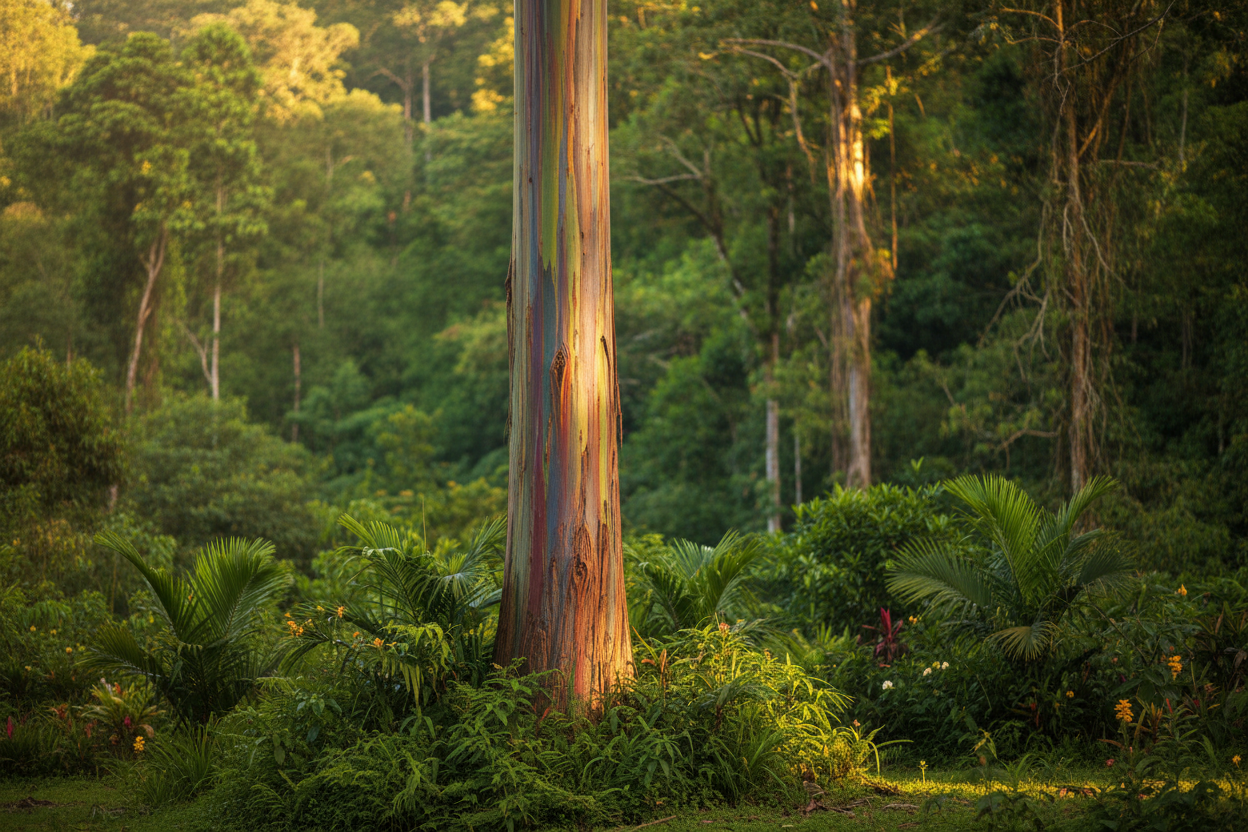
Yes, you can find rainbow eucalyptus trees in Costa Rica. The answer to the question do rainbow eucalyptus trees grow in Costa is a definite yes. They are a spectacular sight at the Arenal Observatory Lodge.
This unique eucalyptus species is not native to the country. It originally comes from places like the Philippines and Indonesia. Costa Rica successfully cultivates these trees in specific areas with the right climate.
The vibrant rainbow bark is still present, though the trees might look a bit different from their native cousins. This guide will show you where to find them. You will also learn what makes their bark so colorful and get tips for your visit.
Discovering the Natural Beauty of Rainbow Eucalyptus Trees
The rainbow eucalyptus tree showcases one of nature’s most stunning displays through its ever-changing bark. This spectacle is not paint or human art. It is a completely natural process that creates a living rainbow.
Unique Colorful Bark and Shedding Process
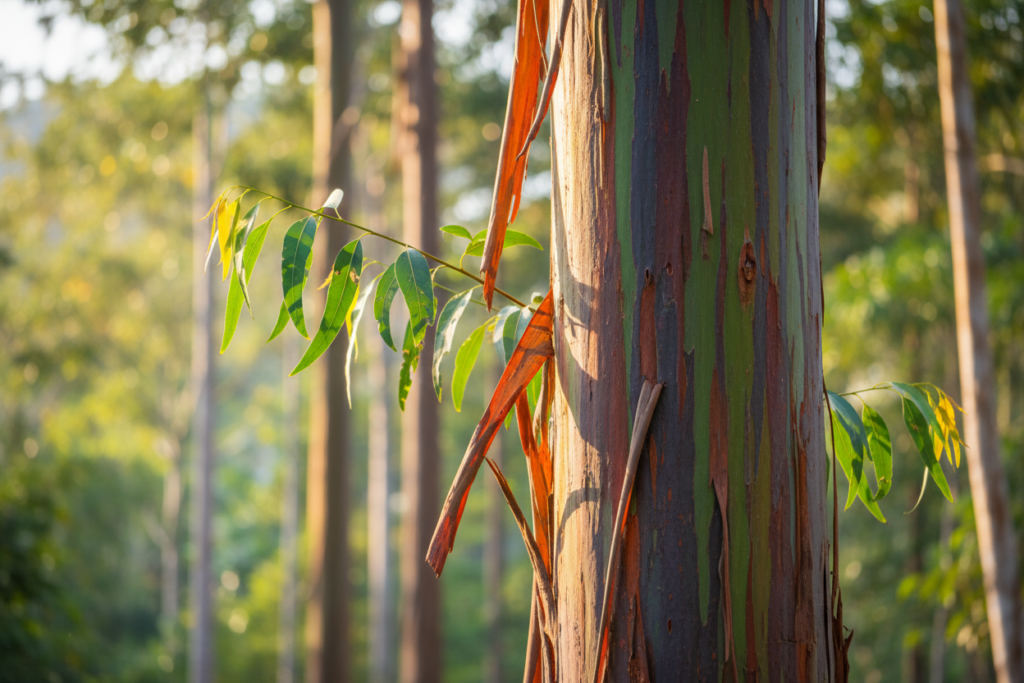
Eucalyptus deglupta has uniquely thin bark that sheds in strips all year. As old layers peel away, fresh bark is revealed. This new bark starts as a bright turquoise color.
Exposure to air and sunlight starts a chemical reaction. The color shifts through a stunning palette. Visitors see shades of blue, purple, red, orange, and pink.
How Nature Creates Striped Wonders
No two trees ever look the same. The bark sheds sporadically, creating random patterns. Each trunk becomes a unique piece of abstract art.
The scientific name deglupta means “peeled off.” This perfectly describes the tree’s appearance. In Costa Rica, the colors are still vibrant and stunning.
These trees are fast growers. They can add about six feet in height each year. Younger specimens develop more dramatic coloring as they mature.
Exploring Costa Rica’s Scenic Spots for Rainbow Eucalyptus
Your journey to see the striped bark begins at a renowned lodge near Arenal Volcano. While these colorful trees are not widespread, one location offers a guaranteed and spectacular encounter.
Arenal Observatory Lodge Spotlight
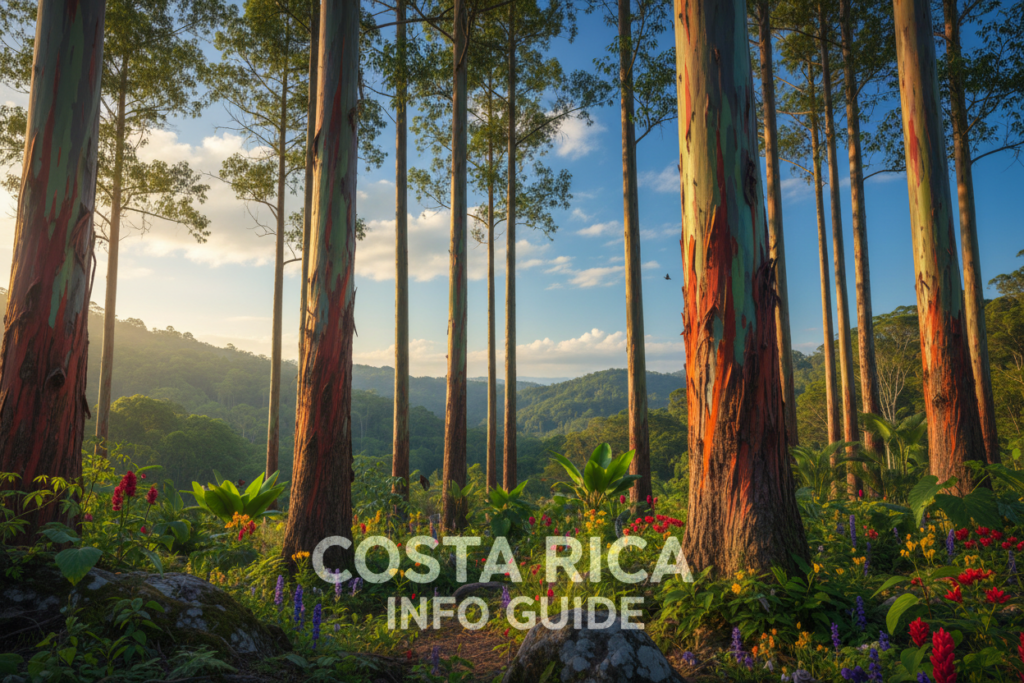
The Arenal Observatory Lodge is the confirmed primary site. Its reforestation program features these stunning eucalyptus trees.
You can explore over seven miles of well-maintained hiking trails. These paths provide easy access for visitors of most abilities. You will encounter the trees at various points along the way.
For detailed insights, read Shannon Farley’s article “The Rainbow Trees of Arenal, Costa Rica” on the lodge’s website.
Other Must-Visit Locations
Other public sightings are rare. Some botanical gardens in warm, moist regions might cultivate them.
These locations are not as well-documented. Checking with local arboretums is an option, but sightings are not guaranteed.
Photographic Opportunities for Tourists
Capture the vibrant bark with these simple tips. Early morning or late afternoon side lighting makes the colors pop.
Use a zoom lens to detail the bark without touching it. Shoot from different angles for unique perspectives.
- Straight-on shots highlight the stripe patterns.
- Looking up from the base shows the tree’s impressive height.
- The green rainforest backdrop at Arenal creates perfect color contrast.
Practical Guide: do-rainbow-eucalyptus-trees-grow-in-costa-rica
Planning your encounter with these colorful trees requires some know-how for a safe and rewarding experience. This guide offers real examples and essential tips for visitors.
Real Examples and Local Experiences
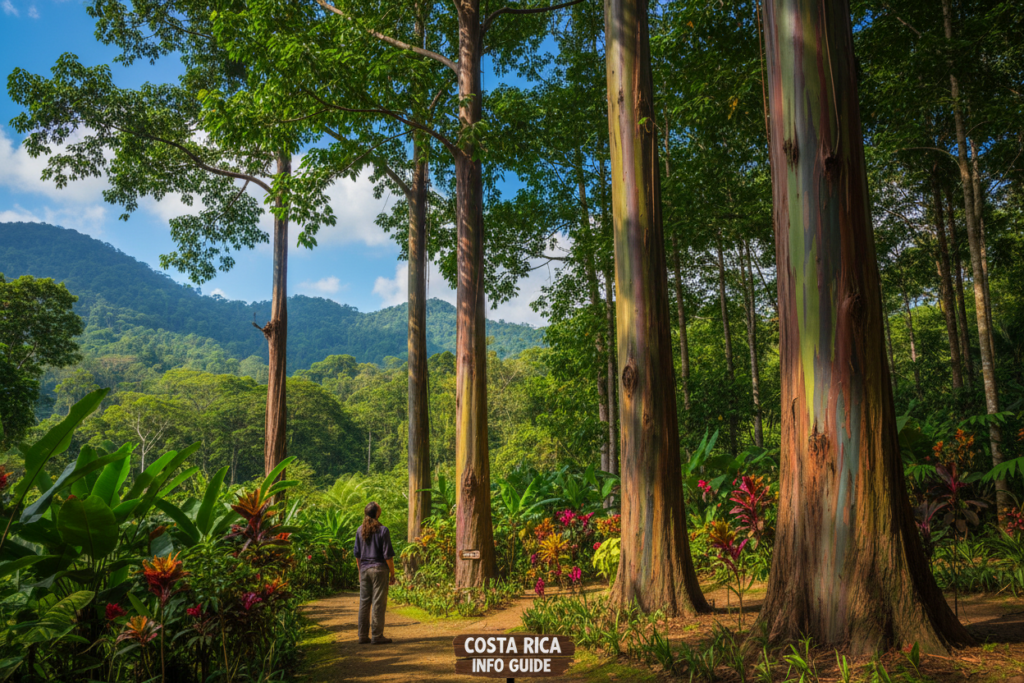
Local resident Shannon Farley spent months exploring the Arenal trails. She documented the stunning variety of these trees. The Arenal Observatory Lodge intentionally planted them for reforestation.
This shows the country’s commitment to biodiversity. You can see the vibrant Eucalyptus deglupta there. It is a vulnerable species globally, so this is a special chance.
Do’s and Don’ts for Tree Enthusiasts
Always stay on marked trails. This protects the ecosystem and keeps you safe. Take plenty of photos from a respectful distance.
Visit at different times of day. Morning and afternoon light change the bark’s look. Bring water and wear good hiking shoes.
Never touch, peel, or carve the bark. The shedding process is natural. Do not expect to find these trees everywhere. They only grow in specific places.
Safety Tips and Best Practices
Stay aware of your surroundings. You are in a rainforest with wildlife. Let someone know your hiking plans if you go alone.
Allocate at least two to three hours for your visit. The best time to come is the dry season from December to April. Trails are more accessible then.
While you can see the trees any time, less rain means safer hiking. It also allows for better photography of the rainbow colors.
Final Thoughts on Enjoying Rainbow Eucalyptus in Costa Rica
The search for these vibrant trees leads to a singular, unforgettable destination in the Arenal region. Yes, rainbow eucalyptus trees do grow here, primarily at the Arenal Observatory Lodge.
This offers a rare chance to see a vulnerable species outside its native habitat. While not native, these trees thrive in the local climate.
They represent a successful reforestation effort. Seeing them in a protected area is a unique and accessible experience.
The bark’s color changes constantly. Every visit shows a different natural artwork.
Enjoy this spectacle responsibly by following the guidelines. It helps preserve the trees for future visitors.
Quick Visit Checklist:
- Confirm lodge opening hours.
- Wear sturdy hiking shoes.
- Bring a camera and water.
- Stay on marked trails.
- Do not touch the bark.
- Allow 2-3 hours minimum.
Frequently Asked Questions:
- Are they native? No, they originate in Southeast Asia.
- Where can I see them? Arenal Observatory Lodge is the main spot.
- Best time of year? Year-round for color; dry season for easier hiking.
- Can I touch the bark? No, let it shed naturally.
If you’re considering spending more time in Costa Rica and have questions about residency options, CRIE can help you choose the correct category. Contact them at WhatsApp +506 8706 3888, email info@crie.cr, or visit www.crie.cr.
Experiencing these remarkable trees in person is worth the trip. Costa Rica continues to amaze with its natural wonders.
FAQ
Are rainbow eucalyptus trees native to Costa Rica?
Why does the bark of this tree look painted?
Where is the best place to see a rainbow eucalyptus in Costa Rica?
Can I take a piece of the colorful bark as a souvenir?
What is the best time of year to see the colors?
Are these eucalyptus trees harmful to the local environment?
Article by Glenn Tellier (Founder of CRIE and Grupo Gap)
Don't wait, contact us right now!
Call or WhatsApp Costa Rica +506 8373 2085 or +506 8706 3888
Call USA/Canada +1 305-906-6784