
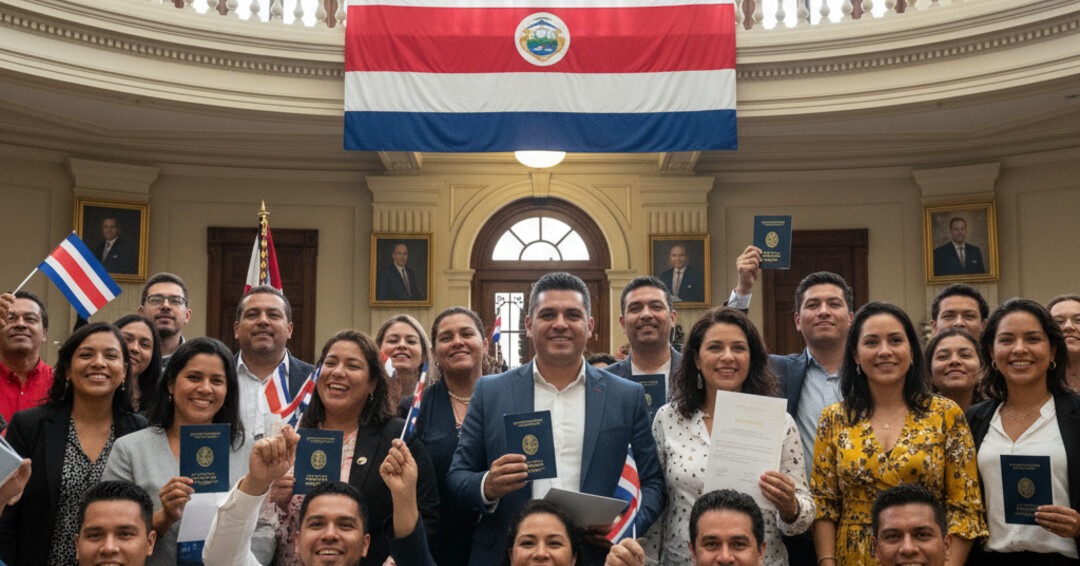
Becoming a full citizen of Costa Rica is a dream for many expatriates. At Costa Rica Immigration Experts (CRIE), we’ve guided thousands of clients through the complex process of achieving their dream of living in Costa Rica. With over 20 years of experience, we understand that the path to citizenship involves more than just the time you’ve spent in the country.
The process of naturalization requires meeting specific residence and other criteria. While time is a crucial factor, it’s not the only requirement for citizenship. Understanding the intricacies of Costa Rica’s immigration rules and the naturalization process is essential for those looking to make the country their permanent home.
At CRIE, we have helped many achieve their dream through successful naturalization applications. Our expertise ensures that you navigate the requirements efficiently.
The Path to Costa Rican Citizenship
As one of the most biodiverse countries in the world, Costa Rica welcomes individuals who wish to become citizens and share its values. With over 20 years of experience and thousands of successful residencies, we are one of the oldest and most trusted immigration firms in the country. Our expertise guides you through the complex process of becoming a Costa Rican citizen.
Understanding Naturalization in Costa Rica
Naturalization is the legal procedure by which a non-citizen can acquire Costa Rican citizenship. To be eligible, one must meet specific residence requirements, including maintaining continuous residence for a designated period. Costa Rica’s structured approach to citizenship involves progressing from temporary to permanent residency before applying for naturalization.
The naturalization process requires demonstrating integration into Costa Rican society through language proficiency and cultural knowledge. Understanding the difference between residency and citizenship is crucial, as each status confers different rights and responsibilities.
Why Many Expats Choose Costa Rica
Many expatriates choose Costa Rica for its stable democracy, high-quality healthcare system, and peaceful way of life, making citizenship an attractive goal. Costa Rica’s approach to citizenship emphasizes both the time spent in the country and the quality of that time in terms of community integration.
- The path to Costa Rican citizenship begins with understanding the naturalization process.
- Naturalization requires meeting specific residence requirements.
- Costa Rica’s citizenship process involves progressing from temporary to permanent residency.
- Many expats are drawn to Costa Rica’s stable democracy and high-quality healthcare.
At CRIE, we have guided thousands of clients through the naturalization process, helping them navigate the complex requirements with our expertise. The path to citizenship represents a significant commitment to Costa Rica and its values.
Can I Become a Naturalized Citizen Based on the Amount of Time I’ve Lived Here?
Understanding the time requirements for Costa Rican citizenship is crucial for those seeking naturalization. The duration of your residence in Costa Rica significantly influences your eligibility for citizenship.
The Role of Time in Costa Rican Citizenship
Time is a fundamental factor in determining eligibility for Costa Rican citizenship. To qualify, you must have maintained legal permanent resident status for a specified period. Typically, this means residing in Costa Rica for at least 5-7 years, depending on your country of origin. However, if you’re married to a Costa Rican citizen, the residency period is reduced to approximately 3 years.
It’s essential to demonstrate continuous residence, meaning you haven’t been absent from Costa Rica for extended periods. The physical presence requirement mandates that you spend a significant portion of each year living within Costa Rica’s borders.
Beyond Time: Other Critical Requirements
While time is a critical factor, it’s not the only requirement for naturalization. Other essential criteria include Spanish language proficiency, knowledge of Costa Rican history and civics, and good moral character. Financial stability and integration into the community are also considered when evaluating citizenship applications.
To ensure a smooth application process, it’s crucial to meet all the requirements, including maintaining proper documentation to demonstrate continuous residence. We help clients track their residency time and maintain the necessary documents to support their application.
Residency Requirements Before Citizenship

Costa Rica’s path to citizenship is paved with specific residency requirements that must be met. To become a citizen, one must first establish and maintain legal residency through a progressive system.
Temporary Residency Process
Temporary residency is the first step in the residency journey, typically maintained for at least three years before applying for permanent status. Various categories can be used to obtain temporary residency, including retirement (pensionado), rentista, investor, or marriage to a Costa Rican citizen. During this period, it’s crucial to comply with all immigration requirements, including regular renewals and maintaining the status in good standing.
Permanent Residency Requirements
After completing the temporary residency period, applicants can proceed to apply for permanent residency, a prerequisite for citizenship. The application process for permanent residency requires proof of continuous residence in Costa Rica, with limited absences from the country. If there have been extended absences during the temporary residency period, additional documentation, such as apostilled police records from the countries where the applicant stayed, may be necessary.
Permanent residency applications also require various documents, including proof of income, health insurance, and good conduct. The process typically takes several months to complete. Once granted, permanent residency must be maintained for several years (typically 5-7 years total from initial temporary residency) before becoming eligible for naturalization.
Continuous Residence and Physical Presence
Continuous residence and physical presence are two fundamental requirements that determine an applicant’s eligibility for Costa Rican citizenship. These requirements help establish that the applicant has integrated into Costa Rican society and intends to remain in the country. Understanding these concepts is crucial for a successful citizenship application.
Understanding Continuous Residence
Continuous residence refers to the maintenance of one’s legal domicile in Costa Rica without significant interruptions during the qualifying period. While short trips abroad are permissible, extended absences can jeopardize an applicant’s continuous residence status. Generally, absences exceeding six months may necessitate additional documentation to prove ties to Costa Rica were maintained.
For instance, if an applicant leaves Costa Rica for more than a year, their continuous residence clock may reset, requiring them to restart the qualifying period upon their return. It’s essential to plan international travel carefully to avoid disrupting continuous residence.
Physical Presence Requirements
The physical presence requirement mandates that applicants be physically present in Costa Rica for a specified number of days during the statutory period. Typically, applicants must be present in Costa Rica for at least half of the qualifying period, which translates to approximately 30 months out of 5 years. Maintaining accurate records of entries and exits from Costa Rica is vital for demonstrating compliance with physical presence requirements.
Strategic planning of travel during the residency period can help ensure that both continuous residence and physical presence requirements are met without complications. Professional guidance can be invaluable in navigating these requirements and ensuring that an applicant’s travel patterns do not adversely affect their eligibility.
Language and Cultural Requirements
The path to Costa Rican citizenship requires more than just residency; it demands a strong grasp of the Spanish language and cultural integration. To become a naturalized citizen, applicants must demonstrate their ability to speak Spanish and understand the country’s history and governance.
Spanish Language Proficiency
Spanish language proficiency is a fundamental requirement for Costa Rican citizenship. Applicants must pass a Spanish language test that evaluates their speaking, reading, and writing abilities at a functional level. This ensures that citizens can participate in civic life, understand government communications, and engage with the community. Exceptions to this requirement exist for applicants who are 65 years or older, who may qualify for modified testing or exemptions.
Knowledge of Costa Rican History and Civics
Beyond language skills, applicants must demonstrate knowledge of Costa Rican history, government structure, and civic values. The civics examination covers topics such as national symbols, important historical events, government branches, and constitutional rights. Study materials for the civics test are available through government resources and preparatory courses offered by organizations like CRIE. Cultural integration is considered an essential aspect of becoming a citizen, as it demonstrates commitment to Costa Rican values and way of life.
To prepare for both the language and civics tests, applicants typically require dedicated study time and practice. By understanding the eligibility criteria and requirements, individuals can better navigate the naturalization process and achieve their goal of becoming a Costa Rican citizen.
The Naturalization Application Process
Once you’ve met the residency requirements, you can initiate the naturalization application process. This process is a crucial step towards becoming a Costa Rican citizen and involves several key components.
Required Documentation
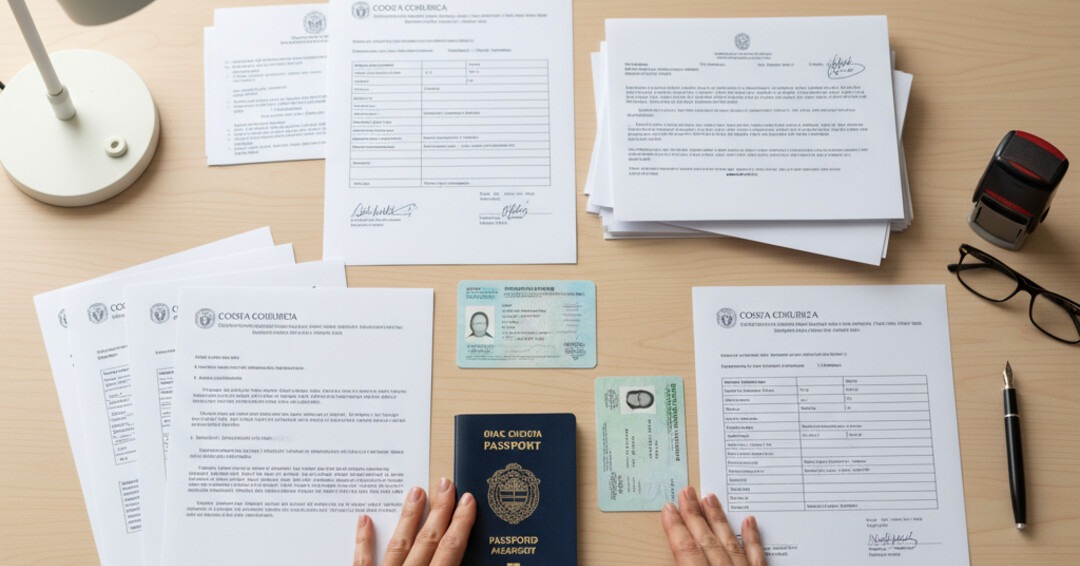
To apply for naturalization, you’ll need to gather various documents. These typically include your birth certificate, passport, residency card, marriage certificate (if applicable), and proof of income. All foreign documents must be properly apostilled or legalized and translated into Spanish by an official translator recognized in Costa Rica. Additionally, you’ll need to provide proof of your continuous residence in Costa Rica, which may include rental agreements, utility bills, or property ownership documents. Evidence of your Spanish language proficiency is also required unless you qualify for an age-based exemption.
Filing Your Application
Filing your naturalization application involves submitting all required documents to the appropriate government office and paying the associated filing fees. After submission, your application will undergo a thorough review process, including verification of all documents and background checks. The processing time for naturalization applications typically takes about 12 months, though this can vary based on current government processing volumes. During this period, you must maintain your permanent residency status and continue to comply with all immigration requirements. For more information on the benefits of residency in Costa Rica, you can visit CRIE’s page on Costa Rica Residency.
It’s essential to ensure that your application is complete and accurate to avoid delays. We can assist with preparing all required documentation, ensuring proper translations and certifications, and tracking your application throughout the process.
- The naturalization application process begins after meeting the residency time requirements.
- Required documentation includes birth certificates, passports, and proof of income.
- All foreign documents must be apostilled or legalized and translated into Spanish.
- Proof of continuous residence and Spanish language proficiency is also necessary.
The Citizenship Interview and Examination
To become a naturalized citizen of Costa Rica, one must successfully navigate the citizenship interview and examination. This critical step in the naturalization process assesses an applicant’s eligibility and knowledge of Costa Rican society.
Preparing for the Interview
Preparing for the citizenship interview involves reviewing your application thoroughly and practicing answers to common questions about your residency and intentions. It’s essential to be ready to discuss your background and reasons for seeking Costa Rican citizenship.
Many applicants find it beneficial to take practice tests and study with materials specifically designed for the Costa Rican citizenship examination. Resources like the Sikua textbook and online guides can be invaluable in your preparation.
Taking the Citizenship Test
The citizenship test evaluates your knowledge of Costa Rican history, government structure, national symbols, and civic responsibilities. To pass, you need to answer at least 6 out of 10 questions correctly.
The language assessment portion of the examination evaluates your ability to understand and respond to questions in Spanish, demonstrating functional proficiency. With thorough preparation and the right resources, you can confidently approach the citizenship test.
CRIE offers preparation services, including practice interviews, study materials, and guidance on what to expect during the examination. Approaching the interview with confidence and thorough preparation significantly increases your chances of success in this crucial step.
Benefits of Costa Rican Citizenship
Becoming a naturalized citizen of Costa Rica comes with numerous benefits that enhance your life and opportunities. As we explore the advantages of citizenship, it becomes clear that the naturalization process is a significant step for many expatriates.
Voting Rights and Political Participation
As a citizen of Costa Rica, you gain the right to vote in all national and local elections, allowing you to participate fully in the country’s democratic process. This civic engagement is a crucial aspect of shaping Costa Rica’s future. Citizens can also run for most public offices and engage in political activities that may be restricted for non-citizens, giving them a stronger voice in the country’s governance.
Travel Benefits and Freedom of Movement
Costa Rican citizenship provides enhanced travel benefits, including visa-free or visa-on-arrival access to numerous countries worldwide. Citizens can leave and re-enter Costa Rica without concerns about maintaining residency status or meeting physical presence requirements. For more information on the requirements for Costa Rican citizenship, you can visit CRIE’s website.
Additionally, Costa Rican citizenship allows for dual citizenship in many cases, meaning you may not need to renounce your original citizenship. This flexibility is particularly beneficial for individuals who wish to maintain ties with their country of origin while embracing their new nationality.
How CRIE Can Help With Your Citizenship Journey

With over 20 years of experience, CRIE has established itself as a leading authority in Costa Rican immigration and citizenship processes. Our team of immigration experts understands the nuances of Costa Rican citizenship law and stays current with all regulatory changes that might affect your application.
Our Experience and Success Rate
CRIE brings over 20 years of specialized experience in Costa Rican immigration and citizenship processes, having helped thousands of clients successfully navigate these complex procedures. Our success rate is a testament to our expertise and dedication to our clients.
Personalized Consultation and Support
We provide comprehensive support throughout your entire citizenship journey, from initial residency applications through the final naturalization ceremony. Our services include document preparation and verification, ensuring all paperwork meets the strict requirements of Costa Rican immigration authorities. Additionally, CRIE offers personalized Spanish language preparation and civics test coaching to help you confidently meet these critical requirements.
Every client receives a customized consultation to assess their unique situation and develop a strategic plan for their citizenship journey. Our pricing is transparent and tailored to your specific needs, taking into account factors such as family size and document requirements.
CRIE maintains strong relationships with immigration officials and understands the internal processes, allowing us to effectively track and advocate for your application. To begin your citizenship journey, contact us via WhatsApp at +(506)-8373-2085 or +(506)-8706-3888, call from the USA at +1 (305)-906-6784, or from Canada at +1 (416)-900-5773.
Conclusion
Embarking on the journey to Costa Rican citizenship is a significant decision that requires careful planning and understanding of the naturalization process. While time spent living in Costa Rica is a fundamental factor in citizenship eligibility, it’s just one of several important requirements.
The path to citizenship typically requires 5-7 years of legal residency, including both temporary and permanent residency periods. Beyond time requirements, applicants must demonstrate Spanish language proficiency, knowledge of Costa Rican history and civics, and good moral character.
With proper planning and expert guidance from CRIE, who have over 20 years of experience in navigating the complex citizenship process, you can successfully achieve your goal. We offer personalized consultation and support to ensure your unique situation is considered when developing a strategy for your citizenship journey.
Start your residency process with us today, and you’ll be on your way to becoming a naturalized Costa Rican citizen, enjoying the benefits of voting rights, unrestricted travel, and full integration into Costa Rican society.
Article by Glenn Tellier (Founder of CRIE and Grupo Gap)
Don't wait, contact us right now!
Call or WhatsApp Costa Rica +506 8373 2085 or +506 8706 3888
Call USA/Canada +1 305-906-6784