
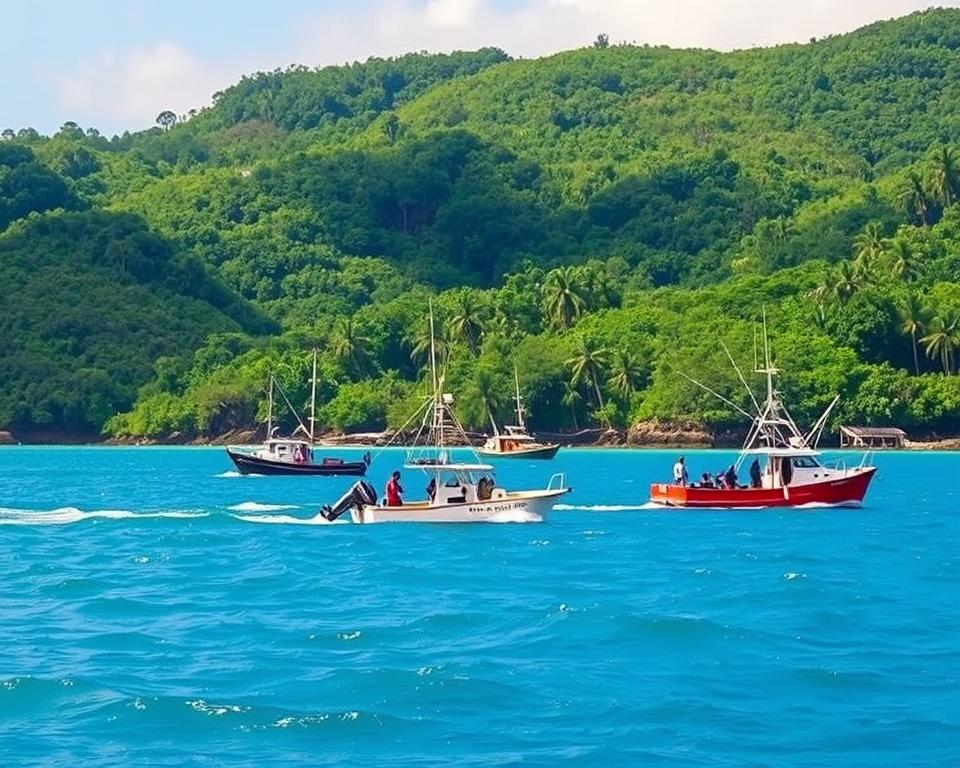
Have you ever thought about the complex relationship between local fishermen and shark conservation in a very biodiverse country? People often wonder: does Costa Rica allow shark fishing? The answer is not simple. It involves local traditions, international rules, and big environmental worries.
Costa Rica is known for its conservation efforts. Yet, it still allows some shark fishing under strict rules. This article will explore the details of shark fishing in Costa Rica. We’ll look at the rules, the impact on the environment, and why it’s important for everyone to know about sustainable fishing.
Key Takeaways
- Shark fishing in Costa Rica is permitted but strictly regulated.
- Local and international laws aim to protect various shark species.
- Costa Rica has established over 31 marine protected areas where fishing is allowed with conditions.
- Enforcement of shark protection laws remains a significant challenge.
- Conservation efforts extend to important habitats like Cocos Island.
Overview of Shark Fishing in Costa Rica
Shark fishing is a big part of Costa Rica’s sea culture. The country’s waters are home to many shark species. This draws both local and international fishermen.
Costa Rica offers a mix of shark fishing for fun and for food. This shows the different reasons people fish for sharks here.
Shark fishing is also a big deal for the local economy, especially in eco-tourism areas. Exciting shark fishing tours are becoming more popular. But, this growth also brings challenges.
The mix of old fishing ways and new conservation efforts is tricky. Changes in the local economy and growing marine conservation awareness are key factors. Many fishermen now follow sustainable fishing, but old traditions and the need for new rules still cause tension.
In summary, shark fishing in Costa Rica is both culturally rich and urgent for marine protection. It’s a complex issue that needs careful handling.
Current Regulations on Shark Fishing
Shark fishing in Costa Rica aims to be sustainable. The rules are key to keeping the ocean diverse. But, not everyone follows these rules, which is a big problem.
In February 2022, a new law was passed. It bans catching and selling hammerhead sharks. This includes three types of hammerheads. If you catch one by accident, you must let it go. You also need to tell the Costa Rican Institute of Fisheries and Aquaculture (Incopesca).
Shark fishing started in 1929 for money. By 1944, selling shark skins was big business. But, this led to fewer sharks. Laws were made in the late 1940s to protect them.
Even with laws, some people still fish illegally. A recent example is a Costa Rican boat caught in Colombia for breaking the rules. This shows the problem is still big.
Some say the rules are good, but they’re not followed well. Hammerhead sharks have lost 90% of their numbers in just a few years. This is because of illegal fishing and other harmful practices.
There are laws for fishing and raising fish in a way that’s good for the planet. But, these laws are not always followed. This has led to criticism from groups that want stronger rules.

Shark Fishing in Costa Rica: An Environmental Perspective
Shark fishing in Costa Rica has big environmental worries. Sharks are key predators that keep marine life in check. Without them, smaller species might grow too fast, harming coral reefs.
Studies show sharks are caught and killed at a rate that’s hard for them to recover. This puts their populations at risk.
Impact of Shark Fishing on Marine Ecosystems
When shark numbers drop, so does the health of coastal waters. This hurts biodiversity and the fishing industry. About 75% of oceanic shark species face extinction threats.
This decline hurts marine ecosystems, especially in places like Costa Rica. Illegal fishing makes things worse. It’s also linked to a big drop in fish and shark numbers.
Laws and Loopholes Surrounding Shark Fishing
Costa Rica has laws against shark fishing, but there are loopholes. These allow fishing of endangered species. Fishermen target these sharks, ignoring their endangered status because of weak laws.
Local fishing groups can sway laws, making conservation hard. Illegal fishing is a big problem. Costa Rica needs to fix these loopholes and enforce laws better to protect marine life.
Protected Areas and Shark Conservation
Costa Rica is dedicated to saving its marine life through marine protected areas. These areas are key for shark conservation. But, even with 31 MPAs, some still allow shark fishing, making conservation hard.
Marine Protected Areas (MPAs) in Costa Rica
The Golfo Dulce Hammerhead Shark Sanctuary was set up in 2018. It’s a big step for shark protection. It focuses on education and monitoring. But, illegal fishing is still a big problem.
Recently, Costa Rica started joint patrols in MPAs. This is a big move to stop illegal fishing.
Cocos Island and Its Unique Ecosystem
Cocos Island National Park is a big win for marine protection. It was made bigger under the Alvarado Quesada administration. It’s a UNESCO World Heritage Site with 15 shark species.
In 2019, it was named a Global Oceanic Refuge. This is because of its rich marine life and beauty.

This island is part of the Eastern Tropical Pacific Marine Corridor. It works with places like Galapagos National Park in Ecuador. But, illegal shark fishing is still a big issue.
It’s important to keep working on protecting Cocos Island. This will help save its marine life and ecosystems.
Popular Shark Species in Costa Rican Waters
Costa Rica’s oceans are home to many shark species. This makes it a great place for scientists and shark lovers. The hammerhead shark, with its unique head, is one of the most interesting. It’s endangered due to fishing and losing its home.
Learning about hammerheads and other sharks in Costa Rica is key. It helps us save them for future generations.
Understanding Hammerhead Sharks
Hammerhead sharks, like the scalloped hammerhead, are common in Costa Rica. They help keep the ocean healthy. But, they’re caught too much, and we need to protect them.
Experts say we must act fast to save these sharks. Laws are needed to keep them safe.
Other Shark Species Found in Costa Rica
Costa Rica’s oceans are full of different sharks. Some you might find include:
- Tiger sharks
- Whale sharks, which can grow up to 40 feet long
- Blacktip sharks
- Bull sharks
- Nurse sharks
These sharks are not just interesting to see. They’re also important for the ocean’s health. Scientists study them to help protect their homes.
By saving these sharks, we help keep the ocean healthy. This is good for Costa Rica’s marine life.
Top Destinations for Shark Fishing in Costa Rica
Costa Rica is a paradise for shark fishing enthusiasts. It has the best spots for both new and experienced anglers. You can catch hammerheads, bull sharks, and even whale sharks. Each place offers a unique experience, depending on the season and local rules.
Best Shark Fishing Spots
Here are some of the top spots for shark fishing in Costa Rica:
- Cocos Island: Known for its rich marine life, it’s a favorite for silky and hammerhead sharks.
- Bat Islands: Home to bull sharks, it’s a thrilling spot for fishing fans.
- Nicoya Peninsula: Great for inshore fishing, where you can find many shark species.
The baitfish and rich waters in these spots make fishing tours successful.
Shark Fishing Charters in Costa Rica
Many shark fishing charters line the Costa Rican coast. They offer guided tours for all skill levels. These charters focus on sustainable fishing and target different shark species.
- Guided Tours: Crews on these tours share local knowledge to improve your fishing experience.
- Responsible Fishing: They follow ethical fishing methods, supporting Costa Rica’s shark protection efforts.

Choosing a reputable charter helps protect sharks and makes your fishing trip more enjoyable.
Shark Fishing Techniques and Tips
Shark fishing is a mix of skill and the right approach. It’s important to fish sustainably to protect sharks. This means catching and releasing them, avoiding their nesting spots, and using non-lethal baits.
Best Practices for Sustainable Shark Fishing
Following shark fishing best practices helps keep the ocean healthy. Teaching fishermen about sharks’ role in the sea encourages them to fish responsibly. Here are some tips:
- Use circle hooks to help sharks survive when released.
- Stick to local fishing rules to avoid overfishing.
- Join catch and release programs to handle sharks gently.
Working with reputable fishing companies can make your trip better. They have guides who know how to fish sustainably. For more tips on bait and where to fish, check out this guide.
Essential Gear and Equipment for Shark Fishing
Having the right gear is key to shark fishing success. You’ll need strong rods and lines for big catches. Here’s what you need:
- Fast reels to handle strong fish.
- Circle hooks to reduce shark injuries.
- Special gear for Costa Rica’s shark fishing.
Good gear helps you catch more sharks and do it humanely. Knowing how to use live bait or jigs can make your trip more rewarding and ethical.

The Role of Local Fishermen in Shark Fishing
The fishing industry in Costa Rica is key to the local economy and protecting marine life, especially sharks. Local fishermen face challenges from both artisanal and industrial fishing. Each method affects shark populations and conservation efforts differently.
Artisanal vs. Industrial Shark Fishing Practices
Artisanal shark fishing uses sustainable methods. It lets local fishermen catch species in Costa Rican waters without harming the ecosystem. This is different from industrial fishing, which captures sharks at a much higher rate.
Industrial fishing uses longlining and trawling. These methods catch many non-target species. This raises concerns among those who want to protect sharks.
There’s a debate about local fishermen and shark protection. Some fishermen see sharks as important to the ocean’s health. But, industrial fishing methods often get in the way of these efforts.
Community Perspectives on Shark Conservation
Views on shark conservation vary among local fishermen. Some see sharks as vital to the ocean’s balance and support conservation. Others focus on the economic benefits of fishing, leading to disagreements.
Working with local communities on shark conservation is important. It helps build understanding and cooperation. Programs that raise awareness can help find common ground on managing marine resources.

It’s crucial for more research and collaboration between fishermen and environmental groups. This partnership can make shark conservation more effective while meeting economic needs.
In summary, finding a balance between artisanal fishing and protecting sharks is good for both local people and the ocean in Costa Rica.
Challenges and Issues in Shark Fishing Practices
Shark fishing in Costa Rica is facing many challenges. These threats harm marine ecosystems and the people who depend on them. The high demand for shark fins in international markets drives illegal fishing. Despite rules to stop this, compliance issues in Costa Rica make it hard to enforce these laws.
Illegal Fishing Activities and Compliance Issues
The illegal shark fin trade is a big problem worldwide. Authorities recently caught 29 tons of illegal shark fins. This shows how many sharks are being killed for their fins, with estimates at 10,000 sharks.
Even though there are laws to protect sharks, not following them is common. It’s important to improve enforcement to protect sharks and meet international agreements.
Demand for Shark Fins and Economic Pressures
The demand for shark fins, especially in East Asia, is high. This demand creates a big economic pressure on local fishermen. They might choose to make quick money instead of fishing sustainably.
This makes it hard to protect marine life. Costa Rica’s role in the shark fin trade shows we need to act fast. We must find a way to balance making money with protecting the ocean.

Future Prospects for Shark Fishing in Costa Rica
The future of shark fishing in Costa Rica is influenced by global agreements for shark protection. International bodies like CITES are pushing for stricter rules on vulnerable species, like hammerhead sharks. This move shows a growing need to protect these important marine animals.
Costa Rica is being asked to commit more to sustainable fishing. This could change the way shark fishing is done in the area.
Implications of Global Agreements on Shark Protection
Costa Rica can improve its conservation efforts by following global shark protection agreements. This is key for shark survival and keeping the marine ecosystem healthy. The country needs to track fishing accurately, as many shark species in its waters are endangered.
An insightful working paper points out the need for careful monitoring and management. This is because nearly half of Costa Rica’s shark species are at risk.
Public Awareness and Conservation Efforts
Public awareness about sharks is vital for conservation in Costa Rica. Educational efforts highlight the role of sharks in marine ecosystems. This helps start community projects focused on sustainable fishing and eco-tourism.
Groups like Misión Tiburón are key in empowering communities, especially women in Golfo Dulce. They offer training for economic support while teaching environmental care. This shows how important public involvement is for shark fishing’s future in Costa Rica.

Conclusion
Shark fishing in Costa Rica is a mix of economic needs and protecting the environment. Every year, about 7,000 hammerhead sharks and 180,000 silky sharks are caught. This shows we need to do more to save these sharks.
Costa Rica has 99 shark and ray species, and over half are at risk of disappearing. It’s time to rethink how we fish for sharks. We must find better ways to fish that don’t harm the ocean.
Shark fishing in Costa Rica needs better rules and strict enforcement. The longline fleet catches too many sharks, especially hammerheads. But, some good news is that half of the fishing boats are starting to release hammerheads.
The future of shark fishing looks better if everyone works together. Fishermen, conservationists, and global groups must join forces. By working together, we can protect Costa Rica’s marine life. For more on shark conservation, check out this link: Shark Conservation in Costa Rica.
Source Links
- https://sharkangels.org/shark-laws-loopholes/costa-rica/
- https://ticotimes.net/2023/05/18/costa-ricas-fight-against-illegal-hammerhead-shark-fishing
- https://whitleyaward.org/winners/sharks-fisheries-costa-rica/
- https://missionblue.org/2015/04/protect-costa-ricas-hammerhead-sharks-from-poachers/
- https://www.sensorialsunsets.com/en/costa-rica-bans-hammerhead-shark-fishing-what-does-the-shark-mean-for-costa-rica/
- https://news.mongabay.com/2023/02/costa-rica-announces-ban-on-fishing-of-hammerhead-sharks/
- https://fishcostarica.org/wp-content/uploads/2023/11/costa-rican-fishing-regulations.pdf.pdf
- https://www.mdpi.com/2071-1050/14/15/9548
- https://revistas.ucr.ac.cr/index.php/rbt/article/view/41126
- https://www.cocosisland.org/en/natural-shark-sanctuary/
- https://ticotimes.net/2022/04/25/costa-ricas-coco-island-national-park-declared-natural-shark-sanctuary
- https://news.mongabay.com/2023/04/maps-of-sharks-journeys-show-marine-protected-areas-alone-wont-save-them/
- https://crie.cr/are-there-sharks-in-costa-rica/
- https://costaricaadventuredivers.com/are-there-sharks-in-costa-rica/
- https://tropicalstudies.org/rbt/attachments/volumes/vol19-1/03-Erdman-Fishes.pdf
- https://www.centralamericafishing.com/costa-rica-fishing-packages/
- https://www.specialplacesofcostarica.com/blog/are-there-sharks-in-costa-rica/
- https://www.sharefishing.net/
- https://www.tomscatch.com/fishing-techniques/shark-fishing-17
- https://www.samarasportfishing.com/the-fishery/species-techniques-to-land-them/
- https://ticotimes.net/2016/02/19/costa-rica-shark-protections
- https://blogs.nicholas.duke.edu/exploring-green/how-commercial-fishing-threatens-costa-ricas-seas/
- https://fishcostarica.org/2021/07/costa-ricas-two-oceans-one-big-dysfunctional-family/
- https://www.ecoamericas.com/issues/article/2003/11/1E2A00CC-2826-4741-B3EB-C6221526DBB9
- https://www.forbes.com/sites/melissacristinamarquez/2023/02/02/costa-rice-has-been-accused-of-international-and-us-fishing-violations/
- https://www.incopesca.go.cr/acerca_incopesca/transparencia_institucional/ocde/02-Post_accession_progress_english.pdf
- https://wilderness-society.org/overfishing-in-costa-rica-is-driving-sharks-to-extinction/
- https://missionblue.org/2023/10/sink-or-swim-protecting-and-restoring-key-mangrove-habitats-for-juvenile-shark-species-in-the-golfo-dulce-hope-spot-costa-rica/
- https://dialogue.earth/en/ocean/costa-rica-capturing-thousands-of-endangered-sharks-every-year/
- https://missionblue.org/2015/06/sharks-and-costa-rica/
Article by Glenn Tellier (Founder of CRIE and Grupo Gap)
Don't wait, contact us right now!
Call or WhatsApp Costa Rica +506 8373 2085 or +506 8706 3888
Call USA/Canada +1 305-906-6784