

In October 2025, Costa Rica registered its first case of yellow fever in over 70 years, sparking concern among travelers and residents. However, it is crucial to understand the context: this was an isolated, imported case in a traveler arriving from a high-risk area, not an outbreak originating within the country. Costa Rica remains free of local yellow fever transmission, a status it works diligently to maintain through strict public health and immigration policies.
This article provides a clear, comprehensive overview of yellow fever, explains Costa Rica’s vaccination requirements for 2025, and clarifies what this recent event means for your travel or residency plans. While CRIE specializes in immigration and residency matters, we believe in empowering our clients with accurate information to ensure smooth and safe travel. For medical advice, always consult a healthcare professional.
Understanding Yellow Fever: A Global Health Overview
Yellow fever is a viral disease transmitted to humans through the bite of infected mosquitoes, primarily the Aedes aegypti species. It is caused by a virus from the Flaviviridae family and is most common in tropical and subtropical regions of South America and Africa.
Symptoms and Progression
The disease presents in a wide range of severities. Most individuals experience mild symptoms that can be easily mistaken for the flu. However, a small percentage of those infected progress to a more severe, toxic phase.
| Phase | Common Symptoms |
|---|---|
| Initial (Mild) Phase | Fever, chills, severe headache, back pain, body aches, nausea, vomiting, fatigue, and weakness. Most patients recover after this phase. |
| Toxic (Severe) Phase | High fever returns, jaundice (yellowing of the skin and eyes, giving the disease its name), abdominal pain with vomiting, bleeding from the mouth, nose, eyes, or stomach, and deteriorating kidney function. |
According to the World Health Organization (WHO), approximately 15% of people with yellow fever develop severe illness, and roughly half of those who enter the toxic phase die within 7 to 10 days. There is no specific cure for yellow fever; treatment is supportive, focusing on managing symptoms, rehydration, and providing organ support.
The Real Story: Yellow Fever and Costa Rica’s Proactive Stance

It is essential to reiterate that there is no yellow fever outbreak in Costa Rica. The country has been free of endemic yellow fever for over seven decades. The October 2025 case involved a U.S. citizen who contracted the virus in Peru before traveling to Costa Rica. The country’s health system quickly identified the case and provided care, demonstrating the effectiveness of its surveillance protocols.
Costa Rica’s vaccination requirements are not a response to an internal problem but a proactive measure to prevent the importation and spread of the virus. By requiring travelers from at-risk countries to be vaccinated, the government protects its population and maintains its status as a safe destination.
Costa Rica’s Yellow Fever Vaccination Requirements for 2025
Costa Rica’s immigration and health authorities enforce specific yellow fever vaccination rules to safeguard public health. These regulations are based on your travel itinerary, not your nationality. As of May 2025, the requirements are as follows:
Who Needs a Yellow Fever Vaccination Certificate?
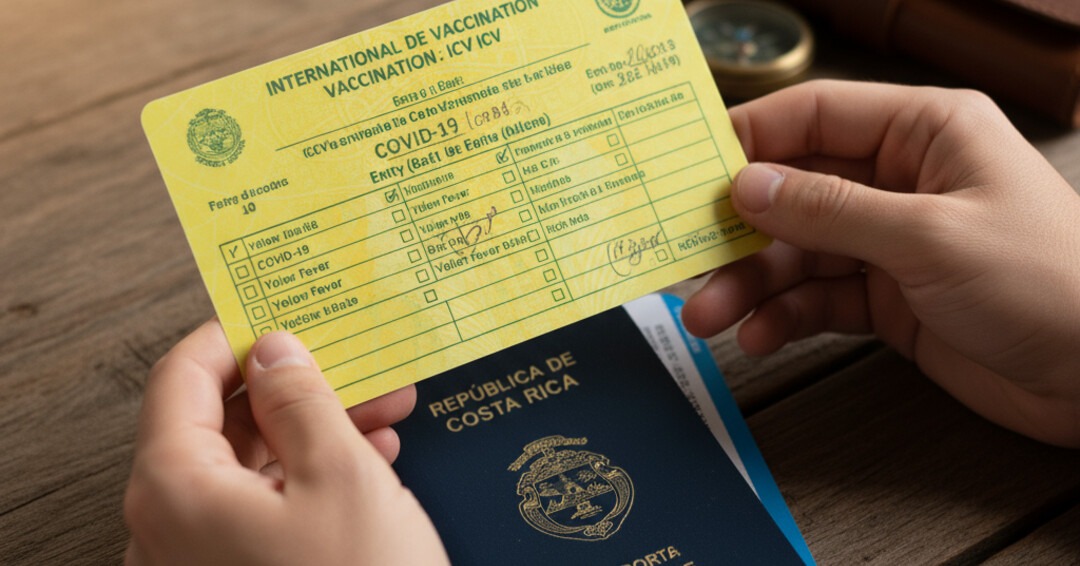
You are required to present an International Certificate of Vaccination or Prophylaxis (ICVP), commonly known as the “yellow card,” if you are arriving from a country that the WHO has designated as having a risk of yellow fever transmission. This applies even if you only had a brief layover in a high-risk country.
Key High-Risk Countries Include:
- South America: Bolivia, Brazil, Colombia, Ecuador, French Guiana, Guyana, Paraguay, Peru, Suriname, and Venezuela.
- Africa: Angola, Benin, Burkina Faso, Burundi, Cameroon, Central African Republic, Chad, Congo, Côte d’Ivoire, Democratic Republic of Congo, Equatorial Guinea, Ethiopia, Gabon, Gambia, Ghana, Guinea, Guinea-Bissau, Kenya, Liberia, Mali, Mauritania, Niger, Nigeria, Senegal, Sierra Leone, South Sudan, Sudan, Togo, and Uganda.
Important Note: This list is subject to change based on global health conditions. Always verify the latest requirements with the official Costa Rican Immigration website (Dirección General de Migración y Extranjería) before you travel.
When to Get Vaccinated
The yellow fever vaccine must be administered at least 10 days before your planned arrival in Costa Rica. A single dose of the vaccine provides lifelong protection, and the ICVP becomes valid 10 days after vaccination.
Exemptions from the Requirement
Certain individuals may be exempt from the vaccination requirement, even if traveling from a high-risk country. These exemptions typically require a medical letter of contraindication and are granted for reasons such as:
- Individuals over 60 years of age.
- Pregnant or breastfeeding women.
- People with a history of thymus gland disorders.
- Individuals with severe allergies to eggs.
- People with compromised immune systems (e.g., HIV/AIDS, cancer patients).
These exemptions must be carefully reviewed and approved by immigration officials upon arrival.
Frequently Asked Questions (FAQ)

Is there yellow fever in Costa Rica?
No, there is no local transmission of yellow fever in Costa Rica. The country is considered free of the disease. The recent case was imported by a traveler who was infected in another country.
Do I need a yellow fever vaccine to travel to Costa Rica?
You only need a yellow fever vaccine if you are arriving from a country with a risk of yellow fever transmission, as designated by the World Health Organization. This includes many countries in South America and Africa.
How long is the yellow fever vaccine valid for?
A single dose of the yellow fever vaccine provides lifelong protection. Your International Certificate of Vaccination (ICVP) is valid for life, starting 10 days after you receive the shot.
What happens if I arrive from a high-risk country without a vaccination certificate?
Costa Rican immigration authorities may deny you entry into the country. It is a mandatory requirement, and airlines will likely check for the certificate before allowing you to board your flight.
I am a U.S. citizen flying directly from the United States. Do I need the vaccine?
No. If you are flying directly from the United States, Canada, Europe, or any other country not on the high-risk list, you do not need a yellow fever vaccination to enter Costa Rica.
What other vaccines are recommended for travel to Costa Rica?
The CDC and WHO recommend that most travelers be up-to-date on routine vaccinations. Depending on your activities, other recommended vaccines may include Hepatitis A, Typhoid, and Hepatitis B. Consult your doctor or a travel clinic for personalized advice.
Where can I get the yellow fever vaccine?
The yellow fever vaccine is only available at designated vaccination centers. You can find a certified clinic through the CDC or your local public health department. It is not typically available at a regular doctor’s office.
Does this recent case change anything for residents or tourists in Costa Rica?
No. This isolated, imported case does not change the health risk within Costa Rica. It serves as a reminder of the importance of the country’s strict vaccination and immigration policies. Continue to practice standard mosquito bite prevention measures, as mosquitoes can transmit other diseases like dengue and Zika.
Travel with Confidence: Stay Informed
Costa Rica’s robust public health system and proactive immigration policies are designed to keep the country safe for both residents and visitors. The recent yellow fever case, while notable, underscores the effectiveness of these measures.
At CRIE, our expertise lies in helping you navigate the complexities of Costa Rican residency and immigration. While we are not medical experts, we are committed to providing you with the accurate, up-to-date information you need to make informed decisions. For any questions regarding your residency application or travel requirements, we are here to help.
For official immigration information, always consult the Costa Rican Immigration website. For medical advice, please contact your healthcare provider.
- Email: info@crie.cr
- Website: crie.cr
References:
[1] World Health Organization. (2025). Yellow Fever. https://www.who.int/news-room/fact-sheets/detail/yellow-fever
[2] Dirección General de Migración y Extranjería. (2025). Requisitos de Ingreso. https://migracion.go.cr/
Disclaimer: The images in this article were generated by an artificial intelligence (AI) program. While they are designed to be illustrative, they are not actual photographs of specific locations or individuals and do not feature CRIE staff or facilities.
Article by Glenn Tellier (Founder of CRIE and Grupo Gap)
Don't wait, contact us right now!
Call or WhatsApp Costa Rica +506 8373 2085 or +506 8706 3888
Call USA/Canada +1 305-906-6784