
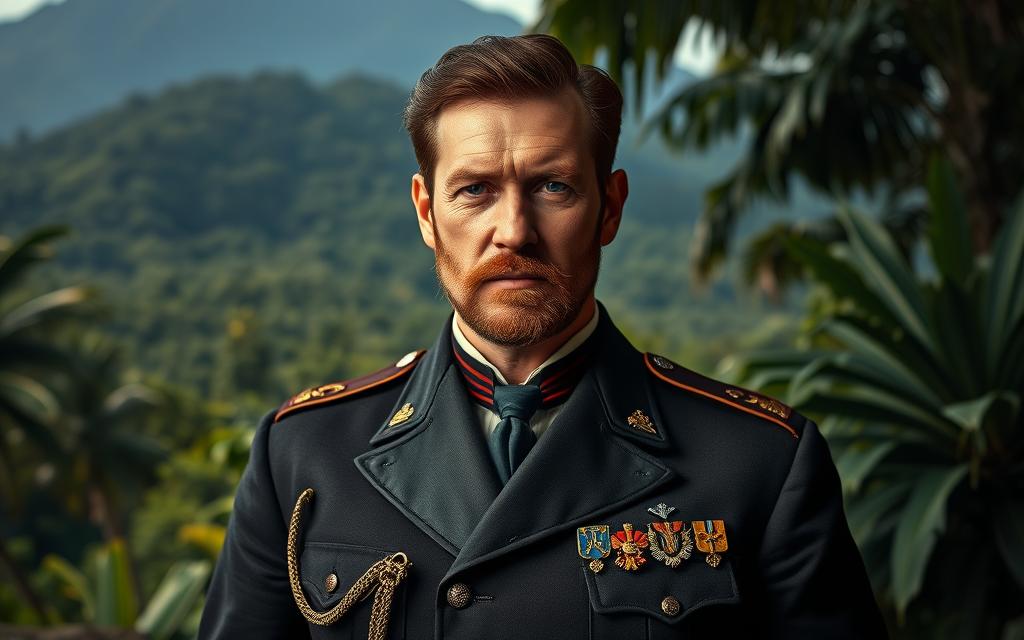
Could an ambitious American adventurer truly reshape the destiny of an entire nation? The story of William Walker, the American filibuster, starts here. His expedition to Nicaragua and invasion of Costa Rica changed Central American history forever.
William Walker was a key figure in 19th-century American expansionism. Born in Nashville, Tennessee, he was part of a group of adventurers driven by Manifest Destiny. His military campaigns in Central America challenged international boundaries and caused big geopolitical tensions.
Walker’s journey to Nicaragua was more than just a military adventure. He went from being a journalist and lawyer to a controversial military leader. His goal was to conquer territory, which led to a strong response from Central American nations to protect their freedom.
Walker’s attempts to control Nicaragua and threaten Costa Rica showed the complex tensions of his time. By trying to change political structures, he sparked a strong resistance. This resistance shaped national identities and the idea of territorial integrity in the region.
To understand Walker’s actions, we need to look at the mid-19th century American expansionist ideologies. His story is a key part of international relations. It shows how individual ambition clashed with national sovereignty.
Early Life and Education of William Walker
William Walker was born in Nashville, Tennessee on May 8, 1824. He was a remarkable American adventurer in the 1850s. From a young age, Walker showed incredible intelligence.
Walker was a young academic star. He graduated from the University of Nashville at 14, leading his class. This early success paved the way for his varied career.
Academic and Professional Foundations
Walker’s career was truly remarkable. By 25, he had earned degrees in medicine and law. His achievements included:
- Medical degree from the University of Pennsylvania in 1843
- Legal training to complement his medical skills
- Exceptional intellectual versatility
Journalism and Early Career
Walker then turned to journalism, editing the Daily Crescent in New Orleans. This period helped him develop his adventurous spirit. It set the stage for his conquest of Lower California.
Pioneering Spirit
Walker’s biography shows a man driven by ambition. His early work in medicine, law, and journalism prepared him for his famous expeditions. These made him a key figure in Central American history.
The Rise of American Filibustering in Central America
In the mid-19th century, American expansionism grew fast, changing Central America. Manifest destiny led people like William Walker to dream big about land. These adventurers in Latin America were a mix of private soldiers and conquerors.
The idea of U.S. involvement in Latin America became strong. Americans thought they had the right to grow their nation’s reach. This idea led to many attempts to take over weak Central American countries.
- Filibusters operated as quasi-military groups
- They sought territorial conquest without official government support
- Walker represented the most infamous of these adventurers
Walker and others saw Central America as a place to expand. The California Gold Rush made them want to control key trade paths, like in Nicaragua. Walker’s actions showed the bold side of 19th-century American power.
These private wars showed America’s big dreams. Filibusters like Walker believed they were making things better by force. Their actions led to big fights and changed the politics of the region.
Who is William Walker and What Did He Do in Costa Rica
William Walker was a key figure in Central American history. He showed the bold side of American military actions in the mid-1800s. His bold moves changed the political scene in many countries, with Costa Rica feeling the impact.
Walker’s Military Expeditions
In 1855, Walker started his invasion of Nicaragua with a small but fierce group of mercenaries. He aimed to conquer more than just land. His military plans included:
- Recruiting about 300 American “colonists” for his army
- Using Nicaragua’s political chaos to his advantage
- Becoming Nicaragua’s president in 1856
- Trying to take over more areas
Territorial Ambitions in Central America
Walker wanted to spread American influence in Central America. He saw it as a chance to grow American power. He focused on key spots and areas without strong leaders to take control.
Impact on Costa Rican Society
Walker’s actions changed Costa Rica a lot. He upset the local government and power balance. This led to a strong reaction from Central America. The Costa Rican army, led by President Juan Rafael Mora, was key in stopping Walker’s plans.
Walker’s Invasion of Nicaragua and Path to Power

William Walker started his conquest of Nicaragua in May 1855. He arrived with 57 men, known as his “Immortals”. The country was in the middle of a civil war between the Legitimist and Democratic Parties.
Walker joined the Democratic Party, aiming for political power. His military skills and ambition changed Nicaragua’s politics. He used local conflicts to become a key player in the region’s politics.
- Invaded Nicaragua with 57 men in May 1855
- Aligned with the Democratic Party
- Capitalizing on ongoing internal conflicts
Walker’s time as president showed his bold approach to politics in Latin America. He took control by using local divisions to his benefit. By 1856, he was elected president, setting up a government that fit his vision.
Walker’s goals went beyond just ruling Nicaragua. He wanted to change the country to fit his ideas. He planned to expand and create new territories under his rule.
Costa Rica’s Response to Walker’s Threat
The nineteenth century military campaigns against William Walker were key to Costa Rica’s identity. Walker wanted to set up a slave colony in Central America. This led to quick and strong action from Costa Rica’s leaders.
President Mora’s Call to Arms
President Juan Rafael Mora saw Walker’s plans as a big threat. He knew the fight against Walker was more than a local issue. It was a fight for the whole region’s freedom.
Formation of the National Campaign
Costa Rica acted fast and smart. They quickly gathered their forces to face Walker. Their plan included:
- Rapid troop recruitment
- Strategic military planning
- Coordinating with neighboring Central American countries
- Developing a comprehensive defensive strategy
Military Preparations
Costa Rican troops worked hard to get ready for battle. They knew stopping Walker was crucial for the region’s stability. They trained, got new weapons, and planned their strategy carefully.
The people of Costa Rica were determined to defend their freedom. Their efforts would be crucial in the battles against Walker’s army.
The Battle of Santa Rosa and its Significance

The Battle of Santa Rosa was a key moment in Costa Rica’s history. It happened on March 20, 1856, when Costa Rican forces faced off against William Walker’s army. This battle, lasting just 18 minutes, showed the bravery of Costa Rican troops against the American filibuster in Costa Rica.
Here are some key facts about the battle:
- Walker’s forces had about 300 soldiers.
- The Costa Rican army had over 10,000 soldiers.
- Costa Rica won the battle decisively.
President Juan Rafael Mora Porras led the defense against Walker’s plans. The Battle of Santa Rosa was more than just a fight. It was a symbol of Costa Rica’s fight against foreign control.
The victory at Santa Rosa weakened Walker’s power in Central America. Even so, Walker tried to gather more troops. He eventually had a new army of 3,000 soldiers. The battle showed Costa Rica’s strength and courage against outside threats.
The Legendary Second Battle of Rivas
The Second Battle of Rivas was a key moment in the 19th century. It was a time when American mercenaries invaded Central America. William Walker’s campaign in Nicaragua reached a turning point that changed history.
This battle was more than just a fight. It showed the strength of Costa Rican and Nicaraguan people against foreign threats.
The battle was crucial strategically. Costa Rican soldiers, led by brave men, faced Walker’s troops. About 26 mercenaries were killed, showing the strong resistance.
Juan Santamaria’s Heroic Sacrifice
Juan Santamaria was a hero of the battle. His bravery is remembered as a symbol of Costa Rican courage. His actions during the battle of Rivas showed the nation’s determination to defend itself.
Strategic Importance of the Victory
- Stopped Walker’s expansion in Nicaragua
- Prevented further American mercenary intrusions
- Protected regional sovereignty
Legacy of the Battle
The Second Battle of Rivas was a defining moment for Costa Rica. It showed the country’s readiness to defend its land against threats. The victory helped defeat Walker and remove him from Central America.
By 1856, the battle had stopped Walker’s plans to take over Nicaragua. It was a victory that boosted national pride and showed the power of resistance.
Central American Alliance Against Walker
William Walker’s expansionist dreams sparked a huge response in Central America. The 1850s filibuster expeditions brought nations together against a common enemy. This made Walker’s military plans a key moment for unity across the continent.

Walker’s failure in Nicaragua led to a strong alliance among Central American countries. This alliance was a powerful force against the threat of manifest destiny. It aimed to protect their freedom and sovereignty.
- Costa Rica led the initial military resistance
- Nicaragua provided critical strategic support
- Other Central American nations joined the coalition
- Unified military operations were coordinated
The effort to push Walker out showed a growing sense of regional identity. By working together, these nations stood up against foreign interference. They set a precedent for protecting each other.
The alliance’s victory was a key moment in Central American history. It was more than a win in battle. It was a strong statement of independence and the right to control their own lands against outside threats.
Conclusion
William Walker’s story is a key part of 19th-century American imperialism. His adventures in Central America showed the dark side of manifest destiny. This concept led to the harm of many lands.
Walker’s battles in Nicaragua and Costa Rica changed the area a lot. He wanted to expand America’s territory, but his plans failed. His execution in Honduras ended his dream of an American empire in Central America.
Walker’s efforts to change Central America’s politics had a big impact. They helped countries like Costa Rica find their identity. Heroes like Juan Santamaría showed the power of standing together against outsiders.
Walker’s tale teaches us about the clash of big dreams and local will. His failure showed that people want to control their own destiny. This lesson has shaped international relations for many years.
Article by Glenn Tellier (Founder of CRIE and Grupo Gap)
Don't wait, contact us right now!
Call or WhatsApp Costa Rica +506 8373 2085 or +506 8706 3888
Call USA/Canada +1 305-906-6784