
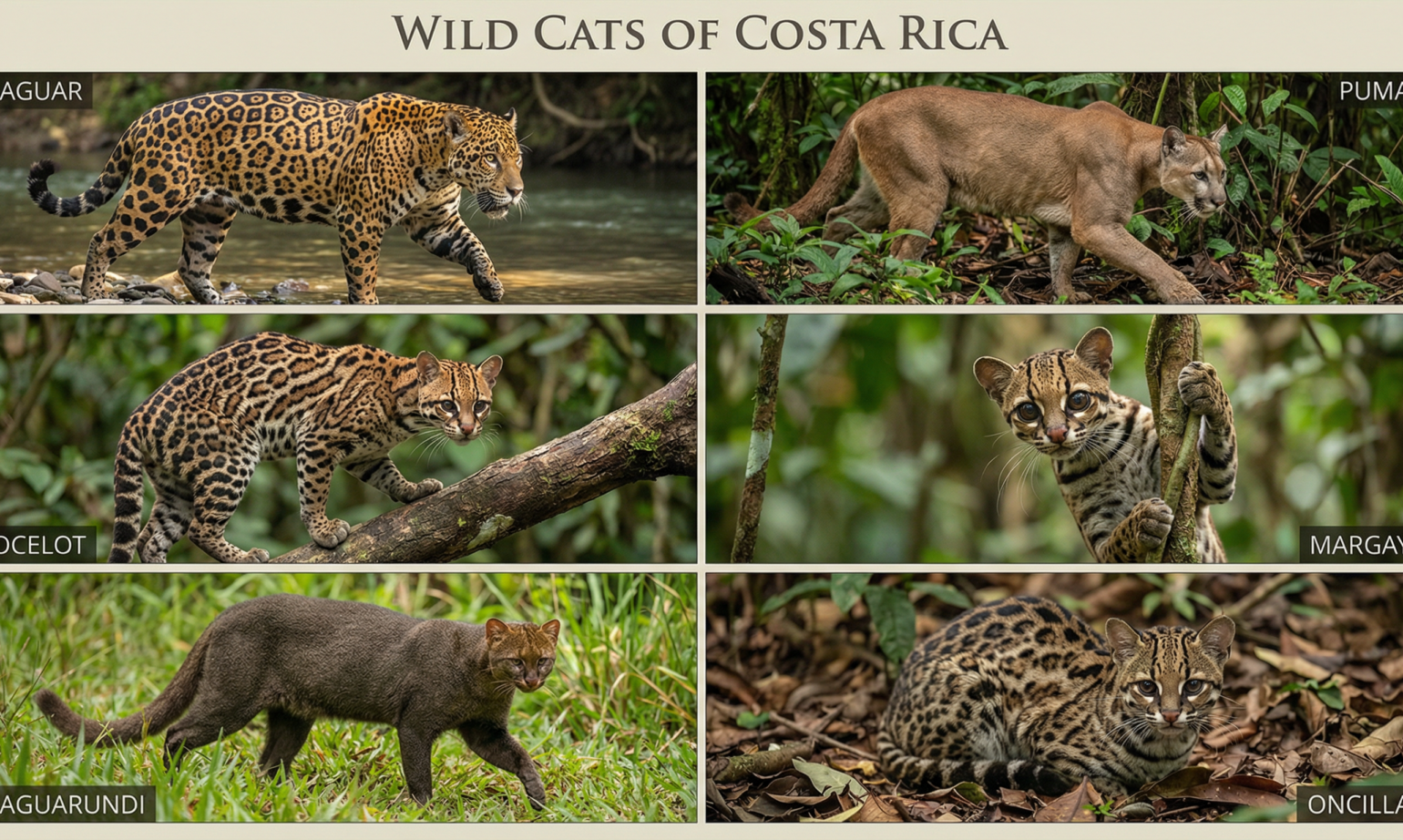
Costa Rica, a nation celebrated for its extraordinary biodiversity, is a sanctuary for some of the most elusive and captivating creatures on the planet: its six species of wild cats. From the formidable Jaguar to the diminutive Oncilla, these felines are integral to the country’s rich ecological tapestry. While the dream of spotting one in the wild draws nature enthusiasts from across the globe, understanding these animals is the first step toward appreciating and protecting them.
This guide delves into the world of Costa Rica’s wild cats, offering insights into their habitats, behaviors, and the conservation efforts dedicated to their survival. Whether you are planning a trip or considering a move to this vibrant country with the help of CRIE, this information provides a window into the wild heart of Costa Rica.
The Six Feline Species Roaming Costa Rica
Costa Rica is home to a diverse range of felines, each adapted to its unique niche within the ecosystem. These six species represent a significant portion of the Americas’ wild cat population and are a testament to the country’s conservation success.
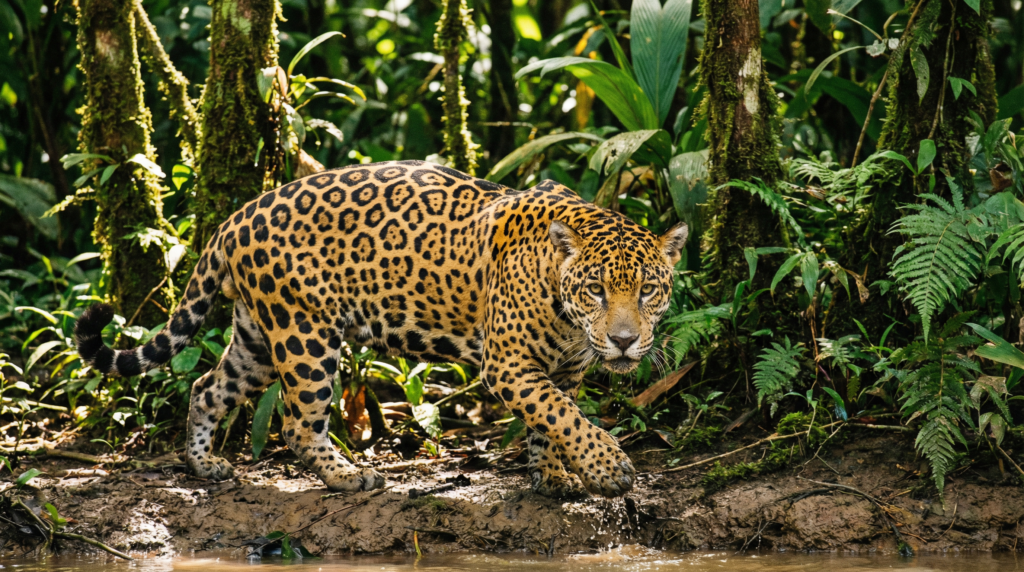
1. The Jaguar (Panthera onca)
The Jaguar is the largest and most powerful cat in the Americas. As an apex predator, it plays a crucial role in maintaining the health of its ecosystem. Jaguars are incredibly elusive, primarily active at night, and require vast territories to roam. Their primary stronghold in Costa Rica is the remote and dense Corcovado National Park on the Osa Peninsula.
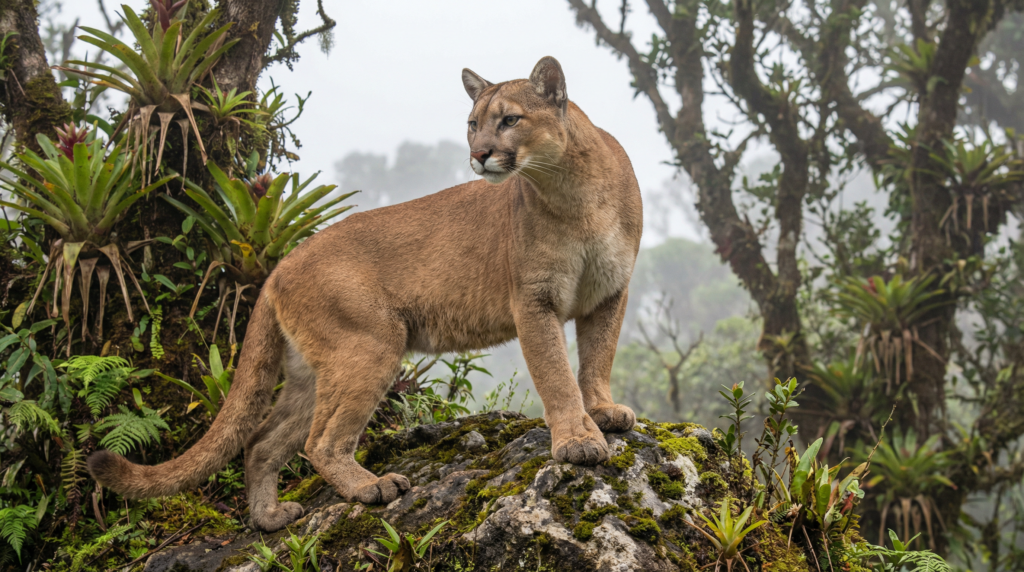
2. The Puma (Puma concolor)
Also known as the mountain lion, the Puma is the second-largest cat in Costa Rica. It is highly adaptable, found in a variety of habitats from cloud forests to dry forests. Pumas are solitary and nocturnal, and their diet consists mainly of medium-sized mammals like coatis and agoutis.
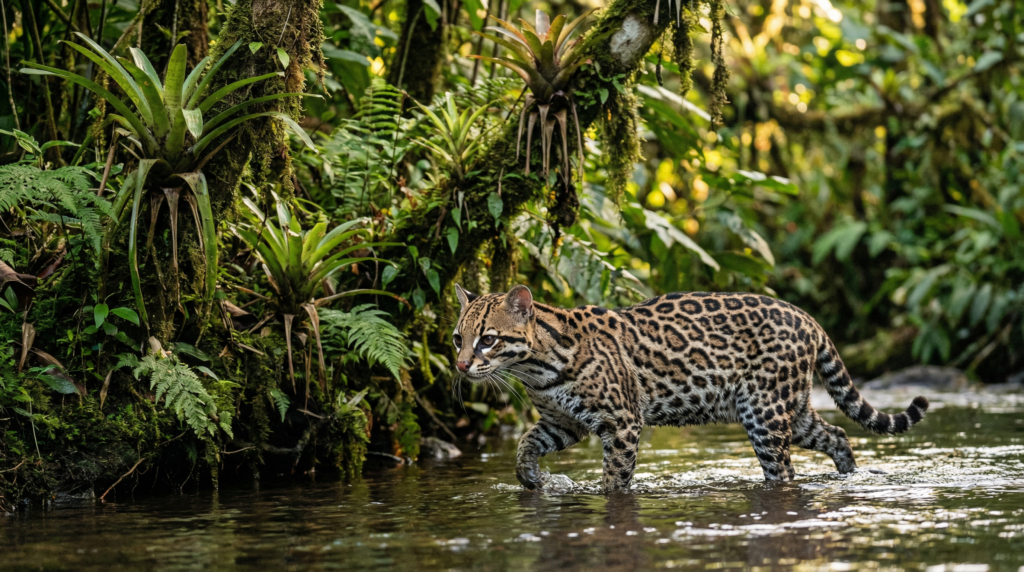
3. The Ocelot (Leopardus pardalis)
The Ocelot is the largest of Costa Rica’s small spotted cats. With a beautifully marked coat that provides excellent camouflage, it is a master of stealth. Ocelots are primarily nocturnal and are skilled hunters, preying on small mammals, birds, and reptiles.
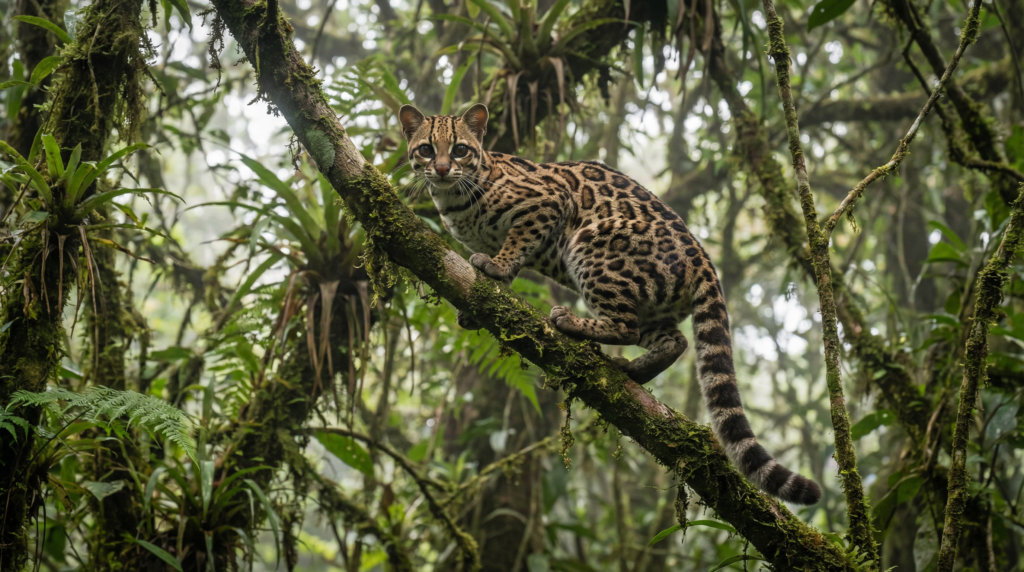
4. The Margay (Leopardus wiedii)
The Margay is a small, spotted cat that is exceptionally adapted for life in the trees. It has unique ankle joints that can rotate 180 degrees, allowing it to climb down trees head-first. This arboreal marvel is a rare sight, preferring the dense canopies of cloud forests.
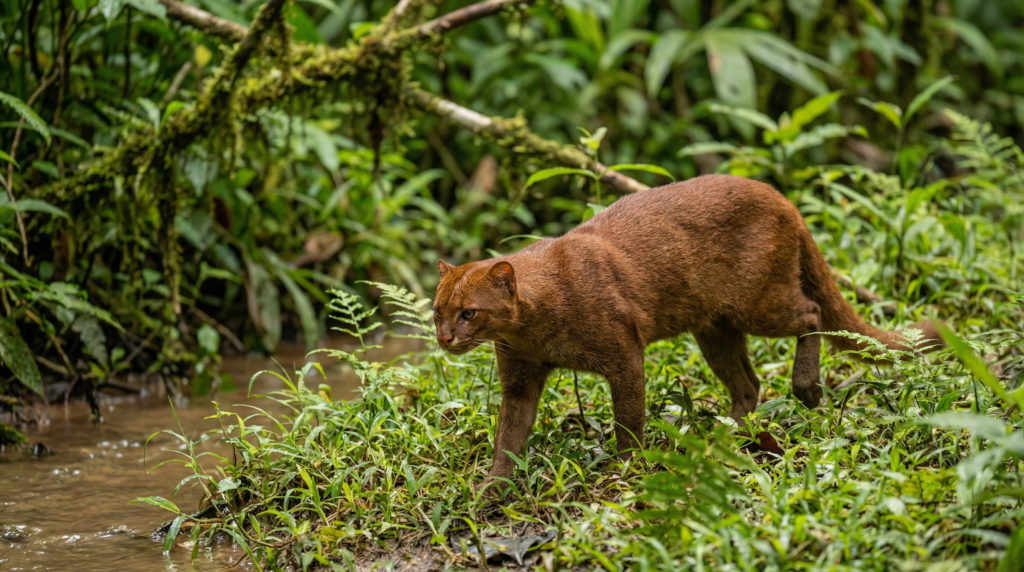
5. The Jaguarundi (Herpailurus yagouaroundi)
The Jaguarundi is unique among Costa Rican cats for its weasel-like appearance and diurnal activity. It is more likely to be seen during the day than other felines. It comes in two color phases—dark grey and reddish-brown—and is highly adaptable to various environments.
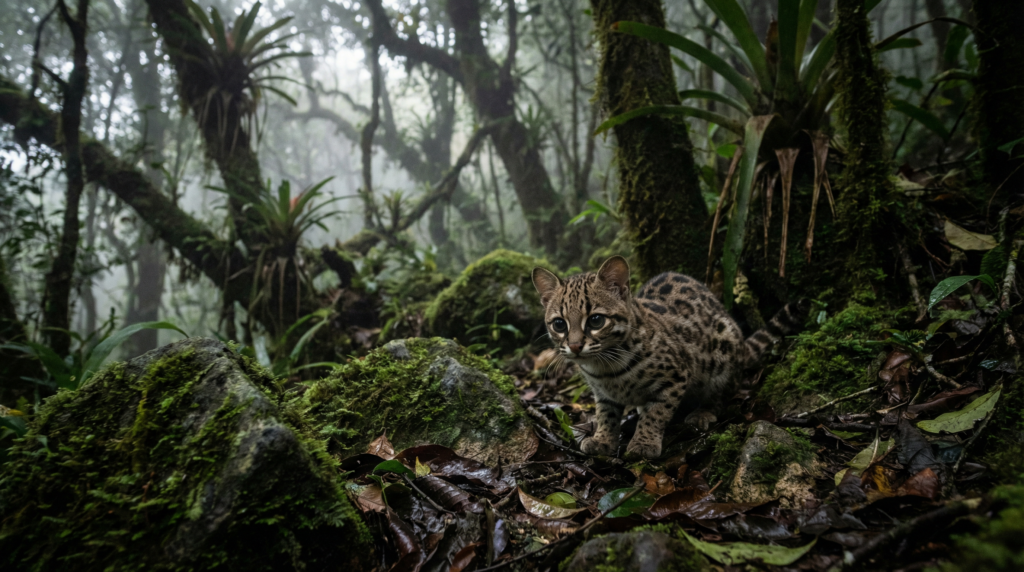
6. The Oncilla (Leopardus tigrinus)
The Oncilla, or Tigrillo, is the smallest and most mysterious of Costa Rica’s wild cats. It is incredibly shy and nocturnal, inhabiting high-elevation cloud forests. Due to its secretive nature, it is the least studied of all the country’s felines.
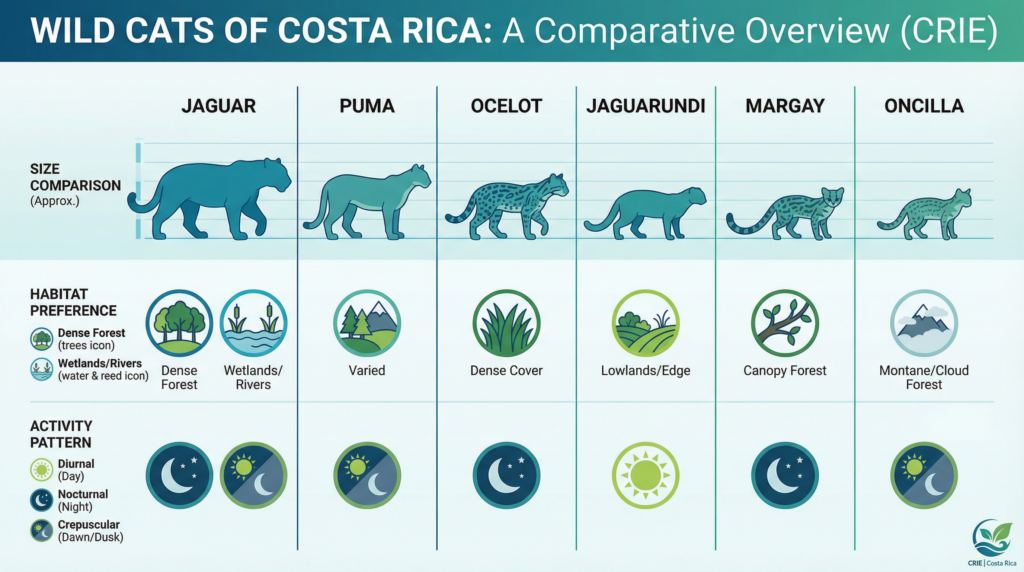
Comparing Costa Rica’s Wild Cats
To better understand these magnificent animals, a side-by-side comparison highlights their key differences in size, habitat, and behavior.
| Feature | Jaguar | Puma | Ocelot | Margay | Jaguarundi | Oncilla |
|---|---|---|---|---|---|---|
| Avg. Weight | 56-96 kg | 53-100 kg | 8-18 kg | 2.6-4 kg | 3-7 kg | 1.5-3 kg |
| Primary Habitat | Dense Rainforests | Diverse (Forests, Mountains) | Lowland Forests | Cloud Forests (Arboreal) | Varied (Forests, Scrub) | High-Elevation Forests |
| Activity Pattern | Nocturnal | Nocturnal | Nocturnal | Nocturnal | Diurnal | Nocturnal |
| Conservation | Near Threatened | Least Concern | Least Concern | Near Threatened | Least Concern | Data Deficient |
Table data is approximate and can vary by individual and region.
Conservation: Protecting a National Treasure
Despite Costa Rica’s progressive environmental policies, which protect over 27% of its land, its wild cats face significant threats. Deforestation, human-wildlife conflict, and illegal poaching remain serious challenges. Organizations like Panthera and local conservation groups are working tirelessly to protect these animals through habitat preservation, community education, and anti-poaching initiatives.
Ecotourism plays a vital role in these efforts. When you choose responsible wildlife tours, you are directly contributing to the conservation of these magnificent species. For those looking to make a more permanent contribution, investing in sustainable projects or real estate through companies like GAP Investments can also support the preservation of Costa Rica’s natural heritage.
Where to See Wild Cats in Costa Rica
While sightings are never guaranteed, certain national parks offer the best chances of spotting these elusive felines:
- Corcovado National Park: The best place for a potential Jaguar or Puma sighting.
- Monteverde Cloud Forest Reserve: A prime habitat for the Margay and Oncilla.
- Arenal Volcano National Park: Known for Puma and Ocelot activity.
- Santa Rosa National Park: A critical habitat for Jaguars and Pumas in the dry forest.
Conclusion: A Symbol of Wild Costa Rica
The wild cats of Costa Rica are more than just beautiful animals; they are a symbol of the country’s untamed spirit and a barometer for the health of its ecosystems. Their continued presence is a testament to the nation’s commitment to conservation. By supporting these efforts, we can help ensure that these magnificent predators continue to roam the jungles and mountains of Costa Rica for generations to come.

FAQ Section
How many species of wild cats are in Costa Rica?
There are six species of wild cats in Costa Rica: the Jaguar, Puma, Ocelot, Margay, Jaguarundi, and Oncilla.
What is the largest wildcat in Costa Rica?
The Jaguar (Panthera onca) is the largest wild cat in Costa Rica and the third largest in the world.
Is it safe to hike in areas with wild cats?
Yes, it is generally safe. Wild cats in Costa Rica are extremely elusive and avoid human contact. Attacks on humans are virtually unheard of. Always follow park rules and stay on designated trails.
Which national park is best for seeing wild cats?
Corcovado National Park on the Osa Peninsula offers the highest probability of spotting wild cats, particularly Jaguars and Pumas, due to its remote location and high density of wildlife.
Are Costa Rica’s wild cats endangered?
Conservation statuses vary. The Jaguar and Margay are listed as Near Threatened, while the Puma and Ocelot are of Least Concern. The Oncilla is considered Data Deficient. All face threats from habitat loss.
How can I contribute to wildcat conservation in Costa Rica?
You can contribute by supporting reputable conservation organizations, choosing certified eco-friendly tours, and spreading awareness about the importance of protecting these animals and their habitats.
Costa Rica Immigration Experts (CRIE) Disclaimer:
Costa Rica Immigration Experts (CRIE) specializes exclusively in immigration and residency matters. This article is for general informational purposes only and does not constitute expert advice on wildlife biology or conservation.
AI Image Disclaimer:
Images in this article are AI-generated for illustrative purposes and reflect realistic scenarios in Costa Rica.
Article by Glenn Tellier (Founder of CRIE and Grupo Gap)
Don't wait, contact us right now!
Call or WhatsApp Costa Rica +506 8373 2085 or +506 8706 3888
Call USA/Canada +1 305-906-6784