

This short guide helps a U.S. sender choose between couriers, ocean freight, and forwarders when shipping to costa rica. It explains practical differences, timelines, and common pitfalls so readers set realistic expectations.
Couriers often deliver in days for express service, while ocean freight can take weeks. Customs inspections and paperwork quality change delivery time and final handling, so fast isn’t always smooth.
The guide is written for someone sending a package to family, forwarding purchases, or shipping goods to San José or coastal towns. Key decision points include item type, urban versus rural destination, tracking needs, and how much customs work you accept.
Readers will learn to avoid vague packing lists, mismatched declared values, and banned items. It also offers safety tips for humidity, theft prevention, and steps if a shipment is held or missing.
For residency questions tied to moves, keep shipping separate from immigration choices and see this resource at what-shipping-companies-ship-to-costa-rica.
Shipping to Costa Rica from the United States: the real-world options (courier, freight, forwarder)
Choosing the right shipping lane from the U.S. to Costa Rica starts with the size and urgency of the items.

Express courier delivery for packages: when speed and tracking matter
Use express courier service when the package is small, time-sensitive, or high-value. Typical express transit runs about 3–7 business days, and tracking is usually end-to-end.
This is the go-to for documents, a replacement phone, or a small part that must arrive fast and intact.
Air cargo for larger shipments: how “freight” changes the paperwork and process
Air cargo handles heavier boxed shipments that don’t fit a standard courier label. The mindset shifts: you treat goods as freight, file more formal paperwork, and often work with a broker or forwarder.
Expect faster transit than ocean but more customs steps than courier services.
Ocean freight for bulky goods: when a container makes more sense than boxes
Ocean freight suits multiple cartons, furniture, or inventory. Transit can be slow—around 6–8 weeks in many cases—but it’s better for volume and bulky size.
Paperwork and customs procedures grow more complex as you move from courier to air to ocean freight, so plan for extra time and documentation help.
- If it fits in a box and you need it fast: choose courier.
- If it’s heavy but time-sensitive: consider air cargo and a forwarder.
- If it’s large, multiple pieces, or not urgent: ocean freight works best.
- Rural delivery often requires local directions or phone contact; pick a carrier used to those routes.
- Measure dimensions as carriers bill by size as much as weight.
| Method | Best for | Typical time | Notes |
|---|---|---|---|
| Express courier | Documents, small electronics, urgent parts | 3–7 days | Strong tracking, simpler paperwork |
| Air cargo | Heavier boxed shipments, time-sensitive bulk | Varies depending on route | Formal freight paperwork; brokers/common forwarders |
| Ocean freight | Furniture, multi-box moves, business inventory | About 6–8 weeks | Best for volume; customs and port handling add time |
Plan buffers for customs clearance and holiday delays. For step-by-step help when sending packages, see this guide on sending packages to Costa Rica.
What-shipping-companies-ship-to-costa-rica: carriers and services Americans commonly use
Deciding between a global courier, USPS, or a freight forwarder often comes down to size, speed, and support. Below are common paths U.S. senders use and how they differ in plain terms.
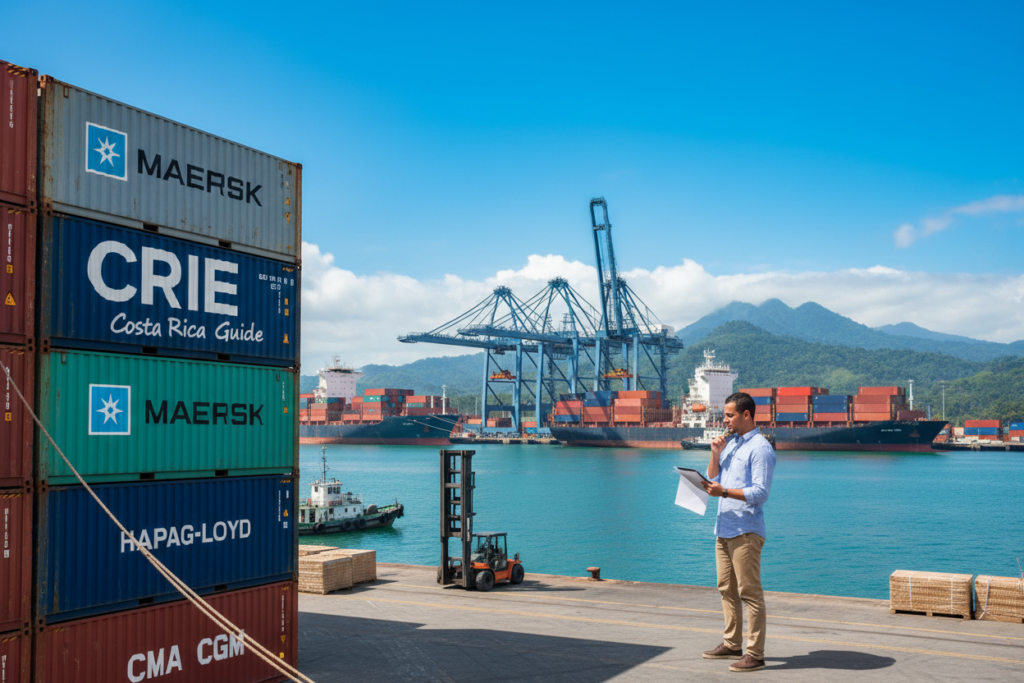
Global couriers: FedEx, DHL, UPS
FedEx, DHL, and UPS offer end-to-end tracking, faster transit, and clearer responsibility when something goes wrong. They work well for urgent documents and small electronics.
Practical tip: pick a service with strong tracking events and a reachable support line (FedEx: 1.800.GoFedEx). That matters when customs or exceptions occur.
USPS and handoff delivery
USPS can be economical for small packages. Expect a handoff to a local carrier in Costa Rica, and less-detailed tracking on the local leg.
Freight forwarders and consolidators
For pallets or multiple cartons use a forwarder. Latin American Cargo (LAC) focuses on Latin America and helps with language, customs, and inspections.
Quote-and-compare platforms (consolidators) let you compare rates and services without multiple accounts. Do this only after listing must-haves like tracking, pickup, and proof of delivery.
| Provider type | Best for | Key benefit |
|---|---|---|
| Global courier | Small urgent packages | Speed and tracking |
| USPS | Small, low-cost parcels | Economy option; local handoff |
| Forwarder | Pallets, multiple boxes | Handles freight paperwork |
How to choose a shipping company for Costa Rica (without getting surprised later)
Start your choice by mapping the final delivery spot and the local realities that affect it.
Start with destination and delivery reality
An urban address in San José often has a formal street and building name. That makes delivery smoother and faster.
Rural destinations may need directions, a landmark, or a phone call. Choose a carrier used to those routes and confirm contact details.
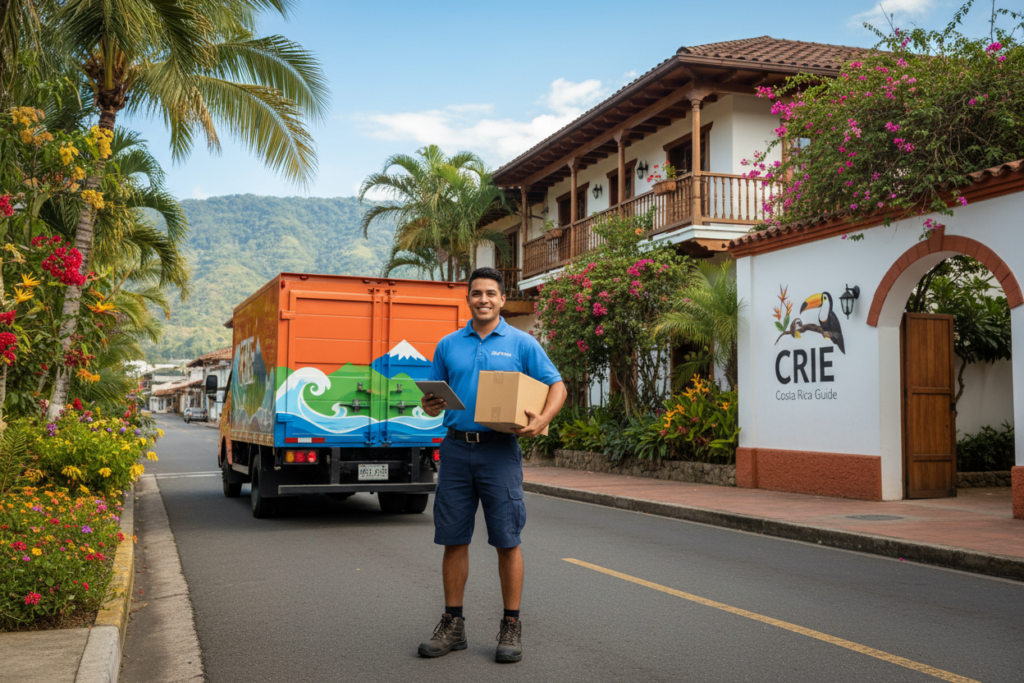
Match the method to the item
Documents and small electronics usually suit express courier service. Household goods and furniture typically need freight or a forwarder.
Business shipments with many cartons often require a forwarder who handles paperwork and port processes.
Customer service, tracking, and proof of delivery
Good customer service matters more than the brand when customs clearance questions pop up. A responsive agent can supply corrected invoices or answer queries fast.
Look for tracking that shows export, arrival, customs processing, and last-mile handoff. Proof of delivery should include name, date/time, and delivery location.
- Collect recipient full name, local phone, province/canton/district, and ID if carrier requests it.
- Don’t ship mixed household boxes without a detailed packing list.
- Pre-booking checklist: confirm restrictions, documentation needs, who pays duties, and who can act during clearance.
| Option | Best for | Key benefit |
|---|---|---|
| Express courier | Documents, small electronics | Fast transit and clear tracking |
| Air/sea forwarder | Household goods, pallets | Handles customs and complex paperwork |
| Local delivery partners | Rural drops, last-mile contact | Local knowledge and phone-based delivery |
Customs clearance in Costa Rica: documents, inspections, and common delay triggers
When a shipment reaches Costa Rica, customs decides the identity, value, and admissibility of every item. Accuracy wins: clear paperwork speeds processing and vague forms invite inspections and delays.
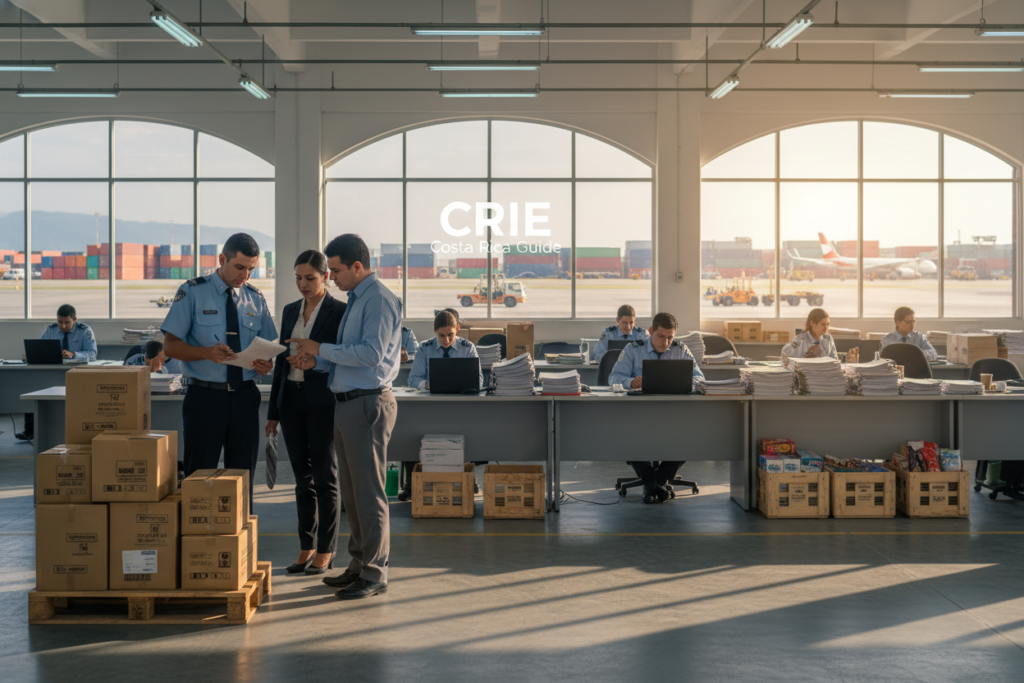
Paperwork most shipments need
Typical freight documents include a commercial invoice, packing list, and an airway bill or bill of lading. Add insurance certificates or a certificate of origin when requested.
Why the packing list must be specific
Never use “miscellaneous.” Itemize contents like “men’s cotton T-shirts (new), 3 units” or “LED monitor, serial #ABCDE.” Specifics cut the chance of a hold.
Declared value, duties, and permits
Duties and taxes are usually assessed from the declared value. Weak or missing receipts let customs re-evaluate value. Some goods—cosmetics, medical devices, certain chemicals, and meat—may need permits or prior authorization and can stall clearance.
| Document | Purpose | Example |
|---|---|---|
| Commercial invoice | Shows seller, buyer, and declared value | Online order receipt or seller invoice |
| Packing list | Details items, quantities, and serials | “Kitchen utensils (stainless steel), 5 units” |
| Airway bill / Bill of lading | Transport record for air or sea freight | Carrier-provided tracking and manifest |
Courier parcels still face customs, but ocean and air freight often trigger more formal review. Major entry points—SJO for air and Caldera, Limón, or Moín for sea—can affect handling and time in days.
Restricted and prohibited items to avoid shipping to Costa Rica
Knowing which goods trigger holds helps senders prevent long customs delays. This short section lists practical rules and examples so shipments clear faster.
Commonly prohibited examples
Freight providers commonly block used clothing and used shoes. Used tires and firearms are also listed as prohibited by many carriers.
Controlled categories that can trigger holds
Pharmaceutical-type items, certain foods (including meat), and some chemicals may need permits. These controlled items often require prior authorization and detailed paperwork.
Do’s and don’ts for gifts, personal effects, and online shopping
Do keep gifts new and clearly described, for example “new baby clothes” or “sealed coffee grinder.” Avoid mixed “grab-bag” boxes that list vague contents.
Do forward online shopping with matching invoices and accurate declared contents. Don’t under-describe electronics or branded goods on the paperwork.
For personal effects, inventory belongings clearly. Don’t hide regulated or used items in household boxes hoping they pass.
If a questionable package is already en route, contact the carrier or forwarder right away. Be ready with receipts, serial numbers, and a clear explanation. Customs may request documents, return the goods, or require abandonment depending on regulations and duties or taxes owed.
| Category | Examples | Why customs flags it |
|---|---|---|
| Prohibited | Used clothing/shoes, used tires, firearms | Public health, safety, and import bans |
| Controlled | Pharmaceuticals, medical devices, certain foods, chemicals | Need permits or prior authorization |
| Sender tips | New gifts, clear invoices, itemized packing list | Fewer holds, faster delivery, lower chance of extra duties |
Packaging and safety tips for shipping packages to Costa Rica
A well-packed box can survive heat, humidity, and many handoffs on its way to Costa Rica.
Assume tropical heat and multiple touches. Use strong double-wall boxes and heavy-duty tape. For items that can absorb moisture, add a sealed plastic liner or zip bag before internal cushioning.
Packing for heat, humidity, and rough handling
Double-box fragile electronics and wrap each item in bubble wrap. Fill voids with crumpled paper or foam so objects do not shift.
Use silica gel packs for moisture-sensitive goods. Remove retail boxes if they reveal brand names that invite theft.
Labeling and contact details that improve delivery
Write the recipient’s full name, local phone number, and province/canton/district clearly on the outside. Match that wording to the commercial invoice and packing list.
Include a secondary contact and a short delivery note if the address is rural. Clear contact details speed customs clearance and last-mile delivery.
Reduce loss and theft risk
Choose plain boxes and minimal branding. Don’t label contents with high-value names like “laptop.” Seal seams with reinforced tape and avoid visible barcodes on removable retail packaging.
If a package is delayed, held, or missing
Collect key items first: tracking number, invoice, packing list, recipient ID, and photos of the packed box.
Contact the carrier or forwarder and provide those details. Notify the recipient and request their local ID or phone so customs or the last-mile carrier can be reached quickly.
Missing usually means a scan gap, customs hold, or address problem. Triage in that order: check tracking events, confirm customs status, then verify delivery details.
| Packing step | Why it matters | Quick tip |
|---|---|---|
| Double-box | Protects against crushing and rough handling | Leave 2–3 inches between boxes with padding |
| Moisture barrier | Prevents humidity damage in tropical transit | Use sealed plastic liners or zip bags |
| Plain external labeling | Reduces theft risk and keeps contents discreet | Avoid brand names and value statements |
Shipping with confidence: realistic timelines, quick checklist, and a note for people relocating
Before sealing the box, confirm realistic transit windows, paperwork, and that someone can answer calls during delivery.
Real timelines: express shipments typically arrive in 3–7 business days. Ocean freight usually runs about 6–8 weeks. Both can slip if customs needs more information at SJO, Caldera, Limón, or Moín.
Confidence formula: pick the right shipping options, itemize documents, pack for humidity and handling, and ensure the recipient can receive calls during local delivery.
Quick checklist (copy/paste): clear commercial invoice; itemized packing list; recipient full name + phone; plain external box; photos before shipping; keep tracking and ID handy.
FAQ snapshot: customs delays mean provide invoices fast; rural delivery may need phone contact; duties and taxes are usually charged to the recipient unless prepaid; avoid prohibited items and under-described goods.
Relocation note: plan freight early, keep inventories clean, and separate shipping choices from residency steps. For residency-category questions, CRIE can help. WhatsApp: +506-########, email: info@crie.cr, website: https://crie.cr/.
FAQ
What shipping options exist for sending packages from the United States to Costa Rica?
How long does delivery typically take by courier, air freight, and ocean freight?
Which major carriers commonly serve Costa Rica and how do their services differ?
What paperwork is required for shipping commercial goods to Costa Rica?
How are duties and taxes calculated on shipments arriving in Costa Rica?
What items are restricted or prohibited when shipping to Costa Rica?
Are gifts and personal effects treated differently for customs?
How should packages be packed for Costa Rica’s climate and handling conditions?
What labeling and contact information help ensure successful delivery?
How can a shipper reduce customs delays and inspections?
When are permits or prior authorizations required?
Which Costa Rican ports and airports handle most international shipments?
What should someone do if a package is delayed, held by customs, or goes missing?
How do freight forwarders and consolidators help reduce shipping costs?
What factors determine total shipping cost to Costa Rica?
How important is customer service and tracking when choosing a carrier?
Are there special considerations for household moves or business relocations?
Can shippers pre-pay duties and taxes to speed delivery?
How should shippers handle high-value electronics or sensitive equipment?
Article by Glenn Tellier (Founder of CRIE and Grupo Gap)
Don't wait, contact us right now!
Call or WhatsApp Costa Rica +506 8373 2085 or +506 8706 3888
Call USA/Canada +1 305-906-6784