
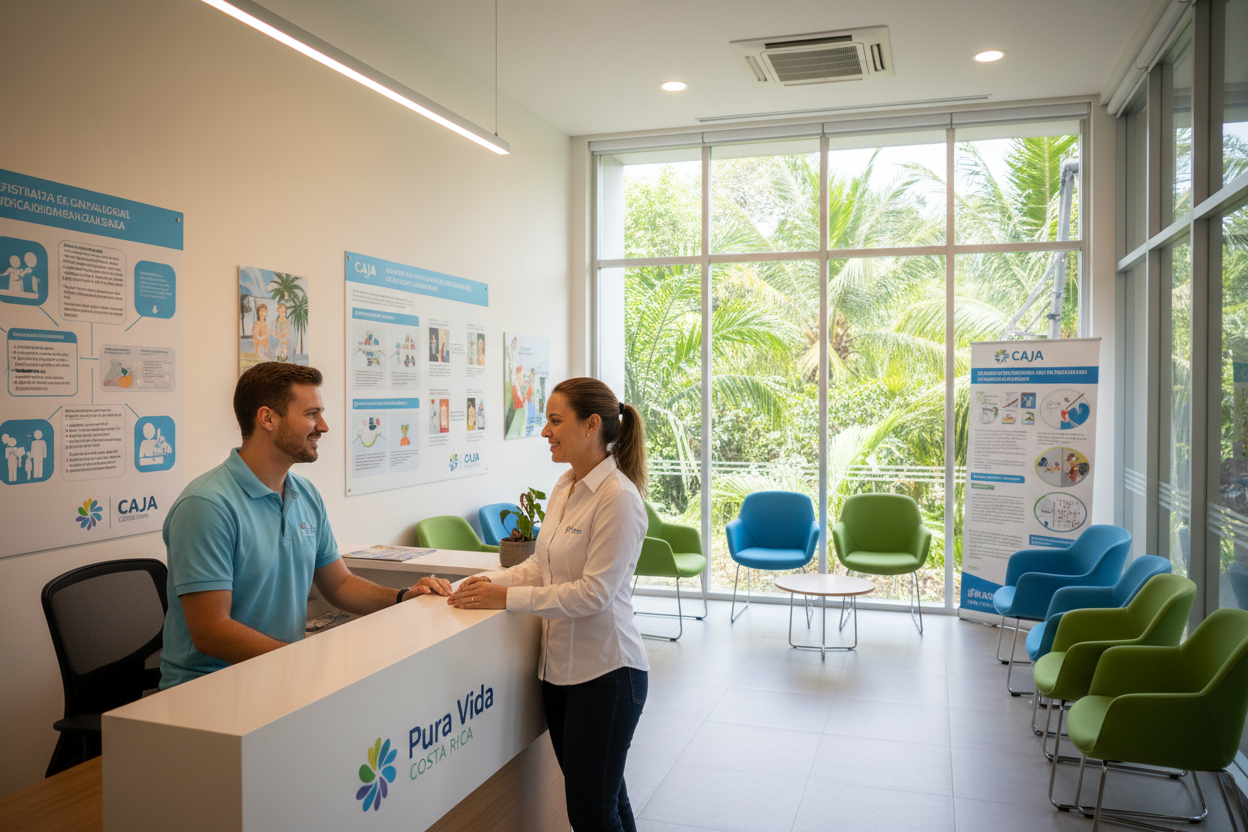
For expatriates planning long-term life abroad, grasping the CAJA system is a fundamental step. This mandatory social security program is a cornerstone of life here.
We guide you through this complex healthcare landscape. Our goal is to ensure you understand how it integrates into your new life.
The national health infrastructure is robust. The World Health Organization ranks it 36th globally—placing it above the United States and New Zealand.
Since 2010, joining CAJA has been mandatory for all permanent residents. This is required to maintain your legal status in the country.
Our team at CRIE provides expert insights into the residency process. We help navigate the requirements for a successful transition, focusing on the correct legal procedures.
By handling your application with precision, we ensure you are prepared for the mandatory enrollment that follows approval.
Understanding the CAJA System in Costa Rica
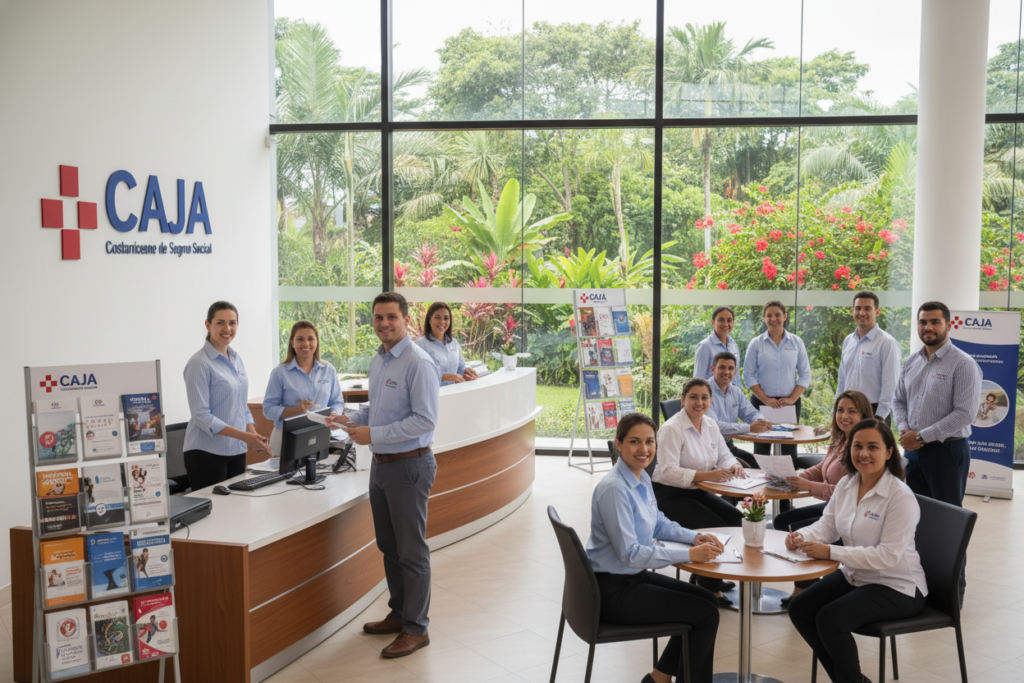
Established in 1941, the Caja Costarricense de Seguro Social forms the backbone of the nation’s social safety net. We help clients understand this mandatory framework, which is integral to life here.
Overview of CAJA (Caja Costarricense de Seguro Social)
Created by Law number 17 in November 1941, this institution survived the 1948 Civil War. It emerged stronger, committed to universal coverage for a growing population.
The government manages this national health system. It ensures citizens and legal residents have access to essential medical services throughout their life.
Key Benefits for Residents and Citizens
The program offers robust protections. Every child born in the country receives full medical services and a complete vaccination program until age 18.
Funding is based on income, promoting equitable access to care. We note the system faces challenges, including long waiting times for non-emergency services.
Despite this, it remains a vital pillar of social security. It provides a fundamental layer of healthcare coverage for the people.
Step-by-Step Guide to the CRIE Residency Process

We break down the residency application into manageable phases, helping you avoid common pitfalls that can delay approval. This structured approach provides clarity from initial qualification to final registration.
Who Qualifies and What Are the Requirements?
It’s crucial to start with the right category. We clarify that the Digital Nomad visa is not a path to residency or citizenship.
For long-term status, you must pursue a formal residency category. Our team guides you through the specific requirements for each, ensuring you meet the legal standards set by immigration authorities.
Timeline and Common Mistakes to Avoid
The residency process typically takes about 18 months from filing to final approval. Meticulous attention to detail is non-negotiable.
Common documentation errors are the primary cause of significant delays. Once approved, you must register with your nearest government regional office.
This step initiates your enrollment in the national social security system. For more detailed guidance, review our frequently asked questions.
Preparing Your Documents Before Arrival
Your journey to residency begins at home, with the meticulous gathering and certification of your personal documents. This foundational step cannot be rushed or done after you arrive.
Essential Paperwork: Apostilles and Translations
All foreign documents must carry an apostille from their country of origin. This international certification is mandatory for legal recognition by authorities here.
Official translations must be performed by a certified professional recognized by the Ministry of Foreign Affairs. Using unauthorized translators will invalidate your paperwork and delay your entire application.
We provide clients with a comprehensive checklist to navigate these requirements. Starting early avoids the stress of last-minute corrections and ensures a smooth transition. This is especially important for specific cases, such as applying for residency as a child of a Costa Rican, which has unique documentation needs.
Residency Categories and Income Thresholds Explained
Understanding the distinct income and investment thresholds for each residency category is essential for a successful application. The government sets clear financial benchmarks that determine your eligibility.
We help you navigate these requirements to choose the pathway that aligns with your situation. Selecting the correct category avoids delays and ensures compliance.
Pensionado (Pensionado): US$1,000+/Month Income
The Pensionado category is designed for retirees. You must prove a verified monthly pension income of at least US$1,000.
This stable income demonstrates your ability to support yourself without local employment. It’s a popular choice for those seeking a relaxed lifestyle.
Rentista (Rentista) and Inversionista (Investor) Requirements
The Rentista category requires a guaranteed monthly income of US$2,500 for two years. This proves financial stability for fixed-income earners.
For the Inversionista category, a minimum investment of US$150,000 is mandatory. Crucially, this investment must be held in your personal name, not through a corporation.
Our experts at CRIE verify your financial documentation to meet immigration standards. We provide clarity for your Costa Rica immigration interview and beyond.
what-is-caja-costa-rica: Integrating Social Security with Residency
Gaining permanent residency is a significant milestone, but the process includes a crucial final step: mandatory enrollment in the national healthcare system. This integration is required for all new residents, securing your access to the social security framework.
Your first point of contact for medical services is the EBAIS program. Established in 1995, these local teams provide comprehensive primary care to about a thousand families in their community.
Doctors and nurses from EBAIS even conduct home visits. This ensures necessary medical attention reaches everyone.
Your monthly contributions to this system fund broad coverage. This includes doctor appointments, hospital visits, and essential prescription medications.
By enrolling, you gain access to a vast national network. It includes over 30 hospitals and 250 clinics across the country.
We at CRIE help you understand how this integration supports your long-term residency goals. It provides a foundational layer of health security and peace of mind.
Navigating Costa Rica’s Healthcare and Social Security Landscape
Life expectancy figures here tell a powerful story about the effectiveness of the country’s health policies. With an average of over 79 years, Costa Rica ranks second in the Americas. This outcome is supported by a system the United Nations ranks among the top 20 in the world.
The value is equally impressive. Medical visits and major surgeries often cost a fraction of comparable U.S. prices.
Insights into the National Healthcare System
This highly regarded framework provides the primary access to care for citizens and legal residents. It forms a robust foundation for public health and long-term wellness. The strong outcomes are a direct benefit of this comprehensive policy.
Implications for Future and Existing Residents
While public facilities are excellent, the system faces challenges like waiting times for elective services. Many residents choose to supplement their coverage with private insurance. This is a common strategy for managing non-urgent care needs.
We help clients understand this balance. Our partnership ensures you navigate the landscape with realistic expectations and confidence. Integrating successfully with this social security framework is a key part of a stable residency.
Final Steps and Resources for a Successful Residency Journey
Completing your residency journey in Costa Rica marks the beginning of a new chapter. It is backed by a robust social security framework.
Your path requires careful planning. We encourage you to verify all current immigration regulations directly at migracion.go.cr for the latest updates.
We are committed to helping you navigate the complexities of the healthcare system. Our guidance covers the broader requirements for living in this beautiful country.
For personalized help with your specific application, contact our team. Use WhatsApp at +506 8706 3888 or email info@crie.cr today.
By following the structured process we outline, you can move forward with confidence. We look forward to assisting you in achieving legal residency and enjoying the high quality of life here.
FAQ
What exactly is the CAJA, and do I need it for residency?
The CAJA, or Caja Costarricense de Seguro Social, is Costa Rica’s public social security and universal healthcare system. While enrolling isn’t a mandatory legal step for obtaining your initial residency visa, it’s a critical part of long-term integration. For many residency categories, proving you have qualifying health insurance—which can be the CAJA or a private policy—is required. Ultimately, accessing the CAJA is a key benefit of becoming a legal resident.
How does the CAJA system work for expatriate residents?
Once you become a legal resident, you can enroll in the CAJA by registering at your local clinic (EBAIS). Coverage is based on your declared income, with monthly contributions typically ranging from 7% to 11% of that amount. This gives you access to the public network of clinics, hospitals, and pharmacies. It’s a comprehensive system used by most of the population, though many expatriates also maintain a private insurance plan for faster specialist access.
What are the main residency categories, and what are the financial requirements?
The most common pathways are the *Pensionado* and *Rentista* visas. The Pensionado visa requires a guaranteed lifetime pension of at least
FAQ
What exactly is the CAJA, and do I need it for residency?
The CAJA, or Caja Costarricense de Seguro Social, is Costa Rica’s public social security and universal healthcare system. While enrolling isn’t a mandatory legal step for obtaining your initial residency visa, it’s a critical part of long-term integration. For many residency categories, proving you have qualifying health insurance—which can be the CAJA or a private policy—is required. Ultimately, accessing the CAJA is a key benefit of becoming a legal resident.
How does the CAJA system work for expatriate residents?
Once you become a legal resident, you can enroll in the CAJA by registering at your local clinic (EBAIS). Coverage is based on your declared income, with monthly contributions typically ranging from 7% to 11% of that amount. This gives you access to the public network of clinics, hospitals, and pharmacies. It’s a comprehensive system used by most of the population, though many expatriates also maintain a private insurance plan for faster specialist access.
What are the main residency categories, and what are the financial requirements?
The most common pathways are the *Pensionado* and *Rentista* visas. The Pensionado visa requires a guaranteed lifetime pension of at least $1,000 per month. The Rentista visa requires proof of a $60,000 deposit or a $2,500 monthly income for two years. The Investor (*Inversionista*) category requires a minimum $150,000 investment in Costa Rican property, projects, or businesses. Each has specific document requirements we help clients navigate.
What is the biggest challenge with the CAJA healthcare system?
The most common feedback revolves around waiting times for non-emergency specialist appointments and elective procedures within the public system. The CAJA provides excellent coverage for primary care, emergencies, and chronic conditions, but the high demand can lead to queues. This is why many foreign residents choose to use the CAJA for standard needs while also holding a private medical insurance policy for more immediate or specialized care.
How long does the residency application process typically take?
A> You should plan for a process that takes 6 to 12 months from document preparation to visa issuance. The timeline can vary based on the category, the completeness of your application, and government processing speeds. The most common delays stem from improperly legalized documents (like apostilles) or incomplete financial proof. Working with experienced professionals helps avoid these pitfalls and streamline your application.
Can I use my home country’s health insurance instead of the CAJA?
For the initial residency application, you often need to provide proof of valid health insurance that meets Costa Rica’s requirements—many international plans qualify. However, for long-term living, most residents find enrolling in the CAJA beneficial due to its local, direct coverage at clinics and hospitals across the country. It serves as a reliable and affordable base layer of healthcare security alongside any private policy you may keep.
,000 per month. The Rentista visa requires proof of a ,000 deposit or a ,500 monthly income for two years. The Investor (*Inversionista*) category requires a minimum 0,000 investment in Costa Rican property, projects, or businesses. Each has specific document requirements we help clients navigate.
What is the biggest challenge with the CAJA healthcare system?
The most common feedback revolves around waiting times for non-emergency specialist appointments and elective procedures within the public system. The CAJA provides excellent coverage for primary care, emergencies, and chronic conditions, but the high demand can lead to queues. This is why many foreign residents choose to use the CAJA for standard needs while also holding a private medical insurance policy for more immediate or specialized care.
How long does the residency application process typically take?
A> You should plan for a process that takes 6 to 12 months from document preparation to visa issuance. The timeline can vary based on the category, the completeness of your application, and government processing speeds. The most common delays stem from improperly legalized documents (like apostilles) or incomplete financial proof. Working with experienced professionals helps avoid these pitfalls and streamline your application.
Can I use my home country’s health insurance instead of the CAJA?
For the initial residency application, you often need to provide proof of valid health insurance that meets Costa Rica’s requirements—many international plans qualify. However, for long-term living, most residents find enrolling in the CAJA beneficial due to its local, direct coverage at clinics and hospitals across the country. It serves as a reliable and affordable base layer of healthcare security alongside any private policy you may keep.
Article by Glenn Tellier (Founder of CRIE and Grupo Gap)
Don't wait, contact us right now!
Call or WhatsApp Costa Rica +506 8373 2085 or +506 8706 3888
Call USA/Canada +1 305-906-6784