
On September 15, 1821, a significant event in Central American history took place – Costa Rica declared its independence from Spanish colonial rule. This day is not only a celebration of freedom but also a testament to the country’s peaceful path to liberation, a unique aspect among many Latin American nations.
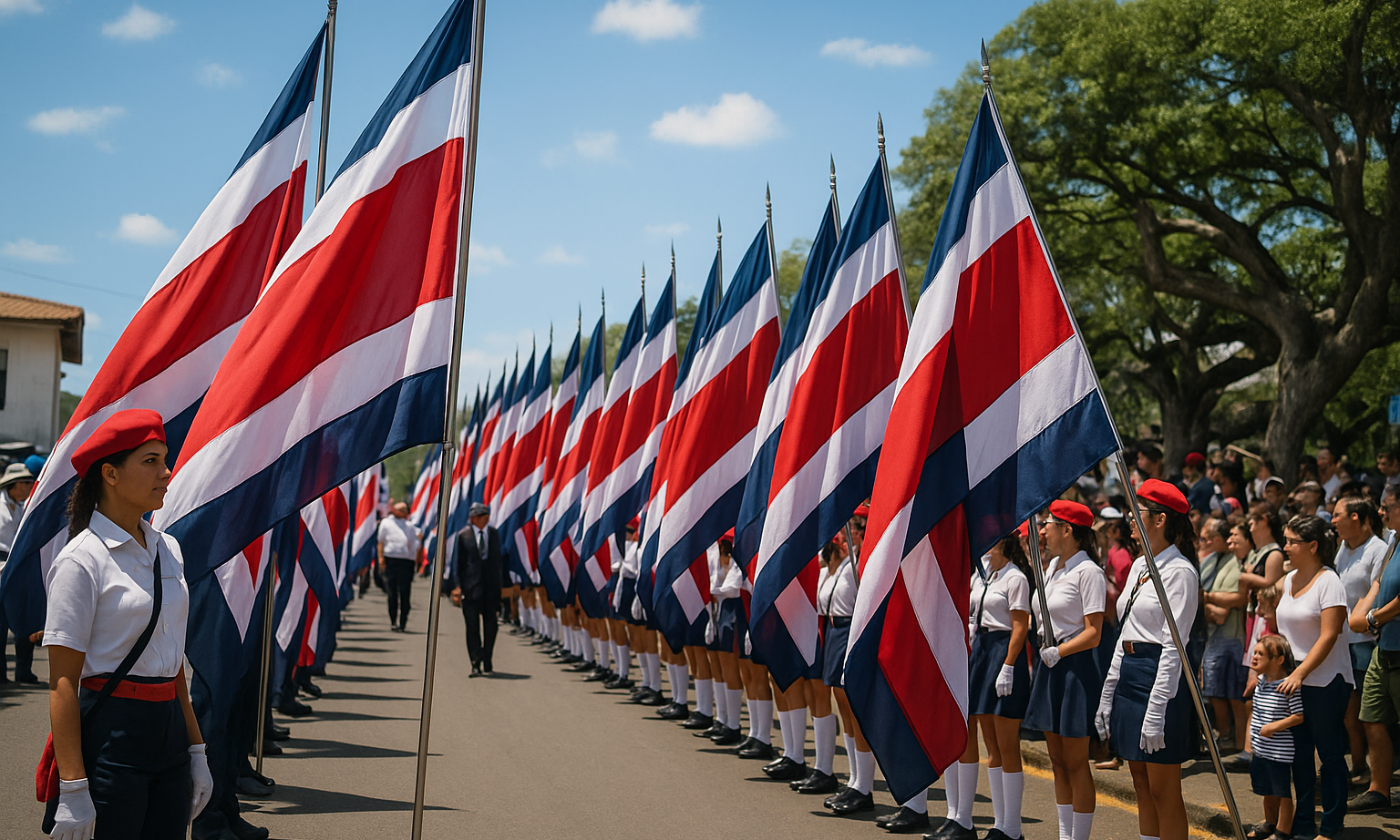
The entire month of September is celebrated as “Mes de la Patria” or Homeland Month, where schools, businesses, and homes are adorned with national symbols, showcasing the country’s rich culture and history. This festive period is filled with parades, traditional music, and dance performances, highlighting the vibrant costa rican spirit.
Costa Rica shares its Independence Day with other Central American countries, including Nicaragua, Honduras, El Salvador, and Guatemala, underscoring their shared colonial past and the significance of this day in the region’s history.
The Historical Path to Costa Rica’s Independence
Costa Rica’s journey to independence is a story of gradual liberation from Spanish colonial rule. The country’s path to freedom was influenced by regional events and its own unique historical context.
Spanish Colonial Rule and the Road to Freedom
For centuries, Costa Rica was under Spanish colonial rule, a period that significantly shaped its development. The Captaincy General of Guatemala, which included Costa Rica, was a administrative division of the Spanish Empire. The influence of Spanish rule was profound, affecting various aspects of Costa Rican society.
- The Spanish colonial period laid the groundwork for Costa Rica’s future development.
- Costa Rica’s relative isolation during this period fostered a more autonomous development.
- The country’s geography and economy were shaped by Spanish colonial policies.
The Peaceful Declaration of September 15, 1821
On September 15, 1821, the Provincial Council of Guatemala declared Central America’s independence from Spain. This historic event marked the beginning of a new era for Costa Rica and the rest of Central America.
- The declaration was a significant milestone in Costa Rica’s history.
- News of the declaration took nearly a month to reach Costa Rica due to its remote location.
- The peaceful nature of Costa Rica’s independence stands in contrast to the violent struggles experienced by many other Latin American nations.
The peaceful transition to independence reflected Costa Rica’s unique historical context and its relative isolation during the colonial period. This peaceful beginning to nationhood would later become a point of national pride and help establish Costa Rica’s reputation as a peaceful democracy in the region.
Costa Rica’s Unique Independence Journey
Costa Rica’s unique independence journey was characterized by its initial declaration of independence from Spain and subsequent struggles for full sovereignty. This complex process involved various stages and challenges that ultimately shaped the country’s future.
The Federal Republic of Central America Period
After gaining independence from Spain in 1821, Costa Rica became part of the Federal Republic of Central America, a union that also included present-day Guatemala, Honduras, El Salvador, and Nicaragua. The president of this republic, Francisco Morazan, a Honduran, strongly supported unification but faced opposition across Central America. The federation began to fracture in the late 1830s due to regional conflicts and ideological differences.
Achieving Full Sovereignty
Nicaragua’s declaration of independence from the federation in 1838 triggered a domino effect, with Costa Rica and Honduras soon following suit. On November 14, 1838, Costa Rica formally declared itself a fully sovereign state, completing its independence journey. This marked Costa Rica’s emergence as a completely autonomous nation, free to chart its own course.
The transition to full sovereignty was complicated by internal divisions between conservatives and liberals in Costa Rica. San José ultimately prevailed in this internal power struggle, becoming the new capital and establishing the liberal vision for Costa Rica’s future, laying the groundwork for its unique national identity.
Costa Rica’s Independence Day – Celebrations & History Through National Symbols
Costa Rica’s Independence Day is a vibrant celebration that showcases the country’s rich cultural heritage through various national symbols. The country’s independence is a significant event that is commemorated with great fervor, highlighting the importance of national symbols in Costa Rican culture.
The Costa Rican Flag and Its Significance
The Costa Rican flag is a prominent national symbol that holds great significance during Independence Day celebrations. The flag’s colors – blue, white, and red – represent the sky, peace, and the blood of martyrs, respectively. The flag is proudly displayed in homes, public spaces, and during parades, symbolizing national unity and pride.
Other Patriotic Symbols During Independence Celebrations
Beyond the flag, Costa Rica’s Independence Day celebrations incorporate numerous national symbols that reflect the country’s natural heritage, cultural identity, and historical journey. The white-tailed deer, Costa Rica’s national animal, features prominently in decorations, representing the country’s rich biodiversity. Other symbols include the national flower (the purple guaria morada orchid), national bird (the clay-colored thrush or yigüirro), and national tree (the Guanacaste tree), which highlight Costa Rica’s natural treasures.
Traditional symbols of Costa Rica’s agrarian heritage, such as the colorfully painted ox cart, coffee bags, and coffee beans, emphasize the country’s historical economic foundations. The national anthem and coat of arms also receive special attention during celebrations, with the coat of arms depicting Central America’s isthmus between two oceans and seven stars representing the provinces.
Modern Independence Day Celebrations
The modern-day festivities of Costa Rica’s Independence Day are a testament to the country’s rich heritage. The celebrations are a blend of traditional and contemporary elements, showcasing the nation’s cultural identity.

The Torch Relay Tradition
The Independence Torch Relay is a significant tradition that symbolizes the light of freedom. The torch is lit in Guatemala and carried through various towns in Costa Rica, symbolizing the journey to independence.
Parades, Lanterns, and Fireworks
During the Independence Day celebrations, parades are held across the country, featuring traditional dances, music, and elaborate floats. Children carry lanterns, adding a colorful and festive atmosphere to the events. Fireworks light up the night sky, marking the joy and celebration.
National Anthem and Cultural Performances
At 6 PM on September 14th, people across Costa Rica gather to sing the national anthem, “Noble Patria, Tu Hermosa Bandera.” This synchronized singing is broadcast on television and radio, allowing Costa Ricans to participate in this collective expression of patriotism. Cultural performances follow, featuring traditional folk dances like the punto guanacasteco and music with instruments like the marimba, showcasing the country’s rich artistic heritage.
These events highlight the nation’s commitment to preserving its cultural heritage while celebrating its national identity. The festivities are a time for communal celebration, reflecting the unity and pride of the Costa Rican people.
Experiencing Costa Rica’s Month of Patriotism
September is a special month in Costa Rica, known as “Mes de la Patria” or Homeland Month, where patriotism is celebrated throughout. During this month, the country transforms visually as buildings, homes, and businesses display the national colors of blue, white, and red in decorations, banners, and flags.
The celebrations are not limited to a single day but extend throughout the month, with schools playing a central role by incorporating special curriculum focused on Costa Rican history and civic values. Various civic events, including historical reenactments and cultural exhibitions, take place, offering insights into Costa Rica’s journey to independence and its national identity.
For visitors, September offers a unique opportunity to experience Costa Rican culture at its most expressive, with authentic displays of patriotism and tradition. The month-long celebration allows Costa Ricans to reflect deeply on their national identity and the values that have shaped their country since independence.
Conclusion
The significance of Costa Rica’s Independence Day extends beyond mere historical commemoration, representing a nation’s journey to sovereignty. Through its unique two-stage independence process, Costa Rica has cultivated a distinct national identity and commitment to self-determination. For a deeper understanding of Costa Rica’s celebrations and public holidays, visit our comprehensive guide on Costa Rica’s public holidays. The annual Independence Day festivities embody the nation’s values, history, and culture, serving as a testament to Costa Rica’s evolution into a stable democracy.
Article by Glenn Tellier (Founder of CRIE and Grupo Gap)
Don't wait, contact us right now!
Call or WhatsApp Costa Rica +506 8373 2085 or +506 8706 3888
Call USA/Canada +1 305-906-6784