
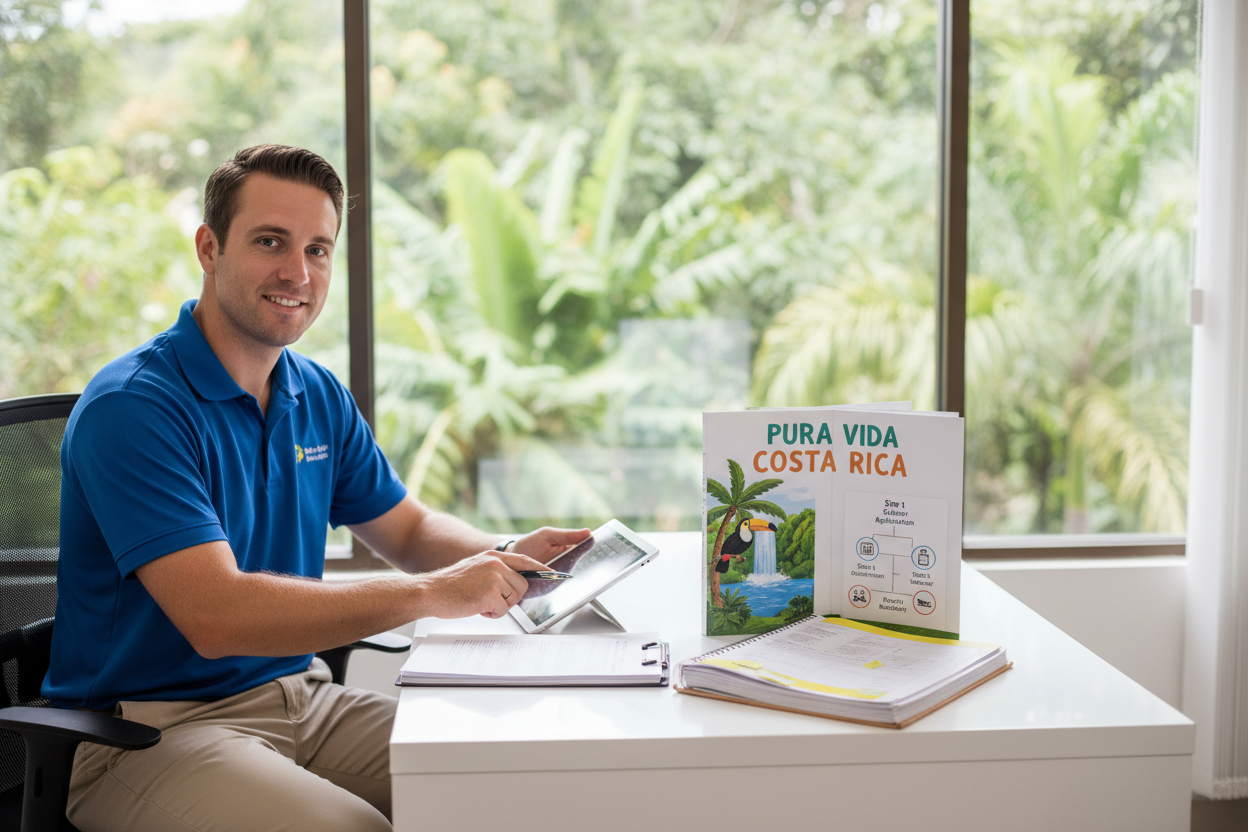
Dreaming of a life in Costa Rica? The path to residency can seem complex. We are CRIE, and for over twenty years, we have guided thousands of successful applications. Our exclusive focus is Costa Rica immigration services—we handle residency only.
The most critical step begins at home. Proper preparation with your documents sets the foundation for success. Gathering apostilles, translations, and background checks before you arrive eliminates costly mistakes and delays.
There are three main pathways: Pensionado, Rentista, and Investor (Inversionista). Each has specific financial thresholds. Understanding which category fits your situation is the first part of our guidance.
We provide expert, step-by-step assistance. However, no firm can guarantee approval—your eligibility depends on meeting the country’s legal requirements. We help you understand and fulfill them.
Note: Digital Nomad status is not a residency category. It does not count toward permanent residency or citizenship. For remote workers, we can suggest the closest actual residency option.
Ready for a personalized assessment? Every case is unique. Contact us via WhatsApp at +506 8706 3888, email info@crie.cr, or visit www.crie.cr to start your journey.
Overview of CRIE’s Costa Rica Residency Services
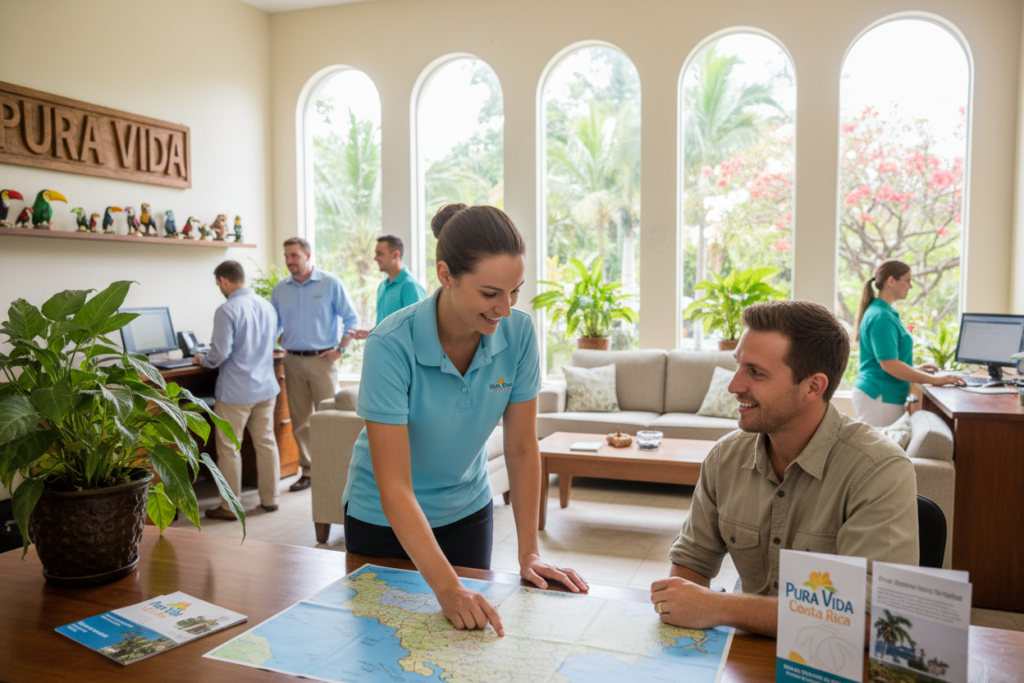
Our approach to immigration services begins with a simple but critical principle: start preparing from home. We are a specialized firm focused solely on guiding you through the Costa Rica residency process. With over twenty years of experience, we have successfully processed thousands of applications.
Exclusively Focused on Costa Rica Immigration
We do not sell property or offer unrelated legal services. Our entire practice is dedicated to Costa Rica immigration. This exclusive focus allows us to provide deep, current expertise.
We begin with a personalized consultation. We assess your unique situation—family size, finances, timeline. Then, we provide clear, step-by-step guidance through the entire system.
Starting from Home with Documents Ready
The most important work happens before you arrive. You must gather documents like apostilled birth certificates and police reports. Certified translations are also required for non-Spanish documents.
Our decades of experience mean we know common pitfalls. We help you present a strong, complete application. We identify which of the main residency options—Pensionado, Rentista, or Inversionista—fits you best.
Laws can change. We provide guidance based on the latest regulations. Final approval always depends on you meeting the country’s legal requirements and government processing times.
Who Qualifies for Costa Rica Residency (Residencia)

Determining your eligibility for Costa Rica residency starts with understanding the three primary legal categories. Each pathway has specific financial criteria you must prove to immigration authorities.
Pensionado (Pensionado) Income Requirements
The Pensionado category is designed for retirees. You must provide proof of a permanent pension income of at least $1,000 USD per month.
This income must come from a government or qualified private retirement system. It needs to be verifiable and continue throughout your residency period.
Rentista and Investor (Inversionista) Thresholds
The Rentista option requires demonstrating stable, guaranteed income. You must show $2,500 USD per month for a minimum of two years.
The Inversionista (Investor) category requires a minimum investment of $150,000 in Costa Rica. This threshold was reduced from $200,000 by a 2021 law.
For real estate to qualify, the property must be held in your personal name. Corporate ownership does not meet the requirement. The official registered value must meet or exceed the $150,000 investment minimum.
For all categories, the primary applicant must meet the financial threshold. Spouses and dependent children can be included on the application.
Document Preparation Before Arrival: Apostilles & Translations
Proper document authentication and translation form the non-negotiable backbone of your Costa Rican residency process. The most critical work happens at home, before you travel. Starting early prevents expensive delays and potential rejections.
Essential Documents to Gather
You will need several key records. These include birth certificates for all family members and police background checks.
Obtain checks from every country where you lived over two years in the past five. These certificates often take 8-12 weeks to issue and have a six-month validity.
Also gather marriage certificates or divorce decrees if applicable. For investors, property registration documents from the National Registry are required.
Standards for Apostilles and Translations
Documents from Hague Convention countries need an apostille stamp. This authentication comes from the issuing state’s designated authority.
After apostilling, every paper must be translated into Spanish. Only translators certified by Costa Rica’s Ministry of Foreign Affairs are accepted.
Category-specific proofs are also needed. Pensionado applicants need pension letters. Rentistas require bank statements proving income.
We guide you through this meticulous process. Always verify the latest requirements at migracion.go.cr to ensure compliance.
Timelines and Process for Investor (Inversionista) Residency
The Inversionista residency process follows a defined path from temporary to permanent status, with clear timeframes at each stage. Government processing typically takes six to twelve months after submitting a complete application.
Your initial approval grants temporary resident status for two years. You must maintain the qualifying $150,000 investment in a property held in your personal name.
Processing and Renewal Timeframes
Plan to submit your renewal about three months before your two-year status expires. This requires updated background checks and proof you’ve kept the investment.
You must also visit Costa Rica at least once per year to maintain your temporary residency. Missing this visit can jeopardize your legal standing.
Transition from Temporary to Permanent Residency
After three consecutive years of temporary status, you can apply for permanent residency. This is a major milestone with significant benefits.
Permanent status removes the need for biennial renewals. You are no longer required to keep the original $150,000 property investment.
You also gain the unconditional right to live in Costa Rica indefinitely. There is no annual visit requirement, and you can work for local companies.
Time spent on a tourist visa does not count toward the three-year requirement. Maintaining your status throughout the entire temporary period is crucial for a smooth transition.
Avoiding Common Mistakes in the Residency Application Process
Understanding the most frequent mistakes is your first defense against application rejection. Many delays stem from simple, avoidable errors in documentation and procedure.
Preventing Incomplete Documentation
The top error is submitting an incomplete file. Applicants often assume certain papers are not needed. This leads to official requests for missing items, causing months of delay.
Always provide exactly what the rules require. Do not substitute documents. A complete package from the start keeps the process moving.
Understanding Misinterpretations of Legal Requirements
Documents must be apostilled first, then translated by a certified professional. Doing these steps out of order causes rejection. Even Spanish-language documents need the apostille.
Police background checks are valid for six months. Getting them too early risks expiration before submission. This forces you to obtain new ones.
For investor residency, the property must be in your personal name. Corporate ownership does not qualify. This is a costly misinterpretation.
Income proof for pensionado or rentista must show permanent, stable funds. Bank statements need to demonstrate consistency. You must maintain all requirements until final approval.
Laws can change. When in doubt, verify current information at migracion.go.cr or consult our team. We answer common questions to help you avoid assumptions.
Understanding Property Ownership and Costa Rica Immigration with CRIE
Foreign nationals have full property rights in Costa Rica, but this ownership does not equate to legal immigration status. These are two separate legal matters. Buying a home here does not automatically grant you permission to live here permanently.
Clarifying Property Ownership vs. Residency Eligibility
You can purchase, hold, and sell real estate with the same protections as a local citizen. The most common form is fee simple ownership. This gives you complete control over the land and buildings.
For that real estate to qualify you for Inversionista residency, strict rules apply. The property must be held in your personal name, not through a corporation. Its officially registered value must meet the $150,000 minimum.
Many buyers use corporations for liability protection. However, this structure disqualifies the asset for residency purposes. Immigration authorities verify everything in the National Registry.
If your goal is investor residency, structure the purchase correctly from the beginning. We help you align your property acquisition with your long-term immigration plans.
Digital Nomad vs. Traditional Residency Options
Remote workers exploring Costa Rica often confuse temporary permissions with genuine residency pathways. It’s critical to understand that the Digital Nomad category is a visa, not a residency program. Time spent under this status does not count toward permanent residency or citizenship.
Limitations of the Digital Nomad Category
This visa allows you to stay for up to one year, renewable for a second. You can work remotely for foreign employers. However, it is an extended visitor permission.
There is no provision to convert it to temporary or permanent residency. For those seeking a real pathway to establish themselves, the Rentista residency category is typically the most appropriate option.
It requires demonstrating $2,500 per month in stable income for two years. This grants actual temporary status, which can lead to permanent residency after three years. Your immigration goals should drive your choice.
The Digital Nomad visa suits short-term stays. For building a life in Costa Rica, traditional residency options like Rentista provide the only secure path.
Financial Considerations for Property Buyers
Beyond the purchase price, acquiring real estate in Costa Rica involves several key financial layers that impact your budget. Planning for these costs is essential for a sound investment.
Review of Closing Costs and Fees
Closing costs for a property purchase here typically range from 3.5% to 4.5% of the property’s registered value. This total includes a 1.5% transfer tax, approximately 1% in legal stamps, 1-2% for notary services, and a 0.5% National Registry fee.
It’s crucial to budget for these expenses upfront. They are calculated on the official fiscal value, which may differ from your purchase price.
Tax Implications and Rental Income Considerations
Annual property tax in Costa Rica is relatively low at 0.25% of the registered value. However, luxury properties valued over approximately $250,000 face an additional sliding-scale tax.
If you generate rental income, it is taxed at a flat 15% rate applied to 85% of the gross amount. Short-term rentals under 30 days must also collect a 13% VAT.
Capital gains from a future sale are generally taxed at 15%. We provide this general financial information for planning. Always consult a qualified local attorney and tax professional for advice specific to your situation.
Immigration Document Checklist and Eligibility Essentials
A complete and correctly prepared document portfolio is the single most important factor for a successful Costa Rica residency application. We guide you through assembling every required paper with precision.
Required Legal Documents and Background Checks
Every applicant needs core personal records. These include apostilled birth certificates for all family members and valid passports.
You must also provide passport-style photos meeting local specifications. Police background checks are mandatory from your home country.
Additional checks come from countries where you lived over two years in the past five. These documents typically expire after six months.
Family status requires proof. Provide marriage certificates or divorce decrees, all apostilled and translated. Dependent children need their birth certificates.
Category-specific proofs vary. Pensionado applicants need official pension letters. Rentistas must show bank statements proving stable income.
Inversionista applicants need property registration from the National Registry. The document must show personal ownership meeting the investment threshold.
All foreign papers need an apostille from the issuing authority. Then they require official Spanish translation by certified professionals.
Finally, consular registration at your embassy here is mandatory. We help coordinate this often-overlooked step. Always verify current requirements at migracion.go.cr.
Starting Your Residency Process from Home
The most efficient path to Costa Rica residency begins long before you book your flight. We guide you to start the entire procedure from your current location. This approach dramatically reduces complications and delays.
Gathering Your Initial Documentation
Begin document gathering at least three to four months before your move. Background checks from government agencies often take 8-12 weeks. Order certified birth certificates and marriage records simultaneously.
Practical Steps for a Smooth Application
First, schedule a consultation to get your personalized checklist. Request background checks immediately due to their long processing. Then, submit each document for apostille as soon as you receive it.
After apostille, send papers for official Spanish translation. Finally, obtain financial verification letters specific to your category. Arriving in Costa Rica with a complete, translated package lets you submit your application promptly.
Expert Guidance and Personalized Support from CRIE
Your journey to Costa Rica residency is personal, shaped by your family, finances, and future goals. We begin with a detailed consultation to understand your unique situation. This allows us to map out the most suitable pathway for you.
Tailored Consultation and Step-by-Step Assistance
We assess your family size, income sources, and property investments. Our goal is to create a personalized action plan. This plan maximizes your chances for a smooth application process.
Our comprehensive services guide you from initial assessment to final approval. We help determine your eligibility category and provide precise document checklists. We also coordinate translations and manage submissions to immigration authorities.
With over twenty years of experience, we have processed thousands of successful cases. We understand how officials evaluate applications. We don’t make promises about approval, but we guarantee expert preparation and persistent follow-up.
Ready for your personalized assessment? Contact us via WhatsApp at +506 8706 3888, email info@crie.cr, or visit www.crie.cr. Let’s start planning your move to Costa Rica today.
Policy and Regulatory Updates Affecting Immigration
Recent legislative reforms have directly altered the financial thresholds for investor residency in Costa Rica. The legal framework governing foreign residency undergoes periodic adjustments. Staying current with these changes is essential for a successful application.
Current Legal Thresholds and Recent Reforms
Law 9996, enacted in 2021, reduced the Inversionista minimum investment from $200,000 to $150,000. This 25% reduction makes the program more accessible to foreign investors. It opens residency opportunities in lower-priced markets.
Recent enforcement has clarified a critical rule. The qualifying real estate must be held in the applicant’s personal name. Corporate ownership structures do not meet the requirement for this residency category.
Impact on Foreign Investors and Residency Applicants
The lower threshold allows more investors to qualify, especially in inland or smaller coastal towns. Buyers must now choose between corporate asset protection and personal ownership for residency eligibility.
Processing timelines have seen some improvement due to administrative reforms. Many applications now resolve within 6 to 12 months. However, backlogs can still occur during peak periods.
Costa Rican immigration regulations continue to evolve. Always verify the latest requirements at the official website, migracion.go.cr. Relying on outdated information can lead to application delays or rejection.
Your Path to a Secure Future in Costa Rica
Building a secure future in Costa Rica involves a clear, step-by-step journey. You progress from temporary residency to permanent status, and potentially to citizenship.
This pathway unlocks significant benefits. You gain strong property rights and access to top-tier healthcare. For investors, it offers a stable environment for real estate assets.
We guide you through each phase, but success depends on meeting legal requirements. Start your journey by exploring resources for moving to Costa Rica. Contact us via WhatsApp at +506 8706 3888, email info@crie.cr, or visit www.crie.cr.
FAQ
Does buying property in Costa Rica automatically grant me residency?
What are the main residency options for someone who wants to live in Costa Rica?
What documents do I need to start preparing from my home country?
How long does it take to get residency, and when can I apply for permanent status?
What is the most common mistake people make when applying?
What should I know about taxes and owning property as a foreigner?
How does CRIE assist throughout the immigration process?
Article by Glenn Tellier (Founder of CRIE and Grupo Gap)
Don't wait, contact us right now!
Call or WhatsApp Costa Rica +506 8373 2085 or +506 8706 3888
Call USA/Canada +1 305-906-6784