
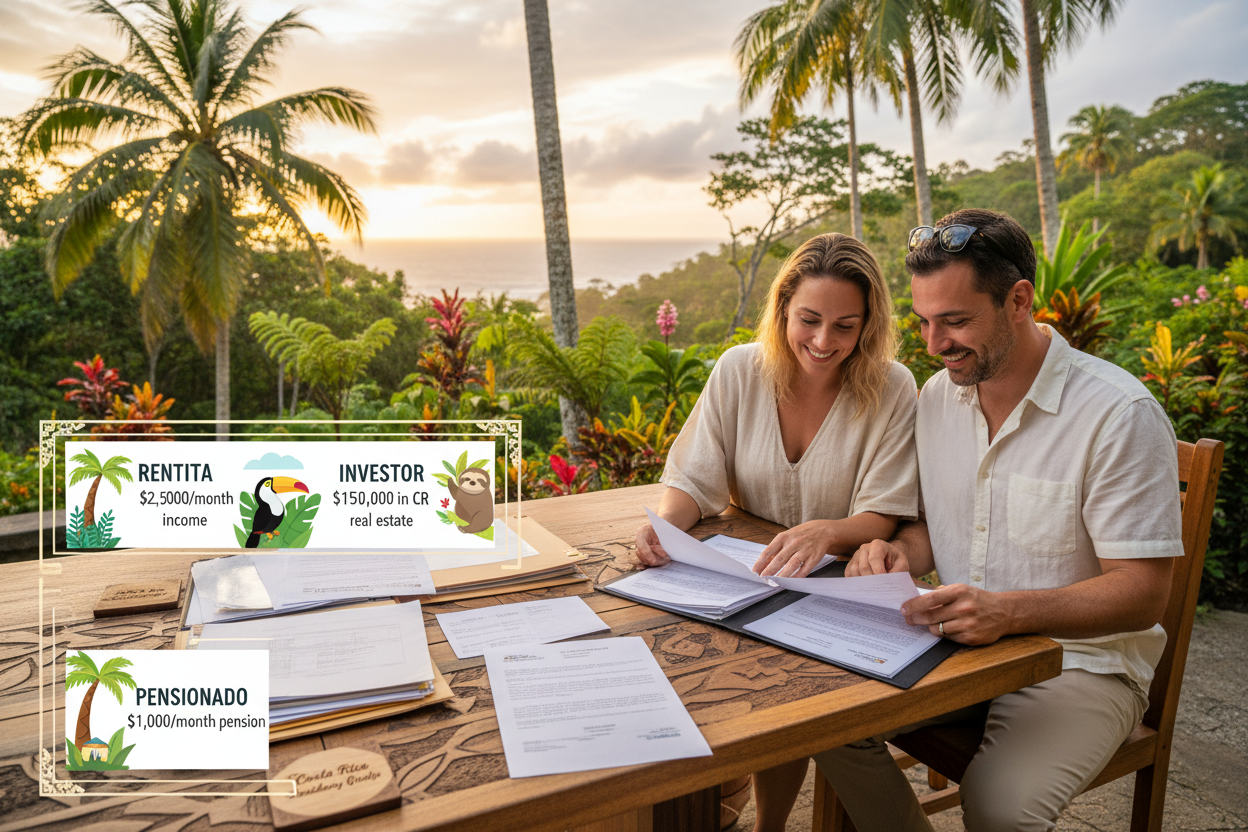
Moving to Costa Rica is a dream for many. The country’s lush landscapes and welcoming culture attract thousands each year. Turning that dream into reality, however, requires careful planning.
We are CRIE, a provider of residency and immigration services. Our goal is to offer clear, practical guidance. A successful application hinges on proving your financial stability to local authorities.
Unclear expectations are a major cause of stress and rejection. The financial rules are not suggestions—they are legal minimums. Falling short is the most common reason applications fail.
There are three primary paths: Pensionado, Rentista, and Inversionista. Each has distinct income or investment minimums you must prove. We’ll help you understand who qualifies and what documents to prepare from home.
This guide provides step-by-step clarity on the thresholds, timelines, and common pitfalls. We focus on facts to set realistic expectations for your journey.
Introduction to Costa Rica Residency and CRIE Services

Navigating Costa Rica’s immigration system begins with understanding the three primary residency categories available. We are CRIE, a specialized provider focused on guiding you through these legal pathways. Our role is to offer clear, step-by-step support tailored to your financial profile.
An Overview of Residency Options (Pensionado, Rentista, Inversionista)
Costa Rica’s welcoming policies offer distinct paths. The Pensionado category is designed for retirees with a guaranteed lifetime pension. The Rentista program suits individuals who can prove stable non-salary income.
The Inversionista (Investor) category requires a significant capital investment in the country. It’s crucial to know that temporary options, like the Digital Nomad visa, do not lead to permanent residency or citizenship.
Why CRIE is Your Trusted Immigration Partner
We provide practical guidance and transparent communication throughout the process. Our expertise is focused exclusively on residency and immigration services. We help you prepare documents and manage timelines effectively.
We build trust by setting realistic expectations. Final approval always rests with Costa Rican authorities, so we never make guarantees. Our goal is to be your knowledgeable partner, simplifying each step from start to finish.
Who Qualifies for Costa Rica Residency? (Pensionado, Rentista, Inversionista)

Qualifying for residency in Costa Rica is a straightforward process if you meet the documented financial criteria for Pensionado, Rentista, or Inversionista status. Your eligibility is not based on subjective factors. It hinges on proving you meet one of three specific financial models.
Understanding Different Applicant Profiles
The Pensionado category is designed for retirees. You must prove a guaranteed lifetime pension of at least $1,000 per month from a recognized source like Social Security.
The Rentista program suits applicants with stable passive income. You need to show $2,500 monthly for two years. Alternatively, a $60,000 deposit in a local bank demonstrates the same financial stability.
The Inversionista (Investor) path requires a minimum $150,000 investment. This must be in approved assets like real estate titled in your personal name. Proper legal documentation is non-negotiable.
Meeting these documented minimums is the key to a predictable application. We help you match your financial profile to the correct category.
A Detailed Look at Financial Thresholds
Understanding the exact dollar amounts required is the first practical step toward a successful residency application. We provide exact thresholds because vague ranges don’t help applicants plan. Each category has a fixed minimum in US dollars.
Pensionado: $1,000+/Month Pension Requirement
The Pensionado category requires a lifetime pension of at least $1,000 per month. This means documented, guaranteed income like Social Security or a government pension. You must prove this with official letters and bank statements.
Rentista: $2,500/Month Income for Two Years or $60,000 Deposit
The Rentista path offers two options. You can show stable passive income of $2,500 monthly for 24 months. Alternatively, a $60,000 deposit in a local bank meets the requirement. Both need solid financial records.
Inversionista: Minimum $150,000 Investment in Personal Name
The Inversionista (Investor) category demands a minimum $150,000 investment. A critical rule: the asset, often real estate, must be titled in your personal name. Purchasing through a corporation disqualifies the investment.
Essential Documentation and Pre-Arrival Preparations
A common misconception is that you can finalize your paperwork after arriving. In reality, the most critical steps happen at home. We emphasize starting with your documents ready to avoid costly delays.
Proper preparation saves months of processing time. It also reduces stress dramatically for your application.
Obtaining Apostilles and Certified Translations
Foreign documents like birth certificates and police records require an apostille. This international certification validates them for use abroad.
All non-Spanish paperwork must be translated locally. You need a certified translator recognized by the Costa Rican government for this step.
Organizing Your Financial Records Before Arrival
Gather at least 12 months of bank statements and official income letters. Organize these financial records chronologically in clearly labeled folders.
Create a checklist specific to your residency category. If any requirement is unclear, verify current details at the official migracion.go.cr website.
Practical Steps to Prepare Your Residency Application
Successfully preparing your residency application hinges on a systematic approach to document gathering and legalization. We break the entire process into clear, sequential steps to prevent overwhelm.
Step-by-Step Guidance on Gathering and Legalizing Documents
Your first step is choosing the correct residency category. Assess your pension, passive income, or investment capital honestly against the official minimums.
Next, gather all required civil documents from your home country. This includes birth certificates, marriage certificates, and police background checks. Start this early to avoid delays.
Each of these documents must receive an apostille. This international certification validates them for use in Costa Rica and cannot be done after you leave.
Organize your financial records with meticulous detail. Provide bank statements, pension letters, and investment records covering the required time period.
Upon arrival, have all non-Spanish paperwork translated by a certified local translator. Finally, submit your complete application package to the Dirección General de Migración y Extranjería (DGME).
Common Mistakes to Avoid in the Application Process
We see several recurring errors that delay approvals. Submitting insufficient financial documentation is a primary cause. Provide the full number of required bank statement months.
For investors, a critical mistake is holding property in a corporate name. The investment must be titled in your personal name to qualify.
Ensure police clearances are recent and apostilles are present on all civil documents. The most expensive error is investing capital before confirming it meets all legal requirements.
Our guidance focuses on helping you avoid these pitfalls. Remember, processing takes 3-12 months, and perfect preparation does not guarantee approval.
Understanding the Timeline and Processing Expectations
One of the most common questions we receive concerns the waiting period before a residency decision is made. Setting realistic expectations for this timeline is crucial to avoid frustration.
Overview of Typical Processing Timeframes
The review process typically takes 3 to 12 months. A 90-day approval is a best-case scenario for perfect applications. More complex cases or high office volume can extend the timeline.
During this period, officials verify your financial documents and background. They may request additional information or clarification.
Keeping Your Application on Track
While your application is in processing, you can generally stay in the country legally. Respond immediately to any official requests to keep things moving.
We recommend checking migracion.go.cr for current processing times. After approval, you will obtain your DIMEX card, which is your official residency ID.
Initial residency is a temporary status valid for two years. Maintaining it requires annual visits and continued compliance with your category’s financial rules.
Addressing Unique Financial Scenarios and Exceptions
A significant point of confusion for many applicants involves the legal distinction between temporary permits and official residency status. We clarify these boundaries to ensure your long-term plans are built on a solid foundation.
Why the Digital Nomad Option Does Not Count as Residency
Costa Rica’s Digital Nomad visa allows remote work with a $3,000 monthly income requirement. It is a temporary stay permit, not a form of residency.
Time spent on this visa does not count toward permanent residency or citizenship. If you qualify for the Digital Nomad visa, you likely meet the income threshold for the Rentista residency category.
Choosing Rentista provides actual temporary residency status that progresses toward permanent status.
Transitioning Between Different Residency Categories
Your financial situation may change. A Rentista applicant might later make a qualifying investment, moving to the Inversionista category.
Transitioning requires a new application meeting all requirements of the target category. The pathway to citizenship begins with legal residency.
After seven years of continuous legal residency, citizenship becomes an option. Permanent residency, achieved after three years, offers most practical benefits without requiring naturalization.
Tips for Building a Robust Financial Profile for Immigration
Building a compelling case for residency requires more than just hitting a number—it demands clear proof of sustainable financial health. Your goal is to present your legitimate situation in the clearest format. This makes it easy for officials to verify you meet the rules. A strong financial profile is built on consistency and proper documentation.
Documenting Consistent Income Sources
Authorities look for regular, predictable patterns over time. Sporadic deposits can raise questions about long-term stability. We recommend providing 12 months of bank statements, not just the minimum.
Use certified statements from your financial institution, not online printouts. If your income comes from multiple sources, document each one separately. Then show the combined total clearly meets the requirement.
Enhancing Your Application with Professional Guidance
Expert help is valuable for complex situations. This includes multiple income sources, self-employment, or if you’re close to a financial threshold. Professionals can identify gaps in your documentation before you submit.
They offer guidance on presenting your proof within legal parameters. Remember, even a perfect application does not guarantee approval. Guidance increases your likelihood of success but cannot provide certainty.
Optimizing Your Application: Understanding Financial Requirements for Costa Rica Immigration with CRIE
Optimizing your Costa Rica residency application centers on presenting your finances with absolute clarity. We help you structure your proof to meet the specific documented thresholds. This approach allows immigration officials to verify your stability quickly and efficiently.
The core financial requirements remain clear. The Pensionado path needs a $1,000+ monthly lifetime pension. The Rentista option requires $2,500 monthly income for two years or a $60,000 deposit. The Inversionista category demands a $150,000 investment in your personal name.
Our optimization process starts with a thorough assessment of your situation. We identify the best-fit pathway and prepare a complete documentation checklist. For us, optimization means presenting your legitimate finances in the exact format authorities require.
We provide expert guidance and realistic assessments. However, we cannot guarantee approval, as final decisions rest with Costa Rican officials. Starting your document preparation at home is the most valuable step you can take for a smoother process.
How CRIE Guides You from Home: Document and Process Management
The journey to Costa Rica residency begins long before you arrive, with careful document preparation at home. Our services provide remote guidance and structured process management from your first inquiry. We help you organize the required documents and understand each step clearly.
Starting the Process Remotely with Proper Documentation
You can begin this process from anywhere. We provide customized checklists based on your chosen residency category.
Our guidance covers obtaining apostilles and reviewing financial records. This preparation happens while you are still in your home country.
Accessing vital records is easier from home. This remote approach saves significant time and reduces stress later.
Contact Options: WhatsApp +506 8706 3888 and info@crie.cr
Reaching out for contact is simple. Use WhatsApp for quick questions or email for detailed submissions.
An initial consultation assesses your situation and goals. We explain documentation requirements and timeline expectations transparently.
Our guidance continues through application submission and beyond. Visit www.crie.cr for comprehensive information on our services.
We manage the documentation thoroughly, but final approval rests with immigration authorities. Our value lies in maximizing your preparation quality.
Legal and Practical Considerations in Costa Rica Immigration
Grasping the legal framework is essential for anyone planning a long-term stay. We clarify official terms to prevent confusion during your application.
Clarifying Legal Terms and Spanish Category Names on First Mention
Understanding Spanish designations is key. We use Pensionado, Rentista, and Inversionista because these are the official legal categories.
“Temporary residency” (residencia temporal) refers to your initial two-year, renewable status. “Permanent residency” (residencia permanente) is an indefinite status achieved later.
“Citizenship” (ciudadanía) means full naturalization as a Costa Rican citizen.
How Residency Steps Lead to Citizenship Options
Your journey begins with temporary residency. After maintaining this status for three years, you can apply for permanent residency.
Permanent status offers stability. You can work without a separate permit and have fewer renewal requirements.
If desired, citizenship becomes an option after seven years of continuous legal residency. This requires an application, language proficiency, and a civics test.
Costa Rica allows dual citizenship, so Americans can keep their U.S. passport. Many residents find permanent status meets all their needs without pursuing naturalization. Always verify current rules at migracion.go.cr, as policies can change.
Understanding these steps helps you plan your long-term future in the country. For a detailed breakdown of the immigration process and associated costs, our resources provide further clarity.
Final Insights on Achieving Successful Residency in Costa Rica
Achieving legal residency in Costa Rica represents a significant life achievement. Your successful application hinges on meeting the country’s documented financial thresholds and preparing your documentation meticulously.
Proving your stable pension, income, or investment is fundamental. The Pensionado, Rentista, and Inversionista categories each have precise monetary requirements. Proper authentication and translation of your paperwork enable efficient verification by authorities.
Costa Rica offers an exceptional quality of life for approved residents. Benefits include access to the national healthcare system and a stable political environment. The journey requires patience during the 3-12 month processing, but the rewarding outcome justifies the effort.
We provide specialized immigration guidance through this established process. We assist with remote preparation from your home country and help navigate each step. Final approval, however, rests solely with Costa Rican immigration officials.
Begin your residency journey today. Contact us via WhatsApp +506 8706 3888, email info@crie.cr, or visit www.crie.cr for expert, personalized support.
FAQ
What are the main residency options for moving to Costa Rica?
How much monthly income do I need for the Rentista residency?
Can I start the residency application process before moving to Costa Rica?
What is the typical timeline for residency approval?
Does the Digital Nomad Visa lead to permanent residency?
Why is proof of financial stability so important for the application?
How does CRIE help me if I’m not yet in Costa Rica?
Can I switch to a different residency category after my first application?
Article by Glenn Tellier (Founder of CRIE and Grupo Gap)
Don't wait, contact us right now!
Call or WhatsApp Costa Rica +506 8373 2085 or +506 8706 3888
Call USA/Canada +1 305-906-6784