
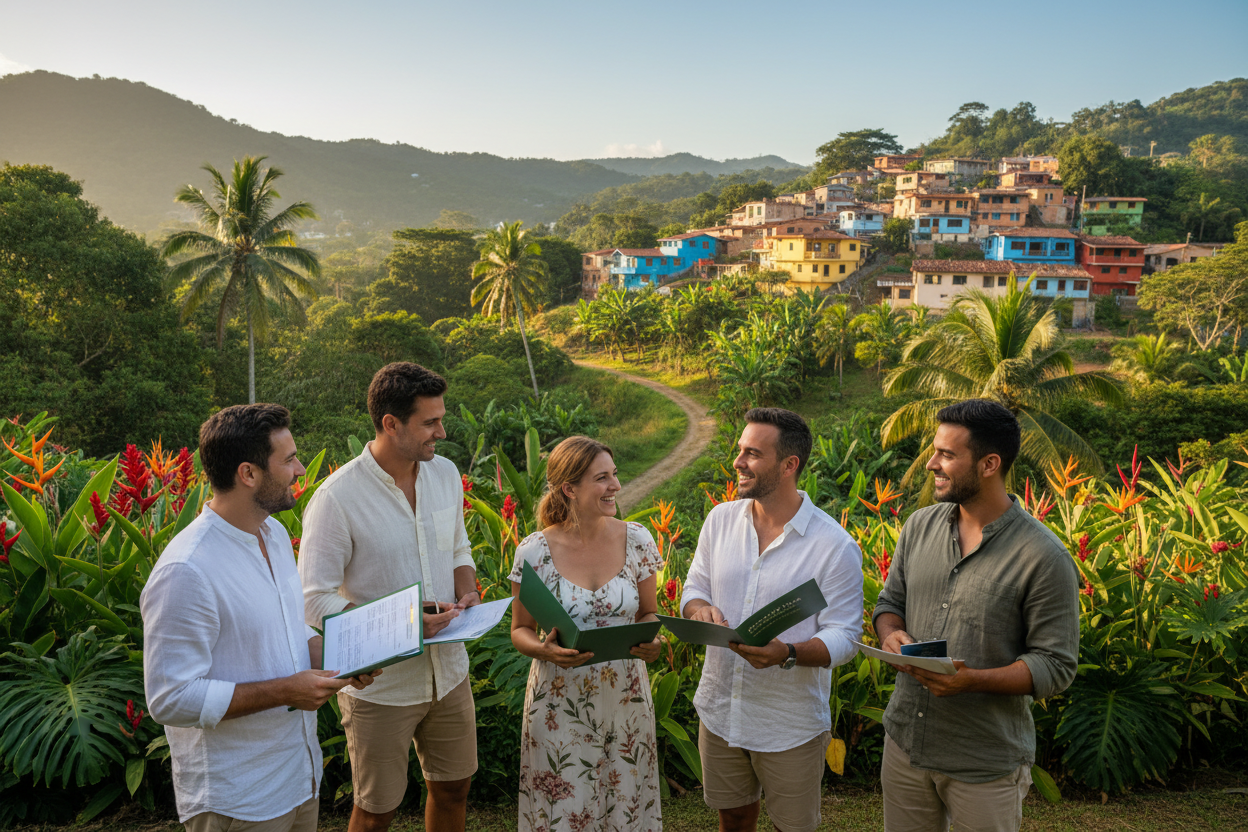
Starting your life in Costa Rica is an exciting prospect. Yet, the path to legal residency is often where dreams meet a harsh reality. A staggering 80% of all residency applications here are rejected. The primary cause? Simple paperwork errors within a complex immigration system.
This is where we come in. At CRIE, we have over twenty years of expertise guiding clients through this process. We are not a distant service provider. We act as your knowledgeable partner, walking alongside you from the very first step.
The cornerstone of a successful application is preparation that begins at home—long before your flight. Properly prepared, apostilled, and translated documents that meet strict Costa Rican legal standards are non-negotiable. Mistakes in financial requirements or forms can derail your plans for months.
Our guidance is built on realism, not hype. We don’t offer shortcuts or guarantees. Instead, we provide a clear understanding of the main pathways—Pensionado, Rentista, and Inversionista—each with specific financial thresholds. This knowledge helps you avoid the costly mistakes that trap most applicants.
CRIE specializes exclusively in Costa Rica residency and immigration services. Our role is to offer transparent, step-by-step guidance through a system that rewards thorough preparation. While the process is detailed, it becomes entirely manageable when you understand each requirement and prepare accordingly.
Introduction to Costa Rica Residency and CRIE’s Expertise
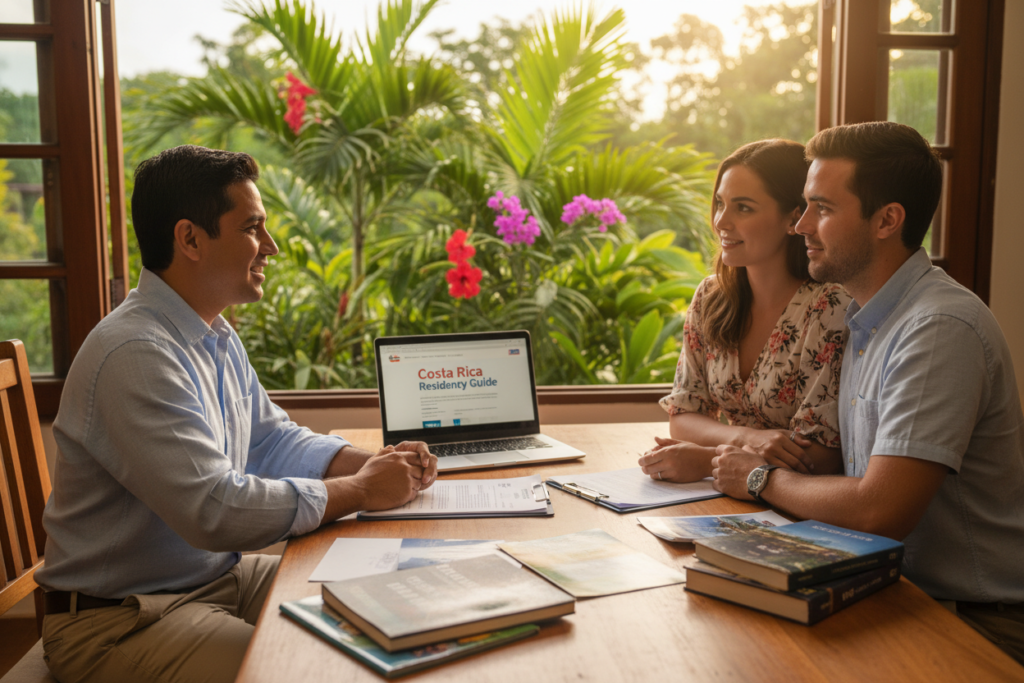
Achieving residency status in Costa Rica hinges on understanding and navigating a precise legal framework. With over 20+ years of specialized experience, we have guided thousands through this process. Our deep knowledge of Costa Rica’s immigration system is your foundation for success.
Navigating Immigration Services with Confidence
Confidence comes from clarity. The Dirección General de Migración y Extranjería, Costa Rica’s immigration authority, operates on strict procedural rules. We provide clear information on these requirements. Our role is to help you navigate these immigration services with precision, avoiding the common pitfalls that cause delays.
Why Begin Your Residency Journey Prepared from Home
Meticulous preparation must begin in your home country. Critical documents like birth certificates and police checks require an apostille from your national authorities. They must then be translated into Spanish by approved professionals.
This step cannot be done after you arrive. Proper preparation from the start is the most effective way to build a strong residency application. We leverage our two decades of experience to ensure your documents meet every legal standard for a smooth path to life in Costa Rica.
Understanding Residency Pathways: Pensionado, Rentista, and Inversionista
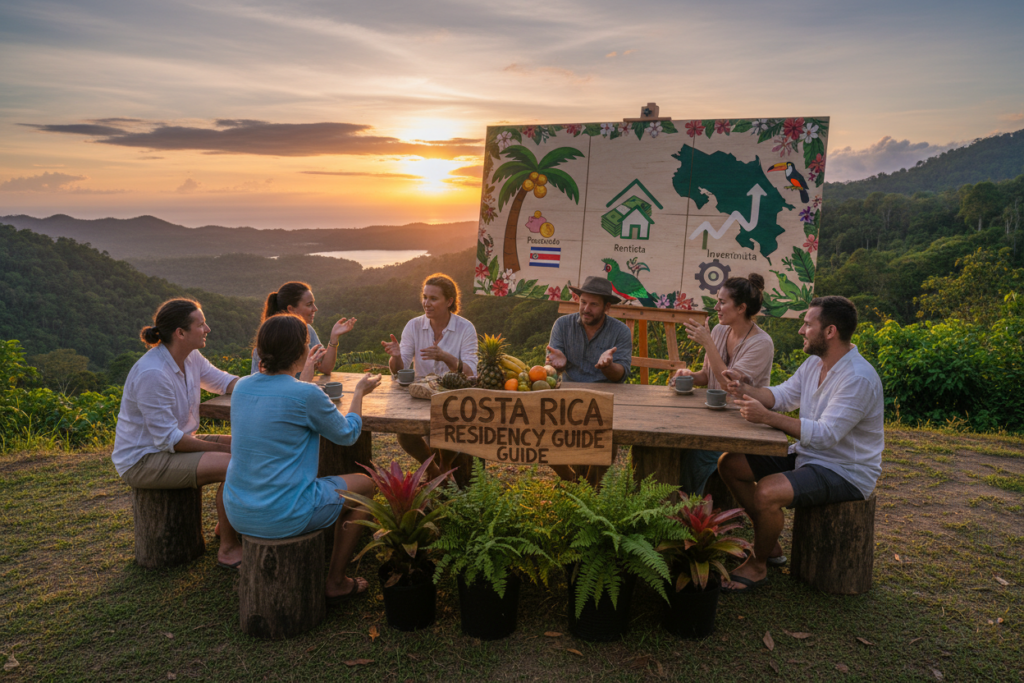
Costa Rica offers three primary residency categories, each with distinct financial requirements and benefits for applicants. Choosing the correct pathway is essential for a smooth process. It aligns your financial reality with the immigration authority’s strict criteria.
Pensionado Requirements and Income Threshold
The Pensionado (Pensionado) category is designed for retirees. It requires proof of a lifetime pension or retirement income of at least $1,000 USD per month. This pathway grants renewable two-year temporary residency and access to valuable benefits like the public healthcare system.
Rentista Income, Bank Deposit, and Document Essentials
The Rentista (Rentista) option suits those with stable passive income. You must prove $2,500 USD per month for two years from sources like investments or rentals. Alternatively, a $60,000 USD deposit in a Costa Rican bank qualifies. These funds must remain untouched during the application period.
Investor’s Criteria: Minimum Investment and Property Guidelines
The Inversionista (Investor) pathway requires a minimum $150,000 USD investment. Qualifying investments typically include real estate. A critical rule is that the property must be titled in the applicant’s personal name, not through a corporation. This is a common point of confusion for many buyers.
All three categories lead toward permanent residency. They require the same foundational documents, like apostilled birth certificates. Digital Nomad visas are useful for short stays but do not count toward these formal residency options. We help you select the pathway that truly matches your situation.
Starting Your Residency Application: Key Preparation Steps
The journey to legal residency in Costa Rica begins with meticulous groundwork long before you submit any forms. This foundational work, done from your home country, is what separates a smooth process from months of frustrating delays.
First, understand the timeline. The entire residency process typically spans 6 to 14 months from initial filing to final approval. This realistic expectation helps you plan your move effectively.
A critical rule involves document currency. Official papers like police clearances must often be issued within the last six months. Timing your document gathering is therefore essential.
The logical sequence is clear. Determine your qualifying category. Then gather the required documents in your home country. Next, obtain apostilles from the proper authority. Finally, arrange official Spanish translations.
When should you seek professional help? Immigration rules change, and small paperwork errors cause most rejections. We recommend starting a consultation while still at home. This allows us to provide a precise checklist for your situation.
True preparation means understanding why each document is required. It’s about ensuring every paper meets Costa Rican legal standards before you invest in the application.
Preparing Your Application: Step-by-Step Guidance
A systematic approach to gathering and legalizing your paperwork forms the backbone of a strong application. We provide clear, step-by-step guidance to navigate this phase efficiently.
Gathering, Apostilling, and Translating Essential Documents
Key documents like birth certificates and police records require an apostille. This international authentication proves their genuineness to Costa Rican authorities.
Every apostilled document must then be translated into Spanish. The translator must be approved by Costa Rica’s Ministry of Foreign Affairs. Standard translations will not meet the requirements.
Establishing Realistic Timelines and Checklists
The document preparation phase itself takes considerable time. For U.S. applicants, FBI background checks can take 8-12 weeks. Adding time for apostilles and official translations means planning for 3-4 months before you even submit.
We help you create a personalized checklist based on your chosen residency category. This ensures all financial proofs and forms meet the specific requirements for your application.
Organize your documents in a clear system. Have the original, apostilled version, and official translation ready for each item. This simple organization prevents delays from common oversights.
Avoiding Common Mistakes in Residency Applications
Many applicants find their Costa Rican residency dreams delayed by simple yet critical paperwork mistakes. The sobering 80% rejection rate primarily stems from preventable documentation errors, not from applicants being unqualified.
We have identified the most frequent pitfalls over two decades of work. These errors transform a straightforward process into a lengthy ordeal.
Identifying Incomplete Paperwork and Error-Prone Areas
Submitting expired police clearances is a top error. All documents must be issued within six months of your application filing date.
Using translations from non-approved professionals will cause rejection. Costa Rican authorities require translations certified by their Ministry of Foreign Affairs.
Financial proof often contains mistakes. For Rentista applications, bank statements must clearly show the $2,500 monthly income over 24 months. Inversionista applicants must prove personal, not corporate, property ownership.
Even minor inconsistencies trigger problems. Names and dates must match exactly across your passport, birth certificate, and all forms. A missing signature or a faint photocopy can add months to your timeline.
Before submission, verify every document is current, apostilled, and accompanied by its official translation. This meticulous check is your best defense against the common errors that derail applications.
Key Documentation Requirements and Legal Prerequisites
Meeting Costa Rica’s legal prerequisites demands attention to specific documentation standards that go beyond basic forms. The immigration authority verifies your background and ensures you will not burden public resources.
We guide you through each mandatory item to build a compliant application.
Mandatory Background Checks and Health Insurance Proofs
All applicants must provide police clearances. You need one from your country of citizenship and from every nation where you lived for two or more consecutive adult years.
Applicants aged 12 and older must also submit fingerprints. For U.S. citizens, this typically means obtaining an FBI background check through an approved channeling service.
Proof of health insurance is another core requirement. Costa Rica mandates that residents have coverage. You must show enrollment in the public Caja system or a qualifying private insurance plan.
This proof demonstrates you won’t strain public health resources. Actual enrollment often occurs after residency approval.
Ensuring Notarized Translations and Authentic Certificates
Every foreign document must be apostilled and translated into Spanish. Apostilles are issued by the competent authority in your document’s country of origin.
Translations must be done by a professional recognized by Costa Rica’s Ministry of Foreign Affairs. They apply an official seal and registration number to certify accuracy.
We always recommend verifying the latest requirements directly with the Dirección General de Migración y Extranjería at migracion.go.cr. Their rules can evolve, and precise compliance is non-negotiable for a successful outcome.
Navigating Costa Rica’s Immigration System and Legal Framework
Costa Rica’s legal framework for immigration is built upon decades of political stability and social investment. The country abolished its army in 1948, redirecting funds toward education and healthcare. This created a stable democracy that welcomes foreign residents while protecting local resources.
The Dirección General de Migración y Extranjería (DGME) serves as the sole authority. It processes all residency applications under Costa Rica’s Immigration Law. This system operates in Spanish and follows specific procedural rules.
Officials review each submission with precision. They verify that every requirement is met exactly as specified. There is limited flexibility for documentation that is merely “close enough.”
Immigration requirements evolve as the country responds to new migration patterns. Recent updates include mandatory proof of health insurance for all applicants. What worked five years ago may not reflect current law.
The system handles thousands of applications annually with limited staff. Processing periods of 6 to 14 months are standard, not exceptional. Understanding this timeline helps you plan realistically.
If an application faces rejection, formal appeal procedures exist. These add significant time to the overall process. Navigating this complex, changing system is more manageable with specialists who monitor updates.
The Role of Expert Assistance: CRIE’s Proven Record
Professional guidance transforms the residency application from a daunting task into a structured journey. The 80% rejection rate highlights the gap between understanding requirements and meeting them to the authority’s satisfaction.
Advantages of Professional Legal and Immigration Guidance
We provide not guarantees, but deep knowledge of current Costa Rican immigration law. Our experience identifies potential documentation issues before they cause rejections.
With over 20 years of specialization, we have guided thousands through every iteration of this process. We offer personalized services, tailoring our approach to each client’s unique financial and family situation.
Over 90% of our clients attribute their residency approval to this systematic preparation. Ready to begin? Contact us via WhatsApp at +506 8706 3888, email info@crie.cr, or visit www.crie.cr.
Application Submission and Managing Processing Timelines
Effective management of processing timelines begins with a well-organized submission. This phase moves your preparation into the official review process. We set realistic expectations from the start.
The typical window for a decision ranges from six to fourteen months. Patience is a necessary part of the journey. Submitting your complete packet as early as possible helps avoid delays from expiring documents.
Step-by-Step Document Organization and Submission Tips
Present your application to the Dirección General de Migración y Extranjería with a clear structure. Create an index and group related documents together. Provide photocopies alongside originals where required.
The government fee for filing is $250 USD. Temporary residency approval adds $100, and permanent residency requires a $200 fee. These are standard costs paid directly to the authorities.
Set calendar reminders for key dates, like when police clearances will expire. Track when you should expect processing milestones. Maintain organized records of all submission confirmations.
You can check your file status online using your application number. Updates in the system may be infrequent. Officials review applications in submission order and may request clarifications.
The final outcome is either approval, granting temporary residency, or a rejection specifying unmet requirements. Understanding this process helps you manage your time and expectations in Costa Rica.
Budgeting and Financial Preparation for Your Residency Journey
A clear financial plan is as crucial as your paperwork for a successful residency application in Costa Rica. Many applicants focus solely on meeting income or investment thresholds. They often overlook the layered fees required throughout the process.
We help you build a realistic budget that accounts for all potential expenses. This prevents surprises and ensures you can sustain the application from start to finish.
Planning for Application Fees and Document Costs
The government mandates several fees. You will pay $250 to file your application. Temporary residency approval costs $100, and permanent residency requires a $200 fee.
Document preparation adds significant costs. Each apostille can cost $15 to $50, depending on its origin. Official translations by approved professionals typically run $20 to $40 per page.
A complete packet may need 15-30 pages translated. These costs multiply if you require documents from multiple countries.
Your chosen residency pathway dictates major financial commitments. Pensionado applicants must prove a stable $1,000 monthly income. Rentista applicants need either $2,500 per month or a $60,000 bank deposit.
Inversionista applicants must make a qualifying $150,000 investment. These funds must be genuinely accessible and documented.
Professional guidance involves fees for expert knowledge and ongoing support. While this adds to upfront costs, the high rejection rate for self-filed applications makes it a valuable investment.
Budget for travel, possible temporary housing, and the ongoing cost of living during the process. This comprehensive approach to costs leads to a smoother transition.
Cultural and Lifestyle Considerations for Expats in Costa Rica
True integration into Costa Rican life extends far beyond the legal approval stamped on your residency card. A successful transition involves adapting to a different pace and set of social values. This cultural preparation enriches your daily experience and helps you build a home, not just a legal address.
Embracing the Pura Vida Lifestyle
“Pura Vida” is the national philosophy. It celebrates simplicity, gratitude, and a relaxed approach to daily living. This mindset is reflected in the country’s priorities.
Costa Rica abolished its army in 1948. It redirects those resources into education and healthcare, which receives 9.3% of GDP. It’s no surprise the country consistently ranks among the world’s happiest.
Adapting to Local Norms and Everyday Practices
You will notice a different pace. The “mañana” mindset isn’t laziness. It prioritizes relationships and present-moment enjoyment over rigid schedules.
Building personal connections often comes before business. Social interactions are genuinely warm. Learning basic Spanish dramatically improves your daily life and shows respect for the local culture.
Adopting this pace reduces the stress many feel when things move slower. Your choice of community is also key. Exploring the best places to live in Costa Rica for can help you find your ideal setting. This cultural understanding turns a legal process into a fulfilling new chapter.
Real Estate and Investment Considerations for Residency Applicants
For those considering the Inversionista residency pathway, real estate investment presents both an opportunity and a specific set of legal requirements. The $150,000 minimum investment often involves property. However, the structure of ownership is critical for immigration approval.
Property Purchase Versus Rental: What to Consider
Many successful applicants rent for six to twelve months before buying. This allows you to experience different areas and climates firsthand. Renting provides flexibility while you finalize your residency application.
Purchasing property commits you to a specific location and investment. It qualifies for the Inversionista category if done correctly. Consider your long-term housing needs and financial strategy before deciding.
Legal and Financial Insights for Inversionistas
A key rule is that qualifying property must be titled in your personal name. Many buyers use corporations for asset protection, but this does not meet residency requirements. You must choose between corporate ownership and qualifying for the Investor visa.
Always verify clear title through Costa Rica’s National Registry (Registro Nacional). For rural properties, confirm water rights (concesión de agua). Beachfront areas have maritime zone regulations within 200 meters of the high-tide line.
Property taxes are low at 0.25% of the registered value. Transaction costs add 3-4% to the purchase price. Foreigners enjoy the same property rights as Costa Rican citizens.
This real estate decision should align with your actual living plans. Investing solely for residency makes sense only if you genuinely want the property.
Your Next Steps: Making the Smooth Transition to Costa Rica
Taking the first step toward residency is about turning preparation into purposeful action. Your successful move to Costa Rica depends on matching your finances to the right pathway. It also requires meticulous document gathering from your home country.
Legal status provides access to the public healthcare system and daily stability. It eliminates tourist visa concerns. Remember, a Digital Nomad visa is for short-term stays. It does not lead to permanent residency.
The way forward is clear. Contact us via WhatsApp at +506 8706 3888, email info@crie.cr, or visit www.crie.cr. We will assess your situation and provide a detailed checklist. Starting your document preparation now is the key to your new life.
FAQ
What are the main residency categories for moving to Costa Rica?
How long does the residency application process typically take?
What are the most common mistakes people make in their residency application?
Do I need private health insurance for my residency application?
Can I work in Costa Rica with temporary residency?
Why should I use a professional service like CRIE instead of applying on my own?
What are the ongoing obligations after I receive my residency status?
Article by Glenn Tellier (Founder of CRIE and Grupo Gap)
Don't wait, contact us right now!
Call or WhatsApp Costa Rica +506 8373 2085 or +506 8706 3888
Call USA/Canada +1 305-906-6784