
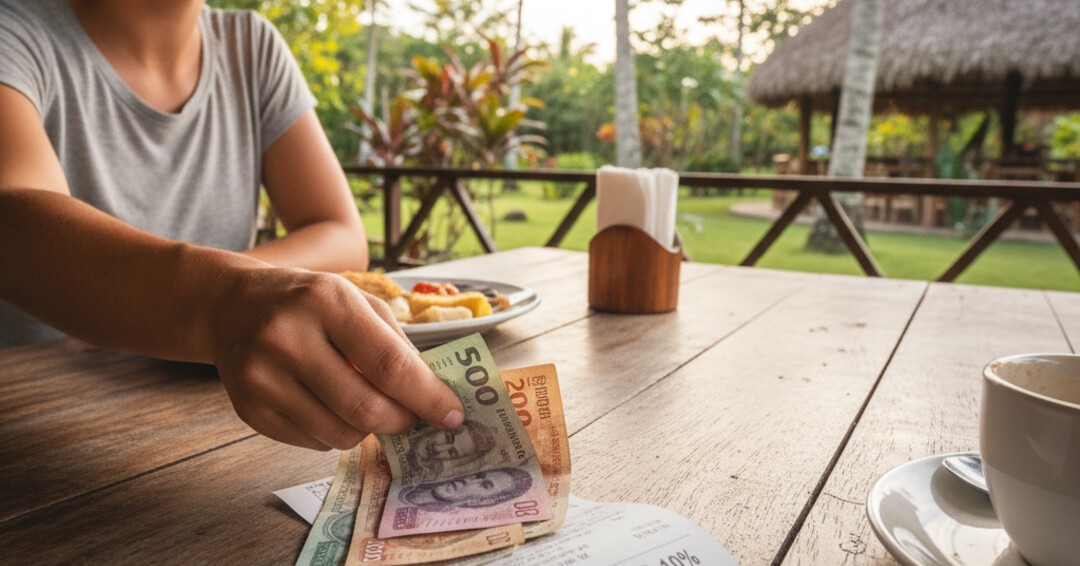
Navigating the nuances of tipping etiquette in a foreign country can be one of the most confusing aspects of international travel. In Costa Rica, a country known for its warm hospitality and Pura Vida lifestyle, the approach to tipping is unique and often misunderstood by visitors. Unlike the United States, where tipping is a deeply ingrained cultural norm, Costa Rica has a different system that combines mandatory service charges with optional gratuities.
This comprehensive guide provides a complete overview of tipping in Costa Rica for 2025, ensuring you have the accurate and up-to-date information you need to navigate any situation with confidence. We’ll debunk common misconceptions, clarify the all-important service charge laws, and provide a detailed breakdown of tipping practices for restaurants, tour guides, hotel staff, and other service professionals.
At CRIE, we specialize in helping individuals and families navigate the Costa Rican residency process with ease and confidence. While our expertise lies in immigration and residency matters, we understand that a smooth transition to life in Costa Rica involves more than just paperwork. That’s why we provide helpful resources like this guide to give you the clarity needed to manage your finances effectively and embrace the local culture.
Join us as we explore the ins and outs of tipping in Costa Rica, so you can show your appreciation for excellent service in a way that is both culturally appropriate and respectful.
Understanding Costa Rica’s Mandatory 10% Service Charge

One of the most important aspects of tipping in Costa Rica is understanding the country’s mandatory 10% service charge, which is automatically added to restaurant bills by law. This system is fundamentally different from the voluntary tipping culture found in countries like the United States, and it’s essential for visitors and new residents to understand how it works.
The 10% service charge, known locally as “servicio” or “cargo por servicio,” is not optional. It appears as a separate line item on your restaurant bill, in addition to the 13% Value Added Tax (VAT) that was implemented for tourism services as of July 1st, 2023. This means that when you dine out in Costa Rica, your final bill will include the menu price plus 10% service charge plus 13% VAT, totaling 23% in additional charges before any optional gratuity.
This mandatory service charge system was implemented to ensure that restaurant workers receive fair compensation for their services. Prior to recent legal reforms, there were concerns that restaurant owners were keeping the service charges rather than distributing them to employees. New legislation now requires that the 10% service charge go directly to the staff, creating a more equitable system for workers in the hospitality industry.
Understanding this system is crucial for budgeting your dining expenses in Costa Rica. For example, if you order a meal that costs $20 on the menu, your actual bill will be $24.60 ($20 + $2 service charge + $2.60 VAT). This transparency in pricing helps you know exactly what to expect when dining out, and it eliminates the guesswork often associated with tipping in other countries.
When and How Much to Tip Beyond the Service Charge

While the 10% service charge covers the basic gratuity for restaurant service, there are situations where additional tipping is appropriate and appreciated. The key is understanding when extra tipping is warranted and how much is considered appropriate in different circumstances.
In restaurants, additional tipping beyond the mandatory 10% service charge is entirely optional but welcomed for exceptional service. If your server goes above and beyond, provides excellent recommendations, accommodates special requests, or creates a memorable dining experience, an additional 5-15% tip is appropriate. This extra gratuity should be given in cash directly to your server, as it ensures they receive it personally.
For tour guides and adventure activities, tipping practices vary based on the type of service and group size. For group tours, $5-10 USD per person is standard, while private tours or specialized activities may warrant $10-20 USD per person. Adventure guides who provide safety instruction, share extensive knowledge about local flora and fauna, or go out of their way to ensure you have an exceptional experience deserve recognition for their expertise and dedication.
Hotel staff tipping follows international standards, but with Costa Rican considerations. Housekeeping staff typically receive $5-10 USD per night, left in the room with a note indicating it’s for housekeeping. Bellhops and porters should receive $2-5 USD per bag, while concierge staff who provide exceptional assistance with reservations, recommendations, or special arrangements may receive $5-20 USD depending on the level of service provided.
Transportation services have their own tipping conventions. Shuttle drivers who provide safe, comfortable transportation and perhaps share local insights typically receive $2-5 USD per person for airport transfers or day trips. Taxi drivers in Costa Rica don’t traditionally expect tips, but rounding up the fare or adding 10% for exceptional service is appreciated, especially if they help with luggage or provide tourist information.
Costa Rica Tipping Etiquette for Different Services
Navigating tipping etiquette across various service industries in Costa Rica requires understanding both local customs and international visitor expectations. Each type of service has its own conventions, and knowing these guidelines helps ensure you show appropriate appreciation while respecting local culture.
Restaurant and bar service represents the most structured tipping environment in Costa Rica. Beyond the mandatory 10% service charge, bartenders appreciate additional tips of 5-15% for craft cocktails, extensive wine knowledge, or exceptional service during busy periods. At beach bars and casual establishments, leaving small change or rounding up the bill is common practice. For fine dining establishments where servers demonstrate extensive menu knowledge, wine pairing expertise, or provide personalized service, additional tipping of 10-15% reflects international standards while showing appreciation for elevated service.
Spa and wellness services follow international tipping conventions, with 15-20% being appropriate for massage therapists, aestheticians, and other wellness professionals. Many upscale spas in Costa Rica cater to international clientele and expect tipping levels similar to those found in North America and Europe. However, it’s always appropriate to ask about tipping policies when booking services, as some establishments include gratuities in their pricing.
Adventure and eco-tourism activities require special consideration due to Costa Rica’s reputation as an adventure destination. Zip-line guides, white-water rafting instructors, and wildlife tour leaders often work in challenging conditions and possess specialized skills that enhance your safety and enjoyment. Tipping $10-20 USD per person for full-day adventures or $5-10 USD for shorter activities acknowledges their expertise and the physical demands of their work.
Personal services such as hair salons, spas, and beauty treatments typically follow a 15-20% tipping standard, similar to international practices. However, it’s worth noting that many Costa Rican establishments serving primarily local clientele may not expect tips at these levels, so observing local customer behavior or asking staff about customary practices can provide guidance.
Cultural Context: Why Tipping Isn’t Traditional in Costa Rica
Understanding the cultural context behind Costa Rica’s tipping practices provides valuable insight into local customs and helps visitors navigate social situations with greater sensitivity and awareness. Unlike countries where tipping is deeply embedded in the service culture, Costa Rica’s approach to gratuities reflects its unique history, economic development, and social values.
Traditionally, Costa Rican culture, known as “Tico” culture, emphasizes community, equality, and fair compensation for work. The concept of additional payment beyond agreed-upon wages was not part of the traditional economic model. Service workers, from restaurant staff to tour guides, were expected to receive fair wages from their employers, and customers were not expected to supplement these wages through tips.
This cultural approach reflects Costa Rica’s broader social values, including its commitment to social democracy and worker rights. The country has a strong tradition of labor protection, social security systems, and collective bargaining, which historically provided service workers with more stable compensation than in countries where tipping culture developed as a way to supplement low base wages.
The introduction of tipping practices in Costa Rica is largely attributed to the growth of international tourism, particularly from North America, beginning in the 1980s and accelerating through the 1990s and 2000s. As more visitors from tipping cultures arrived in Costa Rica, service providers in tourist areas began to expect and receive gratuities, gradually creating a hybrid system that combines traditional Costa Rican wage structures with international tipping expectations.
This cultural evolution has created some interesting dynamics in modern Costa Rica. In areas heavily frequented by tourists, tipping has become more common and expected, while in local establishments serving primarily Costa Rican customers, traditional non-tipping practices often prevail. This geographic and demographic variation means that tipping appropriateness can vary significantly depending on where you are and whom you’re serving.
The mandatory 10% service charge represents a uniquely Costa Rican solution to this cultural tension. By making restaurant gratuities mandatory and legally protected, the country has created a system that ensures service workers receive additional compensation while maintaining transparency for customers. This approach reflects Costa Rica’s pragmatic approach to balancing traditional values with modern economic realities.
Practical Tips for Tipping in Costa Rica
Successfully navigating tipping situations in Costa Rica requires practical knowledge about currency, timing, and cultural sensitivity. These guidelines will help you handle gratuities confidently and appropriately in various situations throughout your visit or residency.
Currency considerations are crucial for effective tipping in Costa Rica. While the Costa Rican colón is the official currency, US dollars are widely accepted in tourist areas and often preferred for tips. Small denomination US bills ($1, $5, $10) are particularly useful for tipping, as they’re easy to handle and universally appreciated. When tipping in colones, be aware that coins are less preferred than bills, and having small denomination bills (1,000, 2,000, 5,000 colón notes) makes tipping more convenient.
Timing your tips appropriately shows cultural awareness and ensures your gratuity reaches the intended recipient. In restaurants, additional tips beyond the service charge should be given directly to your server in cash, either when paying the bill or upon leaving. For hotel services, tip housekeeping staff by leaving money in the room with a note, preferably each day rather than at the end of your stay, as different staff members may clean your room on different days.
Cash versus credit card considerations are important in Costa Rica’s tipping culture. While many establishments accept credit cards for bills, tips should almost always be given in cash. This ensures the recipient receives the full amount immediately and avoids potential issues with tip distribution through electronic payment systems. Always carry small bills specifically for tipping purposes.
Group tipping situations require coordination and communication. When dining or touring with others, discuss tipping expectations beforehand to avoid awkward situations. For group tours, designate one person to collect and distribute tips, ensuring guides receive appropriate compensation without multiple people attempting to tip simultaneously.
Calculating Tips and Managing Your Budget
Effective tip calculation and budget management help ensure you can show appropriate appreciation for good service while maintaining control over your expenses. Understanding the mathematics of Costa Rican tipping and planning accordingly makes your financial management more predictable and stress-free.
The basic calculation for restaurant bills in Costa Rica follows this formula: Menu Price + 10% Service Charge + 13% VAT + Optional Additional Tip = Total Cost. For example, a $30 meal becomes $36.90 with mandatory charges ($30 + $3 service + $3.90 VAT), and adding a 10% additional tip brings the total to $40.59. Understanding this calculation helps you budget accurately for dining expenses.
For tour and activity budgeting, plan to allocate 10-15% of the activity cost for tips. A $100 zip-line tour should include $10-15 for guide tips, while a $200 full-day adventure tour might warrant $20-30 in gratuities. This budgeting approach ensures you can show appropriate appreciation without exceeding your planned expenses.
Hotel tipping budgets should account for daily housekeeping ($5-10 per night), occasional bellhop services ($2-5 per bag), and potential concierge assistance ($5-20 for special services). For a week-long stay, budgeting $50-100 for hotel tips covers most situations comfortably.
Transportation tipping is generally the most affordable category, with shuttle services requiring $2-5 per person and taxi tips being optional. Budget approximately $20-40 for transportation tips during a typical week-long visit, depending on your travel frequency and service usage.
Common Tipping Mistakes to Avoid
Avoiding common tipping mistakes helps ensure positive interactions with service providers and demonstrates cultural sensitivity. These guidelines help you navigate potential pitfalls and show appropriate respect for local customs and individual circumstances.
Over-tipping can be as problematic as under-tipping in Costa Rica. Excessive gratuities can create unrealistic expectations for future customers and may make service providers uncomfortable. Stick to recommended ranges and consider the local economic context when determining appropriate tip amounts.
Under-tipping in situations where gratuities are expected, particularly in tourist areas or for exceptional service, can reflect poorly on visitors and may impact the service provider’s livelihood. When in doubt, err on the side of generosity within reasonable limits, especially for services that require specialized skills or go above and beyond basic expectations.
Assuming all service situations require tips is a common mistake. Many local establishments serving primarily Costa Rican customers operate without tipping expectations, and offering tips in these situations may cause confusion or embarrassment. Observe local customer behavior and ask discreetly about tipping customs when uncertain.
Forgetting to carry appropriate cash for tipping creates awkward situations and may prevent you from showing appreciation for good service. Always maintain a supply of small denomination bills in both US dollars and Costa Rican colones for tipping purposes.
Ignoring the mandatory service charge and attempting to negotiate its removal is inappropriate and may create conflict with restaurant staff. The 10% service charge is legally required and non-negotiable, so factor it into your dining budget rather than viewing it as an optional expense.
Conclusion: Embracing Costa Rica’s Unique Tipping Culture
Tipping in Costa Rica represents a fascinating blend of traditional values and modern international influences, creating a system that is both structured and flexible. The mandatory 10% service charge provides a foundation of fair compensation for service workers, while optional additional tipping allows for personal expression of appreciation for exceptional service.
Understanding these practices enhances your experience in Costa Rica by enabling confident, culturally appropriate interactions with service providers. Whether you’re visiting for a vacation or establishing residency, knowing when and how to tip shows respect for local customs while ensuring you can express gratitude for the excellent service that Costa Rica is known for providing.
The key to successful tipping in Costa Rica lies in understanding the context, carrying appropriate cash, and recognizing that tipping practices may vary between tourist areas and local establishments. By following these guidelines, you contribute to a positive service culture while enjoying the warm hospitality that makes Costa Rica such a welcoming destination.
Remember that tipping is ultimately about showing appreciation for service and supporting the individuals who work hard to make your Costa Rican experience memorable. When approached with cultural sensitivity and appropriate generosity, tipping becomes a positive interaction that benefits everyone involved.
Ready to make Costa Rica your new home?
At CRIE, we specialize in Costa Rica immigration and residency services, helping individuals and families navigate the process with expert guidance and personalized support. While we provide helpful information about living in Costa Rica, our expertise lies specifically in residency applications, renewals, and immigration matters.
Call or WhatsApp CRIE:
Costa Rica: +506 8373-2085 or +506 8706-3888
USA: +1 305 906-6784
Canada: +1 416 900-5773
Disclaimer: This article is for informational purposes only and should not be considered as legal or financial advice. The information provided is accurate as of the date of publication but is subject to change. We recommend that you consult with qualified professionals for advice tailored to your specific situation. CRIE specializes in Costa Rica immigration and residency services and provides general information about living in Costa Rica to assist our clients, but we are not experts on all aspects of Costa Rican culture or general travel topics.
Frequently Asked Questions
1. Is the 10% service charge the same as a tip?
The 10% service charge is a mandatory fee added to restaurant bills by law, similar to a tip but required rather than optional. You can add additional gratuity beyond this charge for exceptional service, but the 10% is automatically included and goes to the staff.
2. Do I need to tip if there’s already a 10% service charge?
Additional tipping beyond the 10% service charge is optional but appreciated for exceptional service. Many visitors add 5-15% extra for outstanding restaurant service, but this is entirely at your discretion.
3. Should I tip in US dollars or Costa Rican colones?
Both currencies are acceptable for tipping, but US dollars are often preferred in tourist areas. Small denomination bills ($1, $5, $10 USD or 1,000, 2,000, 5,000 colón notes) are most convenient for tipping purposes.
4. How much should I tip tour guides in Costa Rica?
For group tours, tip $5-10 USD per person. For private tours or specialized activities, $10-20 USD per person is appropriate. Consider the guide’s expertise, safety instruction, and overall service quality when determining the amount.
5. Is tipping expected at hotels in Costa Rica?
Hotel tipping follows international standards: $5-10 USD per night for housekeeping, $2-5 USD per bag for bellhops, and $5-20 USD for exceptional concierge services. Leave housekeeping tips in your room with a note.
6. Do taxi drivers expect tips in Costa Rica?
Taxi drivers don’t traditionally expect tips, but rounding up the fare or adding 10% for exceptional service (help with luggage, tourist information) is appreciated. Shuttle drivers typically receive $2-5 USD per person.
7. What’s the difference between tipping in tourist areas versus local areas?
Tourist areas have higher tipping expectations due to international visitor influence, while local establishments serving primarily Costa Ricans may not expect tips beyond the mandatory service charge. Observe local customer behavior for guidance.
8. Can I add tips to my credit card payment?
While you can pay bills with credit cards, tips should be given in cash to ensure the recipient receives the full amount immediately. Always carry small bills specifically for tipping purposes.
9. How do I calculate the total cost of a restaurant meal including all charges?
Use this formula: Menu Price + 10% Service Charge + 13% VAT + Optional Additional Tip = Total Cost. For example, a $20 meal becomes $24.60 with mandatory charges, plus any additional tip you choose to add.
10. What should I do if I’m unsure about tipping in a specific situation?
When uncertain, observe local customer behavior, ask staff discreetly about customary practices, or err on the side of modest generosity. Most Costa Ricans appreciate respectful questions about local customs and will provide helpful guidance.
Article by Glenn Tellier (Founder of CRIE and Grupo Gap)
Don't wait, contact us right now!
Call or WhatsApp Costa Rica +506 8373 2085 or +506 8706 3888
Call USA/Canada +1 305-906-6784