
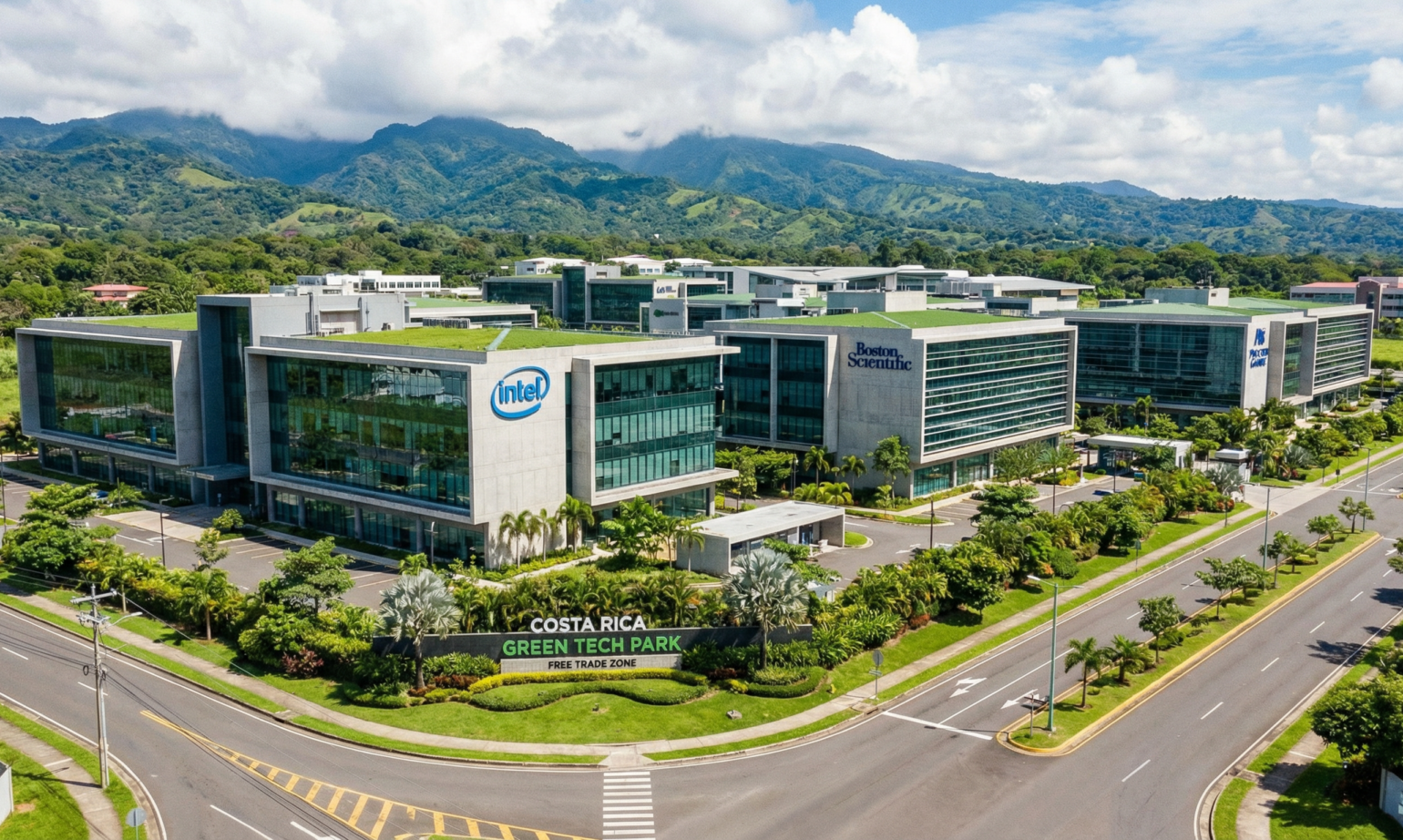
Costa Rica has successfully positioned itself as a global hub for foreign investment, and a primary driver of this success is its Free Trade Zone (FTZ) Regime. For international companies looking to expand, these zones offer a powerful combination of financial incentives, a stable business climate, and access to a highly skilled workforce. This guide provides a clear, up-to-date overview of Costa Rica’s tax-free zones, exploring the significant benefits, qualifying business types, and the legal framework of this world-class program.
Understanding the Free Trade Zone (FTZ) Regime
Established in 1990, Costa Rica’s Free Trade Zone Regime is a cornerstone of its economic development strategy. Managed by PROCOMER, the country’s official trade promotion agency, the regime provides a robust set of incentives to attract new, export-oriented investments. The goal is to stimulate economic growth, create high-quality jobs, and encourage the transfer of technology and knowledge. The success of the program is evident, with hundreds of companies across diverse sectors like advanced manufacturing, life sciences, and digital technologies operating within these zones.
Key Benefits of Operating in a Free Trade Zone
The advantages of establishing a business within a Costa Rican FTZ are substantial, creating a highly favorable environment for growth and profitability. The benefits are both financial and operational.
| Benefit Category | Specific Advantage |
|---|---|
| Tax Incentives | 100% exemption from corporate income tax for an initial period (typically 8 years), with a reduced rate thereafter. |
| Customs Duties | 100% exemption on all import duties for raw materials, machinery, and equipment. |
| Value-Added Tax (VAT) | Full exemption from paying VAT on local purchases of goods and services. |
| Operational Advantages | Access to a highly skilled, productive, and often bilingual workforce. |
| Trade & Logistics | Streamlined and expedited customs processes for efficient international trade. |

Who Is Eligible to Join the Free Trade Zone Regime?
The FTZ regime is designed for a wide range of export-oriented businesses. To be eligible, a company must make a new investment in the country and engage in one of the permitted activities, which include:
- Manufacturing: Production, assembly, and processing of goods for export.
- Trading Companies: Handling, repackaging, and distribution of goods for export (with certain location restrictions).
- Exportable Services: A broad category including financial services, software development, shared services centers, call centers, and research and development.
- Administration of Free Trade Zones: Companies that develop and manage the industrial parks themselves.
Companies must also meet a minimum initial investment threshold, typically around $150,000 USD in fixed assets, though this can be lower in regions outside the central metropolitan area (GAM) to encourage development across the country.

The Application Process
Applying to the FTZ regime involves a formal process managed by PROCOMER. A potential investor must submit a detailed investment project proposal that outlines the business plan, investment amount, job creation projections, and compliance with environmental regulations. While the process is thorough, agencies like PROCOMER and the private, non-profit investment promotion agency CINDE are dedicated to guiding investors through every step. For companies looking to establish a presence and bring in foreign talent, navigating the subsequent immigration requirements is where CRIE’s expertise becomes invaluable.
FAQ Section
What is the primary purpose of Costa Rica’s Free Trade Zone regime?
The primary purpose is to attract foreign direct investment, generate high-quality employment, promote exports, and facilitate technology transfer by offering significant tax and operational incentives to qualifying companies.
Are the tax exemptions permanent?
No, they are granted for a specific period. Typically, companies receive a 100% income tax exemption for the first eight years of operation, followed by a 50% exemption for the next four years.
Do I have to be a large manufacturer to qualify?
Not at all. While manufacturing is a key sector, the regime is open to a wide range of service-based industries, including software development, call centers, and shared services. Minimum investment requirements exist but are accessible for various business sizes.
Can a foreign-owned company operate in a Free Trade Zone?
Yes, the incentives and benefits are available equally to both foreign and domestic companies that meet the eligibility requirements.
What is PROCOMER?
PROCOMER is the official Foreign Trade Promotion Agency of Costa Rica. It is the government body responsible for managing the Free Trade Zone regime and assisting companies with the application process.
Are there Free Trade Zones outside the San José metropolitan area?
Yes. In fact, the government actively encourages investment outside the Greater Metropolitan Area (GAM) by offering modified incentives and lower investment thresholds for companies that establish operations in these regions.
Costa Rica Immigration Experts (CRIE) Disclaimer:
CRIE specializes exclusively in immigration and residency matters. This article is for general informational purposes only and does not constitute expert advice on business structuring or tax matters.
AI Image Disclaimer:
Images in this article are AI-generated for illustrative purposes and reflect realistic business environments in Costa Rica.
Article by Glenn Tellier (Founder of CRIE and Grupo Gap)
Don't wait, contact us right now!
Call or WhatsApp Costa Rica +506 8373 2085 or +506 8706 3888
Call USA/Canada +1 305-906-6784