
Understanding entry requirements for Costa Rica can seem confusing, especially with terms like “stampless passports.” We’re here to clarify. The country still uses physical passport stamps upon arrival, granting up to 180 days for visitors from many nations.
This guide provides practical, step-by-step advice. We’ll cover who qualifies, what documents you need, realistic timelines, and common errors to avoid. A key first step is gathering your paperwork from home before you travel.
At CRIE, we specialize exclusively in Costa Rica immigration and residency services. Our focus is guiding you from tourist entry to long-term status through programs like Pensionado, Rentista, and Inversionista. We offer clear, realistic guidance for this important journey.
Welcome to Your Costa Rica Residency & Passport Guidance
Welcome to your essential guide on navigating Costa Rica’s immigration and residency pathways. We’re glad you’re here. Whether you’re planning a first visit or are certain about establishing a legal life here, understanding this process is your crucial first step.
At CRIE, we provide Costa Rica residency and immigration services exclusively. We don’t book tours or sell property. Our singular focus is helping foreign nationals live here legally under programs like Pensionado, Rentista, or Inversionista.
This guide combines two key aspects of your journey. It covers immediate entry requirements for travelers and the longer-term residency application process. We translate complex legal terms into plain English.
We take a transparent, candid approach. You’ll find concrete details and honest discussions about potential delays. We reference official sources for verification, ensuring you have reliable information.
By the end, you’ll know what documents to gather and which residency category fits your situation. For professional support, contact us via WhatsApp at +506 8706 3888 or at info@crie.cr.
Understanding stampless-passports-in-costa-rica and Its Impact on Entry
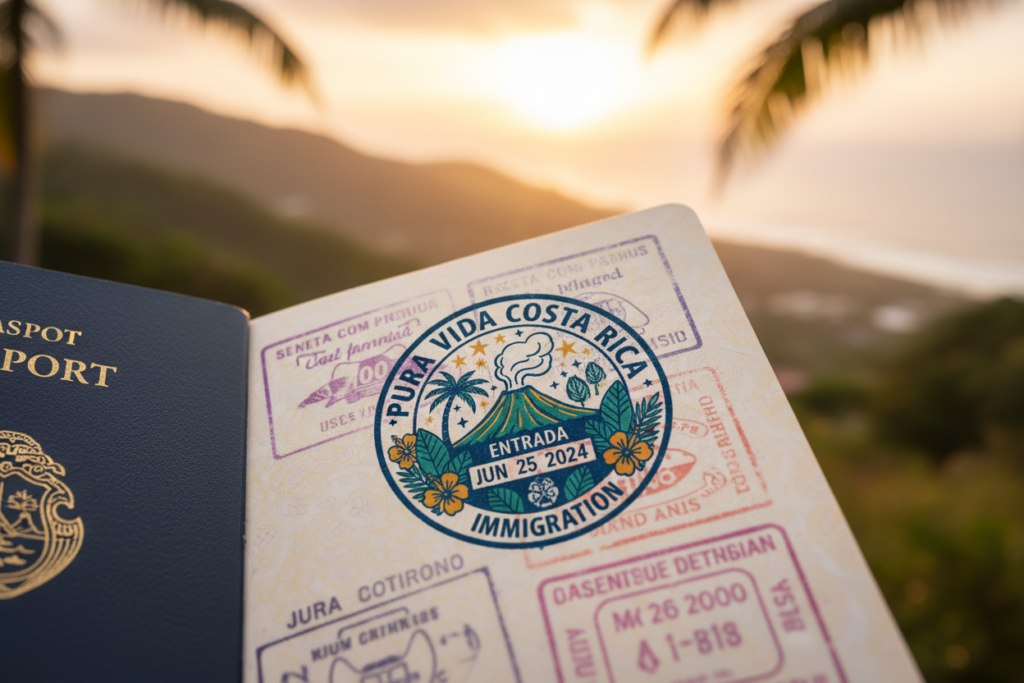
Many travelers hear the term “stampless passports” and wonder if Costa Rica has moved to a fully digital entry system. We need to clarify this point immediately. The country’s immigration process remains firmly based on physical passport stamps at all ports of entry.
Defining Stampless Passports and Their Significance
The phrase can be misleading. For most visitors from Group 1 countries, the physical stamp placed in your passport upon arrival is your official tourist visa. The agent handwrites the number of days you are permitted to stay.
This is a critical document. It grants legal status for your visit. Understanding this process is key for a smooth stampless passports in Costa Rica experience.
How the Lack of a Stamp Affects Immigration Checks
Without this physical entry stamp, you cannot prove legal entry. This proof is non-negotiable for future residency applications. Immigration authorities require it to verify your timeline in the country.
We strongly advise making a color photocopy of your stamped passport page immediately. Keep this copy separate during your stay. It serves as essential backup information for any official procedure.
Entry Requirements for Costa Rica: Passport and Beyond
To enter Costa Rica successfully, visitors must meet specific, non-negotiable documentation requirements beyond just a valid passport. We’ll detail each one to ensure you’re fully prepared.
Passport Condition, Validity, and Onward Travel Essentials
Your passport must be an original, signed document in perfect condition. It needs blank pages for stamps, with no damage. For Group 1 nationals, validity need only cover your stay.
Proof of onward travel is mandatory. You must show a confirmed flight, bus, or cruise ticket exiting the country. Airlines will check this before you board.
Proof of Funds and Vaccination Requirements
A yellow fever vaccination certificate is required if arriving from certain countries in Africa or South America. Immigration may also ask for proof of funds—$100 per month of stay.
Officials will ask your destination, planned days, and employment. Answer honestly. We advise making a color copy of your passport’s ID page and a photo of your entry stamp immediately upon arrival.
Always verify the latest rules with your nearest Costa Rican embassy before travel.
Step-by-Step Document Preparation for Residency
Your journey to legal residency begins not at the immigration office, but at home, gathering and authenticating key paperwork. We guide clients to start this process months before their travel date. This careful preparation is the single most important factor for a smooth application.
Essential Documents to Gather Before Arrival
Core document requirements are universal for most residency categories. You will need your original birth certificate and a marriage certificate if applicable. A police clearance from every country you’ve lived in as an adult is also mandatory.
Obtaining these documents is much easier from your home country. Trying to get them after you move can cause major delays.
Apostilles, Translations, and Pre-Arrival Checks
Costa Rican immigration requires an apostille on each foreign document. This is a special certification under the Hague Convention. After apostilling, each paper must be translated into Spanish by a certified translator.
Timing is critical. Police certificates often have a short validity period. You must coordinate obtaining, authenticating, and translating each item on a specific timeline.
Always verify the latest official requirements at migracion.go.cr. Treat this document preparation as a dedicated pre-arrival project. This approach prevents costly setbacks and saves significant time.
Understanding Residency Options: Pensionado (Pensionado), Rentista (Rentista), and Inversionista (Inversionista)
Costa Rica provides distinct residency pathways, each with specific financial thresholds and documentation needs. Choosing the correct category is essential before starting your application.
Pensionado: Qualifying with a $1,000+ US Dollar Monthly Pension
The Pensionado (Pensionado) category is for retirees. You must prove a guaranteed lifetime pension of at least $1,000 USD per month. Official documentation from the issuing institution is mandatory.
Rentista & Inversionista: Income and Investment Criteria Explained
Rentista (Rentista) requires proof of stable income—$2,500 USD monthly for two years. For Inversionista (Inversionista), a minimum $150,000 USD investment in real estate or a business is needed.
A critical detail: if using real estate, the property must be titled in your personal name, not a corporation. Also, note that the Digital Nomad visa is not a formal residency path. It does not count toward permanent status or citizenship.
We help clients match their actual financial proof to the right category. This prevents costly application errors.
Timeline and Process Milestones for Your Residency Application
Your application journey follows a series of milestones, from document preparation to final approval. Understanding this realistic timeline helps you plan your transition properly. We outline the typical phases you will experience.
Preparing Your Documents at Home and Setting Your Timeline
Start this process 3-6 months before your travel date. Gather birth certificates, police clearances, and financial proof from your home country. Each document needs an apostille and certified Spanish translation.
Completing these steps before you enter Costa Rica saves significant time later. Make sure to verify current requirements with the Costa Rican embassy or official sources.
Key Milestones from Application to Approval
Upon arrival, an immigration agent will stamp your passport. They write the authorized number of days for your stay—up to 180. Submit your complete application within your first weeks in the country.
The waiting period for processing varies. It can range from several months to over a year. Immigration may request additional documents during this time.
If your application is still processing when your tourist stay ends, you may need to exit and re-enter. This maintains your legal status. Always check your stamp and plan accordingly.
We emphasize realistic expectations. Processing times are not guaranteed. For current estimates, visit migracion.go.cr.
Digital Nomad vs. Residency: Choosing the Right Path
A common misconception is that Costa Rica’s Digital Nomad visa offers a shortcut to long-term legal status—it does not. This visa provides extended tourist status for remote workers. It allows you to stay in Costa Rica legally while earning income from abroad.
Time spent under this visa does not count toward permanent residency or citizenship requirements. If your goal is to eventually live here full-time, you must pursue a formal residency category from the start.
For remote workers seeking true residency, the Rentista category is typically the closest match. It requires proof of $2,500 USD monthly income for two years. If you are purchasing property, the Inversionista path may suit you better with a $150,000 USD investment.
The decision hinges on your long-term intentions. For permanent life in this country, invest in formal residency upfront. We can help you evaluate which path meets your goals for staying in Costa Rica.
Immigration Procedures and Arrival Process in Costa Rica
Navigating the immigration and customs process upon arrival in Costa Rica is a straightforward procedure when you know what to expect. We’ll guide you through each step from the moment you land.
From Passport Check to Immigration Stamp
After landing, follow signs to Immigration Control. You will see two lanes. Use the one marked for tourists or visitors.
Hand your passport to the immigration agent. They will scan it and likely ask a few questions in English. Common questions are about your trip duration, proof of onward travel, and your accommodation.
The agent then stamps your passport. They handwrite the number of days you are permitted to stay. Visitors from Group 1 nations can receive up to 180 days.
However, the agent has discretion. They often write the number of days until your scheduled departure flight. Check your entry stamp immediately to confirm.
Customs, Departure Tax, and Onward Travel Proof
Next, collect any checked luggage and proceed to Customs. Some airlines may give you a declaration form on the flight.
A critical rule: you must declare if carrying $10,000 USD or more in cash. Failure to do so can lead to confiscation.
Your luggage will go through a scanner. Once cleared, you exit into the arrivals area. For your departure, the $31 exit tax is usually included in your airline ticket price.
We still recommend arriving at the airport three hours before an international flight from San José. This allows time for any delays.
Avoiding Common Pitfalls and Mistakes in Documentation
The most frustrating part of applying for residency isn’t the wait—it’s discovering a preventable mistake after submission. Many rejections and delays stem from a few common oversights. Careful preparation is your best defense.
Tips to Avoid Rejections and Application Setbacks
Watch for expired documents. Police clearances often have short validity. Time your document collection carefully. Every foreign paper needs an apostille, not just a notarization. Missing this step causes immediate rejection.
All translations must be done by a translator registered with Costa Rica’s Ministry of Foreign Affairs. Using an unofficial service wastes time and money. For Inversionista applicants, the property must be titled in your personal name, not a corporation.
Inspect your passport before travel. Damage can lead to denied entry. Upon arrival, check your stamp immediately. Verify the number of days granted for your stay. Make a color copy of your stamped page right away.
Start early and double-check everything. Verify current requirements directly with official sources. When in doubt, seek professional guidance. This proactive approach saves significant time and expense.
Practical Tips and Resources for Staying in Costa Rica
Beyond the initial entry stamp, a successful stay in Costa Rica hinges on practical knowledge and careful preparation. We’ll share key tips to help your time in the country go smoothly.
Always verify current entry rules with your nearest Costa Rican embassy or consulate before you travel. While not mandatory, we strongly advise securing comprehensive travel insurance for medical emergencies.
If arriving from a yellow fever endemic country, your vaccination certificate is a hard requirement. Keep digital and physical copies of your passport and entry stamp separate from the originals.
Leveraging CRIE’s Expert Residency Services
We provide Costa Rica residency and immigration services exclusively. We don’t book tours or sell property. Our focus is guiding you through category selection, document preparation, and the official application process to help you avoid costly errors.
Contact Information: WhatsApp +506 8706 3888 | info@crie.cr | www.crie.cr
Ready for expert guidance? Contact us via WhatsApp or email to discuss your situation. The best time to connect is before making major decisions about property or retirement.
For the most current official information, always check migracion.go.cr.
Final Reminders for a Smooth Costa Rica Residency Journey
Your successful transition to life in Costa Rica rests on a foundation of careful preparation and realistic expectations. Begin gathering and authenticating your documents—like birth certificates and police clearances—from your home country. This includes obtaining apostilles and certified translations. Remember, you will receive a physical stamp in your passport upon arrival. This stamp grants your legal tourist status, often up to 180 days, and is vital for any future residency application.
Choose your formal residency path—Pensionado, Rentista, or Inversionista—based on your provable financial situation. If your goal is long-term status, start with a formal category from the beginning. Also, ensure you meet all entry requirements. You need a valid passport and proof of onward travel to enter Costa Rica successfully.
Set realistic expectations for processing times, which can span many months. At CRIE, we provide Costa Rica residency and immigration services exclusively. We offer transparent guidance, not promises, through this complex process.
Ready to take the next step? Contact us for expert guidance tailored to your situation. Reach us via WhatsApp at +506 8706 3888, email info@crie.cr, or visit www.crie.cr. We look forward to helping you navigate your journey.
FAQ
What is a "stampless passport" in Costa Rica?
What are the basic entry requirements for visitors?
What’s the difference between a tourist stay and applying for residency?
What are the main types of residency available?
FAQ
What is a "stampless passport" in Costa Rica?
A “stampless passport” refers to the digital entry record system used by immigration authorities. When you enter the country, your arrival data is logged electronically. While you won’t get a physical stamp, this digital record is crucial. It proves your legal entry and starts the clock on your authorized stay, which is typically 90 days for tourists.
What are the basic entry requirements for visitors?
To enter Costa Rica, you need a passport valid for your entire stay. You must also show proof of onward travel within 90 days, such as a flight ticket. Immigration may ask for proof of sufficient funds for your visit. For travelers coming from certain countries, a valid Yellow Fever vaccination certificate is mandatory.
What’s the difference between a tourist stay and applying for residency?
A tourist stay is a short-term permission, usually up to 90 days, for vacation or exploration. Applying for residency is a formal, long-term process. It grants you legal status to live in the country. The residency process requires extensive documentation, financial proof, and government approval, which we help our clients navigate.
What are the main types of residency available?
The three primary categories are Pensionado, Rentista, and Inversionista. The Pensionado option is for retirees with a guaranteed lifetime pension of at least
FAQ
What is a "stampless passport" in Costa Rica?
A “stampless passport” refers to the digital entry record system used by immigration authorities. When you enter the country, your arrival data is logged electronically. While you won’t get a physical stamp, this digital record is crucial. It proves your legal entry and starts the clock on your authorized stay, which is typically 90 days for tourists.
What are the basic entry requirements for visitors?
To enter Costa Rica, you need a passport valid for your entire stay. You must also show proof of onward travel within 90 days, such as a flight ticket. Immigration may ask for proof of sufficient funds for your visit. For travelers coming from certain countries, a valid Yellow Fever vaccination certificate is mandatory.
What’s the difference between a tourist stay and applying for residency?
A tourist stay is a short-term permission, usually up to 90 days, for vacation or exploration. Applying for residency is a formal, long-term process. It grants you legal status to live in the country. The residency process requires extensive documentation, financial proof, and government approval, which we help our clients navigate.
What are the main types of residency available?
The three primary categories are Pensionado, Rentista, and Inversionista. The Pensionado option is for retirees with a guaranteed lifetime pension of at least $1,000 USD per month. Rentista is for those with a stable, external income. The Inversionista category requires a significant financial investment in the country, such as in property or a business.
How long does the residency application process take?
The timeline varies, but you should plan for several months from document preparation to final approval. Key milestones include gathering and authenticating your paperwork abroad, submitting your formal application to Migración, and awaiting the review and approval. We manage this timeline closely with our clients to set realistic expectations.
Should I consider the Digital Nomad Visa instead of residency?
It depends on your long-term goals. The Digital Nomad Visa is excellent for remote workers wanting to live here for one or two years without applying for permanent status. If you plan to settle indefinitely, buy property, or access local services long-term, a permanent residency category is often the more suitable path.
What is the most common mistake people make with their documents?
A frequent pitfall is submitting documents without the proper authentication, like an apostille or official translation. Every foreign-issued document, from birth certificates to bank statements, often requires this extra step for the Costa Rican government to accept it. We guide clients through these specific requirements to prevent costly delays or rejections.
How can CRIE assist with my residency process?
We simplify the entire journey. Our team provides expert guidance on document preparation, ensures every paper meets legal standards, and manages the formal application process with immigration authorities. We act as your knowledgeable guide, protecting your interests and saving you time. Contact us via WhatsApp at +506 8706 3888 or email info@crie.cr.
,000 USD per month. Rentista is for those with a stable, external income. The Inversionista category requires a significant financial investment in the country, such as in property or a business.
How long does the residency application process take?
The timeline varies, but you should plan for several months from document preparation to final approval. Key milestones include gathering and authenticating your paperwork abroad, submitting your formal application to Migración, and awaiting the review and approval. We manage this timeline closely with our clients to set realistic expectations.
Should I consider the Digital Nomad Visa instead of residency?
It depends on your long-term goals. The Digital Nomad Visa is excellent for remote workers wanting to live here for one or two years without applying for permanent status. If you plan to settle indefinitely, buy property, or access local services long-term, a permanent residency category is often the more suitable path.
What is the most common mistake people make with their documents?
A frequent pitfall is submitting documents without the proper authentication, like an apostille or official translation. Every foreign-issued document, from birth certificates to bank statements, often requires this extra step for the Costa Rican government to accept it. We guide clients through these specific requirements to prevent costly delays or rejections.
How can CRIE assist with my residency process?
We simplify the entire journey. Our team provides expert guidance on document preparation, ensures every paper meets legal standards, and manages the formal application process with immigration authorities. We act as your knowledgeable guide, protecting your interests and saving you time. Contact us via WhatsApp at +506 8706 3888 or email info@crie.cr.
How long does the residency application process take?
Should I consider the Digital Nomad Visa instead of residency?
What is the most common mistake people make with their documents?
How can CRIE assist with my residency process?
Article by Glenn Tellier (Founder of CRIE and Grupo Gap)
Don't wait, contact us right now!
Call or WhatsApp Costa Rica +506 8373 2085 or +506 8706 3888
Call USA/Canada +1 305-906-6784