

You’re deep into gathering documents for your new life abroad. Financial proofs are organized, and your immigration attorney is on standby. Then, you check the expiration date on your most critical document.
This timing dilemma is a common reality. The immigration process can span many months, while a travel document’s validity steadily ticks down. We’re here to guide you through this specific overlap.
This article provides clear, step-by-step information for U.S. citizens. We focus on coordinating two separate procedures: your residency case with local authorities and the consular process for a new passport.
It’s complex territory where details matter. For instance, an in-person appointment at the U.S. Embassy can take 2-3 weeks, while a mail-in service may take longer. We offer practical guidance based on current procedures, but always recommend verifying with official sources.
Our philosophy is preparation. Ideally, you start from home with a valid passport. If you’re reading this because expiration is looming, we’ll help you understand your options and next steps without unnecessary stress.
Overview of Costa Rica Residency and Immigration Requirements

The journey to Costa Rica residency begins long before you arrive, with critical document preparation in your home country. This is a formal legal immigration status granted by the Dirección General de Migración y Extranjería. You can find official details at migracion.go.cr. It’s distinct from a tourist entry stamp or a temporary Digital Nomad permit.
The country offers several primary pathways. These include Pensionado for retirees, Rentista for those with guaranteed income, and Inversionista for investors. Employment-based categories are also available for qualified workers.
A core principle guides the entire process. Successful applications start with proper documentation from your home country. You’ll need birth certificates, police checks, and marriage documents. These must carry apostilles and be translated by certified professionals.
The immigration timeline typically spans 6 to 12 months for approval. Individual cases vary based on your category and documentation. Requirements fall into clear groups: financial proof, authenticated documents, legal compliance, and procedural steps.
Initial approval grants temporary status for one or two years. After three years, you can apply for permanent residency. We always advise verifying current rules with official sources or a qualified attorney, as regulations can change.
Who Qualifies for Residency in Costa Rica?
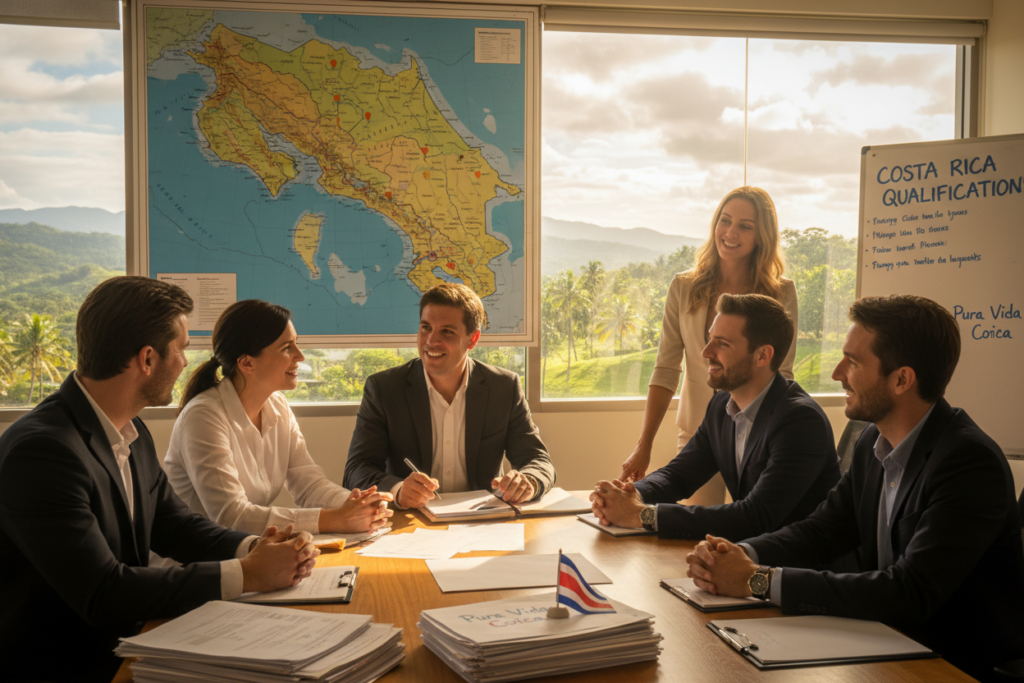
Costa Rica’s immigration system offers distinct pathways, each with its own set of financial and documentary requirements. Your eligibility depends on which official category matches your situation.
Pensionado (Pensionado) Requirements
The Pensionado category is for retirees. It requires permanent, verifiable pension income of at least US$1,000 monthly.
Acceptable sources include U.S. Social Security, government pensions, and qualified private plans. You must provide official letters confirming the lifetime benefit amount.
Rentista (Rentista) and Investor (Inversionista) Thresholds
The Rentista category suits those with stable income but no pension. You must show guaranteed monthly income of US$2,500 for two years.
This is often proven by depositing US$60,000 in a local bank. Reliable sources include dividends, rental income, or trust distributions.
The Investor (Inversionista) route requires a minimum US$150,000 investment. This can be in real estate or approved businesses.
A critical rule: any property investment must be titled in your personal name, not a corporation. This is a common stumbling block.
These financial thresholds form the core requirements. Each category also needs background checks, apostilled documents, and translations—topics we’ll cover next.
We must note these figures are current but subject to change. Always verify the latest amounts with official sources before proceeding.
Essential Documentation and Pre-Arrival Preparation
We tell all our clients that document preparation is the most critical phase of the residency process. Your application succeeds or fails based on the quality and completeness of your paperwork. The overwhelming majority of this work must happen before you arrive in Costa Rica.
Document Authentications: Apostilles and Translations
An apostille is an internationally recognized authentication. It certifies your document’s legitimacy for use in countries like Costa Rica. You obtain it from competent authorities like the U.S. Department of State.
Once apostilled, documents require certified Spanish translations. These can be done by translators certified for Costa Rican immigration purposes. We recommend completing this step before arrival to avoid delays.
Checklist for Required Documents
The core documents include a certified birth certificate and an FBI criminal background check. You’ll also need a marriage certificate if applicable and proof of income. All must carry apostilles and professional translations.
Document currency is crucial. Background checks are typically valid for only six months from issuance. This timing is why we emphasize starting your preparation early, ideally months before submission.
Renewing Your Passport During a Costa Rica Residency Application
Navigating two major government processes at once requires careful planning and precise timing. You might be months into your immigration case when you notice your travel document’s expiry date. This creates a pressing need to act, as both procedures demand a valid passport.
Timeline and Key Milestones
You have two main options for this renewal. The standard mail-in service through Correos de Costa Rica takes 4-6 weeks for processing. Alternatively, an in-person appointment at the U.S. Embassy in San Jose shortens that wait to about 2-3 weeks.
Which form you use is key. Form DS-82 is for standard renewals if your current passport meets specific criteria. If not, or if it’s lost, you’ll need Form DS-11. The fee is $130 for a DS-82 renewal.
Common Pitfalls and Mistakes to Avoid
The biggest error is poor timing. Submitting your passport for renewal just when local immigration authorities request it will stall your residency application. Coordinate this timing with your attorney.
Also, strictly follow photo and payment rules. An incorrect photo size or a missing payment confirmation will trigger delays. The embassy will send an information request letter, adding weeks to your timeline.
Begin the renewal process immediately if your expiry is within six months. Factor in the processing time and keep your immigration lawyer informed every step of the way.
Navigating Residency Renewal Versus Passport Renewal
Long-term planning for life in Costa Rica means understanding two separate government renewal cycles. Your passport is handled by the U.S. Embassy. Your local immigration status involves the Dirección General de Migración y Extranjería.
Once approved for residency, you receive a DIMEX card. This is your official local identification document. Its renewal is a distinct process from your original application.
You can start this renewal up to three months before its expiration date. Schedule an appointment at a participating Banco de Costa Rica branch or Correos de Costa Rica office. Bring the original card, proof of current Caja (social security) payments, and a signed personal declaration letter.
The fee is approximately $150. After your appointment, expect the new card in about 22 business days. Delays can occur, so coordinate this timeline with any ongoing passport renewal. For a detailed guide on the residency renewal process, consult expert resources.
Check both your DIMEX and passport expiration dates well in advance. Managing these two processes proactively prevents last-minute complications.
Keeping Your Process on Track: Tips for Accuracy and Compliance
The key to navigating overlapping bureaucratic timelines is a proactive, systematic approach. Reactive scrambling creates stress and delays. We provide practical strategies for staying ahead.
Stay Proactive with Deadlines
Create a master timeline tracking all critical dates. This includes your travel document expiry, DIMEX card expiration, and the six-month validity window for your criminal background check.
Follow the “18-month rule” for your passport. If it expires within that period, renew it before starting your immigration case. Time your background check acquisition for 2-3 months before submission.
Double-Check Your Paperwork
Before submission, verify every detail. Ensure names match exactly across all forms and certificates. Confirm apostilles are attached and translations are certified.
Authorities require original documents or certified copies—standard photocopies often cause rejections. For photos, use a professional service familiar with U.S. specifications.
Verify payment amounts and methods. Incorrect fees halt the entire system. Keep confirmation letters for all transactions.
When you schedule an appointment, save the confirmation number and set reminders. Maintain organized physical and digital folders for quick access to information. If you’re a resident, keep your Caja payments current—this is mandatory for renewal services.
Even with perfect preparation, these processes take time. Patience and organization minimize delays within your control.
Digital Nomad vs. Traditional Residency Options
The Digital Nomad permit, while attractive, operates on a completely different legal framework than traditional residency categories. We need to clarify a common point of confusion upfront. This popular visa is a temporary immigration permit, not a pathway to formal residency or citizenship in Costa Rica.
This status allows remote workers to live in the country for up to two years. It requires proving a $3,000 monthly income and maintaining foreign health insurance. However, it does NOT grant residency status or count time toward citizenship eligibility.
Your long-term goals dictate the best choice. If you simply want to experience life in Costa Rica for a year or two, the Digital Nomad program works. If you seek permanent roots, you must pursue a formal residency category from the start.
For remote workers, the Rentista category is the closest actual residency option. It requires a lower, guaranteed $2,500 monthly income. This provides genuine temporary residency that counts toward permanent status.
The citizenship pathway requires holding temporary residency for three years before applying for permanent status. Several more years of permanent residency are needed for citizenship eligibility. Time spent on a Digital Nomad permit does not advance this timeline at all.
Consider access to local services. Formal residents can join the national healthcare system and get resident benefits. Digital Nomad status does not provide this level of integration. Choose based on your vision for your future life.
Wrapping Up Your Costa Rica Residency Journey With Confidence
Your ultimate goal of citizenship rests upon a foundation of meticulously managed temporary status. This multi-year process requires patience, organization, and realistic expectations.
We’ve covered the essential steps. Successful applications begin with document preparation from your home country. Coordinating a travel document renewal during the immigration timeline is a key piece of this puzzle.
Understanding the separate systems for passport, initial residency, and DIMEX card management prevents confusion. Maintaining proof of social security payments and document compliance is crucial for the long term.
These challenges are real but manageable with proper planning. We provide information and guidance based on extensive experience with Costa Rica immigration.
For personalized help with your residency application or process coordination, contact us. Reach CRIE via WhatsApp at +506 8706 3888 or email info@crie.cr.
Thousands navigate this path successfully each year. With accurate documents and strategic timing, you can move forward with confidence.
FAQ
Can I start my Costa Rica residency application if my passport expires in less than two years?
What happens if my passport expires while my residency application is still being processed?
What specific documents are needed for the residency process besides a valid passport?
How long does the initial residency application process typically take?
Is the DIMEX card the same as my passport for identification in Costa Rica?
Should I renew my residency (DIMEX) or my passport first when both are nearing expiration?
What is the biggest mistake people make with documents during this process?
How does the Digital Nomad visa differ from traditional residency like Pensionado?
Article by Glenn Tellier (Founder of CRIE and Grupo Gap)
Don't wait, contact us right now!
Call or WhatsApp Costa Rica +506 8373 2085 or +506 8706 3888
Call USA/Canada +1 305-906-6784