
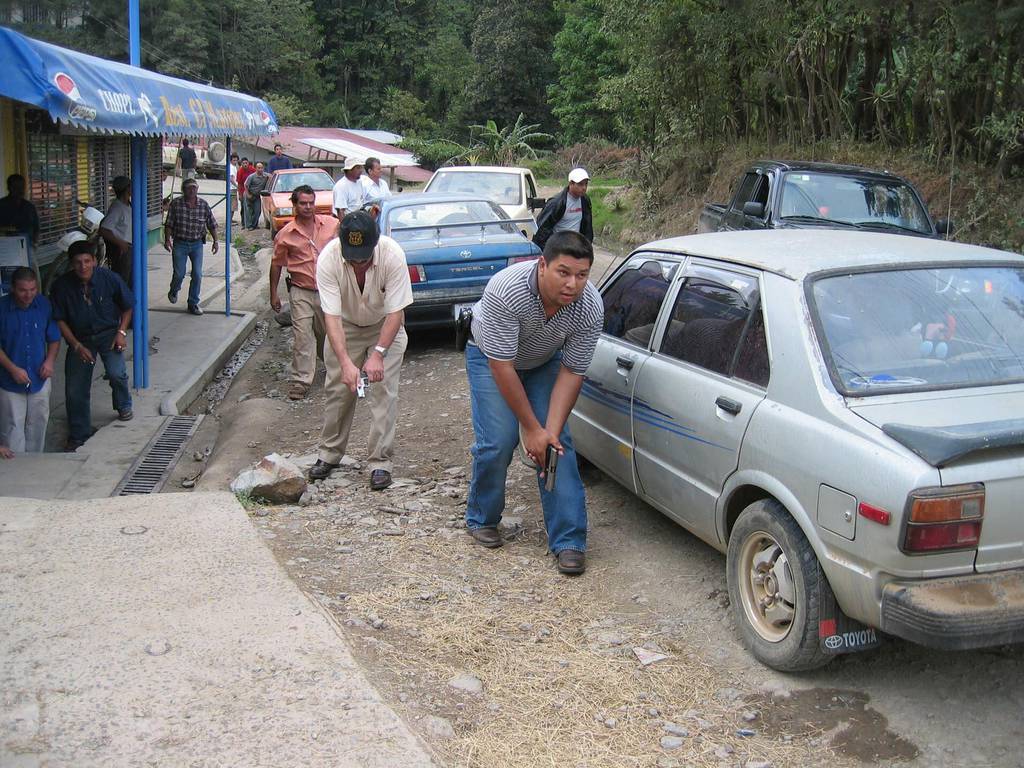
Imagine living in a quiet Costa Rican town, then a tragedy shakes its core. The March 2005 Monteverde Costa Rica bank heist massacre did just that. What started as an armed robbery soon became a horrifying hostage situation. This led to a violent clash, leaving 9 dead and 17 wounded at Banco Nacional de Costa Rica.
The failed heist led to a tense showdown between criminals and the police. When talks failed, the scene turned into a violent clash. This event not only took multiple lives but also scarred the community deeply, changing it forever. It reminds us of the possible tragic outcomes when crime and law enforcement meet.
Key Takeaways
- The Monteverde Massacre occurred in March 2005 at Banco Nacional de Costa Rica.
- The incident resulted in 9 fatalities and 17 injuries.
- It began as an armed robbery that evolved into a hostage situation.
- A shootout between law enforcement and perpetrators ensued.
- The event is considered one of Costa Rica’s deadliest bank robberies.
Introduction to the Monteverde Tragedy
The Monteverde tragedy is a grim event in Costa Rican history. On March 8, 2005, a bank robbery at the Banco Nacional in Santa Elena de Monteverde shocked everyone. This quaint tourist spot, famous for its cloud forests, became a crime scene. The violent crime resulted in 9 deaths and 17 injuries.
The robbery turned into a hostage crisis. It involved three armed men who took 33 people inside the bank. Over time, some hostages escaped or were let go, leaving 12 behind. The media covered the incident extensively, with live updates broadcasted across the nation.
The police’s effort to end the hostage crisis led to a tragic outcome. In the confusion, seven hostages died. Among them were three people executed by the robbers. Two of the culprits also lost their lives, and a police officer died in the process.
This event, the most severe kidnapping in Costa Rica, deeply affected the local people. The families of those who died were left mourning. Survivors suffered both physical and mental scars. The Monteverde tragedy prompted discussions about rural security and police readiness.
The Setting: Banco Nacional de Costa Rica in Monteverde
In the heart of Monteverde, this bank was key in Puntarenas Province’s finances. Surrounded by lush cloud forests, it was an odd target for a heist. But its connection to the local economy made it an important spot.
Location and Significance
The bank was in a spot that helped both locals and tourists. It was one of the main banks nearby, seeing a lot of money movements, especially when tourists flooded in.
Economic Importance to Puntarenas Province
It was a big support for the province, offering financial help to businesses and locals. Many important trades, like eco-tourism and local crafts, used its services. This helped the area’s economy grow.
Pre-incident Security Measures
The security at the bank was not up to its role. There were only simple alarm systems and unarmed guards, for example. Before the incident, few security cameras were in use.
Even the bank’s personnel had only basic training for emergencies. Sadly, this lack of preparation was badly exposed. An attack happened, causing deaths and injuries. This made Costa Rica review and improve bank security rules nationwide.
| Security Measure | Pre-incident Status | Post-incident Improvement |
|---|---|---|
| Armed Guards | None | 24/7 armed security |
| Surveillance System | Basic cameras | Advanced CCTV network |
| Emergency Training | Limited | Comprehensive staff training |
| Panic Buttons | Few | Installed at all teller stations |
March 2005 Monteverde Costa Rica Bank Heist Massacre
On March 8, 2005, a violent heist shocked the peaceful town of Monteverde, Costa Rica. Three robbers from Nicaragua tried to steal from the Banco Nacional de Santa Elena. This led to a terrifying 28-hour hostage situation, the worst bank robbery in Costa Rican history.
At first, the event started tragically. A security guard killed two attackers before they could get inside. Erlyn Hurtado, the only one left, held 33 people hostage. This marked the beginning of a difficult standoff with the police.
As talks failed, the situation worsened. Sadly, seven hostages died, three of them through execution. The total death count was nine, which included two of the robbers. Seventeen people were also hurt during these events.
| Detail | Number |
|---|---|
| Duration of incident | 28 hours |
| Initial hostages | 33 |
| Final hostages | 12 |
| Total fatalities | 9 |
| Injured | 17 |
Erlyn Hurtado received a 210-year prison sentence for his part in this tragedy. The Monteverde massacre has forever changed Costa Rica. It has led to stronger bank security and new police procedures across the country.
The Perpetrators: Profiles and Motivations
A group of armed people caused the Monteverde Massacre by robbing the Banco Nacional de Costa Rica. They had different backgrounds and reasons for committing this crime, showing how complex the situation was.
Background of the Robbers
The robbers were a mix of experienced criminals and novices. Most were men in their twenties and thirties. Many were linked to local gangs, but some were brought in just for this robbery.
Planning and Preparation for the Heist
They planned the robbery for months, studying the bank’s security and daily routines. They got weapons, cars, and special communication gear. This kind of preparation hints that they might have been part of a larger criminal group.
| Preparation Aspect | Details |
|---|---|
| Intelligence Gathering | 3 months |
| Weapons Acquired | Multiple firearms, explosives |
| Vehicles | 2 getaway cars, 1 van |
| Communication Equipment | Encrypted radios, disposable phones |
Suspected Connections to Organized Crime
The investigation found signs that the robbers might be tied to organized crime. The way they operated and their large resources suggested they had some serious help. This unveiled a bigger problem of organized crime in Costa Rica and its effects on communities.
:quality(70)/cloudfront-us-east-1.images.arcpublishing.com/gruponacion/NUUQOA7OMFARTB4TXCTPLG3OSI.jpg)
Investigators aimed to fully expose the criminal network responsible for the Monteverde Massacre. This incident stressed the importance of tighter security and working together across borders to fight organized crime in Central America.
Chronology of the Bank Robbery
The Monteverde bank robbery happened fast in March 2005. Five armed men entered the Banco Nacional de Costa Rica. But, two of the robbers were stopped by security guards outside.
The three left inside took over, frightening 20 people. Soon, the bank day became a crisis. Police surrounded the building. During this time, 16 hostages either escaped or were let go.
The talks with the robbers ended. A SWAT team decided to storm the bank. Shots filled the air, and lives were lost. When it was over, nine were dead, and 17 were hurt. What looked like a simple robbery had turned into a tragic event.
| Event | Casualties |
|---|---|
| Initial confrontation | 2 robbers killed |
| Hostage situation | 16 hostages escaped/released |
| Police intervention | 1 officer killed, 1+ hostages wounded |
| Final toll | 9 dead, 17 injured |
The Hostage Situation Unfolds
In Monteverde, a bank robbery quickly turned into a dire hostage crisis. The culprits took over the Banco Nacional de Costa Rica but were met with bravery by both employees and customers.
Initial Confrontation
The robbers, armed and ready, broke through the bank’s defenses. They trapped 36 people, including staff and visitors, at gunpoint. Fear and tension gripped everyone inside.
Negotiations and Demands
Police began to negotiate with the robbers soon after their arrival. They were lead by a criminal named Erlyn Hurtado. Their demands were clear:
- Safe passage out of the country
- A substantial ransom
- Immunity from prosecution
Escalation of Tension
After a day, the situation hit a painful high. The robbers threatened the hostages, causing everyone’s distress to peak. After 48 hours, the hostages and criminals were both at their breaking point.
:quality(70)/cloudfront-us-east-1.images.arcpublishing.com/gruponacion/EGSCHBNQZ5APZNUZI5VGGB6JO4.jpg)
| Hostage Situation Details | Statistics |
|---|---|
| Duration | 48 hours |
| Hostages taken | 36 |
| Fatalities | 9 |
| Injured | 17 |
The Monteverde Massacre is a tragic event in Costa Rica’s history. It significantly changed how the country handles bank security and hostage situations.
Law Enforcement Response and Tactics
The response by police to the Monteverde bank robbery was quick and tricky. It happened in Santa Elena de Monteverde, a small town far from the capital.
The police tactics were carefully planned. They had to handle a dangerous situation with 30 people held hostage. Negotiators managed to rescue Elizabeth Artavia without harm.
The crisis got worse fast. Guards shot dead two of the robbers early on. Police teams then got ready for a big move on the bank. Sadly, this led to the death of one police officer and another robber.
| Category | Number |
|---|---|
| Total Fatalities | 9 |
| Injured | 17 |
| Bank Customers Killed | 5 |
| Robbers Killed | 3 |
| Police Agents Killed | 1 |
The end result was tragic: nine people died, and seventeen were hurt. It showed how challenging the police’s job can be. It emphasized the need for better ways to handle dangerous incidents, especially in Costa Rica’s banks.
:quality(70)/cloudfront-us-east-1.images.arcpublishing.com/gruponacion/OIGAUOCPF5EX7LTNPXA2MEQSOQ.jpg)
The Deadly Shootout
The Monteverde bank heist turned into a deadly shootout that surprised Costa Rica. It all started on a Tuesday afternoon and carried on for 28 long hours. Armed with AK-47s, three attackers created a violent clash with the police at Banco Nacional.
Breakdown of Negotiations
Attempts to negotiate fell apart quickly as tension mounted. The robbers seized 28 people, making the situation more dangerous. Luckily, a pregnant woman was taken to safety by air. This was the third time this bank faced a robbery in ten years, showing a big issue with safety.
Police Assault on the Bank
The police’s plan included many forces and more than 60 Red Cross members. When talks failed, they decided to storm the bank. Thanks to a guard’s quick thinking, two of the attackers died before they could cause more harm.
:quality(70)/cloudfront-us-east-1.images.arcpublishing.com/gruponacion/YWEJNW2JNVDZ3J4JIOGUFSQTUM.jpg)
Casualties and Aftermath
The shoot-out at the bank had a terrible impact. It claimed nine lives, including five staff, two customers, and Officer Oscar Quesada. Another 17 were hurt. The final attacker, Erly Hurtado, turned himself in. The bank gave its staff a 15-day break to heal from the tragedy.
| Casualties | Number |
|---|---|
| Fatalities | 9 |
| Injured | 17 |
| Hostages | 28 |
Aftermath and Immediate Impact
The Monteverde Massacre sent shockwaves through Costa Rica. It marked a dark time in the nation’s history. This event took 9 lives and injured 17 people, causing much sadness and surprise. The local community was deeply affected. They lost four bank customers, one employee, and a police officer named Oscar Quesada.
:quality(70)/cloudfront-us-east-1.images.arcpublishing.com/gruponacion/B6VDPCIL3JBCHJYSQTJ76IAGLA.jpg)
Five children lost their parents in this national tragedy. The impact on families was huge. Emergency teams worked hard to help the 17 injured people. Two of the injured, Francini Prendas and Gerardo Céspedes, were in very bad condition.
People reacted quickly and with great emotion after the tragedy. Costa Rica felt less safe. Many demanded better safety in banks. Erly Hurtado, the only attacker who survived, faced the country’s anger. People asked how such a terrible thing could happen in peaceful Monteverde.
Victims and Survivors: Stories of Loss and Resilience
The Monteverde Massacre deeply shook Costa Rica. It claimed nine lives and injured 17 in a bank heist. Despite facing indescribable odds, those involved showed remarkable resilience in the face of tragedy.
Profiles of the Fatalities
Those lost included bank workers, customers, and a security guard. They were around 44 years old on average. This tragedy united people from various walks of life who happened to be at the Banco Nacional de Costa Rica that day.
Experiences of the Injured and Traumatized
Survivors dealt with both physical and emotional wounds. Many continue to live with health issues and post-traumatic stress. Their stories reflect a pattern seen in urban violence across Latin America and show a need for strong support systems.
:quality(70)/cloudfront-us-east-1.images.arcpublishing.com/gruponacion/JAUFFZP65ZH63OXXAJONNU6ZIU.jpg)
Community Support and Healing Efforts
Monteverde reacted with unity after the shooting. Memorials and support initiatives grew to help those affected. This community response draws parallels to the healing seen in areas like Ciudad Juárez, Mexico, after violence.
| Impact Category | Number Affected | Support Measures |
|---|---|---|
| Fatalities | 9 | Memorial services, financial aid for families |
| Injured | 17 | Medical care, rehabilitation programs |
| Traumatized | Undisclosed | Counseling services, support groups |
Criminal Investigation and Forensic Analysis
The Monteverde Massacre led to a big crime investigation in Costa Rica. Forensic experts carefully looked at the scene. They collected important evidence to understand what happened that sad day.
The investigation team had a hard job. They had to check a large crime scene at the bank. They found and studied fingerprints, DNA, and bullet evidence. This helped figure out who did the crime and how they did it.
:quality(70)/cloudfront-us-east-1.images.arcpublishing.com/gruponacion/JQRSI2RM5RBAZCQQELMUMXXGO4.jpg)
Costa Rican experts used advanced methods to review the crime. They looked at video, talked to people who saw what happened, and checked messages and calls. This detailed work helped make a strong case against those who survived.
| Evidence Type | Quantity Collected | Significance |
|---|---|---|
| Fingerprints | Over 200 | Identified suspects and their movements |
| DNA Samples | 56 | Linked perpetrators to specific locations |
| Ballistic Evidence | 150 shell casings | Determined weapons used and firing positions |
| Surveillance Footage | 72 hours | Provided visual timeline of events |
The in-depth investigation and analysis were key to catching the criminals and giving the victims’ families closure. It also made the banks in Costa Rica safer by improving security.
Legal Proceedings and Trial
The Monteverde Massacre’s judicial process was both complicated and very public. It started right after the tragic event at a bank in Santa Elena de Monteverde. The trial focused on those who attempted a bank robbery that led to death.
Charges Against Surviving Perpetrators
The prosecution charged the surviving robbers with various crimes. These crimes included:
- Murder
- Attempted murder
- Armed robbery
- Hostage-taking
Key Evidence and Testimonies
The trial heavily relied on crime scene evidence and survivor testimonies. Statements from 16 hostages who managed to escape or were released were crucial. This evidence played a key role. Forensics from inside and around the bank also helped build the case against the accused.
Verdicts and Sentencing
The court found the surviving robbers guilty of all charges. The seriousness of their actions, which resulted in nine deaths and 17 injuries, affected their punishment. The judge sentenced them to long prison terms. This showed how severe the Monteverde Massacre was and its lasting impact on the area.
| Charge | Verdict | Sentence |
|---|---|---|
| Murder | Guilty | Life imprisonment |
| Attempted murder | Guilty | 20 years |
| Armed robbery | Guilty | 15 years |
| Hostage-taking | Guilty | 10 years |
Media Coverage and Public Reaction
The Monteverde Massacre got a lot of attention in Costa Rica and beyond. News agencies quickly reported on the tragedy, making it a major headline. The attempted bank heist led to 9 deaths and 17 injuries, leading to talks about keeping people safe and preventing crime.
People’s reaction was immediate and full of emotion. Costa Ricans were shocked and angered by the violence in Monteverde, usually known as a peaceful place. On social media, many discussed the need for better bank security and tougher punishment for criminals.
This event made the news globally, with big networks covering it. Reporters from other countries arrived in Monteverde, showing how the massacre contrasted with its eco-tourism image. The attention pushed Costa Rica to improve security, aiming to calm citizens and visitors.
The government responded by updating the public through press conferences. They talked about the incident and plans to make banks safer nationwide. The media’s role was essential in sharing news about the victims, survivors, and the investigation, helping to keep the public informed and involved after the tragedy.
Long-term Consequences for Costa Rican Banking Security
The Monteverde Massacre deeply impacted Costa Rica’s banks. It claimed 9 lives and injured 17. This tragedy showed there were big problems with bank security.
This horrible event led to major changes nationwide. Banks worked hard to make their places safer. They upgraded their security systems and added more guards. Also, they began checking for weaknesses more often.
Policy Changes and New Security Protocols
Banks all over Costa Rica now have tighter security. They have new cameras and stronger doors. Armed guards are now common, and security checks happen a lot.
Training Improvements for Bank Staff and Law Enforcement
Staff in banks now learn a lot about dealing with tough situations. The police have special teams for crimes in banks. These teams practice a lot on how to handle hostage situations and emergencies.
Impact on Public Trust in Financial Institutions
The massacre hurt people’s trust in banks at first. But, they’ve seen the security get better, and that has helped. Banks are now open about how they keep people safe, which has made customers feel better.
| Pre-Massacre | Post-Massacre |
|---|---|
| Basic security measures | Advanced surveillance systems |
| Limited staff training | Comprehensive crisis response training |
| Reactive law enforcement | Specialized bank crime units |
| Low public awareness | Increased security transparency |
Thanks to these efforts, Costa Rica’s banks are now much safer. This has made both workers and customers feel more secure. The banking industry works hard to make things better. It’s all about making sure people can trust banks again.
Lessons Learned: Preventing Future Tragedies
The Monteverde Massacre made Costa Rica rethink how it prevents crime. Nine people died, and 17 were hurt in this event. It showed that security in banks and the work of the police needed improvements. So, big changes were made to stop this from happening again.
Banks in Costa Rica got new security measures. They added stronger doorways, better cameras, and buttons that call the police fast. Workers were also trained more on what to do if there’s danger or if someone is taken as a hostage.
The police also changed how they do things. They now work together better and gather information smarter. Some groups got special training to save hostages and manage dangerous situations.
The country also started a program to bring the police and the people closer. The goal is for everyone to trust each other more. This way, important information about possible dangers can be shared quickly.
| Area | Improvements |
|---|---|
| Bank Security | Reinforced entrances, improved surveillance, panic buttons |
| Staff Training | Threat handling, hostage situation management |
| Law Enforcement | Inter-agency coordination, advanced hostage rescue training |
| Community Engagement | Trust-building initiatives, information sharing programs |
All these changes make banks and communities safer in Costa Rica. The Monteverde tragedy taught the country important lessons. These lessons still influence how they prevent crime today.
Conclusion
The Costa Rican bank massacre in Monteverde left a mark on the country. The tragedy caused 9 deaths and injured 17 people. It greatly shook the peaceful nation for 28 hours.
A botched heist held 17 people hostage. Sadly, it ended with the loss of innocent lives. These include bank workers, customers, and a police officer.
This tragedy has changed how banks protect their buildings and how police are trained. It’s a sad reminder that violence can happen in unexpected places. As a result, safety and crisis response are hot topics in Costa Rica now.
As the years go by, people still remember the Monteverde Massacre. It makes everyone think about how to balance safety with being open to the public. The nation’s memory of this dark event motivates them to stop it from happening again.
These efforts make sure that the lessons learned from this tragedy impact policies and behaviors in the banking sector. Although a sad chapter in history, it has spurred positive change in Costa Rica.
FAQ
What was the Monteverde Massacre?
Where did the Monteverde Massacre take place?
What were the security measures in place at the bank before the incident?
How did the Monteverde Massacre unfold?
Who were the perpetrators of the Monteverde Massacre?
What was the law enforcement response to the Monteverde Massacre?
How did the Monteverde Massacre impact the local community?
What were the legal proceedings following the Monteverde Massacre?
How did the Monteverde Massacre impact Costa Rican banking security?
What lessons were learned from the Monteverde Massacre?
Source Links
- https://strangebehaviors.wordpress.com/2011/01/14/the-wall-of-the-dead/
- https://es.wikipedia.org/wiki/Caso_Monteverde
- https://siouxcityjournal.com/news/police-storm-bank-in-costa-rica-killing-two-gunmen-and-freeing-hostages/article_64175c97-0e13-587f-b8cc-8f84137e0258.html
- https://www.insidecostarica.com/dailynews/2011/may/20/costarica11052001.htm
- https://github.com/rss-sync/corpus/blob/master/lifeincostarica/20130330T152757.xml
- https://www.iaf.gov/wp-content/uploads/2018/08/IAF_2013_AnnualReport_English.pdf
- https://pacificinvestmentcorp.com/monteverde-bravery/
- https://dokumen.pub/urban-violence-resilience-and-security-governance-responses-in-the-global-south-1800379722-9781800379725.html
- https://apps.dtic.mil/sti/tr/pdf/ADA458206.pdf
- https://wanderessence.com/category/travel-creativity/writing/prose/travel-essay/
- https://scholarsarchive.byu.edu/cgi/viewcontent.cgi?article=1995&context=ccr
- https://2164th.blogspot.com/2011/06/costa-rica-is-dangerous-country-for.html
- https://dokumen.pub/new-transnationalisms-in-contemporary-latin-american-cinemas-074864573x-9780748645732.html
- https://www.securityinfowatch.com/security-executives/protective-operations-guard-services/news/10609413/stand-off-after-failed-bank-robbery-leaves-nine-dead-in-costa-rica
- https://portals.iucn.org/library/sites/library/files/documents/2005-127.pdf
- https://ticotimes.net/2005/03/11/monteverde-massacre-stuns-nation-failed-bank-robbery-leaves-9-dead-17-injured
- https://owaa.org/oudocs/Final_OU_February_March_2019.pdf
- https://www.state.gov/report/custom/dea2b2f4a1/
- http://2164th.blogspot.com/2011/06/costa-rica-is-dangerous-country-for.html
- https://www.nacion.com/sucesos/nueve-muertos-y-17-heridos-dejo-secuestro-en-banco-de-monteverde/5D2CZOLZINBBLCFA7S5KGPWJ5Q/story/
- https://notgrass.com/content/exploring_world_geography_guide_for_parents_and_answer_key.pdf
- https://www.state.gov/report/custom/2521c461cb/
- https://qcostarica.com/page/410/?cat=-1
- https://www.chinadaily.com.cn/english/doc/2005-03/10/content_423627.htm
- https://ticotimes.net/2011/05/13/more-details-revealed-in-botched-jailbreak-that-left-3-dead
Article by Glenn Tellier (Founder of CRIE and Grupo Gap)
Don't wait, contact us right now!
Call or WhatsApp Costa Rica +506 8373 2085 or +506 8706 3888
Call USA/Canada +1 305-906-6784