
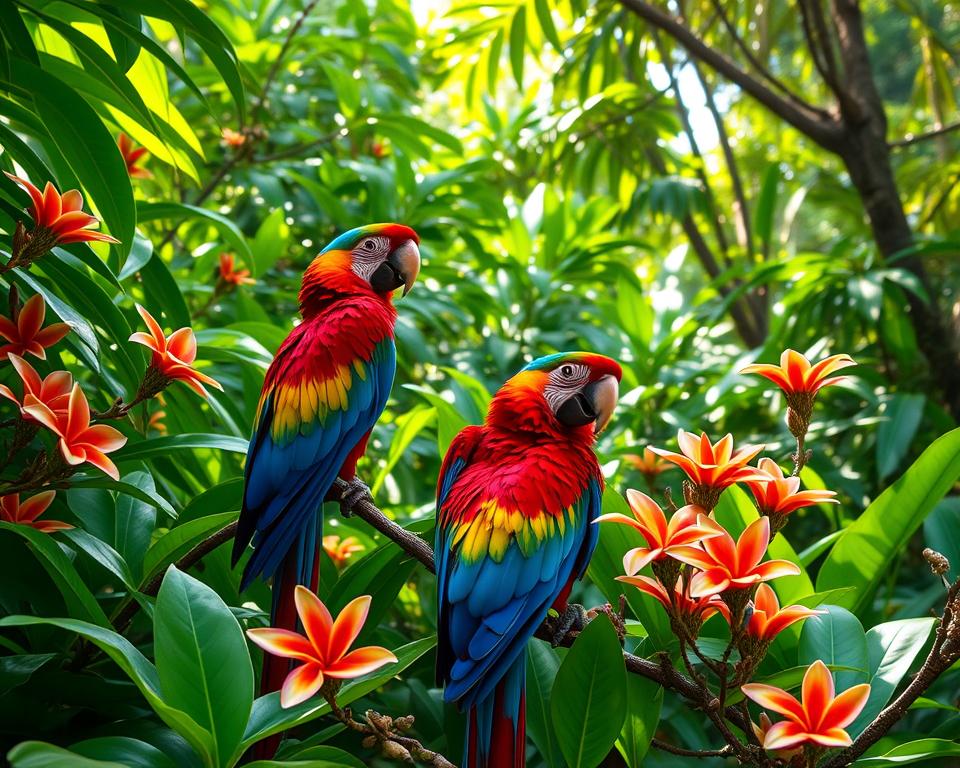
Have you ever wondered about the vibrant macaws in Costa Rica? These birds are known for their stunning colors and smart nature. They are not just a sight to see but also play a key role in keeping the environment balanced. This article will explore the different types of macaws in Costa Rica, where they live, and how we’re working to save them for the future.
Costa Rica is famous for its green jungles and rich wildlife. It’s home to the Scarlet and Great Green Macaws. These birds are not just pretty; they show how important it is to have a variety of life in our world. People who love nature and want to save these birds are working hard to keep them safe from harm.
As Costa Rica welcomes wildlife tourism, seeing these tropical birds becomes easier for everyone.
Introduction to Macaws and Their Significance
Macaws are amazing birds that belong to the parrot family. They are known for their bright colors and big size. These birds are important in ecosystems because they help forests grow by spreading seeds.
Macaws have complex social lives and can talk well. Their smart behavior shows they are intelligent and can adapt to different places. This helps us understand their role in keeping nature diverse.
In Costa Rica, macaws face big challenges. For example, Scarlet Macaws almost disappeared because of habitat loss and hunting. But, thanks to projects like The Ara Project, there’s hope to bring them back. This shows how vital it is to protect these birds and their homes.
Macaws in Costa Rica: An Overview
Costa Rica is home to a vibrant array of wildlife. Two notable macaw species, the Scarlet Macaw and the Great Green Macaw, are key players. They help keep the ecological balance in their habitats. This contributes to the region’s rich biodiversity.
Species of Macaws Found in Costa Rica
The main macaw species in Costa Rica are:
- Scarlet Macaw (Ara macao): Known for its stunning red, yellow, and blue plumage.
- Great Green Macaw (Ara ambiguus): Features a vibrant green body, bluish wings, and a striking red forehead.
Both species thrive in various macaw habitats in Costa Rica. They add to the diverse wildlife and support the ecological landscape.
Habitat Preferences of Macaws
Macaws in Costa Rica have different preferences for their living environments. They often choose:
- Coastal mangroves
- Lowland rainforests
- Open nesting sites
The Scarlet Macaw lives along the Pacific coast. The Great Green Macaw is found in the humid Caribbean lowlands. Specific trees, like the Almendro de Playa and Dipteryx Panamensis, are crucial. They provide essential nesting sites for their reproduction and survival.

Scarlet Macaw: The Iconic Bird of Costa Rica
The Scarlet Macaw, known as Ara macao, is a standout in Costa Rica. It has bright red feathers with yellow and blue wings. These birds are known for their lively sounds and social behavior.
Physical Characteristics and Behavior
Scarlet Macaws are not just beautiful; they are also friendly. They live in groups, showing strong family bonds. Their loud calls help them talk to each other.
They are playful and curious. This shows their intelligence as they explore their home.
Diet and Feeding Habits
Scarlet Macaws eat a variety of foods, showing their adaptability. They love fruits, seeds, and nuts. Their strong beaks help them open hard nuts.
They eat fruits from tropical almond trees. This food is key for their survival in Costa Rica’s ecosystems.
Great Green Macaw: The Colorful Giant
The Great Green Macaw is known for its bright colors and large size. It lives in certain places in Costa Rica. This section talks about where they like to live and how they nest. It also looks at the dangers they face.
Habitat and Nesting Sites
The Great Green Macaw loves the lowland rainforests on Costa Rica’s Caribbean side. Places like Tortuguero National Park are key for them. They need the Dipteryx Panamensis tree for nesting and food.
This tree is special because it has hard nuts that the macaws eat. They pick trees to nest in carefully. They lay one egg every 2-4 years, which is slow.
Threats Facing the Great Green Macaw
The Great Green Macaw is in danger. Habitat loss is a big problem due to deforestation and farming. This has hurt their numbers a lot.
But, thanks to conservation, their numbers have gone up to around 550. Still, they face threats like the illegal pet trade. Poaching hurts their numbers and messes with their homes. We need to keep working to save them.
Best Places to See Macaws in Costa Rica
Costa Rica is a top spot for seeing macaws. It offers great chances for birdwatchers and nature lovers. Three national parks are home to Scarlet and Great Green Macaws, giving amazing views of these colorful birds.
Corcovado National Park – A Biodiversity Hotspot
Corcovado National Park is a hotspot for biodiversity. It has a big Scarlet Macaw population, with almost 1,100 birds. Visitors see Scarlet Macaws flying or eating in the rainforest.
The park is known for its wildlife tours. These tours let birdwatchers see the vibrant ecosystem up close.
Carara National Park – A Birdwatcher’s Paradise
Carara National Park is close to San Jose and great for birdwatching. It has about 400 Scarlet Macaws. The park’s mix of forests offers food for these birds.
Scarlet Macaws are easy to spot here. The park’s trails make it simple to explore and see birds.
Tortuguero National Park – The Little Amazon
Tortuguero National Park is called “The Little Amazon.” It’s a key place for Great Green Macaws. The park’s canals and forests give macaws food and homes.
Visitors often see Great Green Macaws here. Guided tours show off the park’s beauty and let you see these birds up close.
Macaw Conservation Efforts in Costa Rica
In recent years, Costa Rica has seen a rise in macaw conservation efforts. These efforts aim to save the Scarlet Macaw and Great Green Macaw. Many organizations, volunteers, and communities are working together to make a difference.
Scarlet Macaw Conservation Initiatives
The Scarlet Macaw’s preservation involves rescue, rehabilitation, and breeding programs. NATUWA Sanctuary leads in breeding these macaws. They rescue many birds taken by the Ministry of Environment and Energy (MINAE), giving them a new life.
Stakeholders have also set up artificial nests in the wild. These nests help with habitat conservation. The Macaw Management Program works on rehabilitating and releasing young macaws back into their homes.
Great Green Macaw Recovery Programs
The Great Green Macaw’s recovery depends on strong conservation programs. Organizations and local communities work together to protect hardwood trees. These trees are crucial for the birds’ survival. Educational programs help spread the word about the importance of these efforts.
NATUWA also educates university students on environmental conservation. Their research helps improve animal care and supports broader conservation goals.

Understanding Macaw Populations in Costa Rica
The Scarlet Macaw and Great Green Macaw populations in Costa Rica have seen big changes lately. Thanks to conservation efforts and growing awareness, these colorful birds offer a glimmer of hope. Their story is one of both challenges and triumphs in their fight to recover.
Current Population Status of Scarlet Macaws
The Scarlet Macaw population has seen ups and downs. Today, about 2,000 Scarlet Macaws live in Costa Rica, mostly in the Osa Peninsula and Carara Biological Reserve. By 1950, they had almost disappeared from the Caribbean side of the country. Thanks to habitat protection and fighting poaching, their numbers are now on the rise.
Population Trends of Great Green Macaws
The Great Green Macaw population trends are more worrying. With only 400 to 600 individuals in Costa Rica, they are critically endangered, according to the IUCN Red List. Despite the threats, conservation efforts have led to a slight increase in their numbers. Yet, they still need constant protection to ensure their survival and possible growth.

Macaw Sanctuaries and Rescue Organizations
Costa Rica is a key player in saving macaw populations. Organizations like Ara Manzanillo are at the forefront. Located near Puerto Viejo, this macaw sanctuary works to help the Great Green Macaw. It also teaches people why these birds are so important.
Visitors to Ara Manzanillo get to see the hard work in action. They learn about the challenges macaws face. This helps spread the word about the need to protect these birds.

Ara Manzanillo and Its Role in Conservation
The Ara Manzanillo sanctuary is more than a home for macaws. It also helps with breeding to save endangered species. They work with groups like the Kerulos Center and Foster Parrots to do more.
They’re building a special place, Aves Sagradas, for disabled parrots. This shows their dedication to helping all birds.
Macaw Recovery Network and Its Impact
The Macaw Recovery Network is crucial for saving macaws in Costa Rica. They focus on teaching and fieldwork. Their goal is to keep an eye on macaw numbers and help them breed.
They rescue macaws from the pet trade and get the community involved. This helps everyone understand the problems macaws face. They want to create a safe path for macaws, called the Pacific Coast Macaw Corridor.
Despite dangers like losing their homes and being hunted, they keep working. Their dream is to make sure macaws thrive for years to come.
Wildlife Tourism and Macaw Watching Tours
Costa Rica is a top spot for wildlife lovers, especially those into eco-tourism and sustainable travel. It’s home to a wide variety of wildlife, including colorful macaws. Visitors can enjoy birdwatching tours and see macaws in their natural habitat. This helps support conservation efforts and preserves these birds.
Eco-Tourism Opportunities in Costa Rica
Eco-tourism in Costa Rica has grown a lot, making it a favorite for nature lovers. People can join guided tours that teach about sustainable travel. These tours let visitors see birds like the Scarlet Macaw and Great Green Macaw up close.
Places like Carara National Park and Corcovado National Park are great for this. They have over 900 bird species and stunning views of macaws.
Guided Birdwatching Tours for Macaw Sightings
Guided birdwatching tours in Costa Rica are a great way to see macaws. Guides take you to the best spots to see these birds. You can visit the Macaw Recovery Network in Punta Islita and the Tarcoles River in Carara National Park.
These tours are not just fun. They also help local economies and protect endangered species like the Scarlet Macaw.

Distinctive Features of Macaws
Macaws are known for their beauty and unique traits. They have a variety of macaw colors that make them stand out. The Scarlet Macaw, for example, has bright red, yellow, and blue feathers. The Great Green Macaw has vibrant greens.
Coloration and Physical Traits
Macaws have striking physical traits that set them apart. Some key features include:
- Large size, often reaching lengths of up to 3 feet for the Scarlet Macaw.
- Distinctively curved beaks are designed for cracking tough seeds and nuts.
- Long tail feathers aid in their agile flight.
These unique macaw features attract wildlife enthusiasts and researchers. They show how well these birds adapt to their habitats in Costa Rica.
Social Behavior and Communication Skills
Macaws are intelligent and social. They form strong bonds with mates and enjoy playful interactions. They communicate through sounds and body language to express emotions and intentions.
Their macaw communication skills are crucial for survival and social interaction. Observers can see them bond through rituals and vocalizations. This shows the importance of maintaining healthy populations in their ecosystems.

Threats to Macaws in Costa Rica
Macaws in Costa Rica face many dangers that hurt their survival and ability to have babies. One big problem is losing their homes due to human actions like logging and farming. This loss of space makes it hard for macaws to find places to live and eat, leading to a big drop in their numbers.
The forest home of Scarlet Macaws shrank by 37% from 1940 to 1977. This makes it very hard for them to survive.
Habitat Loss and Its Consequences
Habitat loss keeps getting worse, making it harder for macaws to find the places they need. Deforestation, especially in the 1950s, changed the landscapes where macaws live. Places like Carara National Park are key to saving these birds.
Groups like Amigos de las Aves and the Ara Project are working hard. They use captive breeding and release programs to help macaws. Their goal is to make sure there are more macaws in Costa Rica.
The Impact of Illegal Pet Trade
The illegal pet trade is another big danger for macaws. People wanting macaws as pets capture them from the wild. This hurts their social lives and ability to have babies.
Wild-caught birds suffer and also harm the whole population. It’s important to stop this trade. We need to spread the word and enforce laws to protect these amazing birds. For more information, visit this resource.
Conclusion
The majestic macaws of Costa Rica are a key part of the country’s rich biodiversity. They are not just beautiful, but also important for showing us how healthy the environment is. They also bring in tourists, which helps the local economy.
Efforts to save these birds are showing good results. For example, the Scarlet Macaw population has grown from about 400 in 1994 to around 1600 in 2023. This success shows how important it is to involve local communities in conservation.
But, there are still challenges ahead. To keep these gains, we need to keep educating people, being open about our work, and offering economic benefits. This will help us protect these amazing birds for the future.
Working together is key to raising awareness and supporting conservation. Success stories, like the Great Green Macaw’s recovery, show our shared commitment. For more on how to involve local people in conservation, check out this comprehensive report.
Source Links
- https://www.natuwa.com/portfolio/great-green-macaw/
- https://www.govisitcostarica.com/travelInfo/flora-fauna/vibrant-scarlet-macaw.asp
- https://www.costaricafocus.com/most-beautiful-birds-of-costa-rica/
- https://www.twoweeksincostarica.com/macaws-flying-free-a-visit-to-the-ara-project/
- https://yokovillage.com/reintroducing-scarlet-macaws-to-santa-teresa/
- https://birdingcraft.com/wordpress/tag/scarlet-macaw/
- https://www.nathab.com/know-before-you-go/mexico-central-america/costa-rica/wildlife-guide/macaw/
- https://www.villascostarica.com/destinations/jaco/macaws-of-costa-rica/
- https://costa-rica-guide.com/nature/wildlife/macaws-in-costa-rica/
- https://airporttransfercostarica.com/specie/things-to-do-in-guanacaste-costa-rica/
- http://www.scielo.sa.cr/scielo.php?script=sci_arttext&pid=S0034-77442009000100034
- https://www.costaricafocus.com/best-places-for-spotting-macaws-in-costa-rica/
- https://en.wikipedia.org/wiki/Great_green_macaw
- https://www.walkmyworld.com/posts/scarlet-macaws-costa-rica
- https://exploretikizia.com/macaws-in-costa-rica/
- https://www.natuwa.com/macaw-conservation-sanctuary/
- https://earth.org/scarlet-macaw-conservation/
- http://www.costaricaoutdoors.com/articles/conservation/costa-rica-macaws.html
- https://macawrecoverynetwork.org/the-network/threatened-species/
- https://lapasrojaspuntaleona.com/en/2023/08/23/scarlet-macaw-could-be-declared-national-symbol-of-costa-rica/
- https://www.fosterparrots.com/hatched-to-fly-free
- https://www.volunteerworld.com/en/volunteer-program/macaw-animal-reserve-supporter-in-costa-rica-aranjuez
- https://www.copadearbol.com/parrots-costa-rica/
- https://www.samaraadventures.com/wildlife-tours
- https://enchanting-costarica.com/tours-and-experiences/carara-national-park-is-tropical-bird-watching-paradise/
- https://www.natuwa.com/portfolio/hyacinth-macaw-in-costa-rica/
- https://www.distinctivehotels.com/these-8-costa-rica-birds-will-take-your-breath-away/
- https://howlermag.com/scarlet-macaw-costa-rica-comeback/
- https://repositorio.una.ac.cr/bitstream/handle/11056/23424/monge2015.pdf?sequence=1
- https://macawrecoverynetwork.org/great-green-macaw-census-report-2022-2023-2/
Article by Glenn Tellier (Founder of CRIE and Grupo Gap)
Don't wait, contact us right now!
Call or WhatsApp Costa Rica +506 8373 2085 or +506 8706 3888
Call USA/Canada +1 305-906-6784