
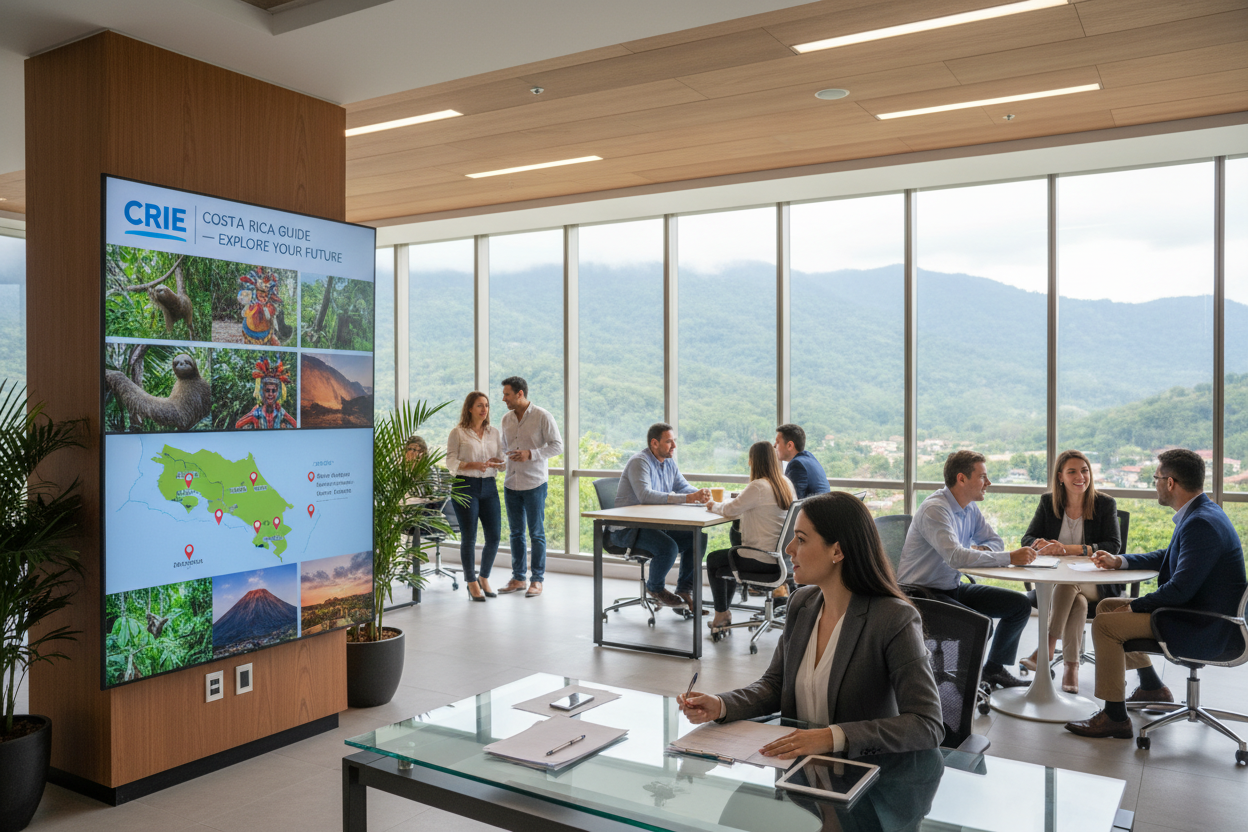
This directory helps readers explore job-opportunities-costa-rica in one place, compare options fast, and move from browsing to applying without overthinking it.
They can view jobs, internships, volunteer exchanges, and company spotlights to match career goals and lifestyle choices. The page shows examples and a simple shortlist method: save roles, note requirements, and plan the next step for each listing.
Work plus lifestyle matters. Choosing a role also sets daily life—city pace or beach pace—and the listings highlight local rhythm and commute details.
Safety notes appear up front: how to spot scams, protect documents, and verify an employer before sharing sensitive info. For Mission roles, all applications must go through ERA to be considered, per the U.S. Mission.
If residency or work authorization questions come up, CRIE can help clarify categories (not legal advice): WhatsApp +506 8706 3888 | info@crie.cr | www.crie.cr.
– One-stop directory to browse and shortlist jobs in costa rica.
– Practical steps: save roles, list requirements, make next-step plans.
– Trust tips: verify employers, protect documents, avoid scams.
What this Costa Rica job directory helps them do right now
Start here to scan current listings, see company details, and build a shortlist you can act on today.
Browse listings, profiles, internships, and volunteer-style roles
The directory shows live jobs and other opportunities alongside company profiles and program details. It lists the main service options and basic work expectations so users get quick information before they click through.

Match roles to lifestyle goals — beach towns or San José
Compare commute times, schedule reliability, and the typical pace in city versus coastal listings. That helps decide whether a job fits daily life and weekend plans.
Use the directory as a shortlist builder
- Open listings, skim requirements, and save 5–10 options.
- Narrow to three that match skills, location, and experience.
- Check company signals: training, schedule clarity, and communication.
- Note role title, location, language needs, start dates, and safe contact methods.
Always verify companies and keep conversations on official channels before sharing IDs or sensitive documents.
job-opportunities-costa-rica: where to find legit openings
Legitimate openings pop up on official sites and program directories — learn where to look and what to verify. Focus on trusted portals first, then use program listings and local company pages to expand a shortlist.
U.S. Mission roles via ERA
The U.S. Mission in San José posts structured jobs and internships on the Electronic Recruitment Application (ERA). To view and apply, an applicant must use ERA; only applications submitted there are considered.
Student internships at the Mission
The Foreign National Student Internship Program is for students who are citizens or permanent legal residents of Costa Rica. These internships in San José offer educational experience and often academic credit, aligning with Mission goals.

Work-abroad directories and teaching/travel roles
Reputable program directories include TEFL providers, MAXIMO NIVEL virtual internships, and organized travel leadership listings. Read responsibilities and refund/fee policies before committing.
- Legit-opening checklist: clear employer name, consistent contact data, detailed duties, and a formal application process (not vague DMs).
- How Mission jobs differ: standardized postings, specific requirements, and a required ERA application channel.
- Shortlist method: track official portals, program directories, and local companies in separate columns for easier comparison.
- Safety reminder: pause and verify if asked to pay or share documents immediately.
| Source | What to expect | Quick verification |
|---|---|---|
| ERA (U.S. Mission) | Structured job data and formal process | Apply only via ERA |
| Program directories | Teaching, virtual internships, travel roles | Check reviews and refund policy |
| Local company sites | Direct hires and listings | Confirm contact details and duties |
Popular job categories Americans search for in Costa Rica
When exploring work abroad options, certain career paths keep appearing for those heading to Costa rica. The list below focuses on typical roles, what a day looks like, and what to check before applying.

Customer service and support roles
These roles center on solving problems quickly and clearly. Shift patterns vary; many are daytime office shifts or rotating hours for global teams.
Language matters: English is often required and Spanish helps a lot. Customer skills and calm communication are the top transferable strengths.
Marketing, operations, and specialist positions
Think of these as “process + communication” jobs. Work includes reporting, campaign tasks, coordination, and cross-team calls.
They suit candidates who like structure, reliability, and measurable results.
Tourism and hospitality teams in high-visit areas
Tourism roles cluster at beaches and parks and follow seasonality. Days can start early, run late, and include weekends.
Teams are often multi-lingual and fast-paced; applicants should expect guest-facing shifts and flexible scheduling.
Education paths like teaching English
TEFL/TESOL paths are common in directories and provide a clear route into paid or exchange-based roles. Lessons, lesson prep, and classroom management fill the day.
Many Americans use these roles to build experience while living abroad.
Environmental and conservation-adjacent work
Conservation programs can be meaningful but vary widely. Read duties and payment terms carefully—some are paid, others are exchange-based.
Expect outdoor days, physical tasks, and small teams focused on habitat or research work.
- Decide by routine: match shift patterns and language needs to your lifestyle.
- Prioritize roles that use your strongest skills—communication, teamwork, or technical ability.
- Confirm pay and schedule before committing, especially for conservation and hospitality roles.
San José vs. beach towns: how location changes the workday
Where you base yourself—city center or shore—shapes the rhythm of each workday and the routines people keep. This short guide helps pick a focus area before applying so lifestyle and job match up.
City structure, office routines, and commute reality in san josé
San José tends to offer more office roles and predictable schedules. Commuting can add real time to the day, so plan for traffic and longer mornings.
Management and team communication follow formal patterns. That makes planning and career growth clearer for people who prefer routine.
Tourist-area seasonality and schedule flexibility
Beach towns often mean flexible hours and work that shifts with visitor flow. Jobs can be last-minute during high season and lighter in low season.
Communication there may lean toward English in tourist hubs, while nearby communities expect Spanish in daily life.
“Home base” planning for weekends in nature
Choose one home area for your main routine, then plan nature weekends—waterfalls, hikes, or beaches—from that base. Pick a spot that balances commute, cost, and access to outdoor time you value.
- Ask about schedule consistency, busiest times, and transport before accepting a role.
- Match your preferred daily pace—structured office days or flexible coastal shifts—to avoid lifestyle friction.
| Feature | San José | Beach towns |
|---|---|---|
| Typical day | Office routine, set hours | Shift-based, visitor-driven |
| Commute | Longer, predictable traffic | Shorter, variable |
| Communication | Formal, management-led | Informal, guest-focused |
Company spotlight example: what “good employer signals” can look like
A clear company spotlight shows what practical employer signals look like when vetting roles. The goal is to spot behaviors that indicate real investment in people and results.
Training and development from day one
P&G Costa Rica runs structured training at onboarding. Training reduces guesswork, speeds early contributions, and signals management invests in career growth.
Work-life balance and flexible schedules
Look for mentions of flexible hours, home office options, and part-time roles. Ask in interviews how those options work week to week.
International teams and culture cues
Responsibility from day one and cross-country teams often mean clear communication norms. Companies that list diverse products and global impact usually track performance metrics tightly.
- Training from day one → faster skill uptake and less ambiguity.
- Flexible hours/home office → verify in writing before accepting.
- Early responsibility → strong sign for rapid experience building.
- Impact, culture, and diversity statements → use them to craft interview questions about daily inclusion.
| Signal | What it shows | What to ask |
|---|---|---|
| Structured training | Employer invests in people | Who leads training and how long? |
| Flexible hours | Work-life balance is supported | Is hybrid or remote allowed, and when? |
| International teams | Standardized communication and growth paths | Which time zones and reporting norms exist? |
How they can prep for working in Costa Rica without overcomplicating it
Simple preparation keeps moving from browsing to applying fast. They should pick one clear goal first so time and effort stay focused. Goals could be to fund travel, build a resume, or test long-term life abroad.
Set one goal before applying
Choosing one aim prevents scattered applications and wasted time. If the aim is resume building, target roles with training. If it is a life test, favor shorter commitments and flexible schedules.
Spanish basics for day one
Learn greetings, schedule words, polite requests, and a few workplace phrases. These reduce friction and show respect. Small phrases ease morning check-ins and quick coordination.
Skills to highlight and prove
Match resume bullets to the post with short examples of communication, teamwork, and a service mindset. Show one clear result per bullet—what they did, how, and the outcome.
- Be reliable: show up on time and update the manager proactively.
- Prepare a one‑paragraph intro in English and a Spanish-lite version.
- Keep copies of applications and track what they sent to whom in a simple spreadsheet.
Applying to U.S. Mission jobs in Costa Rica using ERA
Applying for U.S. Mission employment in San José requires using the Electronic Recruitment Application (ERA) only. They will not review emails or attachments sent outside ERA, so apply in the portal to be considered.
Use the ERA applicant user guide to avoid common mistakes
Download the Job Applicant User Guide (PDF) and follow its steps for required fields and document formats. Treat the guide as a checklist before you hit submit.
Translate ERA pages to Spanish in Chrome
Right-click the ERA page and select “Translate to Spanish.” If that option is missing, pick “Translate to English” then Options → Translate to Spanish. Translation must be repeated on each new page.
What equal opportunity language means
The equal opportunity statement promises fair treatment without regard to race, color, religion, sex, national origin, age, disability, or other protected traits. It signals consistent review practices for all applicants.
- Keep an application data log: role title, closing date, documents uploaded, and confirmation screenshots.
- Use only official ERA links; type the address or reach ERA from trusted Mission pages to avoid lookalike sites.
| Item | Why it matters | Quick tip |
|---|---|---|
| ERA submission | Only route considered | Apply in portal, not email |
| User guide | Prevents format errors | Follow PDF checklist |
| Translations | Helps non-English readers | Repeat per page in Chrome |
Internships and training-style opportunities that build experience
Hands-on training roles let applicants build real skills, earn references, and test what daily work actually looks like.
Student internships with the U.S. Mission in San José
The Foreign National Student Internship Program is open to Costa Rican citizens or permanent legal residents. Interns gain relevant work experience and may receive academic credit.
Verify eligibility before applying to avoid wasted time. Confirm dates, supervisor contact, and required documents in writing.
TEFL/TESOL paths for teaching English
Certification programs like International TEFL Academy or OnTESOL combine coursework with placement support. The usual path: certify, get placement help, then teach in classrooms.
Skills that matter include patience, clear instruction, and classroom control. These roles can be good entry-level jobs and resume builders.
Virtual international internships
When relocation isn’t possible, virtual internships (for example through MAXIMO NIVEL) let candidates build skills and references from home. They offer flexible hours and project-based work.
Volunteer-style hostel roles and exchanges
Hostel exchanges trade scheduled work for lodging and meals. Typical examples ask for about 5 hours/day, 5 days/week.
Always verify exact hours, days off, supervisor contact, and what on-site support exists if issues arise.
- Internship fit: choose internships for structure, mentorship, and resume-ready results.
- Self-screen U.S. Mission eligibility to avoid misapplied applications.
- Confirm placements, hours, and emergency support in writing before accepting.
| Opportunity | What you gain | What to verify |
|---|---|---|
| U.S. Mission internship | Relevant experience, possible credit | Eligibility, supervisor, dates |
| TEFL/TESOL program | Certification, classroom hours | Placement help, course length |
| Virtual internship / hostel exchange | Flexible projects or lodging trade | Hours, duties, on-site support |
What work culture feels like day to day in Costa Rica
Teams in Costa Rica tend to value steady results while keeping time for life beyond the desk. Day-to-day work often balances clear performance expectations with respect for personal time.
“Chill but not lazy”: balancing performance with quality of life
“Chill but not lazy” shows up as reasonable boundaries and reliable output. Employees are expected to meet deadlines and quality standards. At the same time, managers respect breaks, family time, and reasonable hours.
Communication style with local teams and managers
Communication is polite and relationship-focused. Teams prefer direct clarity over public confrontation. New hires should invest time in building rapport before raising major challenges.
Being reliable matters more than being loud
Managers notice habit-driven signals: confirming schedules, sending updates early, and documenting handoffs. Small, consistent actions often matter more than bold self-promotion for career growth.
- Listen and mirror the team’s rhythm in the first weeks.
- Ask clear questions about tasks and time expectations.
- Send short end-of-day recaps when multiple teams are involved.
| Environment | Typical focus | Reliability signal |
|---|---|---|
| Corporate office | Predictable schedules, project milestones | Timely status reports and calendar confirmations |
| Tourism hubs | Flexible hours, guest-centered service | Shift confirmations and clear handoffs |
| Small local businesses | Practical multitasking and community ties | Prompt communication and in-person follow-ups |
Do’s and don’ts when they reach out to companies and recruiters
Smart outreach focuses on fit, clear questions, and a simple next-step request. Short messages that reference the specific role and required skills get read more often by busy professionals and hiring managers.
Do: tailor the message to the role, team, and required skills
Reference the job title, one relevant skill, and why that skill matters to the team. Example: “I saw the customer support role; my three years in English-Spanish support reduced ticket time by 20%.”
Do: ask clear questions about schedule, responsibilities, and training
Good questions show seriousness. Ask about shift patterns, who the manager is, and what training looks like in week one.
Don’t: send sensitive documents before verifying the employer
Never email passport scans, bank details, or social IDs until the company is verified. If asked early, pause and request an official job offer or HR contact on company letterhead.
Don’t: assume English-only workplaces outside tourist zones
Outside tourist areas, many teams use Spanish in daily communication. Ask about the primary workplace language before accepting a role.
- Practical outreach framework: one tailored opener, one proof-of-skill line, and one clear ask for next steps.
- Example template: “Hello [Name], I’m reaching about the [role]. I have [skill] and achieved [result]. Are you accepting applications now, and who would I speak to about training?”
- Scam-avoidance behavior: confirm company domains, use LinkedIn to find the manager, and keep chats on official email or the portal.
- Respectful close: suggest 30-minute availability windows and ask the preferred contact method.
| Do | Don’t | Quick example |
|---|---|---|
| Tailor message to role and skills | Send generic mass messages | “I saw the operations opening; my Excel process cut errors 15%.” |
| Ask about schedule and training | Assume details or accept vague answers | “Who trains new hires and what does week one look like?” |
| Verify company and manager | Share passport or bank info early | Confirm HR contact on the company site or ERA listing |
Safety basics for job seekers in Costa Rica
Knowing simple verification steps reduces risk when people search for employment in Costa rica. The advice below is practical, calm, and focused on prevention. It is not legal guidance.
How to spot scams and unrealistic job promises
Watch for offers that sound too good to be true, pressure to act immediately, or vague role details. Scams often ask applicants to pay fees, send bank info, or move conversations off-platform.
Meeting in public places and keeping communication on official channels
Meet in daytime public locations for in-person interviews. Tell a friend the time and place. Keep messages on official company email or the ERA portal for U.S. Mission roles.
Digital safety: protecting IDs, data, and accounts during applications
Do not reuse passwords and enable two-factor authentication. Avoid sending ID images unless a verified employer requests them after a formal offer. Keep a record of who said what and when.
Emergency contacts for U.S. citizens in San José
For urgent assistance contact U.S. Embassy San José: (506) 2519-2000. From outside Costa Rica call 011-506-2519-2000.
- Trust ladder: verify the company website, confirm official email domains, and save conversation timestamps.
- Finance caution: be wary of transfer requests or unusual “processing” fees.
| Risk | Verification step | Quick action |
|---|---|---|
| Too-good salary promises | Check company site and reviews | Pause and request official offer |
| Off-platform recruitment | Confirm HR email domain or ERA posting | Insist on portal or company email |
| Requests for money or bank info | Contact listed manager or HR on site | Refuse transfers; report suspicious asks |
| Unclear job details | Ask for written duties and schedule | Decline until terms are clear |
For visa or residency related information, see visa renewal information and seek official support when needed.
If residency or work authorization comes up during their search
If an employer asks about work papers, a short verification step saves confusion and wasted time. Treat requests as routine facts to confirm, not roadblocks to the opportunity.
Keep it simple: rules vary, so confirm requirements
Work authorization questions can come up during hiring and the rules depend on the role and the person’s situation. Ask the employer what documentation they require and record the answer.
- Ask a clear, professional question: “What documentation do you require for employment eligibility?”
- Verify requirements through official sources or the employer’s HR, not social posts.
- See this step as part of routine screening — it saves time and avoids surprises later.
CRIE can help choose the correct residency category (not legal advice)
CRIE provides information and service guidance to help professionals pick the right residency path for their career goals. They do not give legal advice but can point to next steps.
Contact: WhatsApp +506 8706 3888 | info@crie.cr | www.crie.cr.
| Action | Who to ask | Quick result |
|---|---|---|
| Confirm documents | Hiring manager or HR | Clear list of required IDs and timing |
| Check official rules | CRIE or government page | Reliable information, not hearsay |
| Record the answer | Candidate notes/log | Avoids rework and speeds the process |
Quick checklist they can use before applying today
Before applying, they should run a fast checklist to confirm fit, readiness, and safety. This saves time and reduces mistakes when juggling multiple listings.
Role fit: location, schedule, and purpose
Confirm location (San José vs. beach), typical schedule, and the busiest days. Note whether the role is for resume-building or a lifestyle test.
Application readiness: resume, references, Spanish basics
Tailor the resume to the posting, make sure references are reachable, and rehearse Spanish greetings and schedule words. Pack one example of relevant skills for interviews.
Trust check: verified employer, safe communication, clear next steps
- Verify employer identity and official contact info before sharing data.
- Keep communication on company email or the ERA/portal; avoid off-platform DMs.
- Write down who they contacted, when to follow up, and what documents remain to gather.
- Management habit: block a 30–60 minute follow-up time so they stay consistent without spamming.
Ready to explore and apply with confidence in Costa Rica
Ready to explore and apply with confidence in costa rica.
Use the directory as a practical map: save roles, compare lifestyle and schedule, and apply through verified channels like ERA for U.S. Mission posts. Focus on clear questions, steady follow-up, and verified companies to reduce wasted time.
Good employer signals include structured training, clear operations, supportive managers, strong communication, and transparent expectations about products, services, and impact. Protect personal data, verify identity, and walk away from pressure or unrealistic promises.
Need residency-category info (not legal advice)? Contact CRIE: WhatsApp +506 8706 3888 | info@crie.cr | www.crie.cr. For emergencies, U.S. Embassy San José: (506) 2519-2000 (from outside costa rica: 011-506-2519-2000).
FAQ — quick answers:
Q: Where to apply for U.S. Mission roles? A: ERA only; use the applicant guide and translate pages in Chrome if needed.
Q: Are beach-town jobs easier? A: They are often seasonal; ask about busiest months and hours.
Q: Do you need Spanish? A: It helps almost everywhere; tourist hubs may use more English. Learn basics for day one.
Q: How to share documents safely? A: Only after verifying the employer, via official channels, and share the minimum needed.
Q: Emergency as a U.S. citizen? A: Call the U.S. Embassy San José at (506) 2519-2000 or 011-506-2519-2000 from outside.
FAQ
What can this directory help them do right now?
How do they match roles to lifestyle goals like San José versus beach towns?
Where are legitimate openings usually posted?
Who qualifies for student internships with the U.S. Mission in San José?
What job categories do Americans commonly search for in Costa Rica?
How does working in San José differ from tourist areas?
What are signs of a good employer to watch for?
How should they prepare before applying to roles in Costa Rica?
How do they apply to U.S. Mission jobs in Costa Rica using ERA?
What does “equal opportunity” language mean for applicants?
What internship and training-style opportunities build experience?
What should they expect of daily work culture in Costa Rica?
What are do’s and don’ts when contacting companies or recruiters?
How can job seekers spot scams or unrealistic offers?
What digital safety steps should applicants take?
Who should U.S. citizens contact in an emergency in Costa Rica?
What if residency or work authorization becomes a question?
What quick checklist can they use before applying today?
Are there tips for translating ERA or job pages to Spanish?
Which skills should applicants highlight for customer service and support roles?
Can virtual internships be a useful alternative if travel isn’t possible?
What does “exchange for lodging/meals” typically mean in hostel volunteer roles?
Article by Glenn Tellier (Founder of CRIE and Grupo Gap)
Don't wait, contact us right now!
Call or WhatsApp Costa Rica +506 8373 2085 or +506 8706 3888
Call USA/Canada +1 305-906-6784