

Many North Americans ask this question when planning a trip or considering a move to Central America. It’s a natural concern for anyone venturing to a new country.
This guide provides clear, data-driven insights and practical safety information. It helps you make informed decisions about visiting or living in this beautiful nation.
Comparing safety between countries involves more than just crime statistics. You must consider types of crimes, regional variations, and daily life.
For example, Costa Rica holds a US State Department Level 1 travel advisory, its safest rating. Yet, national crime rates tell only part of the story.
This article offers a balanced look at the safety landscape. You will find real statistics, comparative analysis, and actionable tips based on official sources.
Understanding the specific risks and precautions empowers you. You can then explore Costa Rica’s wonders with greater confidence and awareness.
Understanding Safety Comparisons: Costa Rica vs. the USA
Evaluating safety between nations requires a nuanced look beyond headline numbers. Different countries track and report crime data differently. Cultural factors also influence what incidents get officially recorded.
The U.S. State Department gives Costa Rica its safest Level 1 travel advisory. This places the country in a category with many Western European nations. It is a key piece of official safety information.
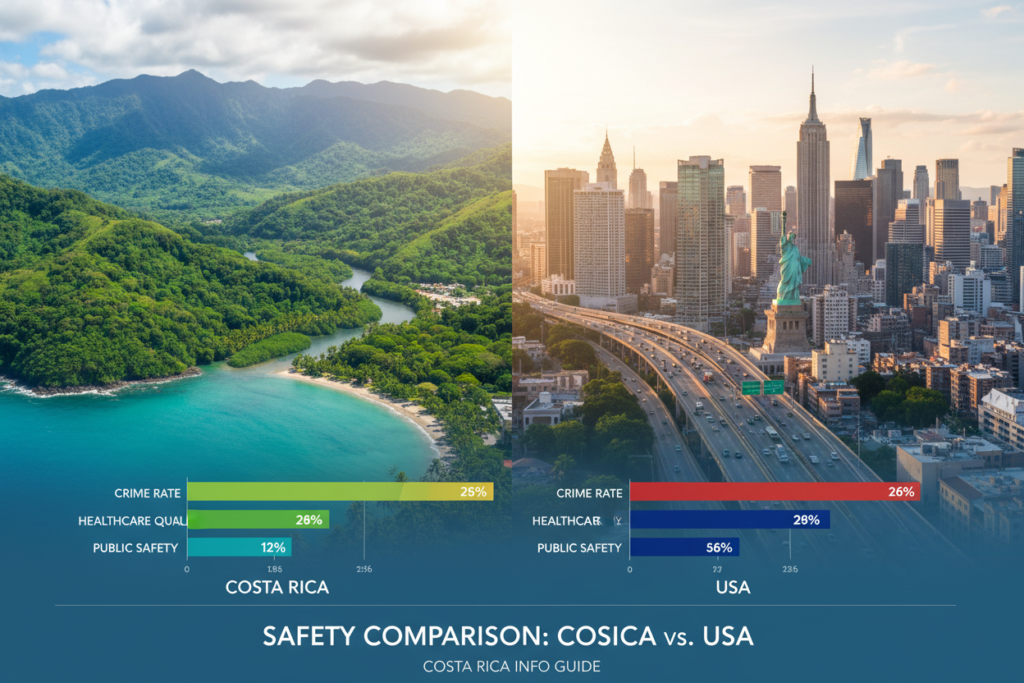
National averages can be misleading for both countries. Significant regional variations exist within each nation. Urban centers often report different statistics than rural areas.
| Safety Metric | Costa Rica | United States | Key Context |
|---|---|---|---|
| Homicide Rate (per 100k) | ~11.5 | ~6.3 | Rates vary greatly by region within each country. |
| Common Property Crime | Petty Theft | Larceny/Theft | Tourists are frequent targets for these crimes. |
| U.S. Travel Advisory | Level 1: Exercise Normal Precautions | Not Applicable | Level 1 is the safest possible designation. |
| Regional Safety Variation | High | High | Some areas are much safer than national averages suggest. |
Perception of safety often differs from statistical reality. Travelers and expats face a different risk profile than local residents. They are more often targets for property crimes like theft.
Understanding these nuances helps interpret the statistics that follow. Factors like population density and socioeconomic conditions play major roles. This knowledge allows for better personal safety planning over time.
Exploring Costa Rica’s Crime Statistics and Trends
When examining safety data, Costa Rica’s crime trends show distinct patterns over recent years. Official statistics provide a factual basis for understanding risks.

Looking at the numbers helps travelers form realistic expectations. The data reveals where precautions are most needed.
Analyzing Homicide Rates and Violent Crime
Costa Rica’s intentional homicide rate is approximately 10 per 100,000 people. This is higher than the national average in the United States.
It is crucial to understand the context. A record number of homicides occurred in 2017, but the rate has declined since.
Most violent crime is concentrated in specific areas. It is often linked to organized crime rather than targeting tourists.
The vast majority of visitors never experience violent crime. Government efforts continue to address these challenges.
Spotlighting Petty Theft and Pickpocketing
For travelers, petty crimes are a far more common concern. Pickpocketing and purse snatching are frequent opportunistic crimes.
These incidents typically target specific valuables. Common items stolen include:
- US passports and cash
- Cell phones and credit cards
- Jewelry and other small electronics
High-risk locations are crowded tourist spots, bus stations, and beaches. Theft from vehicles, especially rental cars, is also prevalent.
Criminals often watch for unattended bags on the sand. Rates can fluctuate with the tourist season and local economic conditions.
Awareness of these patterns allows for effective precautions. Simple vigilance significantly reduces the risk of becoming a victim.
Real Examples and Do’s & Don’ts for Staying Safe
Safety in Costa Rica often comes down to everyday habits and knowing which places to avoid. Real examples from travelers show how simple precautions make a big difference.
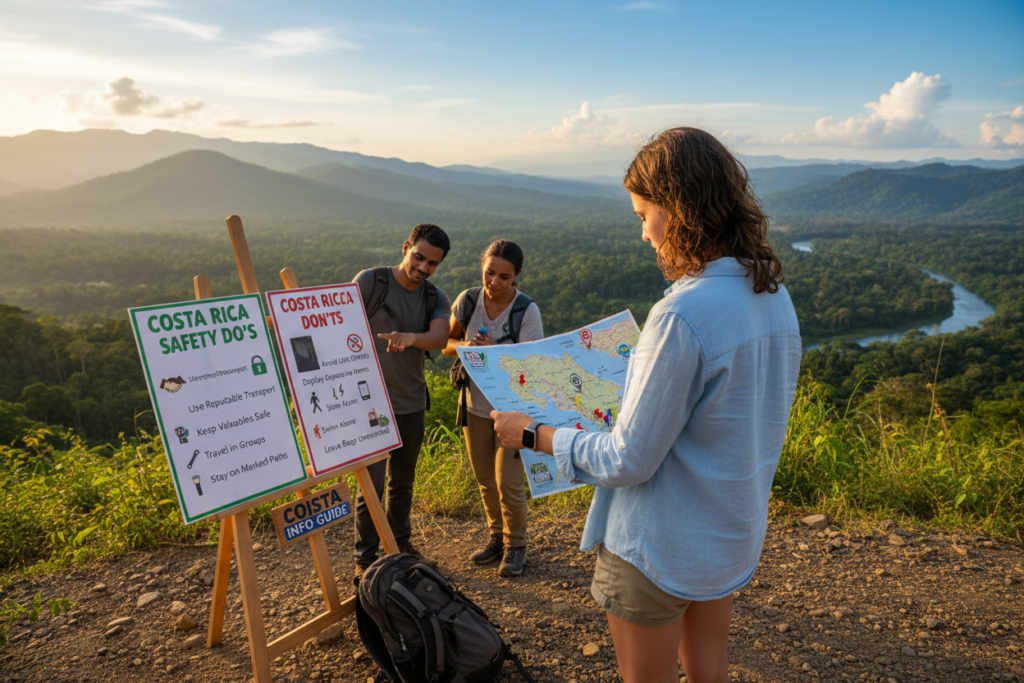
Do’s: Practical Safety Habits in Everyday Situations
Develop smart routines to lower your risk. Always lock your passport and valuables in a hotel safe. Carry only a copy and daily cash.
Stay aware of your surroundings in crowded markets or bus stations. Travel with friends at night. Use bags with secure zippers.
For instance, a couple from California left backpacks visible in their rental car at a beach. They returned to a smashed window and stolen passports. This crime was preventable.
Don’ts: How to Avoid High-Risk Areas
Certain actions increase danger. Do not walk alone in poorly lit areas after dark. Never leave items visible in a car, even briefly.
Avoid displaying expensive jewelry or large amounts of cash. Do not accept help from strangers at ATMs.
An expat in San Jose uses the buddy system at night. They meet friends in well-lit restaurants and take trusted taxis.
The U.S. Embassy notes specific high-risk areas. These include central Limon, parts of Liberia, and certain neighborhoods in San Jose like Pavas.
Tourists should avoid these zones, especially after dark. Many locals also exercise extreme caution there. Costa Rica has countless beautiful and safe places to visit instead.
Practical Safety Tips for Your Costa Rica Adventure
Your Costa Rica adventure can be both thrilling and secure with a few practical safety habits. Focus on protecting your belongings and staying aware in busy tourist areas.
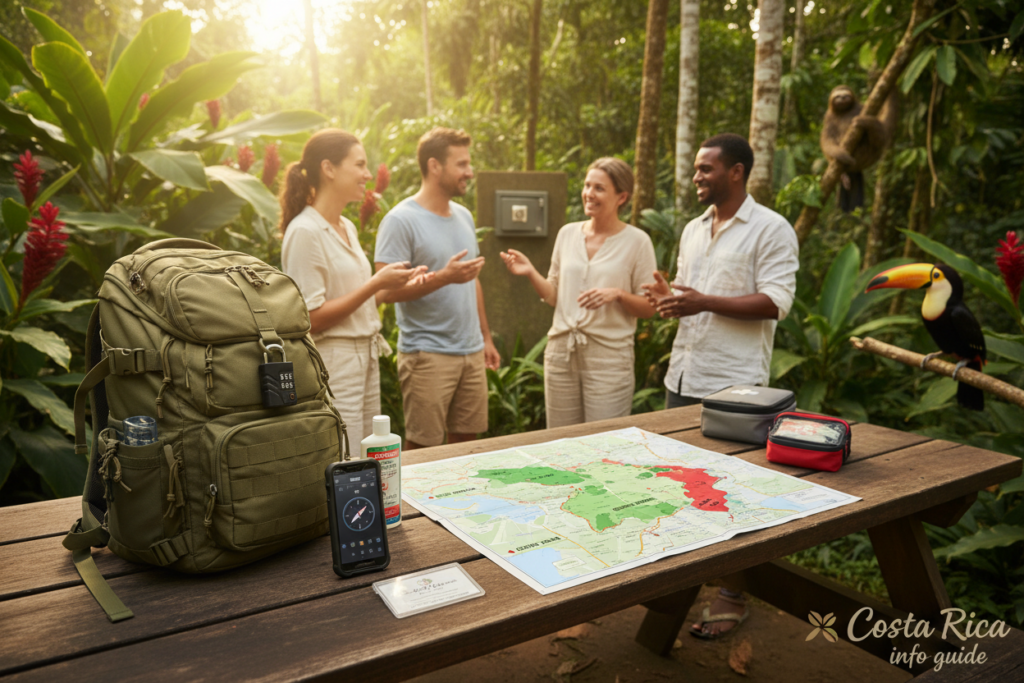
Tips for Protecting Your Valuables
Invest in an anti-theft bag with lockable zippers and RFID blocking. This shields your credit cards and passport from pickpockets and electronic skimmers.
Always carry a photocopy of your passport. Lock the original document in your hotel safe. Stolen passports are valuable on the black market.
Use a money belt hidden under clothing for larger cash amounts. Keep only small bills in a wallet for daily purchases.
Leave expensive jewelry and unnecessary credit cards at home. Use hotel safes properly by setting a unique code.
Beach theft is a common crime. Never leave bags unattended on the sand. Take turns swimming or use a waterproof pouch.
Staying Vigilant in Crowded and Tourist Areas
Be extra vigilant in crowded tourist areas like San Jose’s Central Market. Thieves often work in teams using distraction tactics.
One person might bump into you or ask for directions. An accomplice then steals your phone or wallet. Always be suspicious of unusual interactions.
Use ATMs inside banks or shopping malls during daylight. Always shield your PIN while entering it.
Withdraw larger amounts less frequently to minimize exposure. Put cash away securely immediately.
A traveler in Manuel Antonio kept her phone in her front pocket. She used a cross-body bag with the opening facing her body. She avoided becoming a victim of theft during her two-week visit.
Cultural and Lifestyle Considerations in Costa Rica
Blending into the local culture is one of the most effective safety strategies a traveler can employ. Understanding daily life here helps visitors avoid standing out as obvious targets.
Everyday Precautionary Measures and Local Etiquette
Costa Ricans, known as “Ticos,” embrace the “Pura Vida” lifestyle. This philosophy values peace, community, and friendliness. Dressing modestly and avoiding flashy jewelry helps you blend in.
Learning basic Spanish phrases shows respect. It also aids communication if you need assistance. Citizens are generally helpful, but always use common sense.
Respecting local law is essential for a smooth visit. This includes traffic rules and park regulations. Connecting with expat communities provides valuable, current safety information for your area.
Politeness and patience are highly valued in this country. Adapting to a slower pace of life reduces frustration. This respectful approach often leads to positive interactions and local people looking out for you.
Managing Nighttime and Group Travel in Costa Rica
Navigating Costa Rica after sunset requires specific strategies to ensure your safety remains a priority. Most crimes occur during the evening hours, according to official reports.
Traveling in groups is one of the most effective precautions you can take. Criminals are far less likely to target two or more people together.
Traveling After Dark: Best Practices
If you must go out at night, stick to well-lit areas with established businesses. Never wander into unfamiliar neighborhoods after dark.
Always use trusted transportation like registered taxis. Avoid walking even short distances alone at this time.
Establish a buddy system with your friends. Never let anyone leave your group alone with a stranger.
| Safety Factor | Solo Travel at Night | Group Travel at Night |
|---|---|---|
| Risk Level | High | Significantly Reduced |
| Recommended Actions | Use pre-booked transport only | Stay together, watch drinks |
| Key Precautions | Avoid isolated beaches/parks | Plan return trip in advance |
A real example shows how this works. A group of friends visiting Costa Rica made a rule to always return to their hotel together using registered taxis.
They enjoyed a safe trip without incidents. Solo travelers should join organized group tours for evening activities.
Women should travel with trusted friends when experiencing nightlife. Always watch your drink being prepared.
Staying Informed: Local Crime Data and Safety Alerts
Accessing up-to-date safety information is a crucial step for any traveler heading to Costa Rica. Official government sources provide the most reliable data.
The U.S. State Department website offers comprehensive, regularly updated travel advisories. These reports detail regional safety concerns and current risks.
Register with the Smart Traveler Enrollment Program (STEP) before your trip. This allows the U.S. Embassy to contact you during emergencies and send security updates.
The Overseas Security Advisory Council (OSAC) publishes detailed crime and safety reports. These documents break down statistics by region, crime type, and trends over time.
Check these official sources just before your departure. Situations can change, and areas that were safe months ago might have new concerns.
Follow the U.S. Embassy in Costa Rica on social media for real-time alerts. They share information about demonstrations, natural disasters, or crime spikes.
Connecting with expat forums and online communities provides ground-level information. Local news sources, even with translation tools, offer insights into recent police operations.
Always ask your hotel or tour operators about current conditions in specific areas. Crime patterns can shift based on tourism flows and economic factors.
Maintain awareness throughout your entire trip. Stay flexible to adjust plans if you learn about emerging safety concerns in certain areas.
Smart Secure Storage: Guarding Your Documents and Valuables
Protecting your passport and money requires a deliberate strategy before you even pack your bags. Your hotel room safe is the first line of defense against theft in Costa Rica.
Always set a unique code for the safe. Test that it locks properly before trusting it with your valuables.
Using Hotel Safes and Personal Strategies
Store your passport, extra cash, and backup credit cards inside the safe. Carry only a photocopy for daily identification. This follows U.S. Embassy advice, as passports are valuable targets.
Create digital scans of all critical documents. Store them in cloud storage for easy access if needed. Never leave items unattended in your room.
| Storage Location | Security Level | Best For | Key Tip |
|---|---|---|---|
| Hotel Room Safe | High | Passports, backup cards, jewelry | Use a unique code, not the default |
| Hidden Money Belt | Very High | Emergency cash, one credit card | Wear under clothing, not in a bag |
| Hotel Front Desk | Medium-High | When no in-room safe exists | Get a receipt for stored items |
| On Your Person (Secure Pocket) | Medium | Daily spending money, room key | Use zippered or buttoned pockets |
Spread your money and cards across these different locations. Leave expensive jewelry and unnecessary cards at home. A waterproof pouch is perfect for beach essentials.
Comparative Analysis: is-costa-rica-safer-than-the-usa
A direct statistical comparison reveals a complex safety picture between Costa Rica and the United States. The data shows each nation has different risk profiles.
Data-Driven Insights and Statistical Comparisons
Costa Rica reports higher rates in specific violent crime categories. The intentional homicide rate is one key example.
However, the United States has a much higher total crime rate per capita. This includes property crimes like car theft and assault.
The following table summarizes crucial comparative statistics between the two countries.
| Crime Metric | Costa Rica | United States | Context Note |
|---|---|---|---|
| Homicide Rate (per 100k) | ~10 | ~4.7 | US city rates can be far higher. |
| Total Crimes (per 1,000) | 9.84 | 41.29 | US rate is over 4 times greater. |
| Reported Robberies | 527.3 | 146.4 | Property crime is a key visitor concern. |
| Guns per 100 Residents | 9.9 | 88.8 | Affects the nature of violent crime. |
Context is vital. Many major US cities have homicide rates far above Costa Rica’s national average. St. Louis and Baltimore are prime examples.
For travelers, the relevant question is about crime type and location. Statistically, living in parts of Costa Rica is safer than in many US urban centers. The reverse is also true in specific areas.
Insights on Residency: A Quick Guide for Expats
For many visitors enchanted by Costa Rica’s safety and lifestyle, the next logical step is exploring long-term residency. The country’s affordable cost of living and renowned healthcare system attract retirees and expats from around the world.
Understanding your options is the first key step.
Brief Residency Considerations and Options
Costa Rica offers several formal residency categories. These include the pensionado (pensioner), rentista (guaranteed income), and investor options.
Each category has specific financial and documentation requirements under local law. Successfully obtaining residency provides significant benefits.
These benefits include full access to the public healthcare system, known as the Caja. Residents can also import household goods duty-free and live in the country indefinitely.
The process involves detailed paperwork, background checks, and sometimes legal hurdles. Expert guidance is highly recommended to navigate these requirements correctly.
Contacting CRIE for Expert Residency Advice
CRIE (Costa Rica Immigration Experts) specializes in helping North Americans. They assess your individual situation to recommend the perfect residency category.
Their team provides clear information and handles the complex application process. This professional support helps avoid common mistakes that cause delays.
For personalized assistance, contact CRIE directly. They offer expert advice to start your new life in this beautiful country.
Contact CRIE: WhatsApp +506 8706 3888 | Email: info@crie.cr | Website: www.crie.cr
Your Safety Journey in Costa Rica: A Quick Checklist
Concluding your safety planning involves a quick reference guide for daily precautions and emergencies. This checklist covers essential steps before you go and during your stay in Costa Rica.
Remember to get comprehensive travel insurance with health coverage. Register with the U.S. Embassy’s STEP program for safety information. Always use your hotel safe and stay aware of your surroundings in busy tourist areas.
Frequently asked questions include driving conditions, tap water safety, and natural disaster preparedness. The local healthcare system is good, but insurance is vital. Millions of tourists visit safely each year by respecting local law and avoiding drugs.
Use common sense, travel in groups when possible, and enjoy your adventure. For residency questions after your trip, contact CRIE: WhatsApp +506 8706 3888 | info@crie.cr.
FAQ
How does the overall safety in Costa Rica compare to the United States?
What is the most common crime risk for tourists in Costa Rica?
What are essential safety habits for everyday situations in Costa Rica?
Are there specific high-risk areas or behaviors to avoid?
How can I best protect my valuables and documents while traveling?
Is it safe to travel at night in Costa Rica?
How reliable is local crime data for planning a trip?
What cultural considerations can enhance personal safety?
What should expats consider regarding safety and residency?
Article by Glenn Tellier (Founder of CRIE and Grupo Gap)
Don't wait, contact us right now!
Call or WhatsApp Costa Rica +506 8373 2085 or +506 8706 3888
Call USA/Canada +1 305-906-6784