
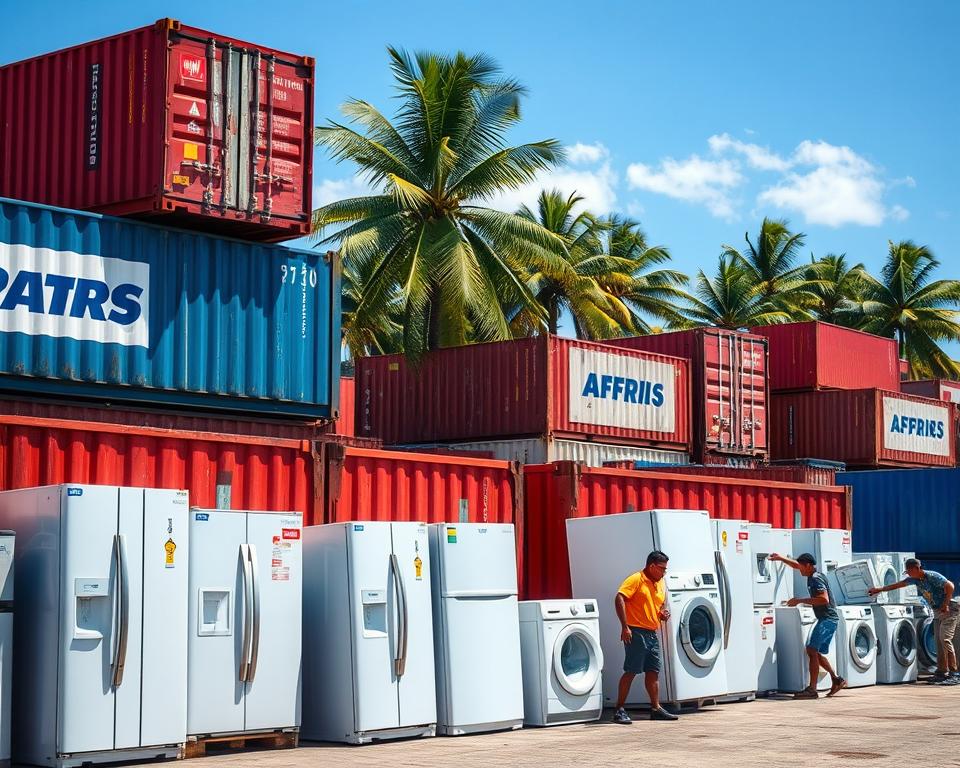
Ever thought about the cost of bringing your favorite appliances to Costa Rica? Import taxes can hit up to 80%. Knowing the appliance import process in Costa Rica is key for home updates. This guide covers the essential steps, including import regulations, taxes, and procedures for a seamless experience.
Introduction to Importing Appliances to Costa Rica
Before starting to import appliances to Costa Rica, it’s key to understand the process. Knowing about the costa rica appliance import process is crucial. This includes local rules, taxes, and needed documents.
When picking appliances, remember Costa Rica uses 120V and 60Hz. Make sure the plugs fit, using types A and B. It’s wise to choose dual voltage appliances for wider use. You can find the right adapters at places like Walmart and Pequeño Mundo.
Knowing what’s needed can save you time and money. Look into logistics at ExpoLogística and regional markets through CAFTA-DR. This knowledge is a big plus for importing electronics and appliances to Costa Rica.
Costa Rica Appliance Import Regulations
Costa Rica has rules for bringing appliances into the country. Knowing these rules helps avoid legal issues. It also affects how much you pay and how long it takes to import.
Understanding the CAFTA-DR Agreement
The Central America-Dominican Republic-United States Free Trade Agreement (CAFTA-DR) is key. It lets over 80% of U.S. exports into Costa Rica without duties since 2009. By 2015, all U.S. goods for homes and businesses entered duty-free. This makes importing easier and prices more competitive.
General Import Restrictions in Costa Rica
There are also general rules for imports in Costa Rica. While many appliances come in duty-free, some have quotas or rules. The Sanitary and Phytosanitary services check if appliances are safe and healthy.
Items like guns and drugs are banned. So, it’s crucial to know all the rules for importing appliances in Costa Rica.

Steps on How to Import Appliances to Costa Rica
Importing appliances to Costa Rica needs a clear plan. You must do your homework and pick the right shipping method. This makes the process smoother and saves money.
Research and Identify Products to Import
The first step is to research well. Look for appliances that are in demand and affordable in Costa Rica. Items like durable cookware and quality home goods are popular. Knowing the import taxes, from 5% to 80%, helps in making smart choices.
Selecting the Right Shipping Method
Choosing the right shipping method is key. You can go for air, sea, or land transport. Think about the cost, time, and the moving company’s reliability. Sea transport is cheaper for big items, while air is faster for urgent needs.
Make sure to label your appliances in Spanish and English. This helps with customs and can speed up the process.
Costa Rica Appliance Import Taxes
When you import appliances to Costa Rica, knowing the taxes is key. The cost of bringing in appliances can add up quickly. It’s important to understand the taxes to stay within your budget and follow the rules.
Overview of Import Tax Rates
Import tax rates in Costa Rica depend on the appliance type and category. Most appliances face a 13% Value-Added Tax (VAT). This VAT applies to all imports. Some appliances might also have extra taxes, which can increase the cost a lot.
These rates can vary from 13% to 49.27% for certain electronics. It’s crucial to know these rates to avoid surprises.
Value-Added Tax (VAT) on Imported Appliances
The VAT on appliances is a big part of the import cost. Since many appliances have this standard VAT rate, it’s important to factor it into your plans. Knowing the exact taxes for each appliance helps avoid unexpected costs.
Appliance Import Process in Costa Rica
Understanding how to import appliances in Costa Rica is key. You need to know about important documents and customs rules. These documents help follow local laws and make customs processing easier. You’ll need papers like commercial invoices, import permits, and proof of value.
Documentation Requirements
To start importing appliances in Costa Rica, you must prepare several documents:
- Commercial Invoice: This gives a detailed list of the goods being imported.
- Import Permit: Needed for the legal import of certain appliances.
- Proof of Value: Important for customs to figure out duties and taxes.
- Bill of Lading: A contract between the shipper and the carrier about moving goods.
Customs Clearance Procedures
After preparing your documents, you’ll need to clear customs for appliances. This involves:
- Handing over the documents to customs officials for review.
- Inspections to check if the shipment meets safety and regulatory standards.
- Pay duties and taxes based on the appliances’ value.
- Get clearance to release the appliances from customs and move them to their destination.
Shipping Appliances to Costa Rica
Shipping appliances to Costa Rica needs careful planning. Choosing a reliable shipping company is key to ensure safe arrival. It’s important to pick a company that knows international shipping and Costa Rican rules well.
Choosing a Reliable Shipping Company
When picking a shipping company for Costa Rica, consider these points:
- Reputation: Check reviews to see if they’re reliable for appliance shipping.
- Experience: Choose a company that knows Costa Rican customs and rules.
- Insurance Options: Make sure they offer good insurance for your appliances.
- Rates and Delivery Times: Compare prices and delivery times with other companies.
Packaging Guidelines for Appliances
Proper packaging is vital for safe transport. Here are some tips:
- Use Sturdy Boxes: Pick boxes that match the appliance’s size and weight.
- Protect with Padding: Use foam, bubble wrap, or blankets for extra protection.
- Secure all Components: Pack all parts well and label them to avoid confusion.
- Review Electrical Specifications: Costa Rica uses 120V, 60Hz. You might need adapters for different plugs.

Costa Rica Customs for Importing Appliances
Understanding the customs rules for importing appliances in Costa Rica is key. This guide covers the customs duties and the inspection steps that shipments face.
Understanding Customs Duties
The taxes on imported appliances can change a lot based on the item. Taxes usually range from 13% to 49% of the item’s value. If you’re a Costa Rican returning home after 24 months abroad, you might get a tax break. You could pay only 20-25% of the value for used household items.
Inspection and Release Stages
The customs clearance process takes about 10 working days after a shipment arrives. Each item is checked to make sure it follows local laws. You’ll need to provide a Bill of Lading, an inventory list, an invoice for new items, your passport, and a letter with instructions.
Some items, like vehicles and pets, need extra paperwork. It’s important to follow these steps closely.
Importing Household Appliances to Costa Rica
Bringing household appliances to Costa Rica means dealing with certain rules and practical tips. Knowing the import rules is key for a smooth process. For smaller items, many options are available locally. But, larger appliances can be more expensive and complicated.
Costa Rica’s living costs are similar to North America, with electricity prices like Boston’s. High taxes on cars show the big costs of importing goods, like appliances. While fresh produce is affordable, electrical appliances can be pricey, affecting your budget.
It’s wise to compare local prices with imported appliance costs. The difference can be big, considering shipping and taxes. Knowing the import rules helps make smart choices, saving money and effort.
Also, be ready for possible delays in the import process. Getting the Casa de Aduana certificate can take weeks. Plan ahead to avoid common problems with importing appliances to Costa Rica.

Best Practices for Importing Kitchen Appliances to Costa Rica
Importing kitchen appliances to Costa Rica needs careful planning. Knowing the right steps can make the process smoother. It’s important to decide what to bring versus what to buy locally to save money and time.
Some tips can help you choose the best appliances. They should fit your needs and be available in Costa Rica. This way, you get the most value for your money.
What to Bring vs. What to Buy Locally
When choosing what to import, think about these points:
- High-End Brands: Brands like KitchenAid and Bosch offer quality and features not found locally. They might be worth the investment.
- Small Appliances: Items like coffee makers or food processors might be cheaper abroad. Always compare prices before buying.
- Electrical Standards: Make sure the appliances you import fit Costa Rica’s electrical standards. This prevents damage or inefficiency.
- Local Availability: Simple items like toasters or blenders are often available locally. They might save you money on import costs.

Customization and Warranty Considerations
Customizing appliances might be needed for Costa Rica’s unique electrical setup. The country uses 100% renewable energy, but usage can change with the seasons. This affects appliance performance and energy use.
It’s also key to get a warranty for your appliances. Warranty policies can be tricky when dealing with imports. Local dealers might offer better warranty support, making it wise to explore local options first.
For detailed information on importing, including customs and duties, check out this guide on shipping household goods to Costa.
Common Challenges in Appliance Importing
Bringing appliances into Costa Rica can be tricky. Knowing the common issues helps avoid problems and makes the process easier.
Identifying and Avoiding Common Pitfalls
Importers might face issues like not knowing about import taxes or missing rules. It’s key to do your homework and get ready for the costs. Here are some pitfalls to dodge:
- Not counting all fees, like customs duties and VAT.
- Not checking if products meet local safety and quality standards.
- Missing deadlines for shipping and customs clearance.
By being proactive, you can avoid expensive mistakes.
Dealing with Delays and Additional Costs
Dealing with delays is a big challenge. Delays can happen for many reasons, like shipping issues or wrong paperwork. To avoid these problems, do the following:
- Keep in touch with shipping companies.
- Make sure all documents are right and follow the rules.
- Plan ahead for delays by scheduling shipments early.
Conclusion
Understanding the appliance import process in Costa Rica is key. It’s complex but doable with the right info. This guide covers important steps like following local laws and choosing shipping methods.
It also talks about tax implications. Knowing these details helps avoid problems and saves money.
Researching well and knowing customs rules can make importing easier. By following best practices, you can avoid delays and extra costs. This ensures your appliances enter Costa Rica smoothly.
Grasping the details of importing appliances can save you time and money. A strategic approach makes the process clearer and more likely to succeed.
Article by Glenn Tellier (Founder of CRIE and Grupo Gap)
Don't wait, contact us right now!
Call or WhatsApp Costa Rica +506 8373 2085 or +506 8706 3888
Call USA/Canada +1 305-906-6784